
The health information on PupWiki is for educational purposes only and does not constitute veterinary medical advice, diagnosis, or treatment. Always seek the guidance of a licensed veterinarian with any questions you may have regarding your dog's health or a medical condition.
A senior dog's world narrows gradually. Walks get shorter, play sessions wind down sooner, and familiar activities become harder. But "slowing down" does not mean your dog's need for engagement, comfort, and stimulation has disappeared — it means the form those things take must change. Thoughtful environmental adjustments and enrichment strategies can preserve quality of life well into a dog's final years.
Home modifications for daily comfort
Your home environment has more impact on a senior dog's quality of life than most owners realize. Small changes remove daily sources of pain, frustration, and anxiety.
Flooring and surfaces
- Non-slip pathways: Hardwood, tile, and laminate floors are treacherous for arthritic dogs. Lay runners, yoga mats, or interlocking foam tiles along your dog's most-used routes — bed to water bowl, bed to back door, hallway to feeding station. Dogs that splay on slick floors develop anxiety about moving, which accelerates muscle loss.
- Stair management: Baby gates at the top and bottom of stairs prevent unsupervised climbing. If stairs are unavoidable, carpet treads or adhesive grip strips reduce slip risk. For dogs with significant mobility issues, carry them or use a sling harness on stairs.
- Outdoor traction: Wet grass, icy paths, and sloped driveways are fall risks. Paw wax or toe-grip products help. Clear a level, non-slip bathroom area close to your door for winter use.
Resting areas
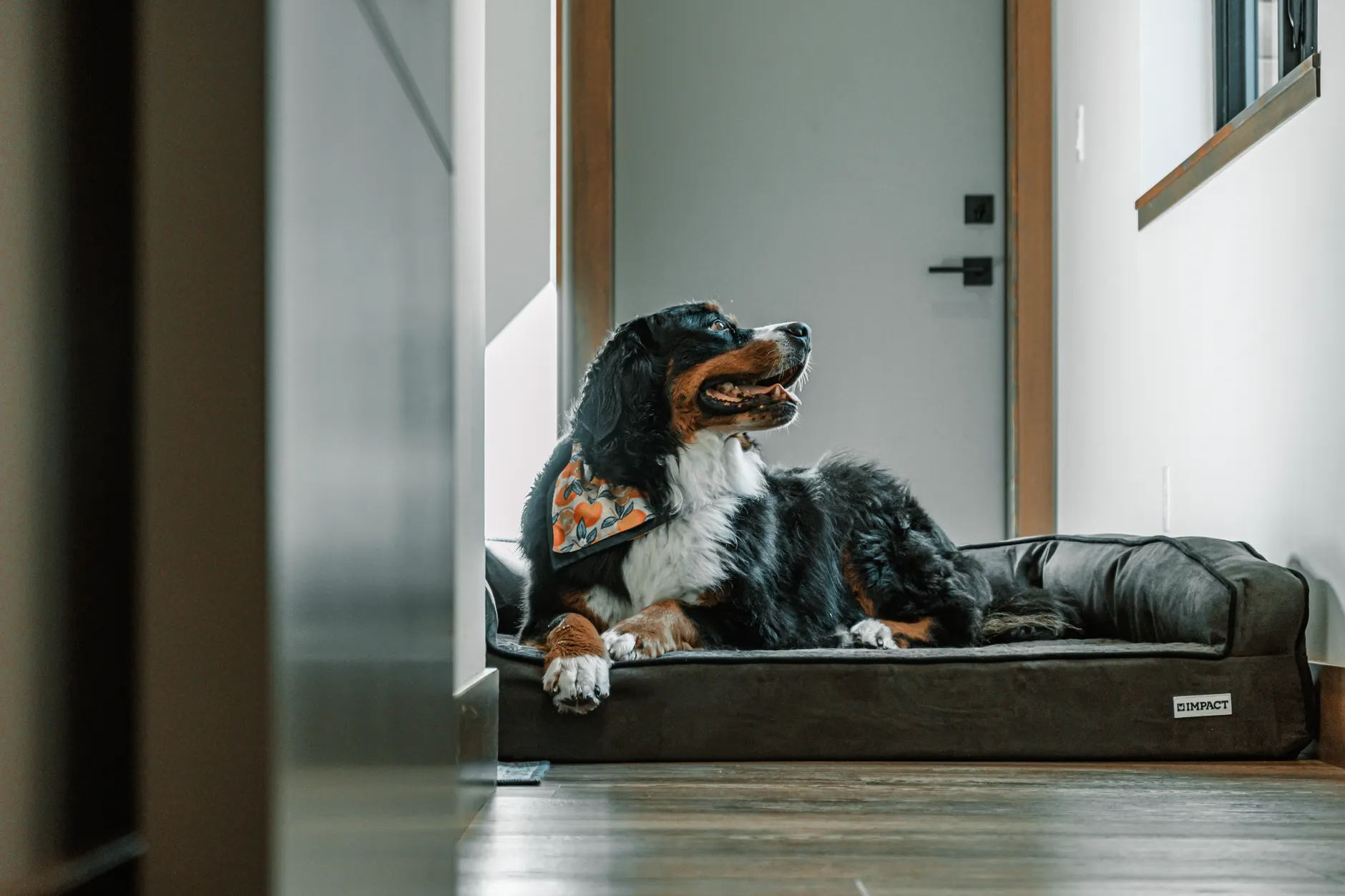
- Orthopaedic beds: Memory foam or high-density support beds distribute weight and reduce pressure on joints. The bed should be large enough for your dog to stretch fully without limbs hanging over the edge. A low-entry design (one side lower than the others) allows easy access without stepping over a bolster.
- Multiple resting stations: Place comfortable beds in every room your dog uses regularly. Having to walk across the house to lie down discourages a dog from joining family activity.
- Elevated warmth: Arthritic joints stiffen in cold. Place beds away from draughts and exterior walls. A thermostat-controlled heated pad (never unsupervised) provides relief in winter. Raised beds keep dogs off cold floors while still providing easy access.
Food and water access
- Raised bowls: Elevating food and water to chest height reduces neck and shoulder strain during eating. This is especially important for large breeds and dogs with cervical arthritis. Adjustable-height stands accommodate changes over time.
- Multiple water stations: Place water bowls in every room your dog frequents. Senior dogs that have to walk far for water may drink less, increasing dehydration risk. A pet fountain can encourage drinking by providing fresh, moving water.
- Non-slip bowl mats: Bowls that slide across the floor are frustrating for dogs with reduced coordination. Silicone mats keep bowls stable.
Adapting exercise for aging bodies
Exercise remains essential for senior dogs — it maintains muscle mass, supports joint health, prevents weight gain, and provides mental stimulation. What changes is the type, duration, and intensity.
The shift from distance to frequency
Replace one long daily walk with two or three shorter outings of 10-20 minutes. This maintains daily movement without pushing arthritic joints past their comfort threshold. Watch for next-day stiffness — if your dog is sore the morning after, the previous walk was too long.
Sniff walks: the underrated enrichment
Let your dog lead. A 15-minute "sniff walk" where your dog investigates every lamppost, leaf pile, and grass patch provides more mental stimulation than a 30-minute structured march. Dogs process the world through their nose — scent investigation is cognitively demanding work, not laziness. Sniff walks are the single best ratio of mental enrichment to physical strain for senior dogs.
Swimming and water exercise
Swimming is the gold standard for arthritic dogs. Water supports body weight, eliminating impact while allowing full range of motion. Warm water is preferable — cold water can increase stiffness. Veterinary hydrotherapy (supervised aquatic therapy with underwater treadmills or controlled swimming) is available through canine physiotherapists for dogs with significant mobility limitations. Even for able-bodied seniors, gentle swimming provides excellent low-impact exercise.
Activities to scale back
- High-impact fetch (sudden stops, pivoting, jumping for catches)
- Rough play with younger or larger dogs
- Running on hard surfaces (concrete, asphalt)
- Extended off-lead activity where excitement overrides the dog's physical limits
- Steep hill climbs or descents
Never force a reluctant senior dog to exercise. If your dog resists a walk, stops and sits during an outing, or seems reluctant to leave the house, this may signal pain rather than stubbornness. Discuss exercise avoidance with your vet.

Cognitive enrichment for aging brains
Canine Cognitive Dysfunction (CCD) — the dog equivalent of dementia — affects an estimated 28% of dogs aged 11-12 and over 68% of dogs aged 15-16. While CCD cannot be fully prevented, regular cognitive stimulation is associated with slower decline, just as mental engagement appears to slow cognitive decline in humans.
Puzzle feeders and food enrichment
- Snuffle mats: Scatter kibble or small treats in a fabric snuffle mat. This engages the dog's strongest sense (smell) without requiring physical dexterity. Excellent for dogs with arthritis or limited mobility.
- Frozen Kongs: Fill a Kong with soft food (mashed banana, pumpkin puree, wet dog food) and freeze it. The licking action is calming and provides 15-30 minutes of engagement. Use soft fillings for dogs with dental issues.
- Muffin tin game: Place treats in a muffin tin and cover each well with a tennis ball. The dog must remove the balls to access the food. Simple, adjustable difficulty, no purchase required.
- Scatter feeding: Instead of a bowl, scatter your dog's meal across a safe area of floor or grass. Foraging is cognitively richer than eating from a dish.
Training as enrichment
Older dogs absolutely can learn new behaviours. Keep sessions short (5-10 minutes), use high-value rewards, and adapt to physical limitations. Scent-based training is particularly valuable for seniors:
- "Find it" games: Hide treats around a room and let your dog search. Start easy (visible treats) and increase difficulty. This builds confidence and exercises the brain.
- Scent discrimination: Teach your dog to identify a specific scent among several options. This is advanced enrichment that dogs of any age can learn.
- Hand targeting ("touch"): Teach your dog to touch their nose to your palm. Requires no physical effort beyond standing and is infinitely variable.
- Name recognition for objects: Teach your dog the names of toys or family members. Cognitive work without physical demand.
Novel experiences
Routine provides comfort, but novelty stimulates the brain. Introduce new experiences in low-stress ways:
- Walk a different route once or twice a week (new scents, new environments)
- Rotate toys rather than leaving all available simultaneously
- Introduce new textures to investigate (a cardboard box with crumpled paper and hidden treats)
- Visit new outdoor locations at quiet times (a different park, a friend's garden)
Managing sensory decline
Vision and hearing loss are common in aging dogs. Most adapt well when the changes are gradual and the home environment is supportive. Sudden loss of either sense warrants immediate veterinary attention, as some causes (cataracts, ear infections, neurological events) are treatable.
Vision loss adaptations
- Keep furniture in consistent positions — dogs with declining vision memorize spatial layouts
- Block access to stairways, pools, and drop-offs with physical barriers
- Place textured mats at doorways, steps, and room transitions as tactile cues
- Avoid startling your dog — always speak before touching them
- Use scent markers at key locations (a small dab of lavender oil by the back door, peppermint by their bed)
- Keep outdoor areas consistent — do not rearrange garden furniture
- Increase verbal communication: narrate your approach, give auditory cues before feeding
Hearing loss adaptations
- Transition to hand signals for commands (many dogs learn visual cues quickly even late in life)
- Approach from the front or side so your dog sees you coming
- Use vibration to get attention: stomp on the floor, or use a vibrating collar (not a shock collar)
- Attach a bell to your shoe or clothing so your dog can track your location through vibration
- Maintain eye contact during interaction to compensate for lost auditory cues
When both senses decline
Dogs that lose both vision and hearing rely heavily on scent, touch, and spatial memory. Keep the home environment extremely consistent, use gentle touch to communicate, and establish routines that provide predictability. These dogs can still enjoy a good quality of life with patient, thoughtful management.
Temperature sensitivity and comfort
Aging dogs lose the ability to regulate body temperature as efficiently as younger animals. Both cold and heat tolerance decrease.
- Cold weather: Thin-coated, lean, and small seniors are especially vulnerable. Provide a warm coat for winter walks, limit outdoor exposure in sub-freezing temperatures, and ensure indoor resting areas are warm and draught-free. Arthritic joints are demonstrably stiffer in cold, damp conditions.
- Hot weather: Senior dogs are more susceptible to heatstroke. Walk during cooler morning and evening hours, provide shade and fresh water at all times, and watch for excessive panting at rest. Brachycephalic seniors (Bulldogs, Pugs, Boxers) are at particular risk because already-compromised airways become less efficient at heat exchange.
- Indoor climate: If possible, maintain a consistent indoor temperature of 65-75 F (18-24 C). Avoid placing beds near exterior doors, windows, or heating vents that cycle between extremes.
Sleep pattern changes
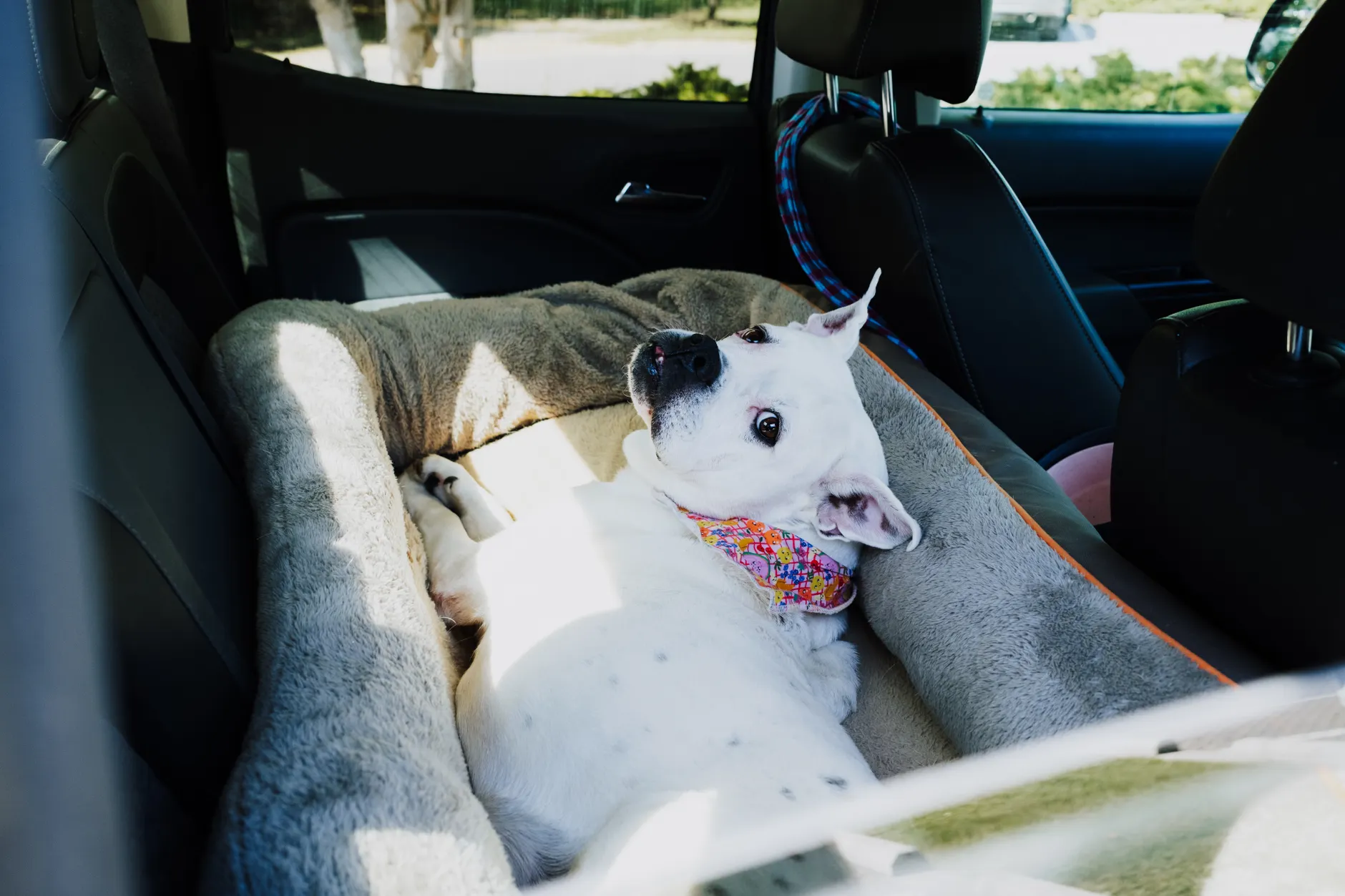
Senior dogs sleep more than adult dogs — typically 14-16 hours per day, and some as much as 18. This is generally normal. What matters is the quality of sleep and behaviour when awake.
- Nighttime restlessness: Pacing, whining, or inability to settle at night may indicate pain, cognitive dysfunction, or anxiety. If this is new behaviour, consult your vet before assuming it is "just aging."
- Daytime napping: Increased daytime sleep is expected. Provide a comfortable, quiet resting area where your dog can nap undisturbed while still being near the family.
- Sun-downing: Some dogs with cognitive dysfunction become more confused or anxious in the evening. Keeping lights on, maintaining a calm environment, and using night lights in hallways can help.
- Sleep-wake reversal: Sleeping all day and being restless at night is a hallmark of cognitive dysfunction. Maintaining regular daytime activity (even brief walks and feeding schedules) helps preserve a normal sleep-wake cycle.
Social needs in older dogs
Senior dogs often experience a shift in social preferences. Understanding and respecting these changes prevents stress.
- Tolerance changes: A previously social dog may become less patient with young children, puppies, or boisterous visitors. This is often pain-related — being bumped, stepped on, or required to move quickly is uncomfortable. Provide a quiet retreat space and teach children to let the senior dog approach on their own terms.
- Increased attachment: Some senior dogs become more clingy as their senses decline — they rely more on their owner's presence for security. This is normal but can develop into separation anxiety if not managed gently.
- Isolation vs. overstimulation: Finding the balance matters. A senior dog left alone in a quiet room all day may become withdrawn and depressed. A senior dog thrust into a noisy family gathering may become stressed and anxious. The ideal is calm inclusion — present with the family, with a comfortable resting spot and the option to retreat.
- Multi-dog households: Monitor dynamics carefully. Younger dogs may begin to challenge or crowd an aging dog. Ensure the senior has access to food, water, and resting areas without competition. Feed separately if necessary.
A daily comfort checklist
A simple daily assessment takes 30 seconds and helps you track your senior dog's wellbeing over time:
- Did they eat their normal amount with normal enthusiasm?
- Is their water intake consistent (not dramatically increased or decreased)?
- Did they move normally when getting up from rest?
- Were they engaged and responsive when interacted with?
- Did they enjoy their walk or outdoor time?
- Is their bathroom routine normal (frequency, consistency)?
- Did they settle comfortably for sleep?
You do not need to write this down daily. But noticing a pattern of "no" answers over a week or two provides valuable information for your vet — and catches decline earlier than waiting for an obvious problem.
Disclaimer: This guide provides general enrichment and comfort guidance for senior dogs and does not constitute veterinary advice. Pain, cognitive dysfunction, sensory loss, and behaviour changes in older dogs have medical components that require professional assessment. Consult your veterinarian before making significant changes to your senior dog's routine, especially if you suspect pain or cognitive decline.
Frequently asked questions
- Can old dogs still learn new tricks?
- Yes. The idea that older dogs cannot learn is a myth. Senior dogs can and do learn new behaviours, though the process may be slower and require more patience and repetition. Short training sessions (5-10 minutes) with high-value rewards work well. Learning provides genuine cognitive stimulation that helps maintain brain health. Adapt to physical limitations — a dog with arthritis can learn "touch" or scent games without needing to sit or lie down repeatedly.
- How can I tell if my senior dog is in pain or just slowing down?
- Normal aging involves gradual energy reduction and longer sleep, but the dog remains engaged and interested when awake. Pain signals include: reluctance to be touched in specific areas, changes in facial expression (furrowed brow, flattened ears), altered breathing patterns, decreased appetite, withdrawal from family interaction, restlessness or inability to settle, and new avoidance of activities they previously enjoyed. If you are unsure, ask your vet — a trial of appropriate pain medication can clarify whether "slowing down" is actually discomfort.
- What temperature is too cold or too hot for a senior dog?
- Senior dogs are more temperature-sensitive than younger adults. Most become uncomfortable below 45 F (7 C) and above 80 F (27 C), though this varies by coat type, body fat, and breed. Thin-coated, lean, and small seniors are especially cold-sensitive. Brachycephalic seniors are especially heat-sensitive. Provide temperature-regulated resting areas, limit outdoor time in extremes, and watch for shivering (cold) or excessive panting at rest (heat). A lightweight coat for winter walks and shade plus fresh water in summer are practical precautions.
- Should I get another dog to keep my senior dog company?
- This depends entirely on your senior dog's temperament. Some older dogs benefit from a calm companion — it can reduce isolation and provide gentle social interaction. However, many seniors find a puppy or high-energy young dog stressful rather than enriching. If your senior dog has always enjoyed other dogs and shows no signs of anxiety around them, a calm adult companion may work. Never get a second dog primarily "for" your senior — the household must be prepared to manage both animals' needs independently.
- How do I keep a blind or deaf senior dog safe at home?
- For vision loss: keep furniture in consistent positions, block stairways with baby gates, add texture cues at doorways and steps (different mats or rugs), avoid rearranging rooms, use scent markers (a drop of essential oil at key locations), and always speak before touching to avoid startling. For hearing loss: use hand signals (many can be taught at any age), approach from the front, use vibration cues (stomping on the floor), attach a bell to your shoe so the dog can track you, and consider a vibrating collar for recall. Many dogs adapt remarkably well to single-sense loss.
- How much sleep is normal for a senior dog?
- Senior dogs typically sleep 14-16 hours per day, compared to 12-14 for adult dogs. Some may sleep up to 18 hours. This is generally normal as long as the dog is alert, engaged, and responsive when awake. Concerning changes include: sleeping significantly more than usual for that individual dog, difficulty waking, disorientation upon waking, or sleeping through meals they previously anticipated. A sudden increase in sleep — rather than a gradual shift — warrants a vet check to rule out hypothyroidism, pain, or other medical causes.
- What kind of puzzle toys work best for senior dogs?
- Choose puzzles that match your dog's physical abilities. Dogs with arthritis do better with floor-level puzzles that do not require standing or pawing overhead. Snuffle mats are excellent — they engage the nose without requiring dexterity. Frozen Kongs with soft food work for dogs with dental issues. Muffin tin puzzles (treats under tennis balls in a muffin tin) provide gentle cognitive challenge. Avoid toys that require forceful chewing if dental disease is present. Start easy and increase difficulty gradually — the goal is engagement, not frustration.


