
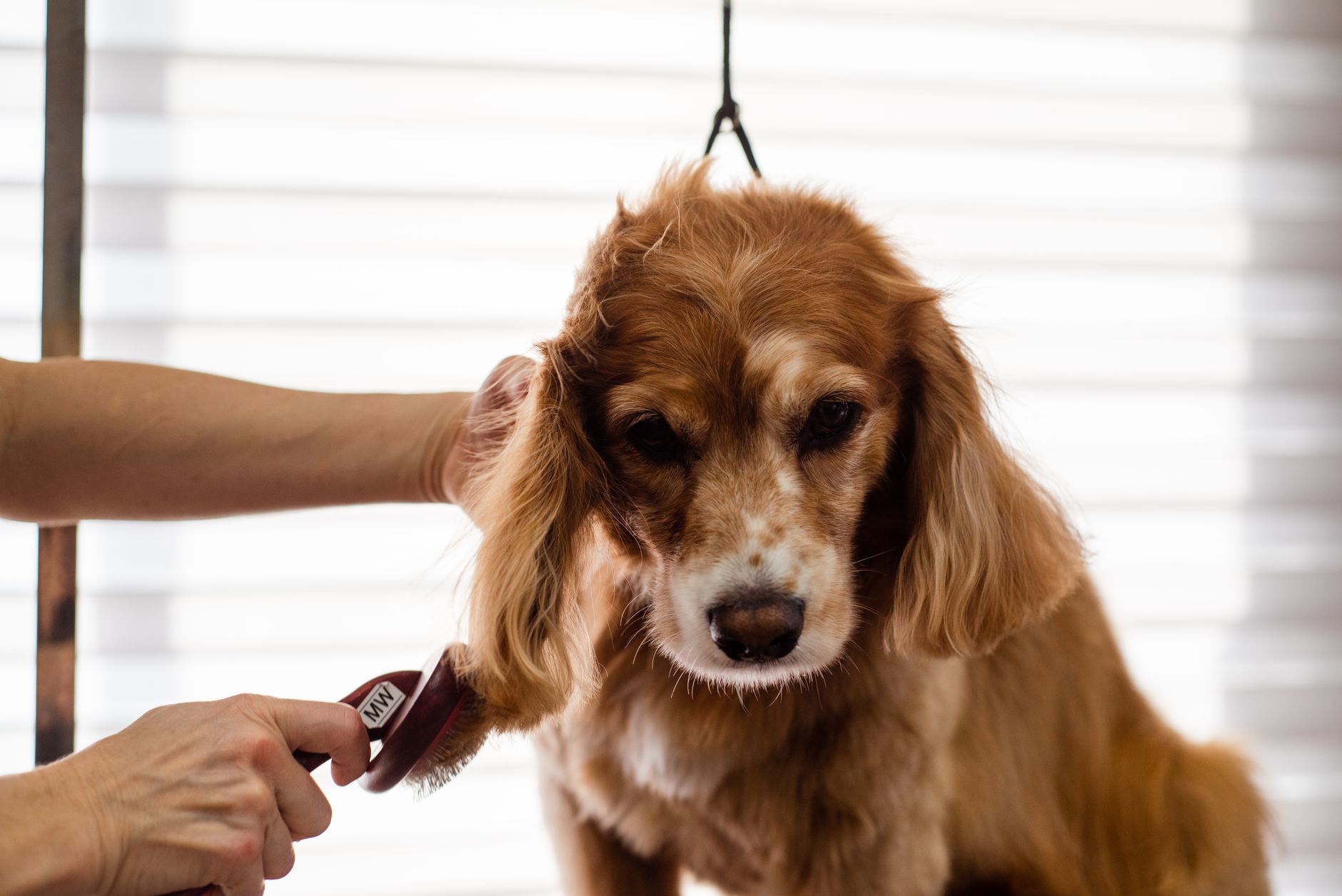
Regular grooming is not just about appearance. It prevents painful matting, allows early detection of lumps or skin changes, keeps ears and nails healthy, and maintains the coat's natural protective function. The right approach depends almost entirely on coat type — what works for a Labrador would leave a Poodle matted within weeks.
Coat types and what they need
Understanding your dog's coat type determines every grooming decision — tools, frequency, professional requirements, and shedding management.
| Coat type | Examples | Brush frequency | Key tools | Professional need |
|---|---|---|---|---|
| Short single coat | Whippet, Great Dane, Beagle, Doberman Pinscher | Monthly | Rubber curry brush or grooming mitt | Rarely needed — occasional bath at home |
| Short double coat | Labrador Retriever, Beagle, Pug | 2–3x per week | Slicker brush, bristle brush | Optional — home bathing sufficient |
| Long double coat | German Shepherd, Siberian Husky, Samoyed, Bernese Mountain Dog | Daily in shedding season, 3–4x per week otherwise | Slicker brush, undercoat rake, deshedding tool | Deshedding treatment 1–2x yearly can help |
| Long silky coat | Maltese, Yorkshire Terrier, Shih Tzu, Irish Setter | Daily | Wide-tooth comb, slicker brush, detangling spray | Clip or trim every 6–8 weeks |
| Curly / wavy coat | Poodle, Bichon Frise, Labradoodle, Cavapoo | Every 2–3 days | Slicker brush, metal comb | Every 6–8 weeks (clips required) |
| Wire / rough coat | Wire Fox Terrier, West Highland Terrier, Border Terrier | 2–3x per week | Slicker brush, stripping knife (for hand-stripping) | Hand-stripping 2–3x per year by specialist |
The core grooming routine
1. Brushing
Always brush before bathing — bathing a matted coat tightens the mat and makes it harder to remove. Work systematically from the skin outward, checking for tangles at the neck, behind the ears, under the armpits, and around the collar area (the most common mat locations). Use a detangling spray on knots before attempting to brush through them.
If a mat is tight to the skin, do not attempt to rip it out with a brush. Hold the hair at the base of the mat to prevent pulling skin, and use a mat splitter or seam ripper to break it up before brushing. Severe matting often requires professional attention — forced dematting is painful and damages the owner-dog trust relationship.
2. Bathing
Use warm (not hot) water and a dog-specific shampoo matched to coat type and skin condition. Wet the coat thoroughly before applying shampoo. Work shampoo through to the skin, avoiding the eye area. Rinse thoroughly — residual shampoo causes skin irritation. For double-coated breeds, thorough rinsing requires more time than it seems necessary.
Conditioner is beneficial for long, silky, or curly coats — it reduces tangles and breakage. Towel dry first, then blow-dry on low heat for thick double coats (air-drying a heavy coat can leave damp skin underneath and encourage hot spots).
3. Ears
Floppy-eared breeds (Cocker Spaniel, Cavalier, Labrador) are prone to ear infections due to reduced airflow. Weekly checks are recommended — look for redness, discharge, or odour. Use a dog ear cleaning solution on a cotton ball to wipe the visible part of the ear canal. Never insert cotton buds or probe deeply into the ear canal.
4. Nail trimming
Overgrown nails affect gait and cause joint stress over time. Nails need trimming when they contact the floor on a hard surface while the dog is standing naturally. Most dogs need trims every 3–4 weeks. Desensitise young dogs to nail handling gradually — frequent brief sessions with high-value treats are more effective than infrequent forced sessions.
5. Teeth
Dental disease affects the majority of dogs over age 3. Daily brushing with a dog-specific toothpaste is most effective. Dental chews, water additives, and dental diets are supportive but not substitutes for brushing. Annual professional cleanings (under anaesthesia) become important from middle age. Small breeds are particularly prone to dental disease due to tooth overcrowding.
When to use a professional groomer
Always use a professional
- Breeds requiring clipping: Poodle, Bichon Frise, Shih Tzu, Maltese, Cocker Spaniel, Miniature Schnauzer
- Breeds requiring hand-stripping: West Highland Terrier, Wire Fox Terrier, Border Terrier
- Severe matting that cannot be safely brushed out
Consider professional help
- Dogs that resist nail trims at home (specialist groomers handle this routinely)
- Seasonal deshedding for very heavy double coats (Husky, Samoyed, Chow Chow)
- Owners with limited mobility or confidence with scissors
Grooming costs: what to expect
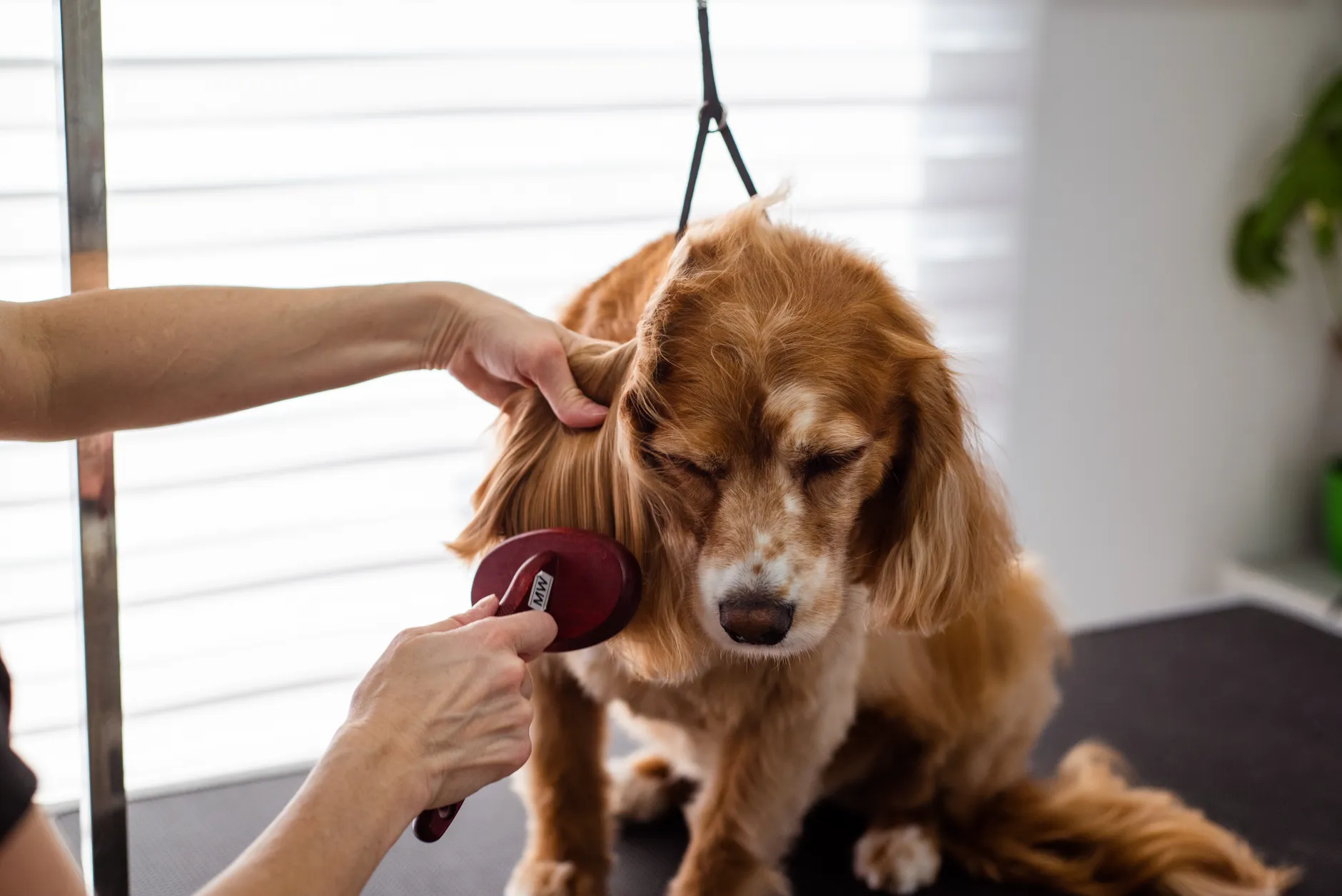
Professional grooming costs vary by breed, coat condition, and location. Approximate frequency and cost for common scenarios:
- Poodle, Bichon Frise, Shih Tzu, Maltese — every 6–8 weeks; typically $50–$90 per session; $300–$600+ annually
- Labrador, German Shepherd (basic groom) — every 3–4 months or seasonally; $40–$70 per session
- Yorkshire Terrier, Cocker Spaniel — every 6–8 weeks for trim + full groom; $45–$85 per session
- West Highland Terrier (hand-stripping) — 2–3 times per year; $80–$150 per session; clipping is cheaper but changes coat texture
These are US national averages. Prices vary significantly by region and city. Grooming costs are an ongoing ownership commitment — factor them into breed selection decisions.
Frequently asked questions
- How often should I brush my dog?
- Frequency depends on coat type. Short single coats (Beagle, Whippet, Great Dane): monthly brushing is sufficient. Medium double coats (Labrador, German Shepherd): 2–3 times per week, daily during seasonal shedding. Long or silky coats (Maltese, Yorkshire Terrier, Shih Tzu): daily brushing to prevent matting. Curly or wavy coats (Poodle, Bichon Frise, Labradoodle): every 2–3 days. Rough double coats (Husky, Samoyed, Bernese Mountain Dog): daily during blowing season, 3–4 times per week otherwise.
- How often should I bathe my dog?
- Most dogs need a bath every 4–6 weeks. More frequently for dogs with skin conditions, dogs that swim regularly, or white-coated breeds that show dirt easily. Less frequently for breeds with oils that protect the coat (some terriers, water-repellent breeds). Over-bathing strips natural coat oils and can cause dry skin. Always use a dog-specific shampoo — human products have the wrong pH balance for dogs.
- When do I need a professional groomer?
- Professional grooming is needed when: the coat requires clipping or scissoring (Poodle, Bichon Frise, Shih Tzu, Cocker Spaniel, Miniature Schnauzer); the dog has significant matting that cannot safely be brushed out; the breed requires hand-stripping (West Highland Terrier, Border Terrier, Wire Fox Terrier); or you are uncomfortable handling nail trims. Many owners split the work: regular home brushing and bathing, with professional clipping every 6–8 weeks.
- How do I cut my dog's nails?
- Use a sharp guillotine or scissor-style nail clipper designed for dogs. Clip small amounts at a time, avoiding the quick (the blood vessel inside the nail, visible as a pink line in light-coloured nails). Dark nails require careful incremental clipping — clip until you see a grey circle in the cross-section, then stop. Have styptic powder available in case you clip the quick. If your dog resists strongly, desensitisation training over multiple sessions is more effective than forcing the procedure.
- What grooming tools do I actually need?
- The essentials depend on coat type. Short coats: rubber curry brush or grooming mitt. Double coats: slicker brush, undercoat rake, and deshedding tool (e.g. Furminator-style). Long or silky coats: wide-tooth comb, slicker brush, and detangling spray. Curly coats: slicker brush and metal comb. All dogs need a nail clipper and dog-safe shampoo. Ear cleaning solution and cotton balls are useful for floppy-eared breeds. Quality tools make a significant difference — cheap brushes skip over tangles.


