
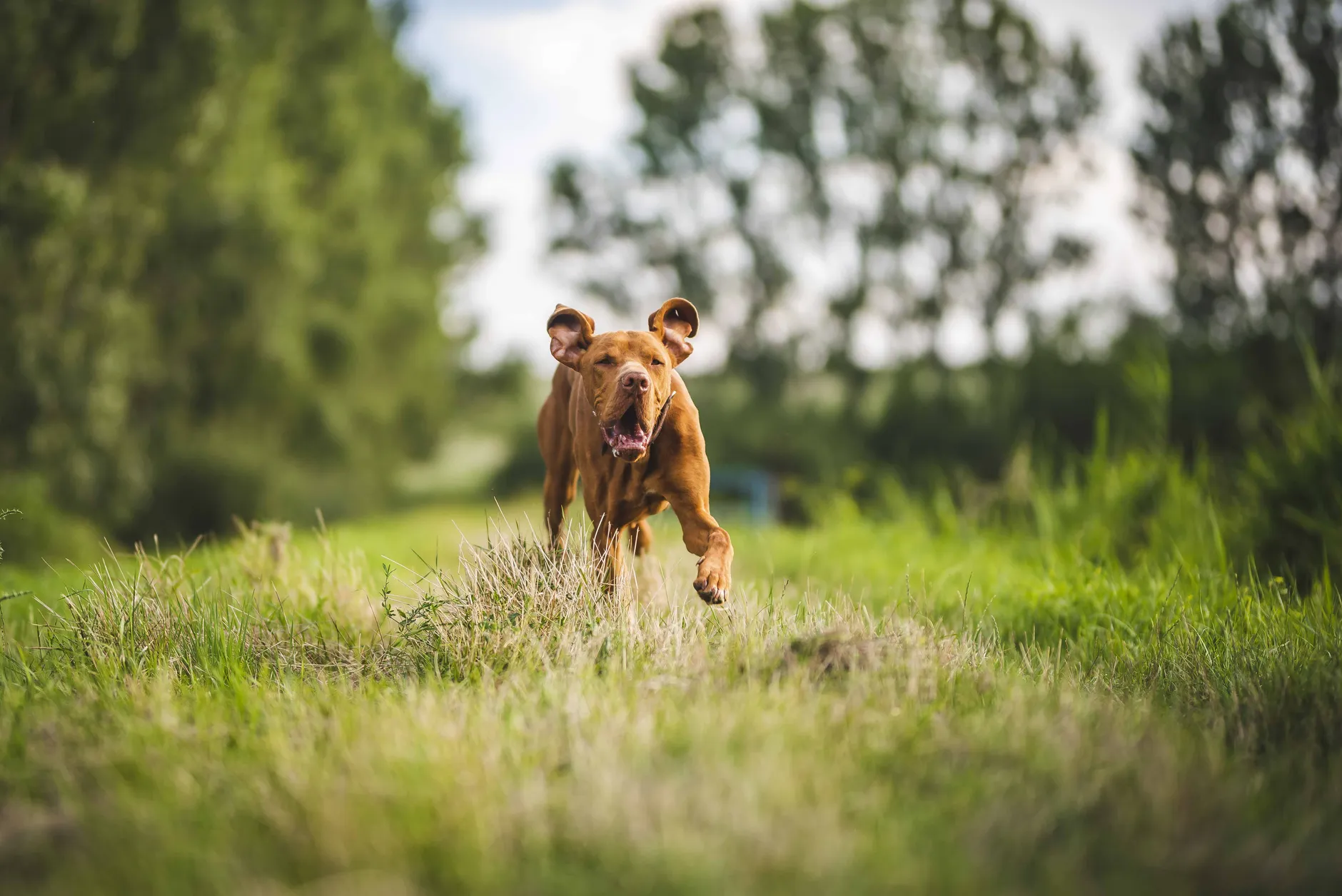
Unmet exercise needs are the root cause of most common behaviour problems: destructive chewing, excessive barking, hyperactivity, anxiety, and difficulty settling. The amount and type of exercise that satisfies a dog varies dramatically by breed — a 20-minute walk is plenty for some dogs and barely warming up for others.
Exercise minimums by breed size and energy level
These are daily minimums for healthy adult dogs. Puppies, seniors, and dogs with health conditions have different requirements covered below.
| Breed category | Examples | Daily minimum | Intensity |
|---|---|---|---|
| Small, low-energy | Bichon Frise, Shih Tzu, Pomeranian, Maltese | 30–45 min | Moderate pace |
| Small, high-energy | Jack Russell Terrier, Miniature Schnauzer, Beagle | 60–90 min | Vigorous |
| Medium, moderate | Cocker Spaniel, Corgi, Cavalier | 45–60 min | Brisk |
| Large, family/sporting | Labrador, Golden Retriever, Boxer | 60–90 min | Vigorous |
| High-drive working breeds | Border Collie, Australian Shepherd, Husky, Weimaraner | 90–180+ min | Vigorous + purposeful |
| Low-energy large breeds | Basset Hound, Bulldog, Great Dane | 30–45 min | Leisurely |
These are breed-group estimates. Individual variation matters — a high-energy Labrador may need significantly more than the table suggests. Your dog's behaviour after exercise (settled and calm, or still restless) is the most reliable feedback.
What counts as exercise
Not all physical activity is equal. Walking on-lead at a slow pace does not provide the same physical benefit as off-lead running or structured activity. Effective exercise:
- Off-lead running and play — the most efficient form of exercise for most dogs; 20 minutes of free running can satisfy more physical need than a 60-minute lead walk
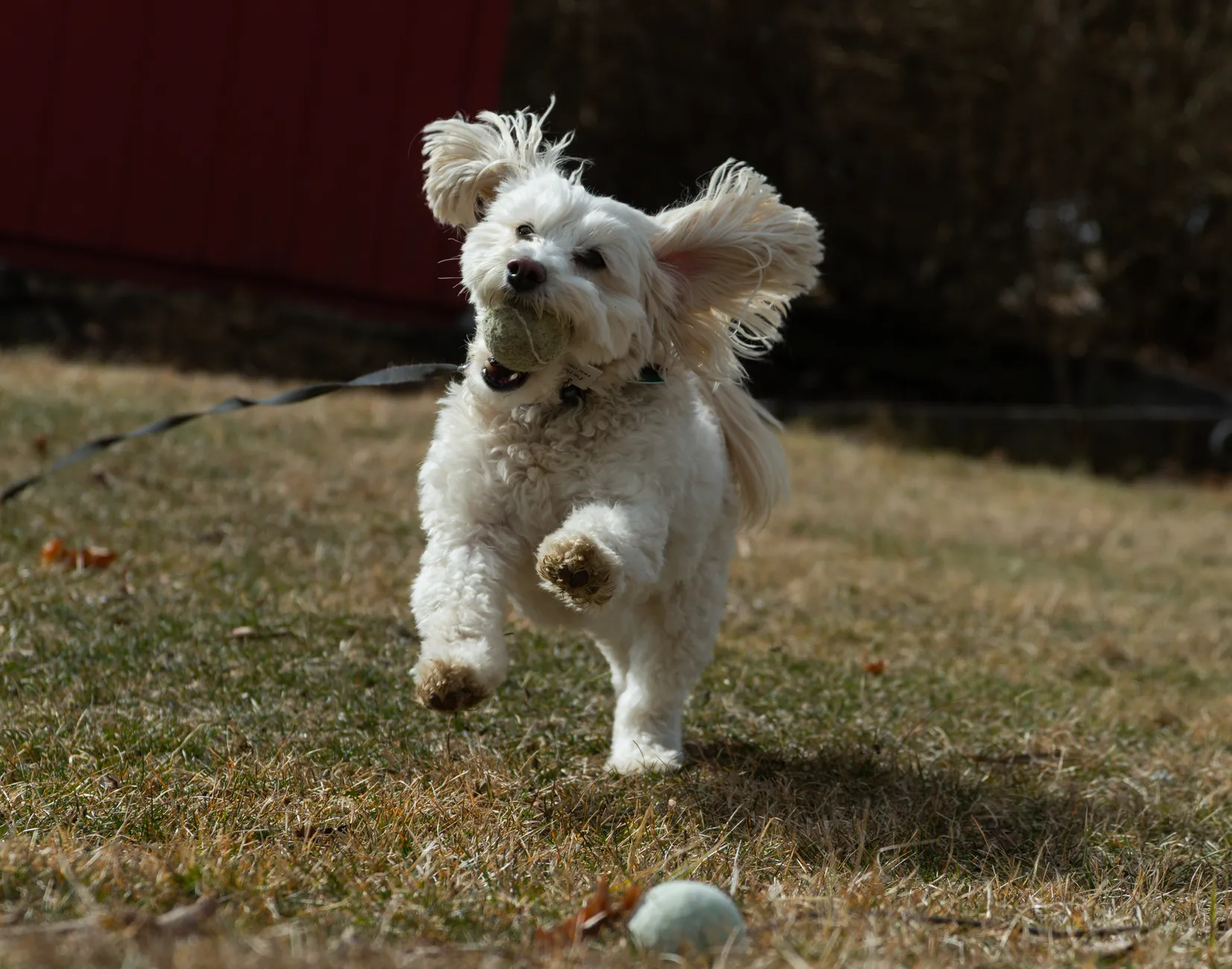
- Fetch and retrieval games — engages prey drive and provides cardiovascular benefit; effective for retriever and spaniel types especially
- Swimming — excellent full-body exercise, particularly valuable for dogs with joint issues as it is non-impact; not all breeds are natural swimmers
- Structured training (agility, obedience, tracking) — combines physical and mental demand; most effective for working breeds
- Brisk on-lead walking — adequate for low-energy breeds; supplementary rather than primary for high-energy breeds
Mental enrichment — what it achieves and what it does not
Mental stimulation engages cognitive capacity, reduces boredom, and genuinely tires dogs — many owners report a 20-minute training session or sniff game produces a more deeply settled dog than a longer walk. But it is not a substitute for physical exercise in breeds that need it.
Feeding enrichment
- Stuffed Kongs (frozen makes them last longer)
- Licki mats and snuffle mats
- Scatter feeding in grass
- Puzzle feeders (adjust difficulty to your dog's frustration tolerance)
Best for: all breeds, particularly effective for dogs left alone
Scent work
- Hiding food around the garden or house
- Formal nosework classes (teaches dogs to locate specific scents)
- Sniff walks — let the dog set the pace and follow its nose
Best for: scent hounds (Beagle, Basset Hound), senior dogs, dogs recovering from injury
Training sessions
- 5–10 minute sessions; short and frequent beats long and infrequent
- Teaching new commands and tricks
- Impulse control exercises (wait, stay, leave it)
Best for: working and herding breeds (Border Collie, German Shepherd, Poodle)
Social and environmental
- Dog-friendly playdates with compatible dogs
- New environments — different parks, beaches, urban areas
- Car trips that end somewhere interesting
Best for: sociable breeds (Labrador, Golden Retriever, Havanese)
Exercise by life stage
Puppies (8 weeks to 12–18 months)
Puppy growth plates — the softer bone tissue at the ends of developing bones — are vulnerable to stress-related damage before they close. The general guideline is 5 minutes of formal exercise per month of age, twice daily. An 8-week-old puppy needs 10 minutes; a 6-month-old needs 30 minutes. This applies to structured on-lead walking and running.
Free play in a safe, non-impact environment (grass, indoors) at the puppy's own pace is fine regardless of duration — the risk is sustained forced exercise on hard surfaces. Large and giant breeds should be restricted from jumping, stair running, and rough play longer than small breeds; their growth plates close later.
Mental enrichment is particularly valuable for puppies — it provides stimulation and begins building training engagement during the critical learning period.
Adult dogs (1–7 years for most breeds)
Peak exercise capacity. Apply the breed minimums from the table above. Consistency matters more than intensity — a dog that gets adequate exercise daily fares better than one that gets a long hike once a week. Two exercise sessions daily (morning and evening) suits most dogs better than one long session.
Senior dogs (7+ for large breeds, 10+ for small breeds)
Exercise remains essential — it maintains muscle mass, supports joint health, and improves mental wellbeing. The adaptation: shorter, more frequent sessions replace long runs; swimming replaces high-impact running for arthritic dogs; mental enrichment takes on greater relative importance as physical capacity declines. Stiffness the morning after exercise signals the session was too long.
High-energy breed considerations
Working and herding breeds — Border Collie, Australian Shepherd, Weimaraner, Siberian Husky, Belgian Malinois — were selectively bred to work all day at a sustained pace. Physical exercise alone is often insufficient because their need is not just for energy expenditure but for purposeful activity.
An under-stimulated working dog does not simply sleep more. It redirects its intelligence and drive into behaviours that satisfy the same neurological need: obsessive behaviours (ball fixation, shadow-chasing, spinning), destructive activity, and anxiety. The solution is not more walking — it is structured engagement that meets the purposeful activity need.
- Agility, flyball, or tracking gives working dogs the structured purpose they seek
- Nosework and scent detection engages intelligence without extreme physical demand
- Regular training sessions provide mental challenge and strengthen the human-dog bond
Frequently asked questions
- How much exercise does a dog need per day?
- It depends heavily on breed and age. A general guide: small low-energy breeds (Bichon Frise, Shih Tzu) need 30–45 minutes; medium family dogs (Labrador, Golden Retriever) need 60–90 minutes; high-energy working breeds (Border Collie, Husky, Weimaraner) need 90–180+ minutes of vigorous activity. These are minimums — most working breeds need more.
- Does mental stimulation count as exercise?
- It is complementary, not a substitute. Mental enrichment (puzzle feeders, scent work, training sessions) tires dogs out cognitively and reduces destructive behaviour, but it does not replace cardiovascular exercise. A physically under-exercised dog that gets puzzle feeders is still an under-exercised dog. The two work best together.
- What are the signs my dog is under-exercised?
- The most common signs: destructive behaviour (chewing furniture, digging, raiding bins), excessive barking or howling, hyperactivity and difficulty settling indoors, pulling hard on the lead, attention-seeking behaviours, and weight gain. These are all symptoms of unmet physical need, not character flaws.
- Can you over-exercise a dog?
- Yes — particularly puppies (growth plates must not be stressed before around 12–18 months in large breeds), older dogs with joint disease, and brachycephalic breeds in warm weather. Signs of over-exercise: lameness after activity, extreme stiffness the day after, reluctance to continue walking, laboured breathing in flat-faced breeds. Recovery days matter as much as exercise days.
- What enrichment works best for high-energy breeds?
- High-energy working breeds (Border Collie, Australian Shepherd, Malinois) need activities that engage their original purpose: scent work, agility, obedience training, herding games. Passive enrichment (stuffed Kongs, puzzle feeders) is useful but not sufficient for these breeds. Structured sport or training that provides an outlet for their working drive is the most effective enrichment.


