
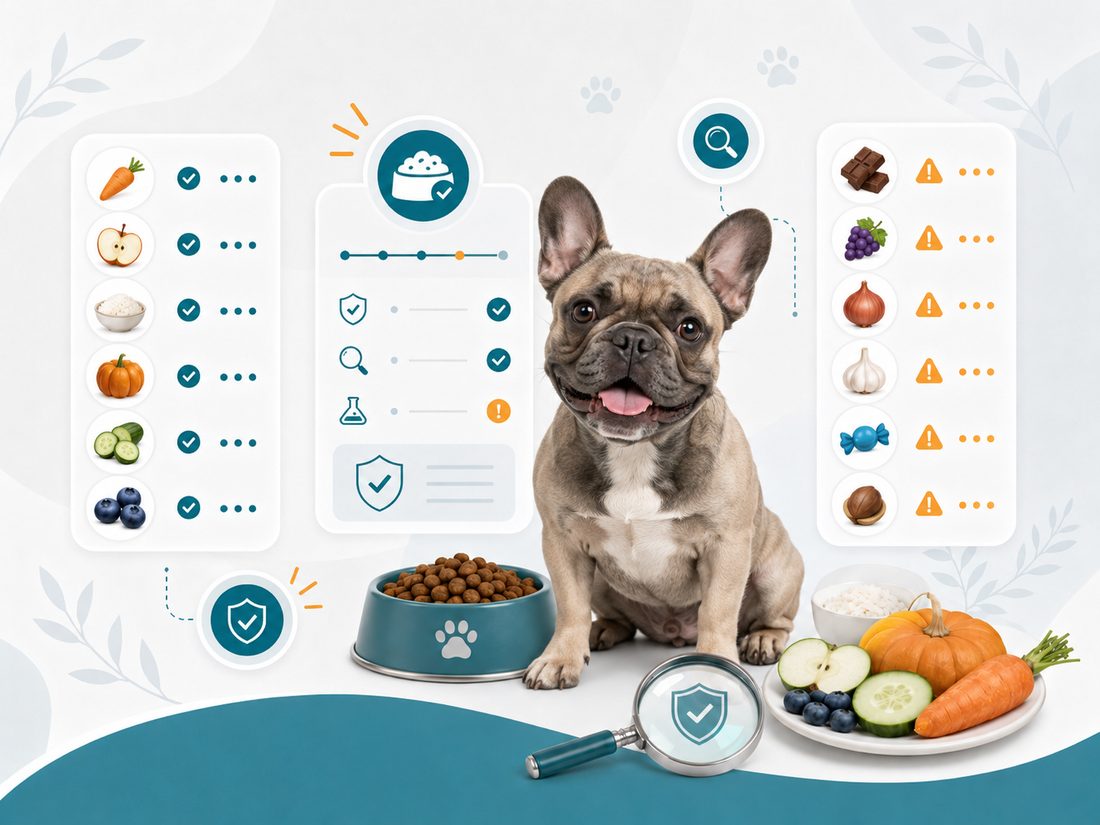
Dog Food Safety Checker
Check whether a human food is safe, toxic, or dangerous for your dog. Search 138 foods with veterinary-sourced safety ratings, toxic dose calculations, symptom lists, emergency actions, and safe serving guidance.
"Can my dog eat this?" is one of the most-searched dog owner questions — and getting the answer wrong can mean an emergency vet visit or worse. This tool gives you instant, veterinary-sourced safety ratings for common human foods, identifies the toxic compound and dose thresholds where known, and tells you exactly what to do if your dog has already eaten something dangerous. For safe foods, it explains how to serve them and how much is appropriate.
Check if a food is safe for your dog
Type any food, ingredient, or common household item to check whether it is safe for dogs.
This tool is for general guidance only. It is not a substitute for professional veterinary advice. If your dog has eaten something potentially harmful, contact your vet or an emergency animal poison helpline immediately. Individual dogs may react differently to foods — allergies, sensitivities, and pre-existing conditions can change risk levels.
How the food safety checker works
The tool matches your search against a curated registry of 138 human foods and ingredients (with over 800 search aliases). Each entry is rated against published veterinary toxicology sources — not AI-generated content or user-submitted data.
- Safety ratings
- Every food gets one of four ratings: Safe (fine to feed with normal serving guidance), Caution (conditionally safe with specific preparation or portion limits), Dangerous (physical harm risk like choking or obstruction), or Toxic (contains compounds that are poisonous to dogs).
- Toxic compounds and doses
- For toxic foods, the tool identifies the specific toxic compound (e.g. theobromine in chocolate, xylitol in sugar-free products) and, where published thresholds exist, the approximate toxic and lethal doses per kilogram of body weight.
- Weight-based dose calculator
- If you enter your dog's weight, the tool calculates personalised toxic dose thresholds — for example, how many grams of theobromine would be concerning for a 10 kg dog vs. a 30 kg dog. These are approximate thresholds from published literature; individual sensitivity varies.
- Emergency guidance
- Toxic and dangerous foods include a "What to do" section with source-backed emergency actions — whether to induce vomiting (usually: don't, unless a vet directs you to), when to call your vet vs. an emergency helpline, and what to bring or tell them.
- Serving guidance for safe foods
- Safe foods include preparation instructions (e.g. remove apple seeds, cook salmon thoroughly), nutrition highlights, and portion limits — following the general veterinary guideline that treats should be under 10% of daily calories.
This tool is for general guidance — it does not replace professional veterinary advice. If your dog has eaten something you're unsure about, contact your vet.
Read the full food safety methodology →Worked example: Chocolate vs. Peanut butter
Two foods that dog owners commonly ask about — one toxic, one safe with a critical caveat — illustrate the range of safety ratings and the kind of information the tool provides:
- Search "chocolate" — rated Toxic (high severity).
- Search "peanut butter" — rated Safe, but with a critical xylitol warning.
- Enter your dog's weight to see personalised theobromine dose thresholds for the chocolate result.
← Scroll to see all columns →
| Chocolate | Peanut butter | |
|---|---|---|
| Safety rating | Toxic — Do not feed | Safe to feed |
| Toxic compound | Theobromine + caffeine | None (unless contains xylitol) |
| Risk level | High | Low (check label for xylitol) |
| Symptoms | Vomiting, tremors, seizures, heart arrhythmia | None (xylitol: collapse, seizures, liver failure) |
| Emergency action | Contact vet immediately | Only if xylitol-containing brand |
| Serving guidance | Never feed any amount | 1 tsp (small dog) to 1 tbsp (large dog) |
Chocolate is dangerous because dogs metabolise theobromine much more slowly than humans — a single square of baking chocolate can be a veterinary emergency for a small dog. Peanut butter is a popular and nutritious treat, but the critical safety check is reading the label for xylitol (birch sugar), which causes rapid, life-threatening hypoglycaemia in dogs at very small doses.
Frequently asked questions
- What should I do if my dog ate something toxic?
- Contact your vet or an emergency animal poison helpline immediately. Do not wait for symptoms to appear — early treatment (within the first 1-2 hours) significantly improves outcomes for most toxic ingestions. Do not induce vomiting unless specifically directed by a veterinary professional, as some substances can cause more damage on the way back up. Have the packaging or food item available so your vet can assess the amount consumed.
- Can dogs eat chocolate?
- No. Chocolate contains theobromine and caffeine, both of which are toxic to dogs. Baking chocolate and dark chocolate are the most dangerous (highest theobromine concentration), while white chocolate is the least toxic but still high in fat. The toxic dose depends on the type of chocolate, the amount, and your dog's weight. Any chocolate ingestion warrants a call to your vet, especially for small dogs or dark/baking chocolate.
- Are grapes and raisins really dangerous for dogs?
- Yes — grapes, raisins, sultanas, and currants can all cause acute kidney failure in some dogs. The exact toxic compound is still under investigation (tartaric acid is suspected), and there is no established safe dose — some dogs develop kidney failure after just a few grapes while others show no symptoms. Because the risk is unpredictable and the consequences are severe, all grape and raisin ingestion should be treated as a veterinary emergency.
- Is peanut butter safe for dogs?
- Plain, unsweetened peanut butter without xylitol is safe in moderation and is a popular enrichment treat (e.g. stuffed in Kongs). The critical safety check is the ingredient list: some sugar-free or "natural" peanut butter brands contain xylitol (birch sugar), which is extremely toxic to dogs — causing rapid hypoglycaemia and potential liver failure. Always read the label before sharing peanut butter with your dog.
- Can my dog eat raw meat or bones?
- Raw meat carries Salmonella, E. coli, and parasite risks per FDA and AVMA guidance. Cooked bones (especially chicken and pork) are dangerous because they splinter into sharp fragments that can puncture the digestive tract or cause obstructions. Raw, appropriately-sized recreational bones under supervision are less risky but still carry infection and dental-fracture risks. If you are considering a raw diet, consult a veterinary nutritionist for a properly formulated plan.
- How does this food safety checker work?
- The tool searches a curated database of 138 human foods and ingredients (with over 800 aliases covering common "can dogs eat X" queries) against veterinary toxicology sources (ASPCA, AKC, Merck Veterinary Manual, Pet Poison Helpline, VCA). Each entry has a safety rating (safe, caution, dangerous, toxic), the toxic compound and dose thresholds where known, symptom descriptions, emergency action steps, and serving guidance for safe foods. If you enter your dog's weight, the tool calculates approximate toxic dose thresholds personalised to your dog. It does not replace professional veterinary advice.
See something outdated, unclear, or incorrect? We welcome corrections — just send us the page URL, the issue, and a supporting source if available.
Submit a correction →When checking a food, what do you need fastest?
Help improve PupWiki with one quick anonymous answer.
Browse all tools →