
Health information is educational only. Always consult your veterinarian.
Few topics in dog ownership generate as much debate as raw versus kibble feeding. Advocates on both sides make strong claims, but what does the actual evidence say? This guide examines the nutritional science, documented safety risks, cost realities, and veterinary consensus for each approach. PupWiki does not advocate for either side -- we present the evidence and let you decide what is right for your dog.
Note: This guide covers general nutritional principles based on published veterinary research, AVMA and FDA position statements, and AAFCO guidelines as of 2026. Individual dogs may have specific needs, allergies, or medical conditions that require tailored dietary advice. Consult your veterinarian before making significant changes to your dog's diet.
What raw feeding actually involves
Raw feeding is not simply tossing your dog a chicken breast. There are two dominant models, each with specific requirements for nutritional balance:
The BARF model (Biologically Appropriate Raw Food)
Developed by veterinarian Ian Billinghurst in the 1990s, the BARF model typically consists of 60-80% raw meaty bones (chicken backs, turkey necks, lamb ribs), 10-15% organ meat (liver, kidney, heart), 5-10% vegetables and fruit (pureed or lightly steamed for digestibility), and small amounts of eggs, yogurt, or fish oil. The emphasis is on variety across protein sources and organ types to approximate whole-prey nutritional coverage over time.
The prey model
A stricter approach that aims to replicate what a wild canid would eat: 80% muscle meat, 10% raw edible bone, 5% liver, and 5% other secreting organs. No vegetables, grains, or supplements. Proponents argue dogs have no biological requirement for plant matter; critics point out that wild canids do consume stomach contents of herbivore prey and that the nutritional profile of domesticated livestock differs substantially from wild game.
Both models require sourcing multiple protein types, proper storage and handling of raw meat, and in many cases supplementation (particularly calcium, zinc, and vitamin E) to avoid deficiencies that develop over weeks or months of feeding.
What kibble is and how it is made
Kibble is produced through extrusion -- a high-temperature, high-pressure process that cooks a slurry of meat meals, grains or starches, fats, vitamins, and minerals into uniform pellets. The process gelatinises starches (making them digestible for dogs), destroys most pathogens, and creates a shelf-stable product that can last 12-18 months unopened.
The quality of kibble varies enormously between brands. Key differentiators include protein source and percentage (named meat versus generic "meat meal"), the AAFCO substantiation method (feeding trials versus formulation alone), and whether a veterinary nutritionist was involved in formulation. A premium kibble backed by feeding trials is a fundamentally different product from a budget brand meeting minimums on paper. Our label-reading guide breaks down how to tell the difference.
Critics of kibble point to the high processing temperatures (which may reduce certain heat-sensitive nutrients, compensated by post-extrusion vitamin spraying), reliance on starches as fillers, and the use of synthetic rather than whole-food nutrient sources. Proponents counter that the format delivers consistent, balanced nutrition at accessible price points with virtually zero food safety risk to the household.
Side-by-side comparison
The table below summarises the key differences across six factors. Each factor links to the detailed section in this guide where we examine the evidence.
| Factor | Kibble | Raw |
|---|---|---|
| Nutritional completeness | AAFCO-verified "complete and balanced" when labelled as such; consistent batch-to-batch | Can meet requirements if carefully formulated; high risk of deficiency without expert guidance or supplementation |
| Food safety | Extrusion kills most pathogens; low risk of bacterial contamination to dogs or household | Documented Salmonella, Listeria, and E. coli risk to dogs and humans handling food; FDA and AVMA advise against |
| Monthly cost (30 kg dog) | USD 40-80 for mid-range brands | USD 150-350 depending on sourcing and whether commercial or home-prepared |
| Convenience | Shelf-stable, portion-controlled, no special storage; minimal preparation time | Requires freezer space, thawing schedule, dedicated prep surfaces, rigorous cleanup |
| Dental health | Mild abrasive effect; some dental-specific kibbles carry VOHC seal of acceptance | Raw meaty bones may reduce plaque mechanically; risk of tooth fractures and oral injury from bone fragments |
| Sourcing transparency | Ingredient list regulated by AAFCO; quality varies by brand but is auditable via labels | Owner controls ingredient quality directly; traceability depends on supplier relationships |
Safety evidence: what the research says
Food safety is the most documented area of concern with raw diets, and the institutional positions are clear:
- The FDA has conducted multiple studies on commercially available raw pet food. A 2012 two-year study found Salmonella in 7.6% and Listeria monocytogenes in 16% of raw pet food samples tested. The FDA's official guidance states: "FDA does not believe raw meat foods for animals are consistent with the goal of protecting the public from significant health risks." The agency has issued multiple recalls of raw pet food products for Salmonella and Listeria contamination.
- The AVMA discourages "the feeding to cats and dogs of any animal-source protein that has not first been subjected to a process to eliminate pathogens, because of the risk of illness to cats and dogs, as well as humans." This position is based on published evidence of pathogen shedding by raw-fed animals.
- The AAHA (American Animal Hospital Association) similarly recommends against raw diets due to the "overwhelming body of evidence" for pathogen contamination.
Specific risks
- Salmonella and E. coli -- raw-fed dogs can shed these bacteria in their faeces for days after eating contaminated food, posing a transmission risk to humans (especially children, elderly, and immunocompromised individuals) and other animals in the household
- Bone obstruction -- raw bones, while less prone to splintering than cooked bones, can still cause oesophageal or intestinal obstruction, tooth fractures, and oral lacerations; the risk is higher with weight-bearing bones from large animals
- Parasites -- Toxoplasma, Neospora, and other parasites can be present in raw meat; freezing reduces but does not eliminate all parasitic organisms
Raw feeding proponents counter that proper sourcing, handling, and freezing protocols substantially reduce these risks, and that healthy dogs' gastric pH (around 1-2) provides natural resistance to many foodborne pathogens. While dogs do have greater acid tolerance than humans, this does not eliminate infection risk, and it does not address the transmission risk to human household members.
You can check specific ingredients for dog safety using our Dog Food Safety Checker.
Nutritional completeness: AAFCO versus formulation risk
Kibble that carries an AAFCO "complete and balanced" statement has either been formulated to meet published nutrient profiles or substantiated through feeding trials on real dogs. This provides a measurable, regulated standard. Our nutrition basics guide explains AAFCO standards in detail.
Raw diets, by contrast, are rarely subjected to AAFCO feeding trials. A 2019 study published in the Journal of the American Veterinary Medical Association analysed 200 home-prepared raw and cooked diet recipes (from books, websites, and veterinarians) and found that 95% had at least one nutrient deficiency or excess when compared to NRC and AAFCO minimums. Common deficiencies included zinc, choline, copper, EPA/DHA, vitamin D, and vitamin E.
Commercial raw brands are more likely to meet nutritional standards than home-prepared diets, but the degree of quality control varies. Look for brands that have undergone AAFCO feeding trials or that employ a board-certified veterinary nutritionist (DACVN) for formulation.
If you want to understand how your dog's calorie and nutrient needs are calculated, the Dog Food Calculator walks through the RER/MER formula step by step.
Cost comparison
Cost is a significant practical factor. For a 30 kg adult dog at moderate activity:
Kibble
USD 40-80 / month
- Mid-range AAFCO-complete brands
- Premium brands with feeding-trial substantiation: USD 60-100
- Shelf-stable, minimal waste
- Lower total cost of feeding across a dog's lifetime
Raw
USD 150-350 / month
- Home-prepared (bulk sourcing): USD 120-200
- Commercial raw brands (pre-made patties/rolls): USD 200-350
- Additional costs: supplements, freezer space, dedicated prep tools
- Higher per-calorie cost than any other feeding format
Over a dog's lifetime (10-13 years for a medium breed), the cumulative cost difference can exceed USD 15,000. This does not account for potential veterinary costs associated with nutritional deficiencies or foodborne illness in either direction. Use the Dog Cost Calculator to see how food fits into your breed's total annual costs.
What the veterinary consensus actually is
It is important to distinguish between institutional positions and individual veterinary opinions:
Institutional consensus -- the AVMA, FDA, AAHA, and WSAVA (World Small Animal Veterinary Association) all advise against raw feeding due to documented pathogen risks. These positions are based on published studies, not opinion. They do not claim raw diets cannot meet nutritional needs; they focus on the food safety risk to animals and humans.
Individual veterinarians -- some vets support raw feeding when done under professional guidance, particularly for dogs with specific medical conditions (severe inflammatory bowel disease, certain allergies) that have not responded to conventional diets. A smaller number of veterinarians specialise in raw diet formulation. The critical distinction is between a veterinarian supervising a carefully formulated raw diet for a specific patient versus blanket claims that raw feeding is superior for all dogs.
Board-certified veterinary nutritionists (DACVN) -- most are cautious about raw feeding but will formulate balanced raw diets for clients who are committed to the approach. They emphasise that nutritional adequacy requires regular reformulation and monitoring, not simply following a recipe indefinitely.
Claims versus evidence
Several claims are frequently made about raw diets. Here is what the evidence actually supports:
"Raw-fed dogs have shinier coats"
Plausible but uncontrolled. Higher fat content in many raw diets can improve coat condition. However, this effect can be replicated with any diet providing adequate omega-3 and omega-6 fatty acids. No controlled studies have compared coat quality between nutritionally equivalent raw and kibble diets.
"Raw food is more digestible"
Partially true, partially misleading. Raw meat protein is highly digestible, but cooked starches in kibble are also well-digested by dogs. Apparent digestibility studies show quality kibble achieves 80-90% digestibility. Smaller, firmer stools on raw diets reflect lower fibre and higher digestibility of animal protein, not necessarily better overall nutrition.
"Dogs are wolves and should eat like wolves"
Inaccurate. Domestic dogs diverged from wolves over 15,000 years ago. Genomic research (Axelsson et al., 2013) identified key genetic differences in starch digestion (AMY2B gene copies) between dogs and wolves. Dogs are not wolves -- they have adapted to a more omnivorous diet through domestication. Basing canine nutrition on wolf diets ignores these evolutionary changes.
"Kibble causes cancer / allergies / shorter lifespan"
Not supported by evidence. No peer-reviewed study has established a causal link between feeding AAFCO-complete kibble and increased cancer rates, allergy prevalence, or shortened lifespan. Food allergies in dogs are most commonly triggered by specific proteins (beef, dairy, chicken), not by the format of the food.
Practical considerations for each approach
If you choose kibble
- Select a brand with an AAFCO "complete and balanced" statement -- ideally substantiated by feeding trials
- Check that a named animal protein is the first ingredient, not a generic "meat meal"
- Use our label-reading guide to decode the guaranteed analysis
- Measure portions by weight (grams) rather than volume (cups) for accuracy
- Use our feeding guide to calculate your dog's daily calorie needs
- Consider rotating protein sources periodically to reduce the risk of developing sensitivities
- Store kibble in the original bag inside an airtight container to preserve fat-soluble vitamins
If you choose raw
- Work with a board-certified veterinary nutritionist (DACVN) to formulate or verify your recipe
- Source meat from reputable suppliers; consider human-grade sourcing where possible
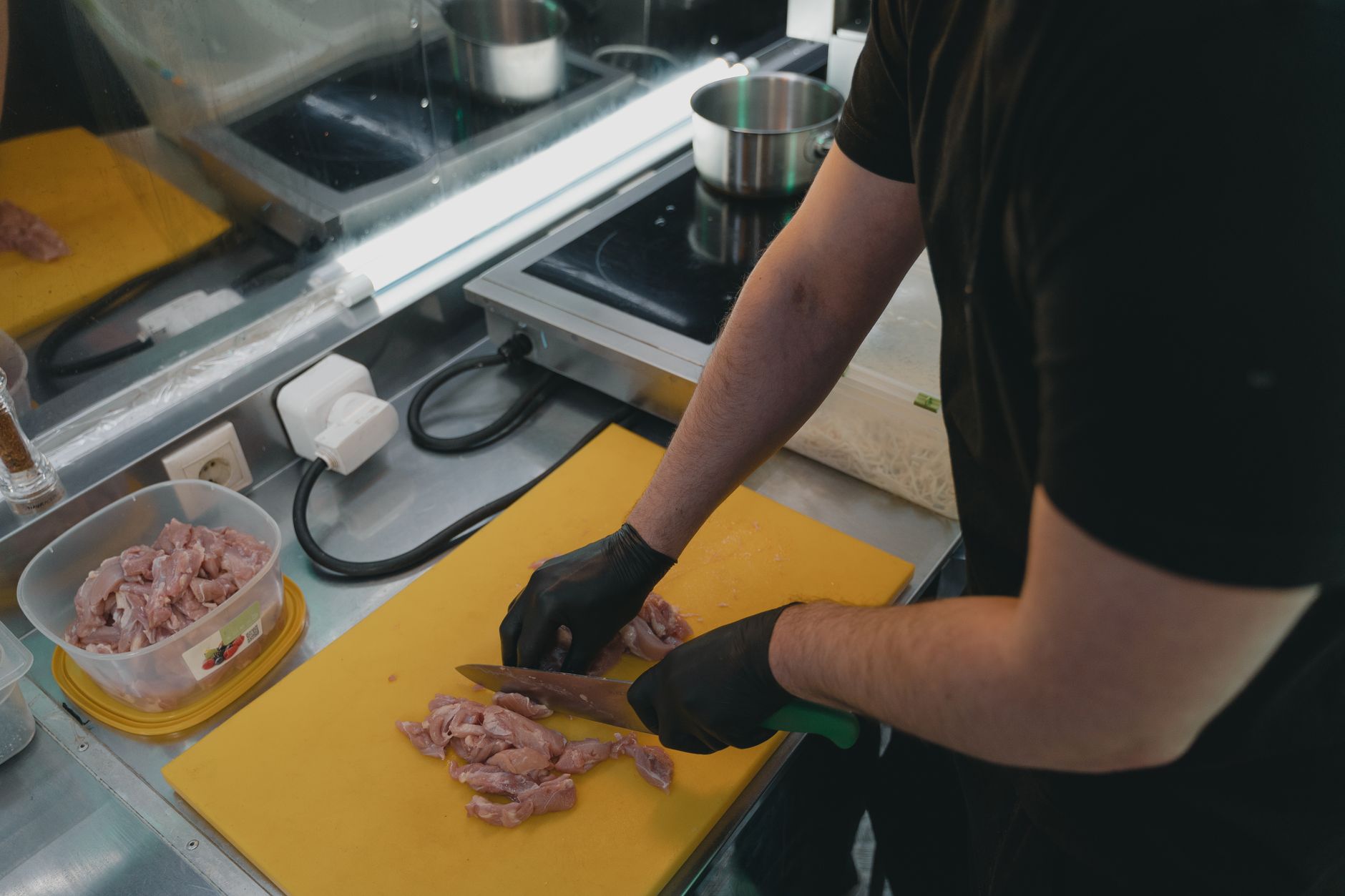
- Handle raw food with the same hygiene protocols as raw meat for human consumption: separate cutting boards, immediate sanitisation, hand washing
- Freeze portions at minus 20 degrees Celsius for a minimum of 3 days to reduce parasitic risk
- Do not feed raw diets to immunocompromised dogs, puppies under 12 weeks, or in households with infants, elderly, or immunocompromised people without veterinary clearance
- Monitor your dog's weight and body condition monthly; recalculate portions as needed using our food calculator
- Budget for periodic nutritional analysis or veterinary check-ups to catch deficiencies early
Where size and breed matter
Not all dogs face the same considerations. Our breed-size feeding guide covers size-specific nutritional needs in detail, but here are the key raw-vs-kibble factors:
- Large and giant breeds -- calcium-to-phosphorus ratio is critical during growth. Improperly balanced raw diets pose a higher risk of developmental orthopaedic disease in large-breed puppies than AAFCO-formulated puppy kibble designed for large breeds.
- Small breeds -- higher metabolic rate per kilogram means nutrient density matters more. Small-breed dogs on improperly formulated raw diets can develop deficiencies faster due to their smaller margin for error on a per-meal basis.
- Brachycephalic breeds -- breeds like Bulldogs and Pugs may struggle with raw bone consumption due to jaw structure; bone fragments pose a higher choking and obstruction risk.
Bottom line
Both raw and kibble diets can meet a dog's nutritional requirements. The evidence does not support the claim that one format is inherently superior to the other for healthy dogs. The real questions are practical:
- Can you afford the three-to-six-times cost premium of raw feeding over the dog's lifetime?
- Are you prepared to handle raw meat safely every day, with rigorous hygiene protocols?
- Does your household include young children, elderly, or immunocompromised people who face higher pathogen risk?
- Will you work with a veterinary nutritionist to ensure nutritional completeness, or are you comfortable relying on AAFCO-substantiated kibble?
- Is your dog a puppy, a large breed, or immunocompromised -- factors that increase the stakes of nutritional imbalance or pathogen exposure?
Whichever approach you choose, the non-negotiable requirement is the same: the diet must be nutritionally complete and balanced for your dog's life stage. Format is secondary to formulation.
Frequently asked questions
- Is raw food healthier than kibble for dogs?
- There is no peer-reviewed evidence proving that raw diets produce better health outcomes than nutritionally complete kibble. Some owners report shinier coats and smaller stools on raw, but these observations have not been confirmed in controlled studies. Both formats can meet a dog's nutritional requirements when properly formulated. The key variable is nutritional completeness, not the format itself.
- Can I mix raw and kibble?
- Yes, many owners feed a combination. The common claim that raw and kibble digest at different rates and cause digestive problems is not supported by veterinary evidence. The main practical concern is food safety: handle raw portions with the same hygiene precautions you would use for raw meat in human cooking. Ensure the combined diet still meets AAFCO nutritional requirements for your dog's life stage.
- What does the vet say about raw feeding?
- The AVMA, FDA, and AAHA all advise against feeding raw or undercooked animal-source protein to dogs due to documented pathogen risks (Salmonella, Listeria, E. coli). The AVMA's position statement cites peer-reviewed studies showing bacterial contamination in commercial raw diets. Individual veterinarians vary in their stance, but the institutional consensus prioritises food safety concerns over anecdotal benefits.
- Is kibble bad for dogs?
- No. Kibble that carries an AAFCO "complete and balanced" statement meets established nutritional minimums for the stated life stage. The extrusion process makes starches more digestible and eliminates most pathogens. Quality varies between brands, so look for products substantiated by feeding trials rather than formulation alone. The main limitation of kibble is lower moisture content compared to wet or raw food.
- How much does raw feeding cost compared to kibble?
- Raw feeding typically costs three to six times more than mid-range kibble for the same dog. A 30 kg dog might cost USD 40-80 per month on quality kibble versus USD 150-350 per month on a balanced raw diet (including organ meats, bone, and supplements). Commercial raw brands with pre-made patties or rolls tend to be at the higher end. Home-prepared raw can be cheaper but requires more time and nutritional knowledge.
- Are commercial raw diets safer than home-prepared raw?
- Commercial raw diets that use high-pressure processing (HPP) reduce but do not eliminate pathogen risk. However, multiple FDA and independent studies have found Salmonella and Listeria in commercially sold raw pet foods. Home-prepared raw diets carry the same bacterial risks plus a higher risk of nutritional imbalance unless formulated by a board-certified veterinary nutritionist. Neither format eliminates the food safety concerns that the AVMA and FDA highlight.


