
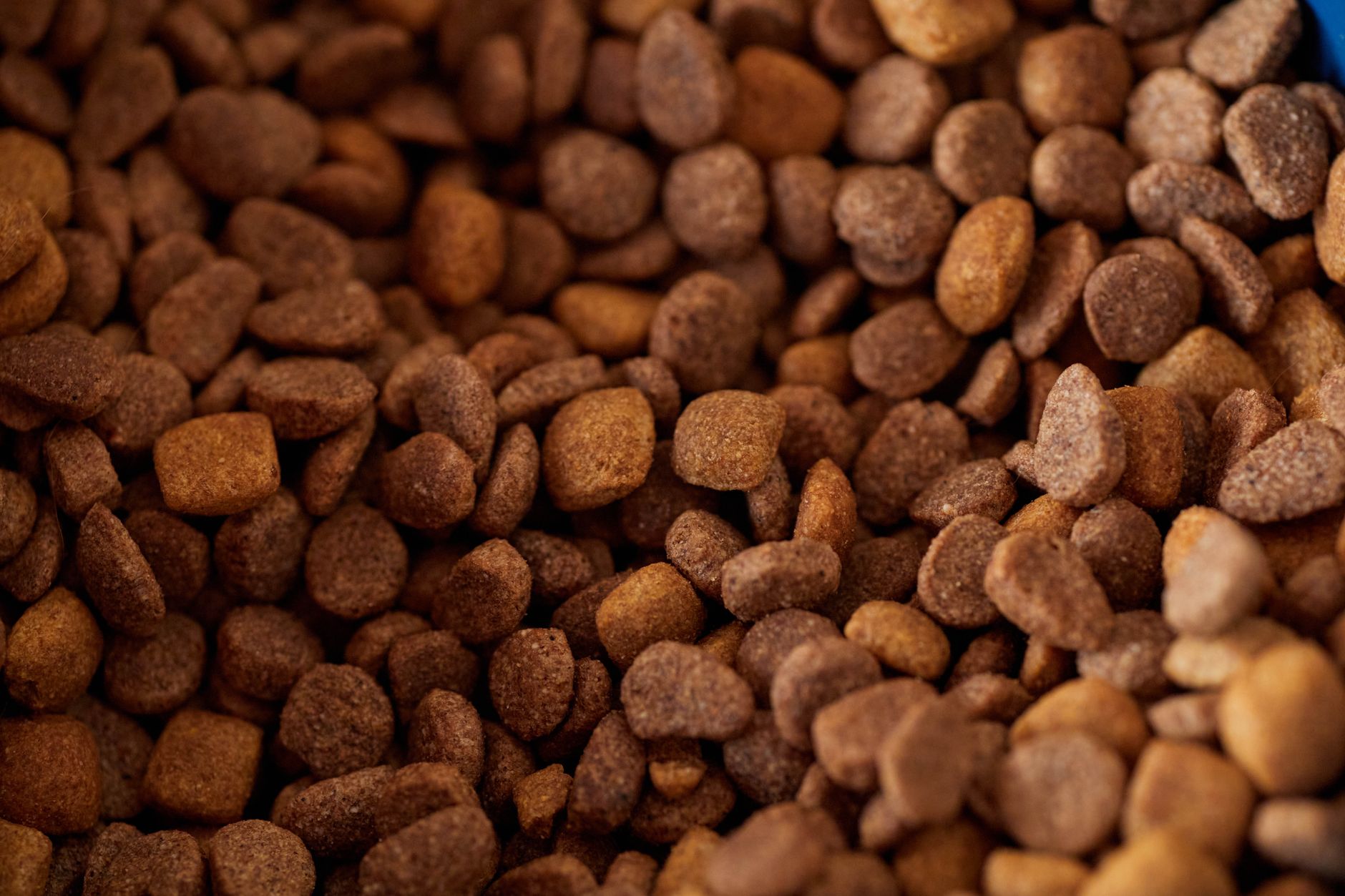
Why label reading matters
Pet food is a $50 billion industry with heavily marketed packaging. "Premium", "natural", "holistic", "human-grade" — none of these terms have regulatory definitions. What does have a regulatory definition is the AAFCO nutritional adequacy statement, the ingredient list order rules, and the guaranteed analysis.
Understanding three things gives you 90% of what you need: the AAFCO statement (is this food nutritionally complete?), the guaranteed analysis (how much protein, fat, fiber, and moisture?), and the ingredient list structure (what's actually in there?).
The AAFCO nutritional adequacy statement
Every complete dog food sold in the US must carry an AAFCO nutritional adequacy statement. It tells you three things:
- Which life stage the food is formulated for: adult maintenance, growth (puppies), all life stages, or senior (note: "senior" is not an AAFCO-defined life stage — it's a marketing claim)
- How it was established: either by formulation (the recipe meets AAFCO nutrient profiles on paper) or by feeding trials (dogs were actually fed the food and tested)
- Whether it's complete and balanced: a food that says "for intermittent or supplemental feeding only" is NOT complete and balanced — fine as a topper, not as the sole diet
How ingredient lists work
Ingredients are listed by weight before cooking. This creates the "meat first" illusion: fresh chicken may be listed first because it's heavy (70% water), but after cooking, the water cooks off and chicken drops significantly in the final composition.
What to look for
- Named protein first: "chicken", "beef", "salmon" — species-specific is better than vague "meat" or "animal"
- Named meat meals are fine: "chicken meal" or "salmon meal" is dried, concentrated protein — often higher in protein per gram than fresh meat after cooking
- Whole grains vs fragments: "brown rice" is better than "brewers rice" (the low-nutrient fragments left after brewing)
- Fats should be named: "chicken fat" is preferable to "animal fat"
What not to panic about
- By-products: organ meats are nutrient-dense; the word "by-product" is not inherently a red flag — unnamed species is the concern
- Preservatives like mixed tocopherols (vitamin E): these are natural antioxidants used to preserve fat; fine
- Grains: wheat, corn, and rice are digestible carbohydrate sources for most dogs; grain-free is not proven superior and carries potential cardiac concerns (see FAQ)
Legitimate red flags
- Unnamed protein sources: "meat", "animal digest", "poultry" (no species specified)
- Multiple grain fragments listed separately (e.g., "ground corn, corn gluten meal, corn bran") — each separately listed lowers its position; combined they'd be the main ingredient
- No AAFCO statement, or "for supplemental feeding only" as the sole diet
- Extremely long lists of synthetic vitamins and minerals with minimal whole-food ingredients
Guaranteed analysis: reading the numbers
The guaranteed analysis lists minimum or maximum percentages for four nutrients:
| Nutrient | Reported as | What it means |
|---|---|---|
| Crude protein | Minimum % | At least this much protein. Can include non-meat protein sources. |
| Crude fat | Minimum % | At least this much fat. Energy density indicator. |
| Crude fiber | Maximum % | No more than this much fiber. High fiber = lower caloric density. |
| Moisture | Maximum % | Critical for comparing wet vs dry food fairly. Dry: ~10%. Wet: ~75–80%. |
Comparing wet and dry: dry matter basis
To compare foods with different moisture levels, convert to dry matter basis (DMB):
Example: Wet food with 9% protein and 78% moisture: 9 / (100-78) x 100 = 40.9% protein DMB. A dry food with 28% protein and 10% moisture: 28 / 90 x 100 = 31.1% protein DMB. The wet food has more protein per dry ounce despite looking lower on the label.
Marketing claims: what they mean (and don't)
| Claim | Regulated? | What it actually means |
|---|---|---|
| Complete and balanced | Yes (AAFCO) | Meets minimum nutrient profiles for stated life stage |
| Human-grade | Partially | Ingredients were "edible" when sourced — not that the finished product was made in a human food facility |
| Natural | Yes (AAFCO) | No chemically synthesized ingredients — but synthetic vitamins/minerals are excepted with disclosure |
| Organic | Yes (USDA) | Ingredients produced without synthetic pesticides/fertilizers per USDA standards — same as human food |
| Holistic | No | Marketing term with no regulatory definition — ignore it |
| Premium / Super premium | No | Marketing term with no regulatory definition — ignore it |
| Grain-free | No | Contains no cereal grains — does not mean lower carb or higher quality |
Life stage: getting the right formula
AAFCO defines three meaningful life stage categories for dogs:
- Growth (puppies): higher calorie, protein, calcium, and phosphorus requirements than adults. Large and giant breed puppies need controlled calcium growth — standard puppy food can cause skeletal problems in breeds over 55 lbs. Look for "large breed puppy" formulas for large/giant breeds.
- Adult maintenance: for healthy adults. Most dogs do well on quality adult maintenance food throughout their life.
- All life stages: must meet the more demanding growth requirements — suitable for puppies, pregnant/nursing females, and adults. Not harmful for adult dogs but often unnecessarily calorie-dense.
A practical label-reading checklist
- AAFCO statement present and says "complete and balanced" for the right life stage
- Named protein source in the top 3 ingredients (chicken, beef, salmon, etc.)
- No unnamed protein sources (avoid "meat", "animal digest")
- Moisture % noted — use dry matter basis if comparing to wet food
- No "for supplemental or intermittent feeding only" if this is your dog's sole diet
- For large breed puppies: label specifically says "large breed puppy" or large breed growth formula
Frequently asked questions
- What does "AAFCO complete and balanced" mean on dog food?
- It means the food has been formulated to meet the minimum nutrient profiles established by the Association of American Feed Control Officials (AAFCO) for a specific life stage. Either by formulation (calculated to meet profiles) or by feeding trial (tested on actual dogs). It does not mean the food is premium or optimal — only that it clears the minimum nutritional threshold.
- Are meat by-products bad for dogs?
- Not inherently. By-products include organ meats (liver, kidney, lung), which are nutrient-dense parts humans typically discard. A chicken by-product meal from a reputable manufacturer can be a higher-quality protein source than a vague "meat meal" from an unnamed species. Specificity matters more than the word "by-product" itself.
- How do I compare wet and dry dog food nutritionally?
- Always compare on a dry matter basis. Wet food is typically 75–80% moisture; dry food is 10%. To compare, subtract moisture percentage from 100, then divide the nutrient (e.g., protein %) by that number and multiply by 100. A wet food with 8% protein at 78% moisture = 8 / (100-78) × 100 = 36% protein on a dry matter basis.
- What does "grain-free" mean and is it better?
- "Grain-free" means the food substitutes grains (wheat, corn, rice, oats) with other carbohydrate sources like potatoes, peas, or lentils. It is not inherently better — most dogs digest grains well. The FDA investigated a potential link between grain-free diets high in legumes and dilated cardiomyopathy (DCM) in dogs; the research is still ongoing. Grain-free is a preference choice, not a nutritional upgrade for most dogs.
- How important is the ingredient order on a dog food label?
- Ingredients are listed by weight before processing. This means a whole meat listed first (e.g., "chicken") may be mostly water. After cooking, a meat meal (e.g., "chicken meal") — which is already dried — may actually contribute more protein by weight. Look at the overall nutritional analysis and AAFCO statement, not just whether meat is the first ingredient.


