
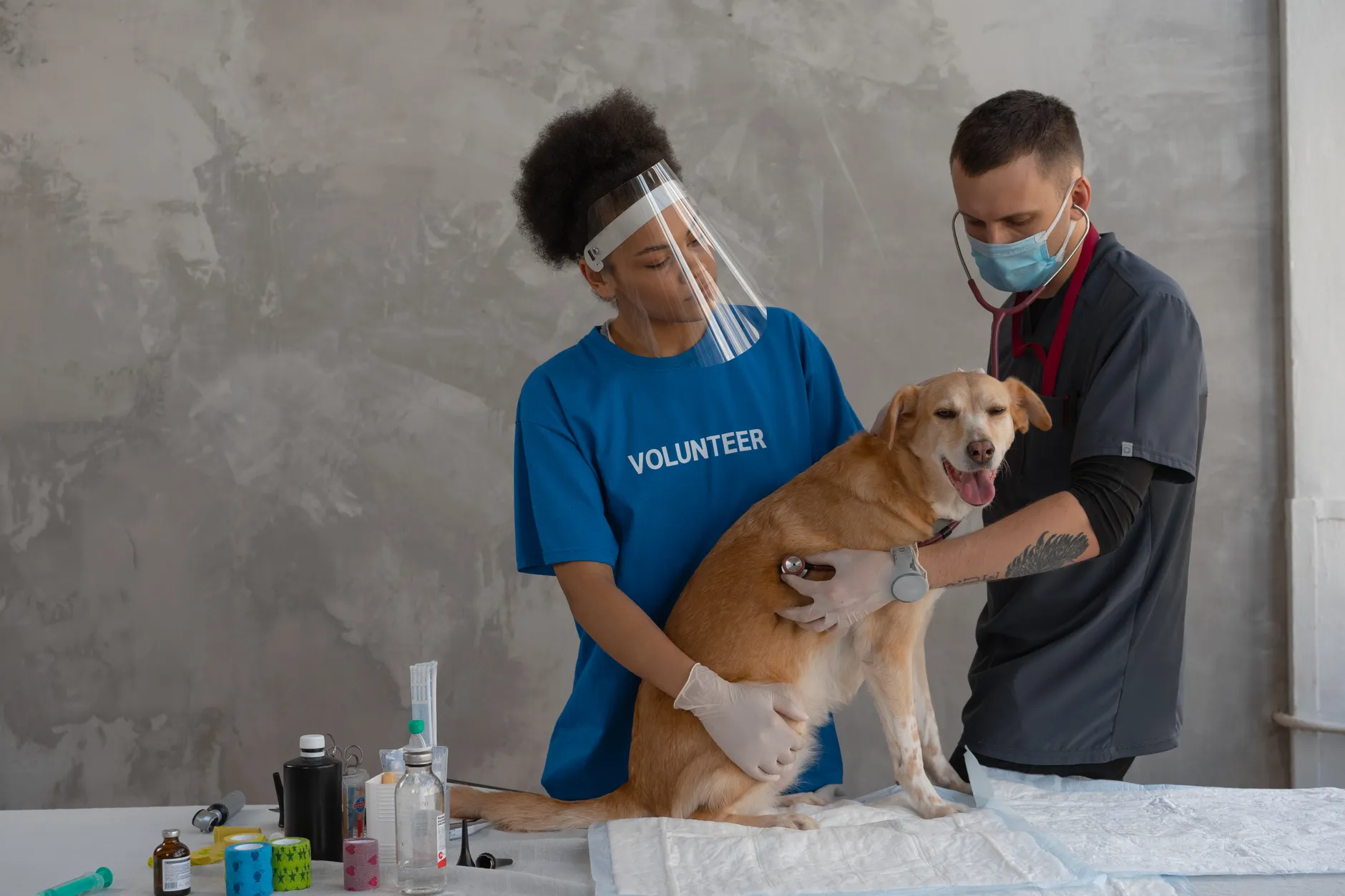
Health information is educational only. Always consult your veterinarian.
If you have ever wondered whether your dog is at a healthy weight, you have probably looked at the number on the scale. But weight alone is surprisingly unreliable — a 30 kg Labrador Retriever and a 30 kg Border Collie have very different builds, and "ideal weight" varies enormously even within a single breed depending on frame size and muscle mass. Body condition score (BCS) solves this problem. It is a standardised, hands-on assessment that veterinarians use at every clinical exam, and it works just as well when you do it at home. No equipment needed, no breed-specific charts to look up — just three quick checks that tell you more than any scale can.
What body condition score is
Body condition score is a standardised system for assessing a dog's fat coverage and body shape, independent of breed or body weight. The most widely used version is the 9-point scale, endorsed by the World Small Animal Veterinary Association (WSAVA) and the American Animal Hospital Association (AAHA):
- 1 = severely emaciated (bones prominently visible, no body fat, obvious muscle wasting)
- 5 = ideal condition (ribs easily felt with light pressure, visible waist, clear abdominal tuck)
- 9 = severely obese (ribs buried under heavy fat deposits, no waist, pendulous abdomen)
The scale works because it assesses fat relative to the dog's own skeletal frame rather than comparing against a breed-average weight number. A BCS of 5 looks different on a Whippet than on a Bulldog, but the underlying assessment — can you feel the ribs, can you see a waist, is there an abdominal tuck — is the same for both.
Veterinarians record BCS during routine exams because it is more clinically useful than weight alone. It detects gradual changes that a scale might miss (a dog can gain fat while losing muscle and show no weight change at all), and it gives a clear, actionable target: get to BCS 4-5 and stay there.
How to assess BCS at home: the 3-step check
You can assess your dog's body condition at home in under a minute. Have your dog stand relaxed on a level surface — not sitting, not lying down — and perform these three checks in order:
- Feel the ribs. Place both hands on your dog's ribcage, thumbs along the spine, fingers spread over the ribs. Apply light pressure — about the same pressure you would use to feel the bones on the back of your own hand. You should be able to feel each rib individually through a thin layer of fat. If you can feel ribs without any pressure at all, your dog is likely underweight. If you need to press firmly to find the ribs, or cannot feel them at all, your dog is likely overweight.
- View the waist from above. Stand directly above your dog and look down. Behind the last rib, you should see a visible narrowing — an "hourglass" indent — before the hips widen again. If the body is a straight line from ribs to hips, or if the area between ribs and hips bulges outward, this indicates excess fat.
- View the abdominal tuck from the side. Crouch or kneel beside your dog and look at the underline profile from ribcage to hind legs. The belly should angle upward from the deepest point of the chest toward the hind legs, creating a visible "tuck." A belly that hangs level with the chest, or sags below it, indicates excess weight. A very pronounced tuck with a visibly drawn-up abdomen may indicate underweight.
These three checks — rib feel, overhead waist, side-profile tuck — are the same assessment your veterinarian performs during every clinical exam. Doing them at home monthly gives you an early warning system for gradual weight changes that are easy to miss in a dog you see every day.
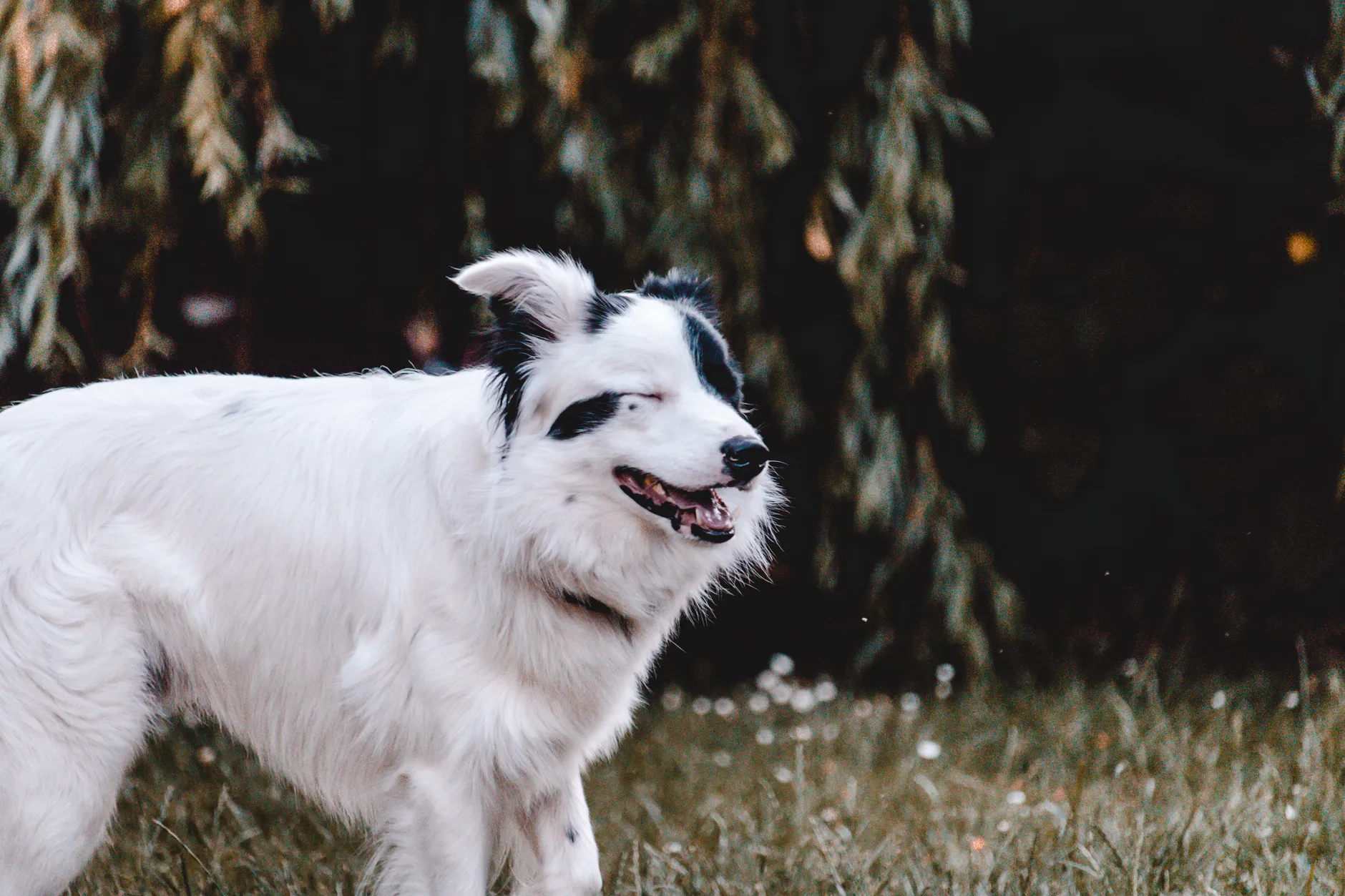
The 9 BCS scores explained
Each score on the 9-point scale corresponds to a specific combination of visible and palpable features. Use this reference alongside your hands-on assessment:
- BCS 1-2: Emaciated to very thin
- Ribs, spine, and hip bones are prominently visible with no palpable fat cover. Muscle wasting is evident, particularly over the spine and hind legs. The waist and abdominal tuck are extremely pronounced. Dogs at this score require immediate veterinary attention — the cause may be malnutrition, parasites, dental disease preventing eating, or a serious underlying medical condition.
- BCS 3-4: Underweight to lean
- Ribs are easily felt with minimal fat covering and may be slightly visible in short-coated breeds. The waist is obvious from above and the abdominal tuck is clearly defined. A BCS of 4 is within normal range for many naturally lean breeds (Whippets, Greyhounds, Vizslas). A BCS of 3 in a breed that should carry more cover warrants investigation — calorie intake may be insufficient for the dog's activity level, or there may be a medical issue.
- BCS 5: Ideal
- Ribs are felt with light pressure through a thin layer of fat — not visible (except in very short-coated breeds), but easy to count individually without pressing hard. A clear waist is visible from above. A distinct abdominal tuck is visible from the side. This is the target for most dogs and the score associated with the longest lifespan and lowest disease risk in longitudinal studies.
- BCS 6-7: Overweight
- Ribs are palpable but require more than light pressure to feel — there is a noticeable fat layer over the ribcage. The waist is less distinct or absent when viewed from above. The abdominal tuck is reduced or flat. Fat deposits may be visible at the base of the tail, over the hips, and along the neck. At BCS 7, the dog is roughly 15-20% above ideal weight and at increased risk for joint problems, reduced mobility, and heat intolerance.
- BCS 8-9: Obese to severely obese
- Ribs are very difficult or impossible to feel under a thick fat layer. No waist is visible — the body may bulge outward between ribs and hips. The abdomen may hang level with or below the chest line (pendulous abdomen). Heavy fat deposits are present on the neck, limbs, and base of the tail. Dogs at BCS 8-9 are at significantly elevated risk for osteoarthritis, diabetes, breathing difficulty, cardiovascular stress, and reduced lifespan. A veterinary-supervised weight-loss plan is strongly recommended at this stage.
Calculating target weight from BCS
Once you know your dog's current BCS, you can estimate how far they are from ideal and set a realistic target weight. The general principle is that each BCS point above 5 represents roughly 10-15% excess body weight, though this varies with individual dogs.
A commonly used estimation approach:
- BCS 6 — approximately 10-15% above ideal weight
- BCS 7 — approximately 15-25% above ideal weight
- BCS 8 — approximately 25-35% above ideal weight
- BCS 9 — approximately 35-45% or more above ideal weight
Worked example: A Labrador Retriever weighing 38 kg with a BCS of 7. At BCS 7, the dog is estimated to be roughly 20% above ideal weight. Target weight = 38 kg / 1.20 = approximately 31.7 kg. This gives a weight-loss target of about 6.3 kg, which at the recommended 1-2% per week rate (roughly 300-600 g/week for this dog) would take approximately 10-20 weeks.
These are estimates, not precise calculations. Your veterinarian can refine the target based on breed standards, frame size, and clinical assessment. The important point is that BCS gives you a direction and a rough magnitude — "my dog needs to lose about 6 kg" is far more actionable than "my dog weighs 38 kg" with no reference point.
Our dog weight and body condition checker automates this calculation and provides a calorie budget for safe, gradual weight loss based on your dog's current BCS, weight, and activity level.
Muscle condition score: the assessment BCS misses
Body condition score measures fat. It does not measure muscle. This matters because a dog can lose muscle mass while gaining fat — and the scale might show no change at all. This is particularly common in senior dogs, dogs recovering from illness, and dogs on prolonged calorie restriction without adequate protein.
Muscle condition score (MCS) is a separate, complementary assessment that evaluates muscle mass over the spine, hips, shoulders, and skull. It uses three categories:
- Normal muscle condition
- Muscles over the spine, hips, and shoulders feel well-developed and firm. No bony prominences stand out beyond what is normal for the breed.
- Mild muscle loss
- Slight loss of muscle bulk over the spine or hind legs. May be noticeable as a slightly more prominent spine or hip bones, even if the dog is not underweight by BCS.
- Moderate to severe muscle loss
- Obvious muscle wasting — the spine, hip bones, and shoulder blades are prominent. The dog may have a BCS of 5 or higher (adequate fat) but still show significant muscle depletion. This combination is a red flag that warrants veterinary evaluation.
The key takeaway: a dog can be overweight by BCS and still have poor muscle condition. Weight loss achieved only through calorie restriction, without adequate protein and appropriate exercise, can result in muscle loss alongside fat loss — leaving the dog lighter but not healthier. Our weight and body condition checker includes a muscle condition assessment alongside BCS for a more complete picture.
Using PupWiki's weight and body condition checker
PupWiki's dog weight and body condition checker walks you through the same BCS and MCS assessments described above in a guided, step-by-step format. Based on your answers, it provides:
- A BCS score with an explanation of what it means for your dog
- A muscle condition assessment
- A target weight estimate if your dog is over- or underweight
- A daily calorie budget for safe weight loss or gain, calculated from your dog's resting energy requirement (RER)
- A realistic timeline for reaching target weight at a safe 1-2% per week rate
- Safety flags for any concerns that should prompt a veterinary visit
The tool is not a replacement for veterinary advice — it is a structured way to do the same at-home assessment your vet would recommend between visits, with the added benefit of a calorie estimate so you know how much to feed. If the tool flags any safety concern, it will recommend consulting your vet before making changes.
For calorie-level adjustments and portion sizing once you have a target, the dog food calculator can translate a daily calorie budget into specific cup or gram amounts for your dog's food.
Frequently asked questions
- What is a healthy body condition score for my dog?
- A BCS of 4 to 5 on the 9-point scale is considered ideal for most dogs. At this score, you can feel each rib with light pressure through a thin layer of fat, see a visible waist when viewed from above, and observe a clear abdominal tuck from the side. Some breeds with naturally lean builds (such as Greyhounds and Whippets) may sit at a 4 and look healthy, while stockier breeds may appear slightly different at the same score. If you are unsure, your veterinarian can confirm your assessment during a routine visit.
- My dog looks thin but eats well — is that normal?
- It can be. Some breeds are naturally lean and maintain a BCS of 3 to 4 even with adequate intake — Whippets, Greyhounds, and many working breeds often appear thin to owners used to seeing heavier dogs. However, a dog that is eating normally but losing weight, or that sits at BCS 1 to 2 (ribs, spine, and hip bones visibly prominent with no palpable fat), should be evaluated by a veterinarian. Possible causes include intestinal parasites, malabsorption, dental pain preventing proper chewing, thyroid conditions, or simply a calorie intake that does not match the dog's actual energy expenditure.
- How often should I check my dog's BCS?
- Monthly checks are a good baseline for most adult dogs — weight changes happen gradually and are easy to miss in a dog you see every day. If your dog is on a weight-loss or weight-gain plan, every two weeks is more useful so you can adjust feeding amounts before progress stalls. Puppies growing rapidly and senior dogs with changing metabolism benefit from monthly checks as well. The hands-on rib check takes about 30 seconds and costs nothing, so there is no real downside to checking frequently.
- Can I assess BCS myself or do I need a vet?
- You can absolutely assess BCS at home — that is one of the main advantages of the system. The three-step check (rib feel, overhead waist view, side-profile abdominal tuck) requires no equipment and no special training. Veterinarians use the same scale during clinical exams. Where a vet adds value is in confirming borderline scores, evaluating muscle condition (which is a separate assessment), and diagnosing any underlying reasons for being over- or underweight. Our dog weight and body condition checker walks through the same assessment your vet would perform.
- What is the difference between BCS and BMI for dogs?
- Body mass index (BMI) divides weight by height squared and works reasonably well for humans because we share a similar body plan. Dogs do not — a Dachshund and a Great Dane have completely different proportions, so a single height-to-weight formula is meaningless across breeds. Body condition score bypasses this problem entirely by using a hands-on and visual assessment of fat coverage and body shape, making it valid for any breed, size, or mix. There is no widely accepted canine BMI equivalent in veterinary practice; BCS is the standard.
- How fast should my dog lose weight to reach ideal BCS?
- The American Animal Hospital Association (AAHA) recommends a target of roughly 1 to 2 percent of body weight per week. For a 30 kg (66 lb) dog, that is approximately 300 to 600 g (0.7 to 1.3 lb) per week. Faster loss risks muscle wasting and nutrient deficiencies; slower loss is safer but requires patience. Weigh your dog every one to two weeks on the same scale at the same time of day, and recalculate calorie needs as weight drops — a fixed feeding amount that produced loss at a higher weight will eventually become maintenance at a lower weight. Our dog food calculator can help estimate appropriate calorie targets throughout the process.


