
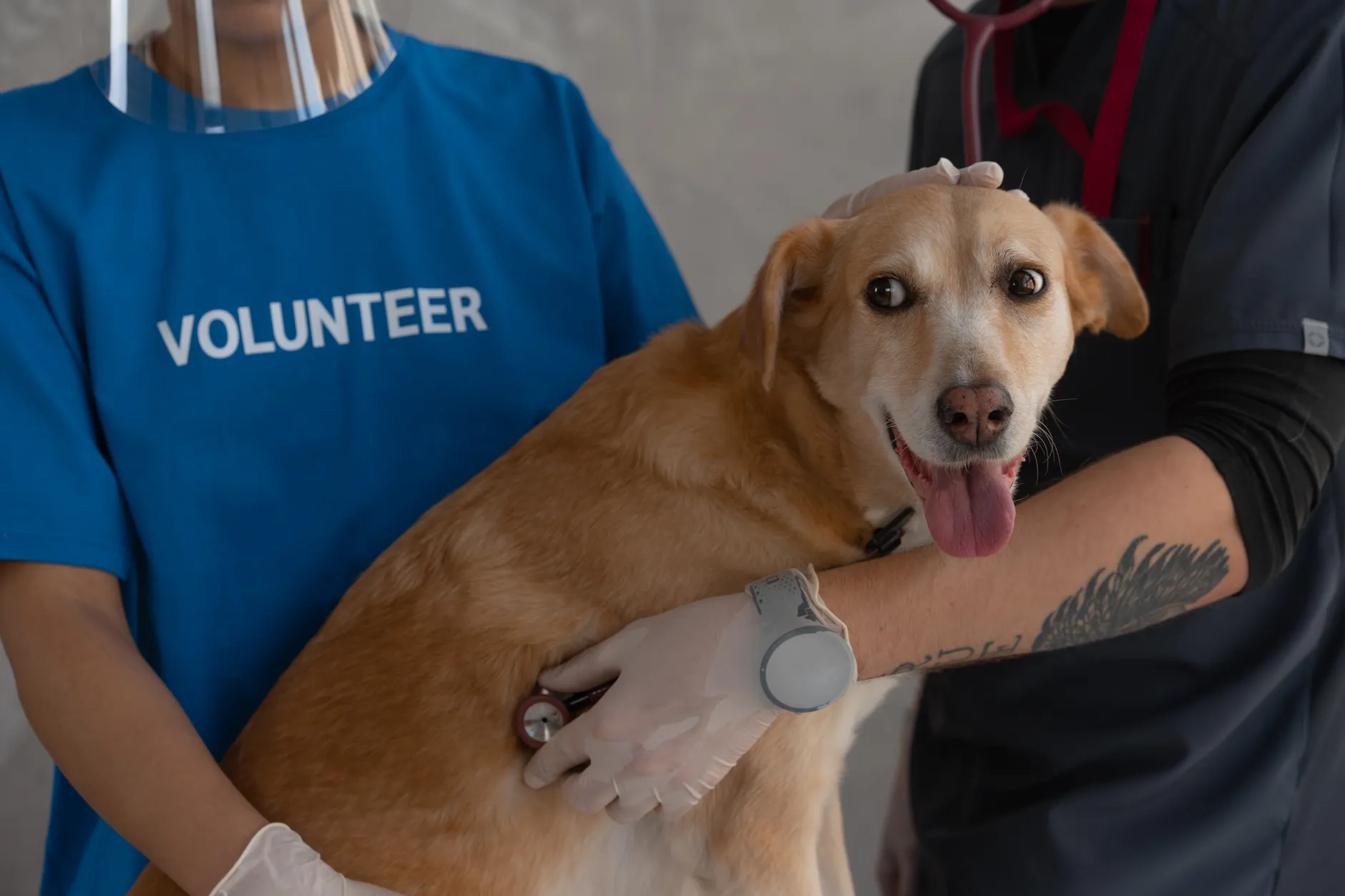
Excess weight is one of the most common — and most preventable — health issues seen in dogs, and one of the easiest for owners to miss, because gradual weight gain is hard to notice in a dog you see every day. The good news is that it is also one of the most directly actionable: unlike many health conditions, weight responds predictably to calorie balance, and even modest weight loss produces measurable improvements in mobility, energy, and long-term health risk.
Why weight matters more than the number on the scale
A "healthy weight" varies enormously between breeds, and even between individuals of the same breed — frame size, build, and muscle mass all play a role. This is why a single target weight in kilograms or pounds is far less useful than body condition score (BCS), a hands-on assessment that works for any dog regardless of breed.
Carrying excess weight is associated with increased risk of osteoarthritis, reduced mobility, breathing difficulty (especially in brachycephalic breeds), diabetes, and a measurably shorter lifespan in studies that have followed dogs over many years. The reverse is also true: dogs brought back to a healthy body condition typically show improved mobility and energy within weeks, often before the scale shows dramatic change.
Body condition score: the at-home check that matters most
The World Small Animal Veterinary Association (WSAVA) body condition score uses a 1–9 scale, with 4–5 representing ideal condition for most dogs. You can assess it at home with three checks, all done with your dog standing relaxed:
- Ribs. With light pressure, you should be able to feel each rib individually under a thin layer of fat — not see them prominently, but feel them without pressing hard.
- Waist. Viewed from above, there should be a visible narrowing behind the ribs. A flat profile or one that bulges outward indicates excess weight.
- Abdominal tuck. Viewed from the side, the belly should angle upward from the ribcage toward the hind legs. A belly that hangs level with or below the chest line indicates excess weight.
Our dog weight and body condition checker walks through this assessment step by step, estimates a target weight range based on your dog's current condition, and calculates a calorie budget for safe, gradual weight loss if needed.
How weight gain happens
Weight gain in dogs is almost always the result of a sustained, often small, daily calorie surplus — and several common factors compound it without owners realising:
- Treats and table scraps add up fast. A single medium training treat can be 5–10% of a small dog's entire daily calorie budget. Multiplied across a day of training, walks, and "just one bite" from the table, treats can easily account for 20% or more of total intake without being counted as "food."
- Activity decreases gradually. As dogs age, mobility issues develop, or routines change (a new job, a house move), exercise often decreases before feeding amounts are adjusted to match.
- Spaying and neutering lowers metabolic rate. Most dogs need fewer calories after the procedure than before — a feeding amount that was appropriate beforehand can result in gradual weight gain afterward if not adjusted.
- Breed predisposition. Labradors, Beagles, Pugs, Dachshunds, Cocker Spaniels, and Basset Hounds are among breeds with well-documented higher rates of obesity, sometimes linked to genetics affecting appetite regulation as well as build.
- "Eyeballing" portions. Scoops and cups vary significantly in volume, and dry kibble density varies between brands — the same "one cup" can represent meaningfully different calorie amounts depending on the food.
Safe weight loss: the evidence-based approach
The American Animal Hospital Association (AAHA) recommends a target weight-loss rate of roughly 1–2% of body weight per week. Faster loss risks muscle wasting and is harder to sustain; slower loss is safer but requires patience and consistent tracking.
- Calculate, don't guess. Start from your dog's resting energy requirement (RER) and reduce from there — typically by around 10–20% below maintenance for gradual loss. Our dog food calculator can help estimate this based on your dog's current weight, target weight, and activity level.
- Weigh regularly, not constantly. Every 1–2 weeks, same scale, same time of day, is enough to track a trend without reacting to normal day-to-day fluctuation.
- Recalculate as weight drops. A calorie allowance that produces loss at a higher starting weight will eventually become a maintenance amount as weight decreases — plans need periodic adjustment, not a single fixed number for the whole process.
- Count everything. Treats, training rewards, dental chews, and any "extras" should come out of the daily calorie budget, not be added on top of it.
Practical strategies that work
- Weigh food, don't scoop it. A kitchen scale removes the single biggest source of portion error — scoop sizes and kibble density both vary widely.
- Substitute low-calorie treats. Small pieces of carrot, green beans, or cucumber can replace some commercial treats for dogs that enjoy them, cutting treat calories significantly without cutting treat frequency.
- Use food for enrichment, not just meals. Splitting the daily allowance across food puzzles and slow feeders extends feeding time, increases mental stimulation, and can reduce begging behaviour — all without adding calories.
- Increase activity gradually. For dogs that are very overweight or have joint issues, start with shorter, more frequent walks and gentle activities like swimming, building up duration as fitness improves — see our dog exercise and enrichment guide for ideas suited to different fitness levels.
- Get the whole household on the same plan. Inconsistent treat-giving between family members is one of the most common reasons weight-loss plans stall — everyone needs to know the daily allowance and what counts toward it.
When weight loss isn't straightforward
If your dog is on an appropriate calorie-restricted plan with accurate tracking and shows no progress over 3–4 weeks, a veterinary check is worthwhile. Conditions such as hypothyroidism and Cushing's disease can cause weight gain or resistance to weight loss independent of intake, and are more common in middle-aged and older dogs. Sudden weight gain, especially alongside other changes such as lethargy, hair coat changes, or increased thirst, should always be checked by a veterinarian rather than managed through diet changes alone.
For dogs that are significantly overweight (BCS 8–9), starting a weight-loss plan with veterinary input is recommended — very overweight dogs may need a more conservative starting calorie target and closer monitoring than the general guidance above provides.
Frequently asked questions
- How do I know if my dog is overweight?
- Weight alone is not a reliable indicator — a healthy weight varies enormously by breed, frame size, and individual. The more useful check is body condition score (BCS): with your dog standing, you should be able to feel (not necessarily see) the ribs under a thin layer of fat with light pressure, see a visible waist when viewed from above, and see an upward abdominal tuck from the side. If ribs are difficult to feel, the waist is flat or bulging, and there is little to no abdominal tuck, your dog is likely overweight. Our dog weight and body condition checker walks through this assessment step by step.
- My dog always seems hungry, even though they are already overweight — why?
- This is extremely common and is not a sign your dog "needs" more food. Dogs are highly motivated by food-seeking behaviour regardless of actual energy needs, and overweight dogs often have disrupted hunger-regulation hormones that make begging worse, not better, as weight increases. The solution isn't more food — it's addressing hunger through volume rather than calories: high-fibre, lower-calorie foods designed for weight loss tend to be more filling per calorie, splitting the daily allowance into more frequent small meals can help, and food puzzles and slow feeders extend mealtime satisfaction. Persistent, severe hunger alongside weight loss attempts is also worth mentioning to your vet, since some medical conditions affect appetite regulation.
- How fast should a dog lose weight safely?
- The American Animal Hospital Association (AAHA) recommends a target of roughly 1–2% of body weight loss per week. For a 30 kg (66 lb) dog, that is approximately 300–600 g (0.7–1.3 lb) per week. Faster loss risks muscle wasting and nutrient deficiencies, particularly in dogs on a calorie-restricted diet for an extended period, and is harder to sustain. Weigh your dog every 1–2 weeks (the same scale, same time of day) and adjust the daily calorie allowance as weight drops — the calories needed to maintain a lower weight are themselves lower, so a fixed feeding amount that worked at the start of a weight-loss plan will eventually stall progress.
- Are weight-management or "light" dog foods worth it?
- They can help, but the label alone does not guarantee results — what matters is the actual calorie density (kcal per cup or per 100 g) compared with what your dog was eating before, not just whether the bag says "light" or "weight management." Some weight-management formulas are also higher in fibre and protein relative to calories, which can help dogs feel fuller on fewer calories — genuinely useful for some dogs. The safest approach is to compare the calorie content of any food against your dog's calculated daily energy needs, which our dog food calculator can help with, rather than relying on the feeding guidelines on the bag, which are often generous estimates for an "average" dog.
- My vet says my dog needs to lose weight, but they seem to eat less than the feeding guidelines suggest — what is going on?
- This is common and usually comes down to one or more of: treats and table scraps that are not being counted (these can easily add up to 20% or more of daily calories without anyone realising), an activity level lower than the food packaging assumes, a metabolic rate that has slowed with age or after spaying/neutering, or — less commonly — an underlying medical condition such as hypothyroidism that lowers metabolic rate independent of food intake. If a genuinely accurate calorie count (including everything your dog eats) over 2–4 weeks shows no progress despite being below your dog's calculated maintenance needs, this is worth discussing with your vet, who can check for medical contributors before adjusting the plan further.


