

Most dog owners choose food based on price, advertising, or word of mouth. But dog nutrition has a clear evidence base — once you understand how to read a label and what life stage requires what, most of the confusion disappears. This guide cuts through the noise.
Note: This guide covers general nutritional principles based on AAFCO guidelines and veterinary consensus as of 2026. Individual dogs may have specific needs, allergies, or medical conditions that require tailored dietary advice. Consult your veterinarian before making significant changes to your dog's diet.
What dogs actually need
Dogs are omnivores — they evolved eating varied diets including meat, organs, bones, and plant matter. Nutritionally, a complete adult dog diet requires six categories:
- Protein — for muscle, tissue repair, and enzyme production. Minimum 18% dry matter for adults (25%+ for puppies). Sources: meat, poultry, fish, eggs.
- Fat — energy density, fat-soluble vitamins (A, D, E, K), and skin/coat health. Minimum 5% dry matter for adults. Omega-3 and Omega-6 ratio matters.
- Carbohydrates — not technically essential, but useful for energy and digestive fibre. Dogs digest starches well once cooked.
- Vitamins — A, D, E, K (fat-soluble) and B-complex, C (water-soluble). Most complete commercial foods supply these.
- Minerals — calcium, phosphorus, potassium, sodium, and trace minerals. Calcium:phosphorus ratio of 1:1 to 2:1 is important, especially for puppies.
- Water — the most critical nutrient. A 10 kg dog needs roughly 500–700 ml of water daily; more in heat or high-activity periods.
The AAFCO standard: the only label claim that matters
The Association of American Feed Control Officials (AAFCO) sets nutritional profiles for dog food. When a food is "complete and balanced," it means it meets AAFCO nutrient minimums for the stated life stage. This is the single most important thing to look for on any dog food label.
Two valid AAFCO statements to look for:
- Formulated to meet AAFCO nutrient profiles — the manufacturer calculated the nutritional content to meet the standard.
- Substantiated by feeding trials — stronger claim; the food was tested on real dogs for a defined period.
Life stages covered: Growth (puppies), Adult Maintenance, and All Life Stages (formulated to the higher puppy requirements). "Complementary" or "for intermittent feeding" foods are not complete and should not be used as a sole diet.
Types of dog food
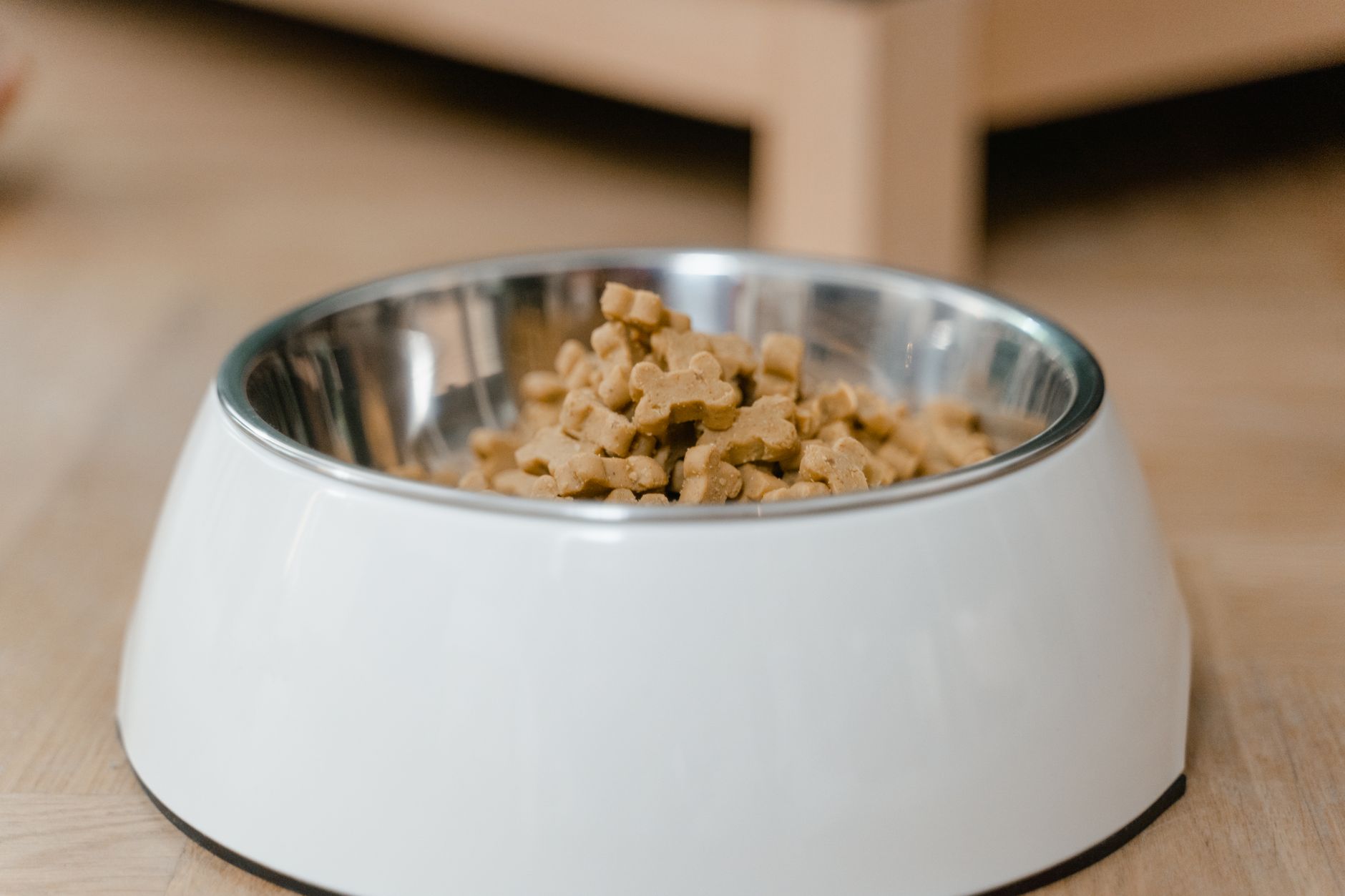
Dry kibble
Most common, lowest cost per calorie, good for dental health (mild abrasive effect), long shelf life.
Good default choice for most dogs when AAFCO-complete and appropriate for life stage.
Wet / canned
Higher moisture content (70–80%), more palatable for picky eaters, useful for seniors or dogs with dental pain. Higher cost per calorie.
Good supplement or primary food; watch calorie density on portions.
Raw (BARF)
Biologically appropriate raw food: raw meat, bones, organs. High palatability and protein. Significant food safety risks (bacterial contamination) for dogs, owners, and household members. Difficult to balance nutritionally without expertise.
Requires veterinary nutritionist guidance to do safely. Not recommended for immunocompromised dogs or households with young children.
Fresh / cooked
Human-grade cooked ingredients, delivered fresh or frozen. Highly digestible and palatable. Significantly higher cost.
Nutritionally valid if AAFCO-complete. Choose brands with a veterinary nutritionist on the formulation team.
How to read a dog food label
The label is regulated — here is what each section means:
- Product name — wording is regulated. "Beef dog food" must be 95%+ beef by weight. "With beef" means only 3%+ beef. "Beef flavour" means trace amounts detectable by a dog.
- Guaranteed analysis — lists minimum protein and fat, maximum fibre and moisture. To compare foods accurately, convert to dry matter basis: divide by (100 minus moisture %).
- Ingredient list — listed by weight before processing. "Chicken" (raw, heavy with water) listed first is not necessarily more chicken than "chicken meal" (already dried, more concentrated protein). Do not judge quality by first ingredient alone.
- AAFCO nutritional adequacy statement — find this. If it is absent or says "intermittent feeding only," the food is not complete and should not be your dog's only food.
- Feeding guidelines — starting point only. Adjust based on your dog's body condition score, not just weight. Most commercial guidelines are slightly generous (the manufacturer wants you to buy more).
Life stage feeding
Puppies (up to 12 months, or 18–24 months for large breeds)
- Need puppy or all-life-stages food — higher protein, calcium, and calories than adult formulas
- Large breeds need controlled calcium and phosphorus — do not use small-breed puppy food for large-breed puppies (excess calcium can damage developing joints)
- Feed 3–4 times per day until 6 months, then transition to twice daily
- Do not free-feed — structured meals help with training, digestion, and weight monitoring
Adults (1–7 years, varies by breed)
- Switch to adult maintenance formula once growth plates close
- Twice daily feeding is standard; once daily is acceptable for healthy adults if it suits your routine
- Monitor body condition score monthly — adjust portions, not food
- Most adult dogs need fewer calories than feeding guides suggest if they are moderately active
Seniors (7+ years, or earlier for giant breeds)
- Reduced calorie needs (lower activity), but higher protein may help maintain muscle mass
- Senior formulas vary widely — some are simply lower calorie; consult your vet before switching
- Watch for dental problems affecting appetite and chewing ability
- Regular bloodwork (annually) may reveal kidney or liver changes that affect dietary needs
Portion sizing and weight management
Obesity is the most common preventable health problem in dogs. A 2016 APOP study found that 56% of US dogs were overweight or obese. The consequences are significant: shortened lifespan, increased joint disease, diabetes, and breathing problems.
Use a body condition score (BCS) rather than a scale alone. A dog at a healthy weight has:
- Ribs easily felt but not visible
- A visible waist when viewed from above
- An abdominal tuck when viewed from the side
If your dog's ribs are hard to find under fat, reduce daily calories by 10–15% and reassess monthly. Treats should account for no more than 10% of daily calorie intake. Measure food by weight (grams) rather than volume (cups) for accuracy.
Foods toxic to dogs
Several common human foods are toxic to dogs. The following require immediate veterinary attention if ingested:
The health information on PupWiki is for educational purposes only and does not constitute veterinary medical advice, diagnosis, or treatment. Always seek the guidance of a licensed veterinarian with any questions you may have regarding your dog's health or a medical condition.
High toxicity — contact vet immediately
- Xylitol (artificial sweetener in gum, some peanut butters, sugar-free products) — causes rapid insulin release and liver failure
- Grapes and raisins — cause acute kidney failure; mechanism not fully understood
- Onions, garlic, leeks, chives — damage red blood cells; toxic in all forms including cooked and powdered
- Macadamia nuts — cause weakness, hyperthermia, vomiting
- Chocolate and caffeine — contain theobromine and caffeine; dark chocolate and baking chocolate are most dangerous by weight
Moderate concern — monitor and call vet
- Alcohol — any amount can cause toxicity; do not give intentionally
- Cooked bones — splinter and can cause internal punctures; raw bones are generally safer but still carry risk
- High-fat foods and trimmings — trigger pancreatitis, especially in susceptible breeds
- Avocado — the skin, pit, and leaves contain persin; the flesh is lower risk but best avoided
- Salt — in large amounts causes excessive thirst, urination, sodium ion poisoning
If you suspect ingestion of a toxic food, contact your veterinarian or the ASPCA Animal Poison Control Center (888-426-4435) immediately. Do not wait for symptoms.
Common nutrition myths
Grain-free diets are healthier. The FDA investigated a potential link between grain-free diets high in legumes and dilated cardiomyopathy (DCM). The evidence remains inconclusive but the concern is real. Grains are not harmful for most dogs — they are a digestible energy source. Avoid grain-free unless your vet has identified a specific grain sensitivity.
Raw food is always better. Raw diets can meet nutritional needs but require careful formulation. They carry real pathogen risks (Salmonella, Listeria) and are inappropriate for immunocompromised dogs or households with vulnerable people. They are not superior by default.
More protein is always better. Excess protein is not stored as muscle — it is used for energy or excreted. Very high protein diets may be stressful for dogs with kidney disease. Choose protein levels appropriate for your dog's life stage and health status.
"Premium" or "natural" labels mean better quality. These terms are loosely regulated. The only meaningful quality indicator on a label is the AAFCO nutritional adequacy statement and whether the product was substantiated by feeding trials.
Bottom line: a practical checklist
- Choose a food with an AAFCO complete-and-balanced statement for your dog's life stage
- Measure portions by weight (grams) — reassess if body condition changes
- Feed twice daily; avoid free-feeding for most dogs
- Keep treats to under 10% of daily calories
- Fresh water available at all times
- Transition to new foods gradually over 7–10 days to avoid digestive upset
- Consult your vet annually — bloodwork can reveal nutritional or metabolic issues early
Disclaimer: This guide reflects general veterinary consensus on canine nutrition as of 2026 and is intended for educational purposes only. It is not a substitute for veterinary advice. Individual dogs may have specific nutritional needs or health conditions. Consult your veterinarian before making significant changes to your dog's diet or if you have concerns about their health.
Frequently asked questions
- What should I look for on a dog food label?
- The most important thing is the AAFCO nutritional adequacy statement — it should say the food is "complete and balanced" for your dog's life stage (growth for puppies, adult maintenance for adults). "Substantiated by feeding trials" is a stronger claim than "formulated to meet nutrient profiles." If the statement says "for intermittent feeding only," the food is not a complete diet.
- How much should I feed my dog?
- Use your dog's body condition score rather than weight alone. A healthy dog has ribs easily felt but not visible, a visible waist from above, and an abdominal tuck from the side. Measure food by weight in grams rather than cups for accuracy. Commercial feeding guidelines are a starting point — most are slightly generous. Reassess monthly and adjust portions, not the food brand.
- Are grain-free dog foods healthier?
- No. The FDA investigated a potential link between grain-free diets high in legumes (peas, lentils, potatoes) and dilated cardiomyopathy (DCM). While the evidence remains under review, grains are a digestible energy source and are not harmful for most dogs. Avoid grain-free diets unless your veterinarian has identified a specific grain sensitivity in your individual dog.
- What foods are toxic to dogs?
- High-toxicity foods requiring immediate veterinary contact include: xylitol (artificial sweetener in gum, some peanut butters), grapes and raisins, onions/garlic/leeks in all forms, macadamia nuts, and chocolate. If you suspect your dog has ingested any of these, contact your vet or the ASPCA Animal Poison Control Center (888-426-4435) immediately — do not wait for symptoms.
- When should I switch from puppy food to adult dog food?
- Small and medium breeds: switch to adult maintenance food at around 12 months when growth plates close. Large breeds (over 25 kg adult weight): switch at 12–18 months. Giant breeds: up to 24 months. Do not feed small-breed puppy food to large-breed puppies — the excess calcium and phosphorus can damage developing joints.


