
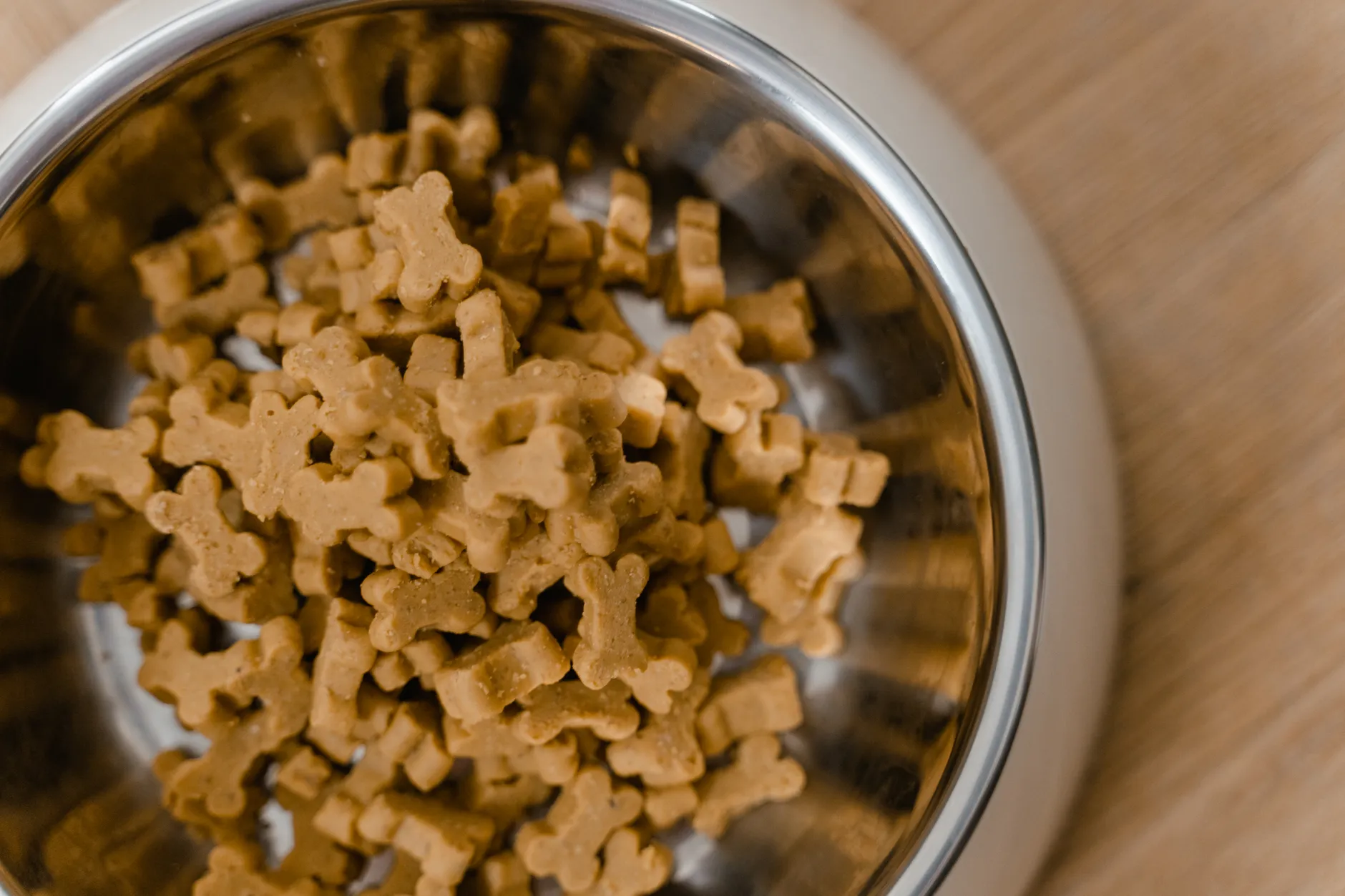
Why One Food Does Not Fit All Dogs
Walk through any pet store and you will see shelves labelled "small breed," "large breed," and "all life stages." It is easy to dismiss this as marketing. It is not. The metabolic differences between a Yorkshire Terrier and a Great Dane are profound enough that feeding the same food at different volumes is genuinely insufficient.
The core issue is metabolic scaling. Smaller dogs have a larger body surface area relative to their mass, which means they lose heat faster and burn calories at a higher rate per kilogram. The standard veterinary formula for resting energy requirement, RER = 70 x body weight (kg)^0.75, captures this relationship: it is not linear. A 3 kg dog does not need one-tenth the calories of a 30 kg dog. It needs roughly one-quarter.
This metabolic reality drives three practical differences in food formulation: calorie density (how many kcal are packed into each gram), kibble geometry (the physical size and shape of the pieces), and nutrient ratios (particularly calcium and phosphorus levels for growing large and giant breeds). Understanding these differences means you can make informed choices rather than relying on whichever brand has the most persuasive packaging.
If you want to calculate your specific dog's calorie requirement, our dog food calculator walks through the RER/MER formula step by step and gives you a personalised daily portion based on your dog's weight, age, activity level, and the calorie density of your specific food.
Size Class Comparison
The table below summarises the key nutritional differences across the five standard veterinary size classes. These ranges reflect typical values for healthy, neutered adults at ideal body condition. Puppies, intact adults, working dogs, and pregnant or lactating females will differ.
| Size class | Weight range | Calorie need | Food calorie density | Kibble diameter | Feeding frequency |
|---|---|---|---|---|---|
| Toy | Under 4.5 kg (10 lb) | 40-55 kcal/kg/day | 3,800-4,200 kcal/kg | 5-8 mm | 3-4 meals/day |
| Small | 4.5-10 kg (10-22 lb) | 35-45 kcal/kg/day | 3,600-4,000 kcal/kg | 8-12 mm | 2-3 meals/day |
| Medium | 10-25 kg (22-55 lb) | 28-35 kcal/kg/day | 3,400-3,800 kcal/kg | 12-16 mm | 2 meals/day |
| Large | 25-45 kg (55-100 lb) | 22-30 kcal/kg/day | 3,200-3,600 kcal/kg | 14-20 mm | 2 meals/day |
| Giant | Over 45 kg (100 lb) | 18-25 kcal/kg/day | 3,000-3,400 kcal/kg | 18-25 mm | 2-3 meals/day (split to reduce bloat risk) |
Toy breeds (Under 4.5 kg (10 lb))
Key nutritional considerations: Hypoglycaemia risk if meals are skipped; dental crowding makes dental-formula kibble beneficial; picky eating common
Examples: Chihuahua, Yorkshire Terrier, Maltese
Small breeds (4.5-10 kg (10-22 lb))
Key nutritional considerations: Still high metabolic rate per kg; prone to obesity if overfed treats; dental disease prevalent
Examples: Dachshund, Pug, Cavalier King Charles Spaniel
Medium breeds (10-25 kg (22-55 lb))
Key nutritional considerations: Widest variation in body type and activity; portion control matters more than formula specialisation
Examples: Border Collie, Beagle, English Bulldog
Large breeds (25-45 kg (55-100 lb))
Key nutritional considerations: Joint stress from excess weight; bloat (GDV) risk — avoid exercise immediately after meals; controlled calcium for puppies
Examples: Labrador Retriever, Golden Retriever, German Shepherd
Giant breeds (Over 45 kg (100 lb))
Key nutritional considerations: Highest bloat (GDV) risk — split meals mandatory; joint supplements (glucosamine/chondroitin) often warranted; slowest growth to maturity (24+ months)
Examples: Great Dane, Saint Bernard, Bernese Mountain Dog
Calorie Density: Why It Matters More Than Portion Size
Calorie density is the number of kilocalories per kilogram (or per cup) of food. It varies substantially between brands and between size-specific formulas within the same brand. A typical small-breed kibble might deliver 3,900 kcal/kg, while a large-breed formula from the same manufacturer might deliver 3,300 kcal/kg.
For toy and small breeds, high calorie density is essential. A Chihuahua with a stomach capacity of roughly 40 to 60 ml cannot physically consume enough of a calorie-dilute food to meet its energy needs, particularly in a single meal. This is why toy breeds are at genuine risk of hypoglycaemia (dangerously low blood sugar) when meals are skipped or when they are fed a food formulated for larger dogs. Three to four smaller meals per day, using a calorie-dense formula, prevents this.
For large and giant breeds, the opposite logic applies. A Labrador Retriever or Great Dane eating a very calorie-dense food will either get too many calories from a reasonable-looking portion or will need such a small portion that they feel unsatisfied. Moderate calorie density allows them to eat a physically satisfying volume without exceeding their energy budget. This is particularly important because obesity in large breeds dramatically accelerates joint problems that these dogs are already predisposed to.
Our guide on how much to feed your dog explains how to use the kcal/cup or kcal/kg figure on the label to convert calorie requirements into actual portions.
Kibble Shape and Size: Not Just a Gimmick
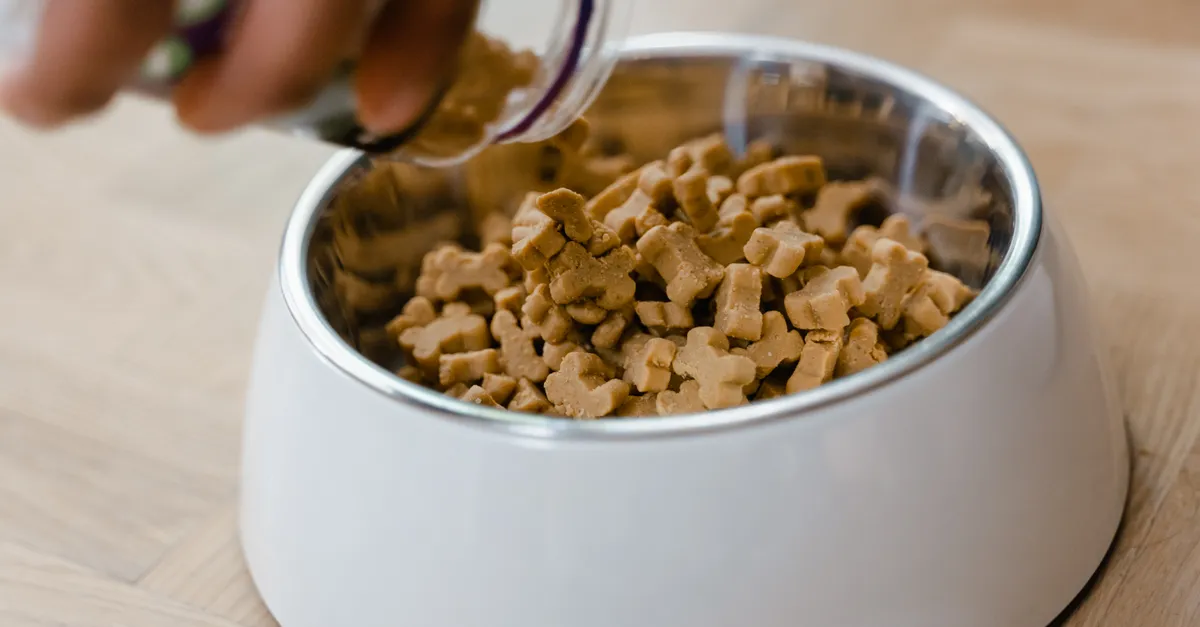
Kibble geometry serves a functional purpose beyond marketing. Dogs do not chew the way humans do. Many dogs, particularly medium and large breeds, are inclined to gulp food with minimal chewing. Appropriately sized kibble encourages some degree of mechanical breakdown before swallowing, which improves digestion and, in bloat-prone breeds, may reduce the volume of air swallowed during eating.
For toy breeds, kibble that is too large becomes a choking risk or simply gets ignored. Pieces in the 5 to 8 mm range can be picked up and crushed comfortably by small jaws. Some toy-breed formulas use triangular or pillow-shaped pieces rather than round ones, making them easier for small mouths to grip.
Brachycephalic breeds such as the Pug and French Bulldog deserve special mention. Their shortened muzzles and flat faces make it physically difficult to pick up round kibble from a flat bowl. Cross-shaped, X-shaped, or irregularly textured kibble gives them better purchase. A slow-feeder bowl can also help these breeds eat at a safer pace.
For large and giant breeds, kibble in the 14 to 25 mm range forces the dog to chew rather than inhale, which is one component of a bloat-prevention feeding strategy (alongside split meals, avoiding exercise within an hour of feeding, and using elevated or slow-feeder bowls for at-risk breeds).
What to Look for on the Label for Each Size Class
Dog food labelling follows AAFCO (Association of American Feed Control Officials) standards in the US and FEDIAF in Europe. The two most important elements to check are the nutritional adequacy statement and the calorie content statement. Our label reading guide covers the full process, but here is what matters most for size-specific choices.
Toy and small breed formulas
- AAFCO statement: Should say "formulated to meet the nutritional levels established by AAFCO for adult maintenance" or "all life stages." If feeding a small-breed puppy, "all life stages" is acceptable, but check the calcium levels are not excessive.
- Calorie content: Look for at least 3,600 kcal/kg (dry kibble). Below this, your small dog may struggle to eat enough volume to meet calorie needs.
- Protein: Minimum 25 percent on a dry matter basis. Small breeds do well with higher protein (28 to 32 percent) to support their faster metabolic turnover.
- Fat: 15 to 20 percent on a dry matter basis. Fat is the most calorie-dense macronutrient and helps achieve the calorie density small breeds require.
Medium breed formulas
- AAFCO statement: "Adult maintenance" or "all life stages" is appropriate. Medium breeds have the fewest size-specific nutritional constraints.
- Calorie content: 3,400 to 3,800 kcal/kg is a reasonable range. Portion control matters more than choosing ultra-high or ultra-low density formulas.
- Protein: 22 to 28 percent on a dry matter basis covers most healthy adult medium breeds. Active working or sporting dogs in this size range may benefit from the higher end.
Large and giant breed formulas
- AAFCO statement: For puppies, critically important to see "formulated for growth of large-size dogs (70 lb or more as an adult)" or the equivalent AAFCO large-breed growth claim. This indicates controlled calcium and calorie levels. A generic "growth" or "all life stages" claim without this large-breed specification may have calcium levels that are too high for large-breed puppies.
- Calorie content: 3,000 to 3,600 kcal/kg for adults. Lower density helps prevent over-feeding without requiring uncomfortably small portions.
- Calcium (puppies): 0.8 to 1.2 percent on a dry matter basis. The calcium-to-phosphorus ratio should fall between 1.0:1 and 1.3:1. Excess calcium during the growth phase is a known risk factor for developmental orthopaedic disease in large and giant breeds.
- Glucosamine and chondroitin: Many large-breed formulas include these joint-support compounds. While the evidence for dietary-level supplementation is modest, they are unlikely to cause harm and may provide some benefit for breeds predisposed to hip and elbow dysplasia.
For a deeper understanding of how your dog's weight and body condition should influence feeding decisions, see our body condition score guide, which explains the 9-point BCS scale and how to assess your dog at home.
The Large-Breed Puppy Problem
Large and giant breed puppies deserve their own section because getting their nutrition wrong during growth has consequences that cannot be reversed. A German Shepherd puppy reaches roughly 60 percent of its adult weight by 6 months but does not reach skeletal maturity until 14 to 18 months. A Great Dane may not reach full maturity until 24 months.
During this extended growth window, bones are lengthening rapidly while the surrounding cartilage, ligaments, and tendons are developing to support the eventual adult frame. If a puppy grows too fast, driven by excess calories or calcium, the skeleton outpaces these supporting structures. The result can be conditions like hip dysplasia (where the hip socket develops abnormally), osteochondritis dissecans (where cartilage separates from the underlying bone), and hypertrophic osteodystrophy (painful inflammation of the growth plates).
The evidence-based approach is straightforward: feed a diet specifically formulated for large-breed growth, follow the portion guidelines based on expected adult weight (not current weight), and aim for a lean body condition throughout the growth phase. A large-breed puppy should gain weight steadily but not rapidly. You should be able to feel their ribs easily at all times during growth. If you cannot, they are gaining too fast.
Never add calcium supplements to a complete large-breed puppy food. The calcium in the formula is already carefully calibrated. Adding more disrupts the balance and increases skeletal risk.
Feeding Strategy Beyond the Size Label
Choosing a size-appropriate formula is the starting point, not the finish line. The following factors also shape how well your dog does on any food.
- Body condition monitoring
- Labels provide starting portions, but your dog's body condition score is the real feedback mechanism. Check BCS monthly and adjust portions up or down by 10 percent increments. Our nutrition basics guide covers the broader principles.
- Transition gradually
- When switching foods or moving from a puppy to an adult formula, transition over 7 to 10 days by gradually increasing the proportion of new food. Abrupt switches can cause digestive upset, particularly in large breeds with sensitive digestion.
- Treats count
- Treats should comprise no more than 10 percent of daily calories. For a toy breed eating 200 kcal per day, that is only 20 kcal in treats, which is roughly one small commercial treat. For owners who use treats heavily during training, reduce the meal portion accordingly.
- Wet food, raw, and mixed feeding
- The size-class principles apply regardless of food format. Wet food has the same macronutrient needs but at 75 to 80 percent moisture, the volume required is much larger. When comparing wet and dry options, always convert to a dry matter basis for an accurate comparison. Our label reading guide walks through this conversion.
- Life stage transitions
- Small breeds typically transition from puppy to adult food at 10 to 12 months. Large breeds should stay on large-breed puppy food until 12 to 18 months. Giant breeds may benefit from continuing their large-breed puppy formula until 18 to 24 months, though many transition to a large-breed adult formula at around 15 to 18 months with veterinary guidance.
Frequently asked questions
- Do small dogs need different food than large dogs?
- Yes. Small dogs have a significantly higher metabolic rate per kilogram of body weight than large dogs, meaning they burn energy faster relative to their size. A 3 kg Chihuahua needs roughly 40 to 55 kcal per kg daily, while a 40 kg Labrador needs around 25 to 30 kcal per kg. Small-breed formulas are designed with higher calorie density (more kcal per gram) so that a small dog can meet its energy needs from a smaller meal volume. They also use smaller kibble pieces that are easier to pick up and chew. Large-breed formulas, by contrast, tend to have slightly lower calorie density and controlled calcium-to-phosphorus ratios to support joint health and reduce the risk of developmental orthopaedic disease.
- Why does my large breed puppy need special food?
- Large and giant breed puppies grow much more slowly to full maturity than small breeds, often taking 18 to 24 months compared to 8 to 12 months for small breeds. During this prolonged growth phase, excess calories and uncontrolled calcium intake can accelerate skeletal growth faster than the supporting structures (cartilage, ligaments, tendons) can keep pace, increasing the risk of hip dysplasia, osteochondritis dissecans (OCD), and other developmental orthopaedic diseases. Large-breed puppy formulas address this by moderating calorie density and carefully controlling calcium (typically 0.8 to 1.2 percent on a dry matter basis) and the calcium-to-phosphorus ratio (ideally 1.0:1 to 1.3:1). Never supplement a large-breed puppy formula with additional calcium unless directed by a veterinarian.
- How many calories per day does a toy breed dog need?
- A typical healthy adult toy breed (under 4.5 kg) needs roughly 150 to 300 kcal per day, depending on their exact weight, activity level, and neuter status. The standard veterinary formula for resting energy requirement (RER) is 70 multiplied by body weight in kilograms raised to the power of 0.75, and the maintenance energy requirement (MER) for a neutered adult is typically 1.4 to 1.6 times RER. For example, a 2.5 kg Chihuahua has an RER of about 132 kcal and an MER of roughly 185 to 210 kcal. Because toy breeds eat such small volumes, calorie-dense food (around 3,800 to 4,200 kcal per kg of food) helps them get enough energy without needing to consume uncomfortably large portions. Our dog food calculator can calculate your specific dog's calorie requirement.
- What is the right kibble size for my dog?
- Kibble diameter should roughly match your dog's ability to pick up, chew, and swallow comfortably. For toy breeds (under 4.5 kg), kibble pieces of 5 to 8 mm work best as they can grip and crush them easily. Small breeds (4.5 to 10 kg) do well with 8 to 12 mm kibble. Medium breeds (10 to 25 kg) can handle 12 to 16 mm pieces. Large breeds (25 to 45 kg) benefit from 14 to 20 mm kibble that encourages chewing rather than gulping whole. Giant breeds (over 45 kg) need 18 to 25 mm pieces for the same reason. Flat-faced (brachycephalic) breeds like Pugs and French Bulldogs often do better with pillow-shaped or cross-shaped kibble that they can grip with their shortened jaws, regardless of their size class.
- Can I feed my small dog large-breed food or vice versa?
- It is not recommended as a long-term practice. Feeding a small dog large-breed food means they receive lower calorie density per gram, so they may not get enough energy unless you significantly increase the portion, which could cause digestive discomfort. The larger kibble size may also be difficult for them to chew. Conversely, feeding a large dog small-breed food provides excess calorie density, which can quickly lead to weight gain. More critically, feeding a large-breed puppy a regular puppy formula (which typically has higher calcium levels) instead of a large-breed puppy formula can contribute to developmental skeletal problems. In short-term emergencies it will not cause harm, but for daily feeding, use a formula designed for your dog's size class.
- How do I compare dog food labels across different size formulas?
- The most reliable comparison method is to convert the guaranteed analysis percentages to a dry matter basis, which removes the distortion caused by moisture content. Divide each nutrient percentage by (1 minus the moisture percentage). For example, a food with 25 percent protein and 10 percent moisture has a dry matter protein of 25 divided by 0.9, which equals about 27.8 percent. This matters especially when comparing kibble (typically 10 percent moisture) with wet food (often 75 to 80 percent moisture). Beyond macronutrients, check the calorie content statement (kcal per kg and kcal per cup or can) and the AAFCO nutritional adequacy statement, which should specify the life stage and size the food is formulated for. Our guide on reading pet food labels covers this process in detail.


