
Health information is educational only. Always consult your veterinarian.
The first twelve months set the trajectory for your dog's entire life — socialization, vaccination immunity, training habits, and nutrition all have critical windows that close whether you're ready or not. This guide gives you the timeline, not just the theory.
The first 72 hours
The transition to a new home is the most stressful phase of a puppy's early life. Setting up correctly now prevents problems that are hard to unwind later.
Before your puppy arrives
- Puppy-proof the primary room (remove electrical cords, toxic plants, small objects)
- Set up a crate or pen with a soft bed and a worn item of your clothing
- Book your first vet appointment — within 48–72 hours of arrival
- Purchase same food the breeder/shelter was feeding (to transition slowly)
- Set up a feeding station, water bowl, and designated toilet spot outside
Days 1–3
- Keep visitors to a minimum — let the puppy settle before introductions
- Establish the toilet routine immediately (take outside every 1–2 hours, after meals, and after naps)
- Introduce the crate positively — never use it as punishment
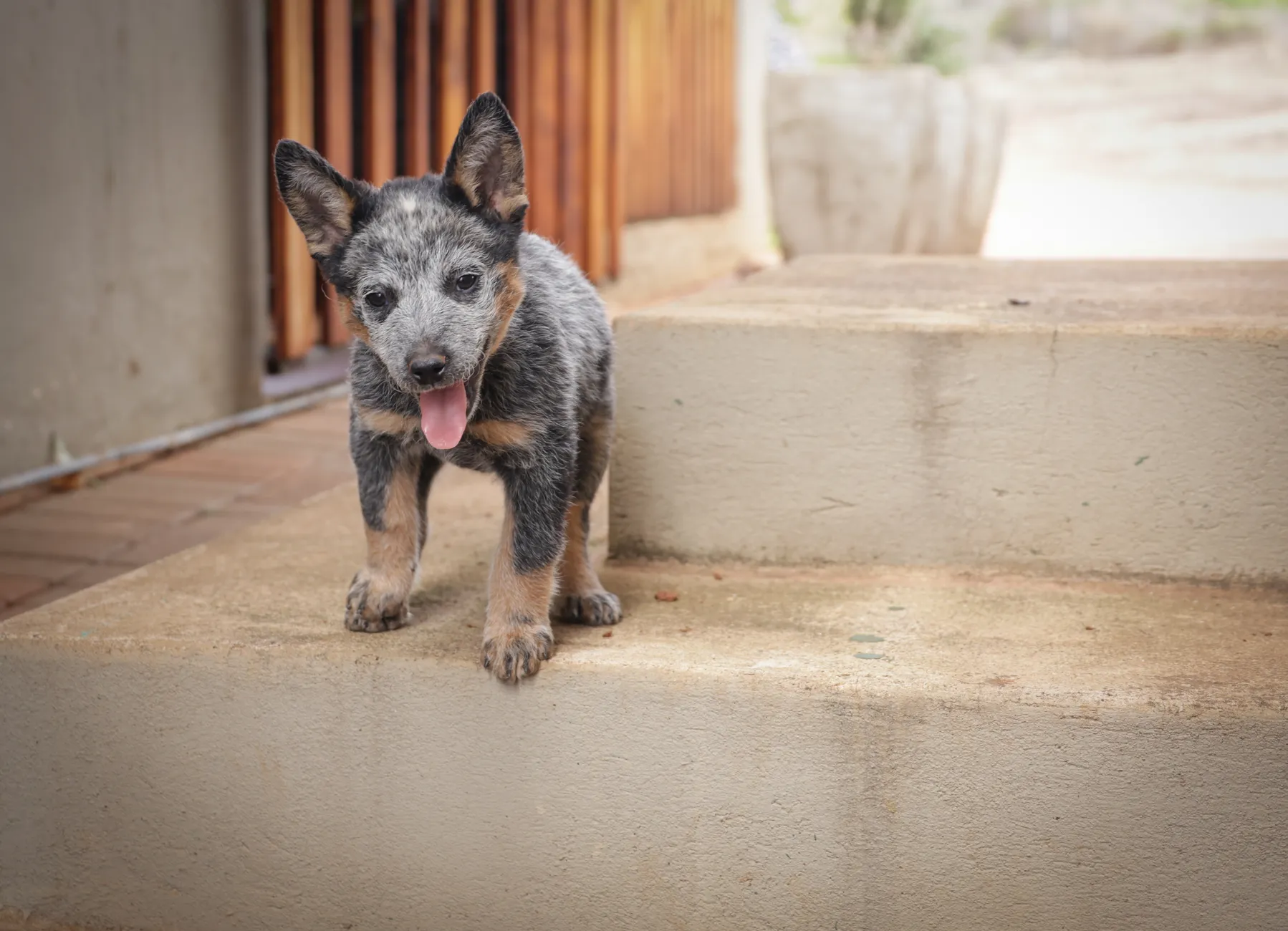
- Limit stair access for large breeds (joint stress risk before 16 weeks)
- Complete first vet visit — discuss deworming, flea prevention, and vaccination schedule
Expect some whining at night during the first week — this is normal. A covered crate near your bed (but not in your bed) and a warm water bottle wrapped in a towel can reduce night-time anxiety.
Weeks 1–8: Foundation building
The first eight weeks at home are about establishing routine, beginning toilet training, and building positive associations with handling, grooming, and basic cues.
- Take outside on a lead every 1–2 hours during waking hours
- Always go to the same spot — scent helps trigger the behaviour
- Reward with calm praise immediately after elimination, not after returning inside
- Expect accidents — never punish, simply clean with an enzymatic cleaner
- Night trips: 8–12 week pups typically need 1–2 overnight toilet breaks
- Sit: First cue to teach; easy win builds confidence in both you and the puppy
- Name recognition: Call name, reward eye contact — 10x daily
- Come: Only call when you're certain the puppy will succeed — never chase
- Keep sessions to 2–3 minutes; puppies lose focus quickly
- Use high-value treats (real meat, cheese) — dry kibble won't compete with distractions
- Daily touch exercises: gently handle paws, ears, mouth, and tail
- Introduce a soft brush before grooming is strictly needed
- Touch paw pads — this makes nail trimming far easier at 6 months
- Pair all handling with treats to build positive associations
Months 2–4: The socialization window
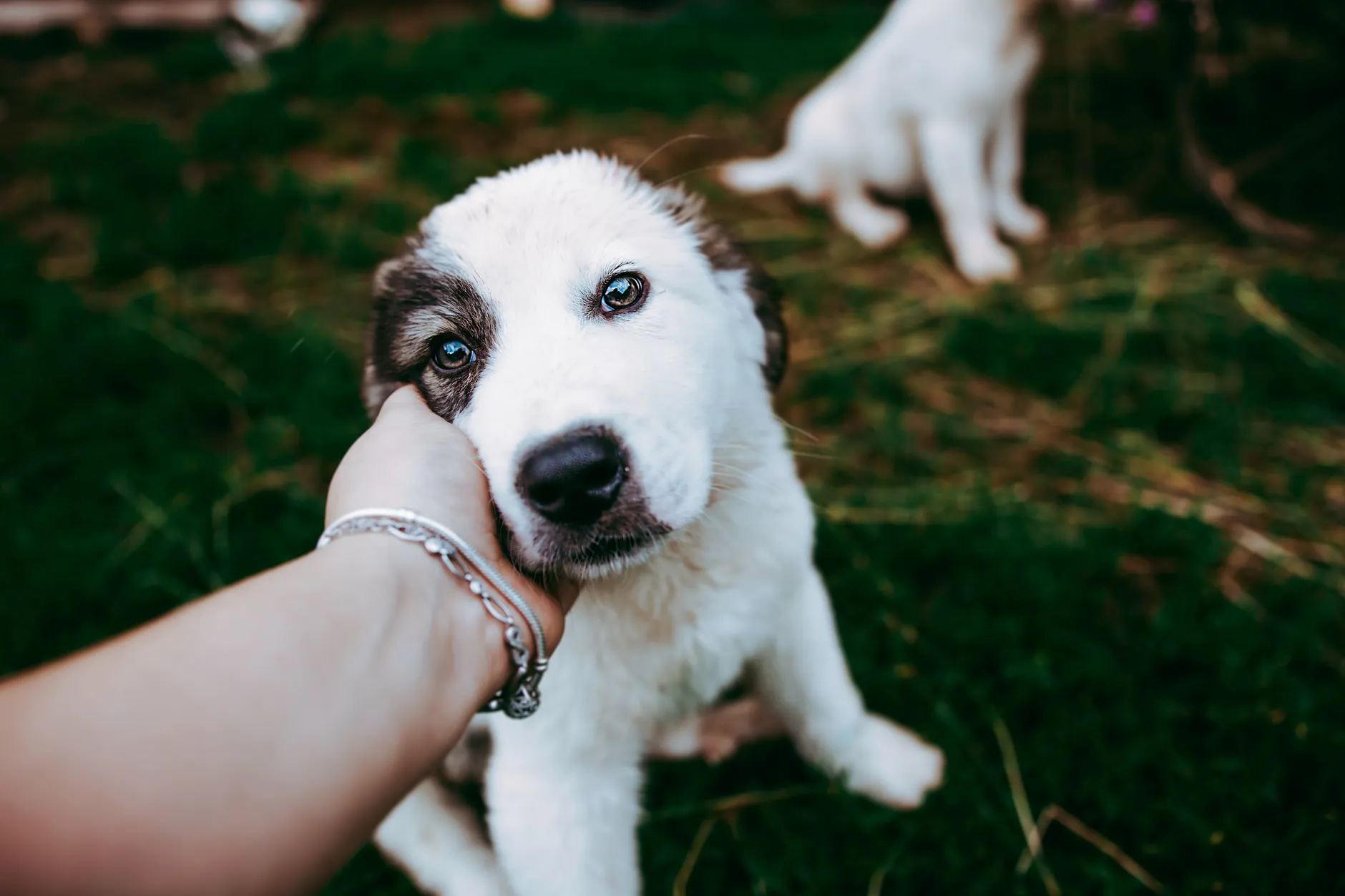
Research published through AVMA and veterinary behaviorists identifies 3–12 weeks as the primary socialization window, with a secondary window extending to approximately 16 weeks. Experiences during this period shape how a dog perceives the world for life. Missing this window is one of the most common and costly mistakes new owners make.
Socialization checklist — aim for each at least once before 16 weeks
Months 4–6: Adolescence begins
Around 4–6 months most puppies enter the "teenage" phase — the fear periods, testing of boundaries, and selective hearing that frustrate many owners. This is also when permanent teeth come in and chewing intensity peaks.
- Regression in recall and previously reliable cues — this is normal and temporary
- Increased chewing (teething discomfort): provide appropriate chews, redirect from furniture
- A second fear period typically occurs at 6–14 months: don't force frightening exposures
- Sexual maturity: unspayed females may show first season; unneutered males may become more reactive
- Reliable recall: the most important skill — proof in progressively distracting environments
- Loose-lead walking: the most common complaint at 12 months; start now, not later
- Down and stay: builds impulse control
- Introduce "leave it" and "drop it" — critical for safety
- Booster vaccinations — typically due at 12–16 weeks and again at 6 months (verify with vet)
- Begin monthly parasite prevention if not already started
- Discuss neutering timing with your vet — optimal timing varies significantly by breed and sex
- Dental check: retain puppy teeth alongside adult teeth? Vet should evaluate
Months 6–12: Consolidation
By 6 months a well-socialised, consistently trained puppy should have solid foundations. The second half of year one is about consistency, exercise calibration, and preparing for adult health management.
- Rule of thumb: 5 minutes of structured exercise per month of age, twice daily — until growth plates close
- Large and giant breeds: growth plates close later (12–24 months) — avoid repetitive impact exercise
- Mental stimulation (puzzle feeders, nose work, training) tires puppies faster than physical exercise alone
- Swimming is low-impact and appropriate earlier than high-impact activities
- Large breeds: transition to adult food at 12–18 months (prevents overfeeding growth nutrients)
- Small breeds: can transition at 10–12 months
- Follow WSAVA-member food guidelines: established manufacturer, published feeding trials, veterinary nutritionist formulation
- Avoid grain-free diets pending ongoing FDA investigation into dilated cardiomyopathy association
- Annual booster vaccinations
- Heartworm test (if recommended for your region)
- Weight and body condition score review
- Discuss adult parasite prevention protocol
- OFA preliminary hip/elbow screenings for large breeds at 24 months (too early at 12 months)
Core vaccination timeline
Health information is educational only. Always consult your veterinarian.
The following represents a typical AVMA-aligned core vaccination schedule. Your vet will tailor this based on regional disease risk, lifestyle, and breed.
| Age | Core vaccines | Non-core (discuss with vet) |
|---|---|---|
| 6–8 weeks | DA2PP (Distemper, Adenovirus, Parvovirus, Parainfluenza) | Bordetella if kennel/daycare planned |
| 10–12 weeks | DA2PP booster | Leptospirosis (if regional risk), Lyme (if tick-endemic area) |
| 14–16 weeks | DA2PP booster, Rabies (required by law in most US states) | Canine influenza (if boarding/dog-park frequent) |
| 12–16 months | DA2PP booster, Rabies booster (1 or 3-year depending on product/state law) | Non-core boosters as indicated |
| Annual / triennial | Per vet recommendation based on antibody titers or protocol | Per vet recommendation |
Maternal antibodies can interfere with vaccine effectiveness — this is why the series of boosters (not a single shot) is necessary. Do not skip boosters because your puppy "already had shots."
Year-one budget guide
First-year costs are significantly higher than ongoing years due to one-time setup, initial vet visits, and spay/neuter. The ranges below are US national averages; costs vary substantially by region and breed.
One-time setup
- Crate (appropriate size)$50–$200
- Bedding, bowls, collar, lead, ID tag$80–$180
- Puppy gates / pen$50–$150
- Puppy-proofing items$30–$100
Typical total: $210–$630
Year-one veterinary
- Puppy vet visits (3–4 visits incl. vaccines)$300–$600
- Spay or neuter$200–$800
- Parasite prevention (12 months)$120–$300
- Microchip (if not done by breeder)$25–$75
Typical total: $645–$1,775
Ongoing year-one costs
- Food (varies hugely by breed size)$300–$1,200
- Treats and chews$100–$300
- Training classes (group puppy class)$150–$300
- Grooming (breed-dependent)$0–$900
- Toys and enrichment$100–$250
Typical total: $650–$2,950
Year-one total estimate: $1,500–$5,355 before pet insurance and unexpected vet costs. Use the breed cost estimator for breed-specific projections and ongoing annual costs.
When to call the vet immediately
Health information is educational only. Always consult your veterinarian.
The following are red flags requiring same-day or emergency veterinary attention in puppies under 12 months. When in doubt, call.
Emergency — go now
- Bloated, distended, or hard abdomen (especially large breeds post-meal)
- Pale, blue, or white gums
- Collapse, loss of consciousness, or seizure
- Suspected poisoning (chocolate, grapes, xylitol, rat poison, household chemicals)
- Difficulty breathing or choking
- Suspected bone fracture
Same-day call
- Vomiting more than twice in 12 hours, or any blood in vomit
- Diarrhoea with blood, or more than 24 hours of diarrhoea in a young puppy
- Not eating for more than 24 hours (12 hours in very young or toy-breed puppies — hypoglycaemia risk)
- Limping or inability to bear weight
- Eye discharge that is yellow/green or causes squinting
- Lethargy that persists more than a few hours
Frequently asked questions
- When should I take my puppy to the vet for the first time?
- Within 48–72 hours of bringing your puppy home. This first visit establishes a health baseline, discusses the vaccination schedule, deworming, flea and tick prevention, and lets the vet flag any early concerns. Book the appointment before you collect the puppy.
- What vaccines does a puppy need and when?
- Core vaccines follow a series: DA2PP (distemper, adenovirus, parvovirus, parainfluenza) at 6–8 weeks, 10–12 weeks, and 14–16 weeks; Rabies at 14–16 weeks (required by law in most US states). Boosters are due at 12–16 months. Your vet may add non-core vaccines (Bordetella, Leptospirosis, Lyme) based on regional risk and lifestyle.
- When is the puppy socialisation window?
- The primary socialisation window runs from approximately 3 to 12 weeks of age, with a secondary window extending to 16 weeks. Experiences during this period have a disproportionately large and lasting effect on how the dog responds to the world throughout adulthood. Most puppies arrive home around week 8 — the window is still open but closing.
- How much does a puppy cost in the first year?
- First-year total costs typically range from $1,500 to $5,355+ before unexpected vet bills or pet insurance. This includes one-time setup costs ($210–$630), year-one veterinary costs including vaccines and spay/neuter ($645–$1,775), and ongoing costs like food, training classes, and grooming ($650–$2,950). Large breeds and brachycephalic breeds cost significantly more.
- How often should puppies eat per day?
- Feed puppies 3–4 times per day until 6 months of age, then transition to twice daily. Avoid free-feeding (leaving food down all day) — structured meals help with training, allow you to monitor appetite, and support healthy digestion. Use a growth-formula or all-life-stages food appropriate for your puppy's breed size.


