
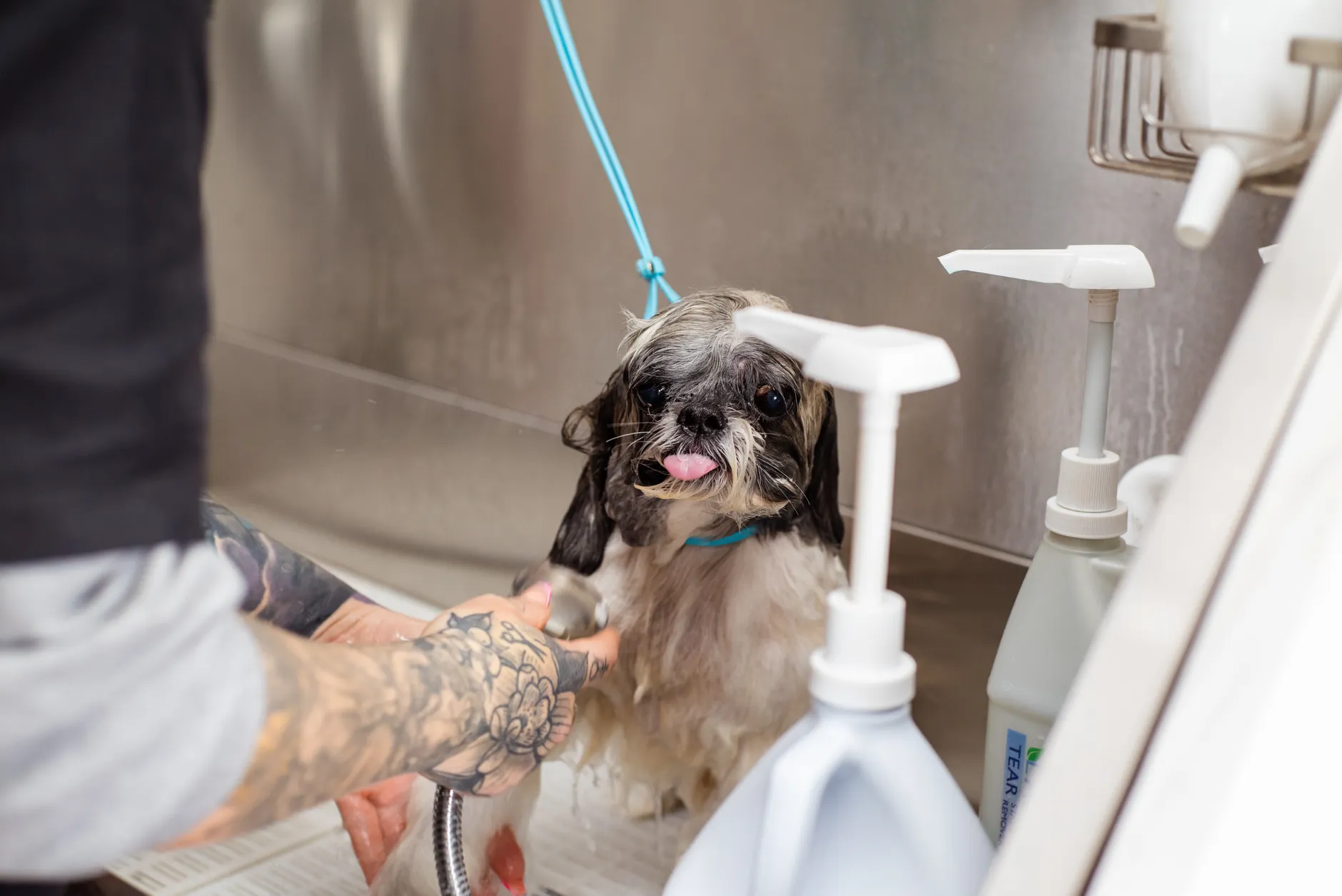
Bathing a dog seems straightforward until you realise how much the answer to "how often?" depends on coat type, skin health, and lifestyle. Over-bathing strips essential oils and damages the skin barrier. Under-bathing lets dirt, allergens, and oils accumulate. This guide breaks down bathing frequency for every major coat type, walks through proper technique, covers shampoo selection, explains why drying method matters more than most owners realise, and offers practical between-bath freshening strategies.
Why over-bathing is worse than under-bathing
Your dog's skin produces sebum — a natural oil secreted by sebaceous glands distributed across the body. Sebum serves multiple functions: it waterproofs the coat, maintains coat texture and sheen, supports the skin's acid mantle (a thin, slightly acidic film that acts as a barrier against bacteria, yeast, and environmental allergens), and keeps the skin supple and hydrated.
Every bath, even with mild shampoo, removes a portion of this oil layer. The skin replenishes it over a few days, which is why occasional bathing is fine. But bathing too frequently — before the oil layer has time to fully restore — creates a cycle of stripping and underproduction that leads to:
- Dry, flaky skin — the most common sign, often mistaken for allergies or poor diet
- Dull, brittle coat — hair shafts lose their protective oil coating and become rough
- Increased skin sensitivity — a weakened acid mantle means environmental irritants, pollen, and cleaning product residue penetrate more easily
- Paradoxical oiliness — some dogs' skin overproduces sebum in response to constant stripping, making the dog smell worse and prompting owners to bathe more often
A dog that gets mildly dirty on a walk does not need a full bath. Rinsing the legs and belly with plain water, or wiping down with a damp towel, is usually sufficient. Reserve full shampoo baths for when the coat is genuinely soiled, smelly, or on your scheduled bathing day.
Bathing frequency by coat type
The table below provides baseline recommendations. Adjust based on your dog's specific skin condition, activity level, and environment. Dogs with skin allergies or conditions may need a different schedule prescribed by their vet.
| Coat type | Example breeds | Bathing frequency | Key notes |
|---|---|---|---|
| Short single | Boxer, Dalmatian, Whippet | Every 6 to 8 weeks | Natural oils distribute easily; coat stays clean longer; over-bathing causes visible dryness quickly |
| Short double | Labrador, Rottweiler, Beagle | Every 6 to 8 weeks | Dense undercoat retains water; thorough drying is essential to prevent musty smell and hot spots |
| Long double | Golden Retriever, Bernese Mountain Dog, Samoyed | Every 8 to 12 weeks | Brush thoroughly before bathing to remove loose undercoat; water trapped in matted coat causes skin issues |
| Long silky | Yorkshire Terrier, Afghan Hound, Cavalier King Charles Spaniel | Every 2 to 4 weeks | Fine hair tangles when dirty; conditioner recommended; gentle handling during lathering to avoid breakage |
| Curly / wavy | Poodle, Bichon Frise, Portuguese Water Dog | Every 3 to 4 weeks | Curls trap dirt close to skin; always brush out tangles before wetting; conditioner reduces post-bath matting |
| Wire / rough | Wire Fox Terrier, Schnauzer, Airedale Terrier | Every 4 to 6 weeks | Coarse outer coat resists dirt; excessive bathing softens the wire texture; hand-stripped coats need less frequent baths |
| Hairless | Chinese Crested (hairless variety), Xoloitzcuintli | Every 1 to 2 weeks | No coat to absorb oil; skin accumulates sebum and environmental debris rapidly; use a gentle, moisturising shampoo |
Use the Dog Grooming Schedule Generator to create a personalised bathing schedule based on your dog's breed and coat archetype, with seasonal adjustments built in.
Choosing the right shampoo
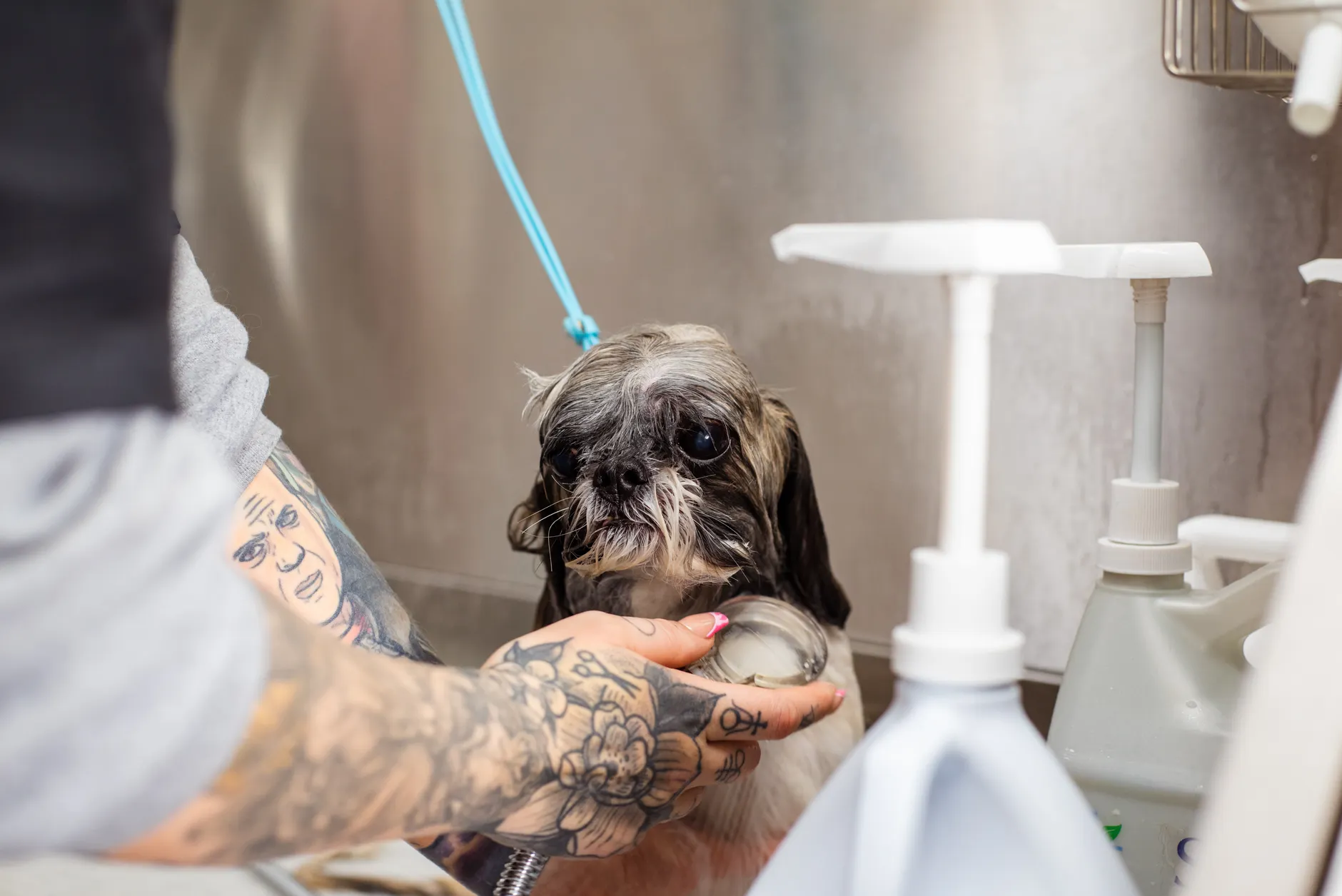
Dog shampoo is not a commodity — the wrong product can cause real skin problems. The most important factor is pH balance: canine skin runs pH 6.2 to 7.4, while human skin and human shampoos target pH 4.5 to 5.5. Using human shampoo on a dog disrupts the acid mantle and can cause dryness, itching, and increased vulnerability to infections.
General-purpose canine shampoo
For healthy dogs with no skin issues, a soap-free, pH-balanced canine shampoo is the best choice. Look for formulas that are free of artificial fragrances, parabens, and sulphates. Mild surfactants clean effectively without aggressively stripping oils.
Oatmeal and aloe shampoos
Colloidal oatmeal has well-documented soothing properties for irritated skin. Aloe vera provides moisture and has mild anti-inflammatory effects. These formulas are a good default for dogs with mildly sensitive skin or breeds prone to dryness (Bulldogs, breeds in arid climates). They are not a treatment for active skin infections or allergies.
Medicated shampoos
Antifungal (ketoconazole, miconazole), antibacterial (chlorhexidine, benzoyl peroxide), and anti-itch (hydrocortisone) shampoos are prescription or vet-recommended products. Use them only under veterinary direction and for the prescribed duration. Many medicated shampoos require a specific contact time — lathered on and left for 5 to 10 minutes before rinsing — to be effective. Using them without adequate contact time wastes the product and undertreats the condition.
Whitening shampoos
Designed for white-coated breeds (Samoyed, Maltese, West Highland White Terrier) to reduce yellowing and tear staining. These contain optical brighteners or mild bleaching agents. Use sparingly — they can dry the coat if used too frequently — and never use around the eyes unless the product is specifically labelled as tear-safe.
Dish soap, laundry detergent, and hand soap should never be used on dogs. They are formulated for grease-cutting at pH levels that are harsh on canine skin, and even a single use can cause irritation, dryness, and coat damage. The exception sometimes cited is Dawn dish soap for removing skunk spray, but even then, a veterinary degreasing shampoo is the better choice if available.
Step-by-step bathing technique
Good technique makes the bath faster, less stressful, and more effective. Adjust the process based on your dog's size — small dogs can be bathed in a sink or basin, medium and large dogs in a bathtub with a non-slip mat or in an outdoor area with warm water (never cold).
- Brush before wetting: Remove all tangles, mats, and loose fur before the coat gets wet. Water tightens mats, making them impossible to brush out and trapping moisture against the skin. For double-coated breeds, a thorough deshedding session before the bath significantly reduces drying time.
- Prepare your supplies: Have shampoo, conditioner (if using), towels, and treats within arm's reach. Fill the tub or basin to ankle depth with warm water (test on your inner wrist — it should feel comfortably warm, not hot). Place a non-slip mat on the tub floor.
- Wet the coat thoroughly: Use a handheld sprayer or pitcher to soak the coat down to the skin. Double coats and curly coats are water-resistant by design — this step takes longer than you expect. A coat that is not fully saturated will not lather properly and shampoo will sit on the surface rather than reaching the skin.
- Apply shampoo from neck to tail: Squeeze a line of shampoo along the dog's back and work it into a lather with your fingers, moving from the neck toward the tail, then down each leg and across the chest and belly. Avoid the face and inner ears for now. Massage the shampoo into the coat for 2 to 3 minutes (or the recommended contact time for medicated shampoos).
- Clean the face separately: Use a damp washcloth or a tearless facial shampoo applied with your hands to clean the face, muzzle, and around the ears. Keep water out of the ear canals — tip the head slightly forward and clean around, not inside, the ears. See our ear care guide for post-bath ear drying protocol.
- Rinse thoroughly — then rinse again: Shampoo residue left in the coat causes itching, flaking, and dullness. Rinse until the water runs completely clear with no suds. Pay special attention to the armpits, groin, and behind the ears, where shampoo tends to hide. Under-rinsing is one of the most common bathing mistakes.
- Apply conditioner (if using): Work conditioner through the coat, focusing on the longer, tangle-prone areas. Leave it in for the time specified on the product label (usually 2 to 5 minutes), then rinse thoroughly.
- Begin the drying process immediately: See the drying section below. The faster you remove water from the coat, the less opportunity for skin issues to develop.
Why drying method matters
Drying is the most underrated step in dog bathing. For short single-coated breeds, towel drying is usually sufficient and the coat air-dries in under an hour. But for double-coated, long-coated, and curly-coated breeds, improper drying is a genuine health risk.
The air-dry problem with dense coats
A dense double coat (Golden Retriever, Husky, German Shepherd) can hold an enormous amount of water against the skin. Air-drying these coats can take 4 to 8 hours — during which the warm, damp layer against the skin creates ideal conditions for bacterial hot spots and yeast overgrowth. In humid climates, the coat may not fully dry at all before the next moisture exposure.
Towel drying technique
Press and squeeze the towel against the coat rather than rubbing back and forth. Rubbing creates friction that tangles long coats, roughs up the hair cuticle, and can irritate the skin underneath. For double-coated breeds, use multiple towels — the first towel will saturate quickly.
High-velocity dryers
Professional groomers use high-velocity (force) dryers that blast room-temperature or warm air at high speed to push water out of the coat mechanically. These are the gold standard for double-coated and long-coated breeds. Home versions are available and are a worthwhile investment if you bathe a dense-coated breed at home regularly. They cut drying time from hours to 15 to 30 minutes and blow out loose undercoat simultaneously.
Blow dryer caution
Household blow dryers can be used on dogs in a pinch, but only on a cool or warm setting — never hot. Human blow dryers concentrate heat in a small area, and dogs' skin is thinner than humans', making burns a real risk. Keep the dryer moving constantly, maintain at least 15 cm (6 inches) distance from the skin, and watch for signs of discomfort (panting, moving away, skin reddening). Many dogs find the noise stressful — introduce the sound gradually if your dog has not been exposed before.
Bathing puppies vs adult dogs
Puppies can be bathed from approximately 8 weeks of age, but only when they genuinely need it — visible dirt, an unpleasant smell, or a specific mess. Routine bathing before 12 weeks is generally unnecessary and risks chilling a puppy that cannot regulate body temperature as effectively as an adult.
Key differences when bathing a puppy:
- Water temperature: Slightly warmer than for an adult dog — puppies chill faster. Test on your inner wrist; it should feel comfortably warm.
- Shampoo: Use a gentle puppy-specific formula. Adult shampoos, even mild ones, may be too concentrated for a puppy's developing skin.
- Duration: Keep the bath as short as possible — 3 to 5 minutes of lathering and rinsing is sufficient. Long sessions in water stress young puppies.
- Drying: Wrap immediately in a warm towel and dry thoroughly. Puppies lose body heat quickly when wet. Avoid blow dryers on very young puppies — the noise and sensation can create lasting fear associations.
- Positive association: The first few baths set the tone for a lifetime. Go slowly, speak calmly, reward with treats, and stop before the puppy becomes distressed. A puppy that has a traumatic early bathing experience may resist baths for years.
Special situations
After swimming
Dogs that swim in lakes, rivers, oceans, or pools should be rinsed with clean water after every swim session. Lake and river water contain algae, bacteria, and parasites. Salt water dries the coat and irritates the skin if left to evaporate. Chlorine from pools can cause dryness with repeated exposure. A full shampoo bath is not necessary after every swim — a thorough freshwater rinse followed by proper drying is usually sufficient. Save full baths for your regular schedule.
Skunk spray
Skunk spray is an oil-based sulfur compound that bonds to hair and skin. Regular shampoo will not remove it. The most effective home remedy is a mixture of 1 quart (1 litre) of 3% hydrogen peroxide, one-quarter cup of baking soda, and 1 teaspoon of liquid dish soap. Apply immediately to the dry coat (do not wet first), work into the affected areas for 5 minutes, then rinse thoroughly. This mixture cannot be stored — it must be mixed fresh and used immediately because pressure builds in a sealed container. Avoid the eyes and mouth. If the spray hit the face, clean around the eyes with plain water only and consult your vet if eye irritation persists.
Mud and heavy soil
Counter-intuitively, it is often easier to let mud dry completely and then brush it out rather than bathing immediately. Wet mud smears through the coat during bathing and is harder to remove than dried clumps that break apart under a brush. For light mud, let the dog dry in a crate or on a towel, brush out the dried mud, then decide if a bath is still needed. For heavy mud covering most of the body, a rinse with warm water (no shampoo) followed by towel drying is more practical than a full bath.
Between-bath freshening options
Not every odour or dirt situation calls for a full bath. These maintenance options extend the time between baths while keeping your dog presentable and comfortable:
- Dog grooming wipes: Pre-moistened, pH-balanced wipes designed for canine skin. Effective for cleaning paws after walks, wiping the face and underbelly, and quick spot-cleaning. Use wipes labelled for dogs — human baby wipes may contain fragrances or chemicals that irritate canine skin.
- Dry shampoo (powder): Dog-specific dry shampoo absorbs excess oil and freshens the coat without water. Sprinkle onto the coat, work it in with your fingers, let it sit for a few minutes, then brush it out thoroughly. Best for odour between baths, not for removing actual dirt or debris.
- Waterless foam shampoo: Dispensed as a foam, massaged into the coat, and towel-dried without rinsing. More effective than dry powder for moderate surface dirt. Still not a replacement for a proper bath, but useful for dogs that resist water or during cold weather when outdoor bathing is impractical.
- Regular brushing: The simplest and most effective freshening tool. Brushing distributes natural oils through the coat (improving sheen and reducing that "doggy" smell), removes loose fur and dander, and dislodges dirt and debris before it accumulates. A thorough brushing session often eliminates the perceived need for a bath.
Setting up a bathing schedule
The best bathing schedule is one you actually follow consistently. Use these principles to build yours:
- Start with the coat-type baseline from the frequency table above.
- Adjust for lifestyle: Dogs that spend a lot of time outdoors, roll in things, or swim need more frequent baths. Dogs that are primarily indoor may need fewer.
- Factor in skin health: Dogs with allergies may need medicated baths on a vet-prescribed schedule that differs from the coat-type recommendation. Dogs with dry skin may benefit from longer intervals.
- Coordinate with your full grooming calendar: Bathing fits naturally alongside brushing, nail trimming, ear cleaning, and dental care. Use the Dog Grooming Schedule Generator to build a complete grooming calendar with all tasks on appropriate intervals.
- Track what works: If your dog's coat looks healthy, smells normal, and the skin is supple between baths, your interval is right. If you notice dryness, reduce frequency. If the dog is consistently smelly or dirty before the next scheduled bath, shorten the interval.
Remember that seasonal changes affect bathing needs. Dogs may need more frequent baths during muddy spring months or after summer swimming, and fewer baths during cold, dry winter months when over-bathing risk is highest. See our seasonal grooming tips for detailed seasonal adjustments.
Frequently asked questions
- How often should I bathe my dog?
- It depends on coat type. Short single-coated dogs (Boxers, Dalmatians) need baths every 6 to 8 weeks. Double-coated breeds (Golden Retrievers, Huskies) do well every 8 to 12 weeks. Curly and wire-coated breeds (Poodles, Schnauzers) need baths every 3 to 4 weeks because their coats trap dirt close to the skin. Hairless breeds (Chinese Crested) need weekly baths to manage oil buildup. Dogs that roll in mud or swim regularly may need more frequent bathing regardless of coat type.
- Can I bathe my dog too often?
- Yes. Over-bathing strips the natural oils (sebum) from your dog's skin and coat. These oils provide waterproofing, maintain coat texture, and support the skin barrier that protects against allergens and bacteria. Signs of over-bathing include dry, flaky skin, a dull coat that lacks shine, increased itchiness, and skin that feels tight or rough. If you notice these signs, extend the interval between baths and consider using a milder, soap-free shampoo.
- What kind of shampoo should I use on my dog?
- Use a shampoo specifically formulated for dogs. Canine skin has a pH of approximately 6.2 to 7.4 (more neutral), while human shampoo is formulated for human skin pH of 4.5 to 5.5 (more acidic). Using human shampoo disrupts the dog's skin acid mantle and can cause dryness and irritation. For healthy dogs, a gentle, soap-free canine shampoo works well. For dogs with skin sensitivities, an oatmeal-based or aloe-based formula provides extra soothing. Medicated shampoos (antifungal, antibacterial, anti-itch) should only be used on veterinary advice.
- Should I use conditioner on my dog?
- Conditioner is beneficial for long-coated and silky-coated breeds (Yorkshire Terriers, Cavalier King Charles Spaniels, Afghan Hounds) because it reduces tangles, makes brushing easier, and adds a protective layer to fragile hair. It is also helpful for double-coated breeds after deshedding baths to smooth the undercoat. Short-coated breeds generally do not need conditioner. Use a dog-specific conditioner, not a human product, and rinse thoroughly to avoid residue that attracts dirt.
- How should I dry my dog after a bath?
- Start by letting the dog shake (they will instinctively), then towel-dry by pressing and squeezing — not rubbing, which tangles long coats and damages the hair cuticle. For double-coated breeds, a high-velocity dryer (not a human blow dryer on a hot setting) is strongly recommended because air-drying dense undercoats takes hours and creates a damp environment against the skin that promotes yeast and hot spots. For short-coated breeds, towel-drying is usually sufficient. If you use a blow dryer, keep it on a cool or warm setting, never hot, and keep it moving constantly.
- Can I use baby wipes or dry shampoo on my dog between baths?
- Dog-specific grooming wipes are a safe option for spot-cleaning paws, the face, and under the tail between baths. Avoid human baby wipes, which may contain fragrances, propylene glycol, or other ingredients irritating to canine skin. Dry shampoo powders formulated for dogs can absorb excess oil and freshen the coat without water. Neither replaces a proper bath — they manage surface dirt and odour between scheduled washes.
- At what age can I bathe a puppy for the first time?
- Puppies can be bathed from about 8 weeks of age, but only when necessary (visible dirt, odour, or a specific mess). Young puppies chill easily, so use warm (not hot) water, bathe in a warm room, and dry thoroughly and quickly. Use a gentle puppy-specific shampoo. Keep the first few baths short and calm to build positive associations — a puppy that panics during early baths may resist bathing for life.


