
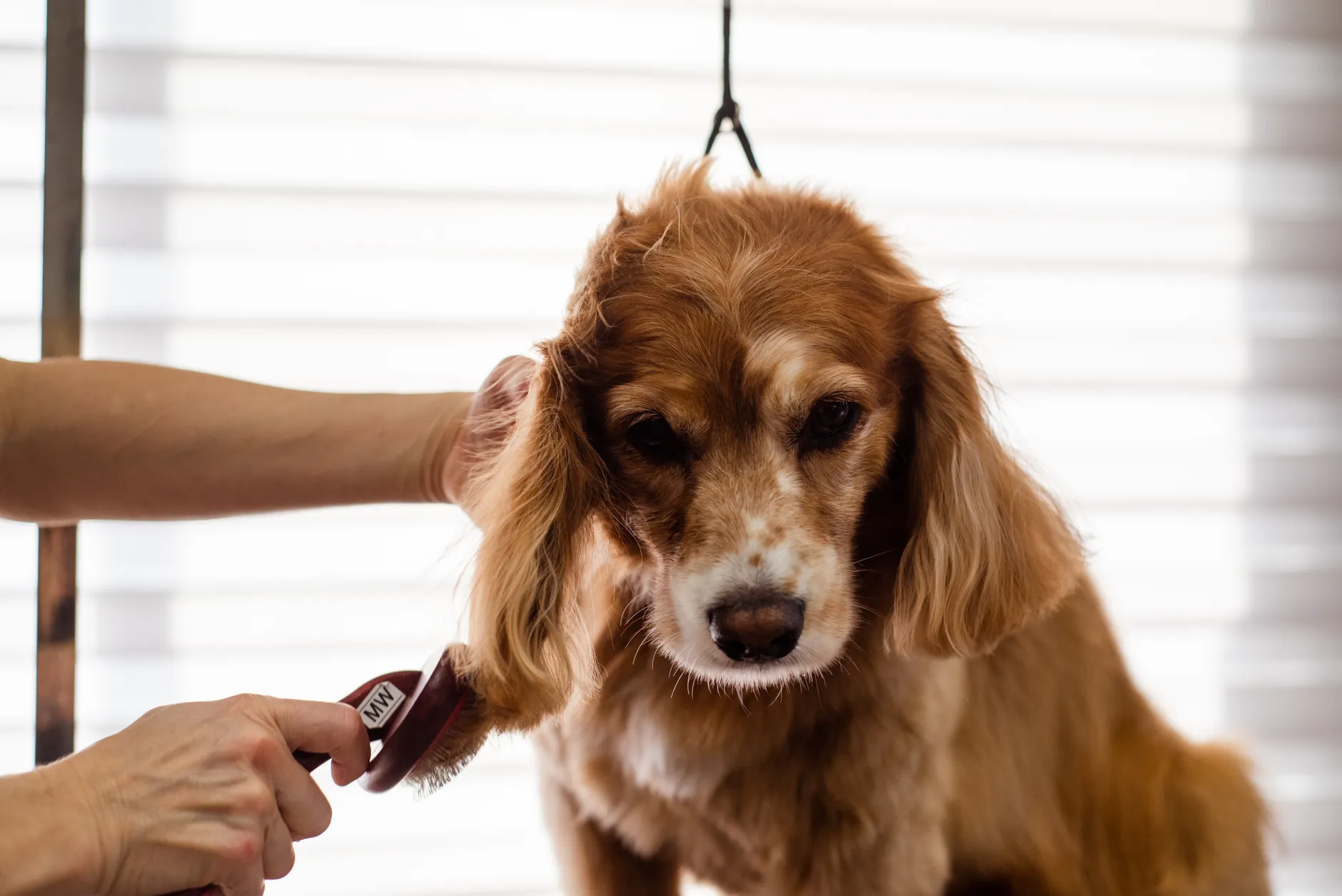
Your dog's grooming needs are not the same in July as they are in January. Coat cycles, temperature, humidity, parasite pressure, and surface conditions all shift with the seasons, and your grooming routine needs to shift with them. A double-coated breed blowing its undercoat in spring demands a completely different approach from winter paw care after walks on salted roads. This guide covers what changes, when, and why -- with breed-specific adjustments for double-coated, single-coated, and brachycephalic dogs.
Why grooming changes by season
Dogs with double coats (a dense undercoat beneath longer guard hairs) undergo seasonal coat transitions driven by photoperiod -- changes in daylight hours, not temperature. As spring days lengthen, the body signals the undercoat to shed in preparation for summer. As autumn days shorten, a thicker winter undercoat grows in. This biological cycle means the volume of loose fur, the tools needed, and the frequency of grooming sessions all shift predictably through the year.
Beyond coat cycles, seasonal factors affect skin health (dry winter air, summer humidity and parasites), paw pad condition (hot pavement in summer, salt and ice in winter), and bathing requirements. Adjusting your routine to match these patterns prevents problems rather than reacting to them.
For a full overview of coat types and baseline grooming routines, see the complete grooming guide. This seasonal guide builds on those foundations.
Season-by-task grooming checklist
Use this reference to see how each core grooming task shifts across the year. These recommendations apply primarily to double-coated breeds; single-coated breeds need less seasonal variation (noted below the table).
| Grooming task | Spring | Summer | Autumn | Winter |
|---|---|---|---|---|
| Brushing frequency | Daily (coat blow period) | 2-3x per week | Daily during autumn blow | 2-3x per week |
| Bathing frequency | Every 4-6 weeks + post-blow bath | Every 4-6 weeks (more if swimming) | Every 4-6 weeks | Every 6-8 weeks (less frequent) |
| Deshedding tool use | Heavy use (peak shedding) | Moderate use | Moderate use (second blow) | Minimal use |
| Paw care | Check for allergy irritation | Check for pad burns on hot surfaces | Condition pads for winter | Rinse after walks (salt removal) |
| Skin checks | Flea/tick season starts | Sunburn, hot spots, parasites | Dry skin onset, final flea treatment | Dry skin, cracked pads |
| Coat conditioning | Post-blow conditioning rinse | Light conditioner for UV protection | Moisturising conditioner | Oil-boosting shampoo or coat oil |
| Nail trimming | Standard (every 3-4 weeks) | May slow if dog walks on hard surfaces | Standard (every 3-4 weeks) | More frequent (less natural wear) |
Single-coated breeds (Poodle, Maltese, Greyhound, Whippet) maintain more consistent grooming needs year-round. Their primary seasonal adjustments are paw care, skin moisture, and parasite prevention rather than shedding management.
Spring: coat blow and fresh starts
Spring is the most demanding grooming season for owners of double-coated breeds. The dense winter undercoat sheds rapidly over 2-4 weeks -- a process called "blowing coat." Breeds like the Siberian Husky, Alaskan Malamute, Samoyed, German Shepherd, and Golden Retriever produce remarkable quantities of loose fur during this window.
Managing the spring blow
Switch to daily brushing sessions during the blow period. Use an undercoat rake to pull loose undercoat from the skin, followed by a slicker brush to catch remaining loose strands. A deshedding tool (such as a Furminator-style blade) can supplement but should not replace the rake -- overuse on the same area can damage the guard coat. Work in sections, starting from the rear and moving forward.
A warm bath mid-blow helps loosen the undercoat significantly. Follow with a high-velocity dryer (or a home dryer on cool/low) to blast out loose fur. This single bath-and-blow session can remove more undercoat than several brushing sessions combined.
Spring parasite prevention
Spring marks the start of flea and tick season in most regions. Begin or resume parasite prevention as temperatures consistently reach 4-7 degrees Celsius (40-45 degrees Fahrenheit). During grooming sessions, run your fingers through the coat to check for ticks, especially around the ears, neck, armpits, and groin. Flea combs catch early infestations before they establish. For dogs with skin allergies, spring allergen exposure compounds parasite irritation -- early prevention matters.
Post-winter bathing
After months of reduced bathing, a thorough spring bath removes accumulated oils, dander, and dry skin. Use a moisturising shampoo followed by conditioner for medium and long coats. This is also the time to check for any skin issues that may have developed under the winter coat -- dry patches, hotspots from damp undercoat, or irritation from indoor heating.
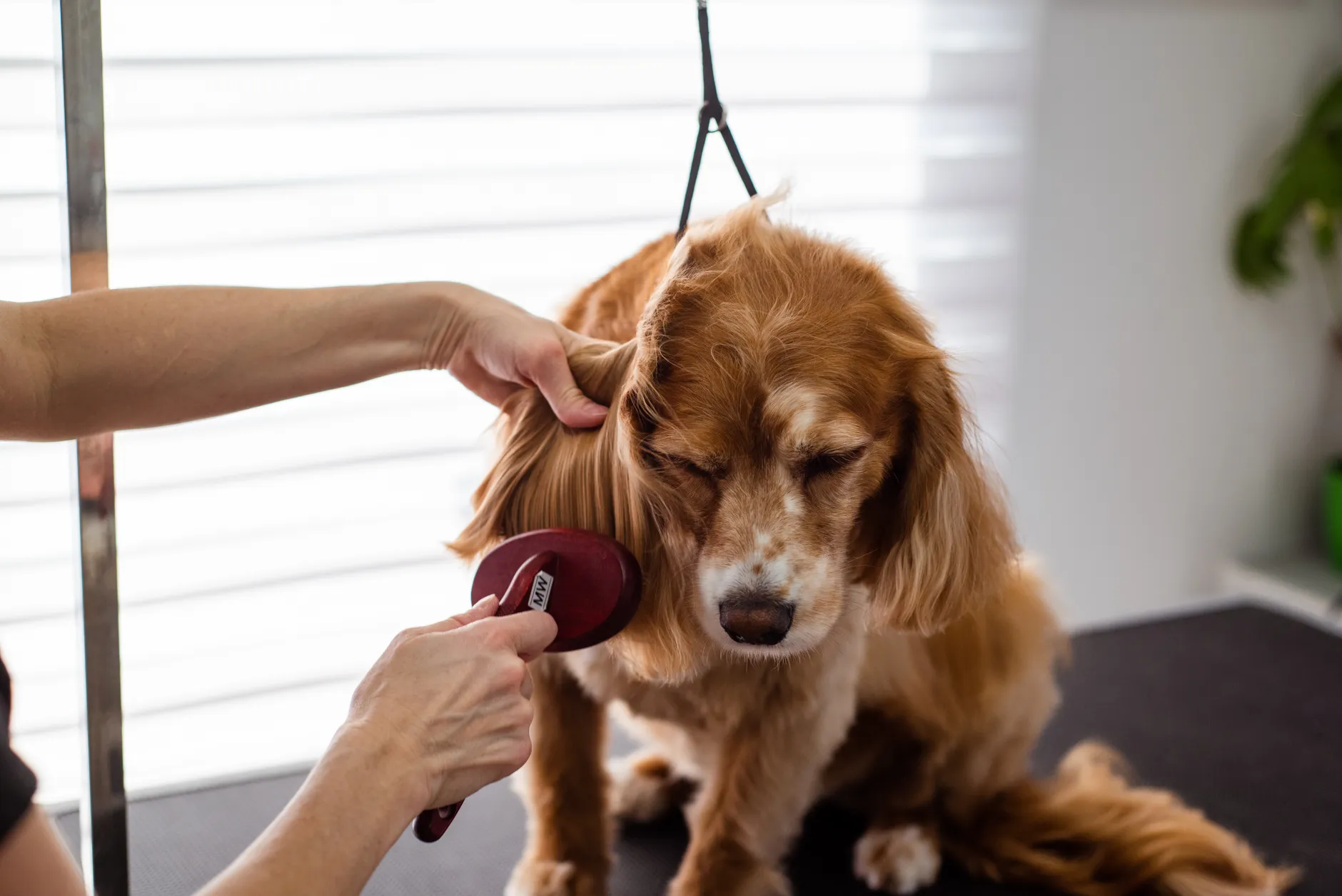
Summer: heat, sun, and water
Summer grooming is about keeping the dog cool, protecting the skin, and managing the effects of swimming and outdoor activity -- not removing coat.
Never shave a double coat
This is the most common and most damaging seasonal grooming mistake. Shaving a double-coated breed does not cool the dog down. The double coat acts as insulation in both directions: it keeps cold out in winter and heat out in summer, while the guard coat provides UV protection. Shaving removes this system entirely, exposing the skin to direct sun (causing sunburn) and eliminating the air-trapping insulation layer. The undercoat often grows back faster and denser than the guard coat, resulting in a permanently altered, woolly texture that insulates worse than the original coat.
Instead, keep the coat well-brushed to remove dead undercoat and allow air circulation. A properly maintained double coat is a cooling system, not a liability.
Paw pad protection from heat
Pavement and asphalt absorb heat and can reach temperatures far above the air temperature. At 30 degrees Celsius (86 degrees Fahrenheit) air temperature, asphalt can reach 57 degrees Celsius (135 degrees Fahrenheit) -- enough to cause second-degree burns within 60 seconds. Use the back-of-hand test: press your hand flat on the surface for 7 seconds. If it is too hot for your hand, it is too hot for paw pads. Walk on grass or shaded paths, and schedule walks for early morning or evening.
Sun protection
Dogs with thin, light, or sparse coats need sun protection on exposed skin. At-risk breeds include the Whippet, Dalmatian, Bull Terrier, and Chinese Crested. Apply pet-safe sunscreen (not human sunscreen containing zinc oxide, which is toxic if ingested) on the nose bridge, ear tips, belly, and any areas with thin coverage. Reapply every 2-4 hours during extended outdoor time.
Swimming and water safety
Dogs that swim regularly need post-swim care. Rinse the coat with fresh water after swimming in chlorinated pools, salt water, or natural bodies of water to remove chemicals, salt, and bacteria. Dry the ears thoroughly after every swim -- moisture trapped in floppy ears creates ideal conditions for ear infections. Breeds with heavy ear flaps (Cocker Spaniel, Labrador, Golden Retriever) are especially vulnerable. Increase bathing slightly if your dog swims frequently, and use a conditioner to counteract the drying effects of chlorine or salt.
Brachycephalic breeds in summer heat
Brachycephalic breeds (Pug, French Bulldog, Bulldog, Boston Terrier, Shih Tzu) face elevated heat risk due to compromised airways. Grooming cannot solve the underlying respiratory anatomy, but it supports temperature regulation. Keep skin folds clean and dry -- moisture trapped in facial and body folds breeds bacterial and yeast infections, which worsen in humid summer conditions. Use unscented, dog-safe wipes daily on facial folds. Avoid exercise and grooming sessions during peak heat hours. Watch for excessive panting, which in brachycephalic breeds escalates quickly to heat exhaustion.
Autumn: preparing for winter
Autumn is a transition season. The coat is thickening, parasite season is winding down, and paw pads need conditioning before the first freeze.
Autumn coat transition
Many double-coated breeds experience a lighter secondary blow as the summer coat transitions to the denser winter undercoat. This is less dramatic than spring shedding but still benefits from increased brushing (daily for 1-2 weeks). The new undercoat growing in can trap dead hair if not brushed out, leading to matting close to the skin -- particularly behind the ears, under the armpits, and around the collar area.
Final parasite treatment
Complete the season's flea and tick prevention. In warmer climates, year-round prevention is standard. In colder regions, continue treatment until the first hard frost. During grooming sessions, check thoroughly for ticks -- autumn is a peak period for deer ticks in many regions. Remove any ticks with fine-tipped tweezers, pulling straight up without twisting.
Paw pad conditioning
Before the ground freezes and salt appears on roads, condition the paw pads. Apply a dog-safe paw balm 2-3 times per week through autumn to build pad resilience. Check for cracks, dryness, or roughness that could worsen in winter conditions. Trim the fur between the toes -- excess inter-digital fur traps ice balls in winter, causing pain and cold exposure. For detailed nail care ahead of the season, see the nail trimming guide.
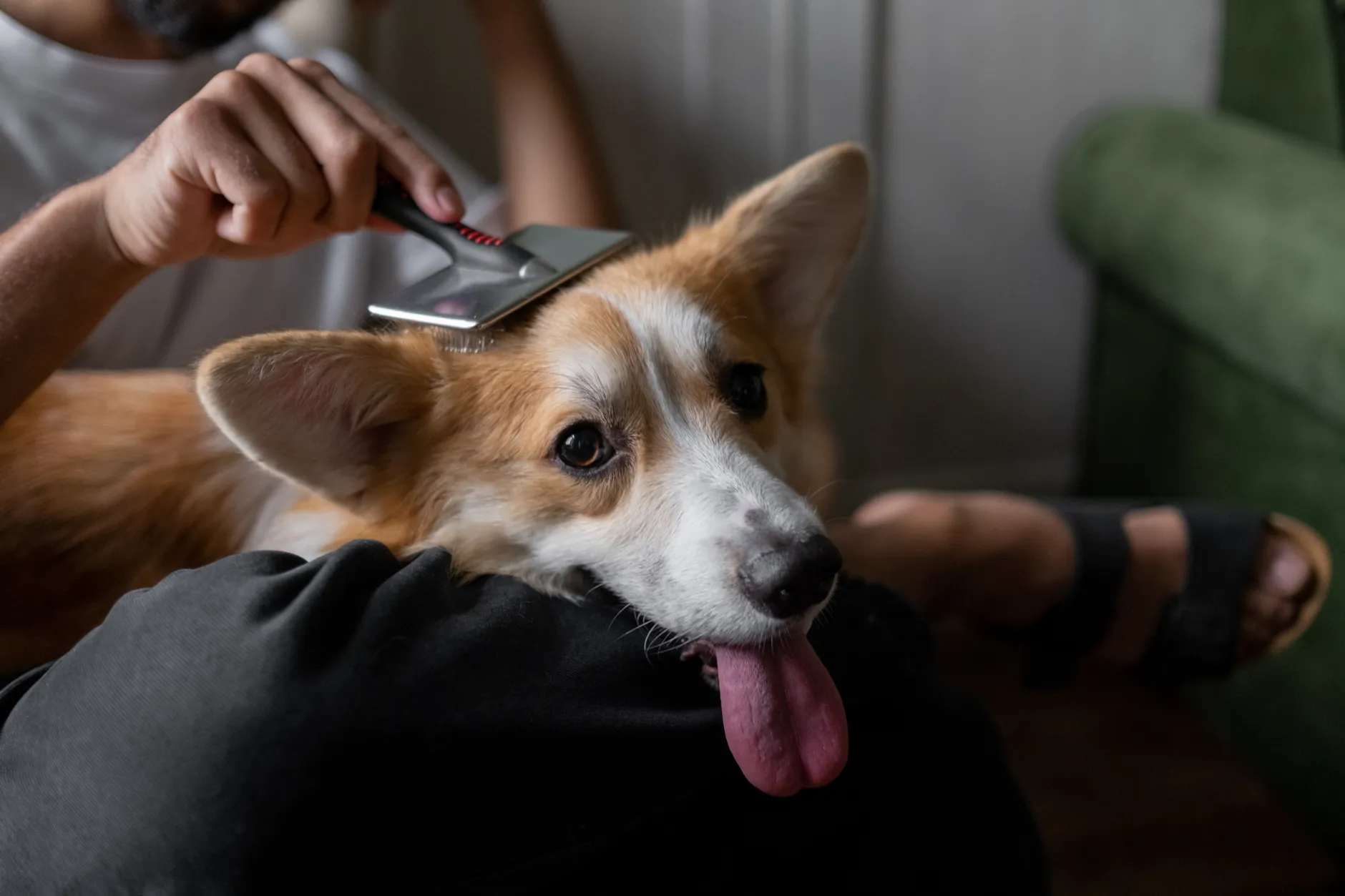
Winter: dry skin, paw care, and coat protection
Winter grooming focuses on moisture retention, protecting paw pads from salt and ice, and maintaining coat condition without over-bathing.
Paw care after winter walks
Road salt and chemical de-icers are the single biggest winter grooming concern. They cause irritation, cracking, and chemical burns on paw pads, and they are toxic if ingested through licking. After every walk on treated surfaces, rinse or wipe all four paws with warm water and dry thoroughly. Apply a protective paw wax before walks to create a barrier. Dog boots provide the most reliable protection but require desensitisation for most dogs -- start with short indoor sessions before expecting comfortable outdoor use.
Ice balls form between the toes in breeds with longer foot fur (Golden Retriever, Bernese Mountain Dog, Cocker Spaniel). Keep inter-digital fur trimmed short to prevent buildup. After walks, check between the toes and remove any ice or packed snow.
Dry skin management
Indoor heating combined with cold outdoor air creates a low-humidity environment that strips moisture from the skin and coat. Signs include visible flaking (dandruff), dull coat, and increased scratching. To manage winter dry skin:
- Reduce bathing frequency to every 6-8 weeks; each bath removes natural oils that take time to replenish
- Switch to a moisturising shampoo formulated for dry or sensitive skin; avoid degreasing or clarifying formulas in winter
- Consider a coat oil or leave-in conditioner applied after brushing to seal in moisture
- Brush regularly (2-3 times per week) to distribute natural oils from the skin through the coat
- Maintain indoor humidity -- a humidifier benefits both the dog and the humans in the household
If dry skin persists despite these measures, consult your veterinarian. Persistent flaking, hair loss, or excessive scratching may indicate an underlying condition rather than simple seasonal dryness.
Coat care in cold weather
Do not clip or trim double-coated breeds in winter -- the full coat is their primary insulation. Single-coated breeds with short fur (Whippet, Greyhound, Great Dane, Doberman Pinscher) lack natural cold-weather insulation and benefit from a fitted coat or jacket for walks in freezing conditions. This is not cosmetic -- these breeds lose body heat rapidly and are genuinely uncomfortable in cold temperatures without a layer.
Nail trimming in winter
Nails grow at the same rate year-round, but natural wear decreases in winter because dogs spend less time on abrasive outdoor surfaces. Expect to trim more frequently -- every 2-3 weeks rather than the typical 3-4. Overgrown nails affect gait and become more problematic on slippery winter surfaces.
Breed-specific seasonal considerations
Different coat types respond differently to seasonal changes. Here is how to adjust for the main categories:
Double-coated breeds
Breeds: Siberian Husky, Golden Retriever, German Shepherd, Samoyed, Bernese Mountain Dog, Labrador Retriever, Alaskan Malamute.
These breeds have the most dramatic seasonal grooming variation. Spring and autumn coat blows require daily brushing (15-30 minutes per session for heavy-coated breeds) and undercoat-specific tools. Never shave. In summer, focus on thorough undercoat removal to maximise air circulation. In winter, allow the full coat to function as insulation and brush regularly to prevent matting under the dense undercoat.
Single-coated breeds
Breeds: Poodle, Maltese, Greyhound, Whippet, Yorkshire Terrier.
Single-coated breeds do not blow coat and have minimal seasonal shedding variation. Their grooming schedule stays more consistent year-round. The main seasonal adjustments are: protective clothing in winter (especially for short-haired single coats), sun protection in summer for thin-coated breeds, and year-round skin moisture management since they lack the undercoat's oil-trapping layer. Clipping schedules (for Poodles, Maltese) remain the same regardless of season.
Brachycephalic breeds in seasonal extremes
Breeds: Pug, French Bulldog, Bulldog, Boston Terrier, Shih Tzu.
Summer is the critical risk season. Their compromised airways make them inefficient at panting -- the primary cooling mechanism for dogs. Grooming sessions should be short, conducted in air-conditioned environments, and never during peak heat. Skin fold care intensifies in humid months: clean folds daily with unscented wipes and ensure they are fully dry to prevent yeast and bacterial infections. In winter, many brachycephalic breeds have thin coats and benefit from a jacket for outdoor walks.
Building a year-round grooming calendar
Rather than reacting to seasonal problems, plan ahead. Set reminders for these seasonal transitions:
- Early March: Stock up on deshedding tools and undercoat rakes; begin daily brushing as the spring blow starts
- April-May: Schedule a professional deshedding session if coat blow is heavy; resume flea/tick prevention; give the post-winter bath
- June-August: Apply paw wax before walks on hot surfaces; sunscreen for at-risk breeds; post-swim ear drying; clean brachycephalic skin folds daily
- September-October: Increase brushing for autumn coat transition; condition paw pads; complete final parasite treatment in cold-climate regions
- November-December: Switch to moisturising shampoo; reduce bathing frequency; trim inter-digital fur; check paw pads after every walk on treated surfaces
- January-February: Monitor for dry skin; maintain regular brushing to distribute oils; increase nail trim frequency; keep coat at full length for insulation
The Dog Grooming Schedule Generator creates a personalised routine based on your dog's breed and coat type, including seasonal adjustments for shedding and bathing frequency.
Frequently asked questions
- Should I shave my double-coated dog in summer?
- No. A double coat (Siberian Husky, Golden Retriever, German Shepherd, Samoyed, Bernese Mountain Dog) insulates against both cold and heat. The undercoat traps air that regulates temperature, and the guard coat protects against UV radiation. Shaving removes this system and exposes the skin to sunburn and overheating. The coat often grows back improperly, with a patchy or woolly texture. Instead, increase brushing frequency to remove loose undercoat and allow the insulating layer to work as designed.
- How often should I bathe my dog in winter?
- Reduce bathing frequency in winter to every 6-8 weeks (compared to every 4-6 weeks in warmer months). Cold, dry air combined with indoor heating strips natural oils from the coat faster than usual, so over-bathing worsens dry skin. When you do bathe, use lukewarm water, a moisturising dog shampoo, and dry the coat thoroughly before the dog goes outside. Between baths, a damp cloth wipe-down after walks removes salt and grit without stripping oils.
- Do dogs need sunscreen?
- Some dogs do. Dogs with thin or light-coloured coats, pink skin, or sparse hair on the nose, ears, and belly are vulnerable to sunburn. Breeds at higher risk include Whippets, Bull Terriers, Dalmatians, and Chinese Cresteds. Use a pet-safe sunscreen (zinc oxide in human sunscreen is toxic to dogs if licked) on exposed areas: nose bridge, ear tips, belly, and any areas with thin or no fur. Reapply every 2-4 hours during prolonged outdoor exposure.
- When does spring coat blow happen and how long does it last?
- Double-coated breeds typically blow their undercoat in spring (March through May in the Northern Hemisphere) as daylight hours increase. The process lasts 2-4 weeks, during which loose undercoat comes out in large clumps. Daily brushing with an undercoat rake and deshedding tool during this period is essential. Some breeds (Siberian Husky, Alaskan Malamute, Samoyed) have a second, lighter blow in autumn (September through November).
- How do I protect my dog's paws from road salt in winter?
- Road salt and chemical de-icers cause irritation, cracking, and chemical burns on paw pads. After every winter walk, rinse or wipe paws with warm water and dry them thoroughly. Apply a paw balm or wax (petroleum-free, dog-safe) before walks to create a protective barrier. Dog boots provide the best protection but require desensitisation training for most dogs. Trim the fur between the toes to prevent ice ball accumulation. If your dog licks its paws excessively after walks, salt residue is likely the cause.
- Should I change my dog's brushing routine between seasons?
- Yes, for double-coated breeds especially. In spring and autumn during coat transitions, increase brushing to daily sessions using an undercoat rake and deshedding tool. In summer, maintain 2-3 sessions per week focusing on removing dead undercoat to improve airflow. In winter, brush 2-3 times per week with a slicker brush to distribute natural oils and prevent dry-skin flaking. Single-coated breeds (Poodle, Maltese, Greyhound) need consistent year-round brushing with minimal seasonal variation.


