
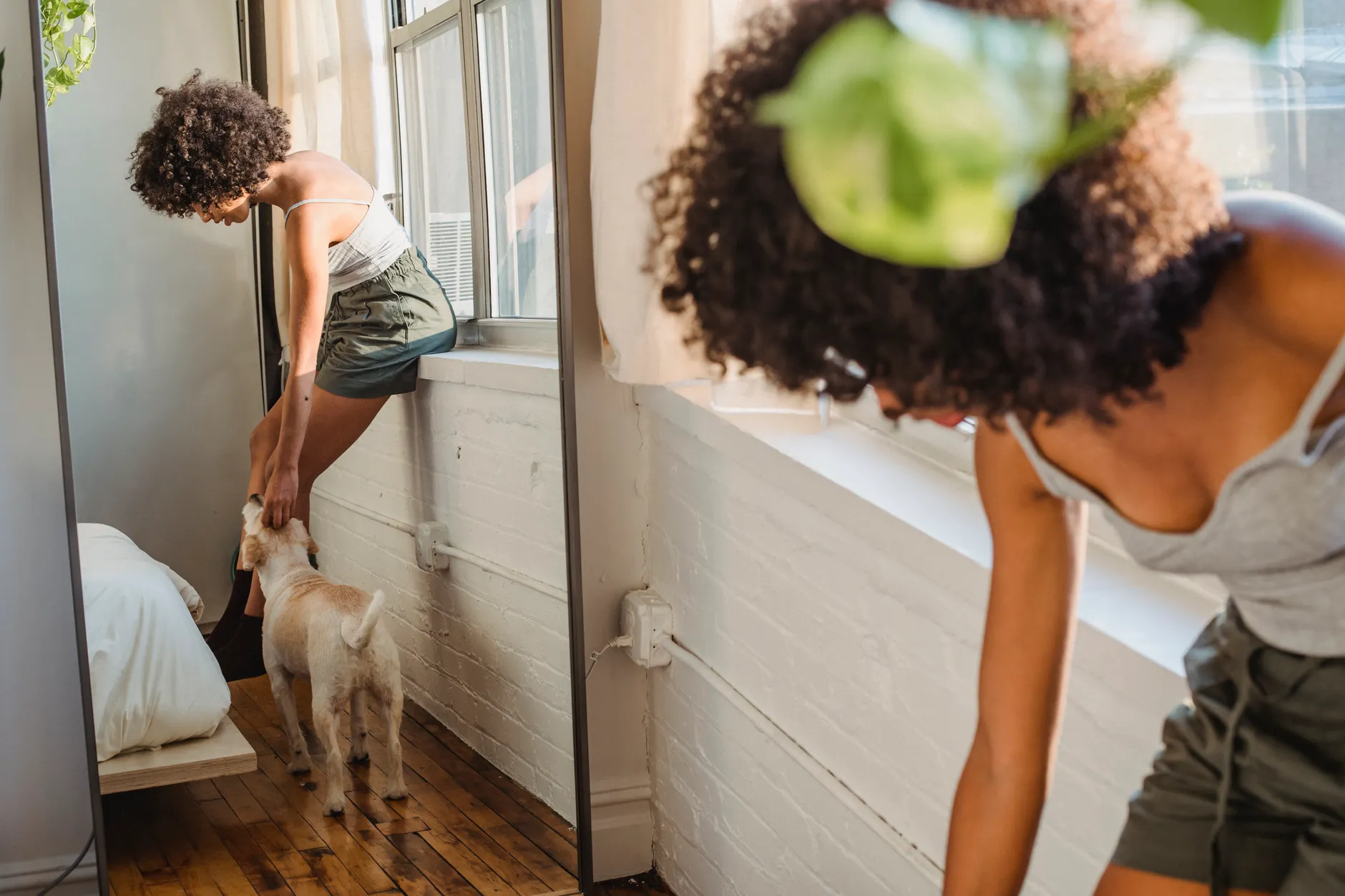
Apartment living with a dog is absolutely achievable — for the right dog, with the right owner commitment. The most common mistake is choosing a dog based on size alone. A small Jack Russell Terrier can be far more challenging in an apartment than a large, calm Greyhound. The factors that actually determine success are energy level, barking tendency, and how consistently the dog's exercise and enrichment needs are met.
What apartment-friendly actually means
"Apartment-friendly" means a dog that can live contentedly in a smaller space without a private garden, managed with urban walking routines. It does not mean zero exercise needs — it means manageable exercise needs that can be met without outdoor private space.
The three most important apartment traits:
- Calm indoors — settles without constant stimulation; does not pace or demand constant engagement
- Low barking tendency — does not bark excessively at hallway sounds, other dogs, or visitors (relevant in shared-wall buildings)
- Manageable exercise needs — can be fully satisfied with daily structured walks rather than hours of off-lead running
Breeds that genuinely suit apartment life
These breeds are consistently adaptable to apartment living when their baseline exercise needs are met through regular walks.
- Whippet — Calm indoors despite speed — a genuine couch potato between exercise sessions
- Cavalier King Charles Spaniel — Gentle, quiet, and low energy; adapts easily to smaller spaces
- French Bulldog — Low exercise needs, quiet, minimal outdoor space required
- Bichon Frise — Small, low-shedding, moderate energy; bonds well in close quarters
- Maltese — Small, low-shedding, calm; adjusts to apartment routines reliably
- Shih Tzu — Bred as a palace companion; content with indoor life and moderate walks
- Standard Poodle — Surprisingly adaptable — calm indoors when exercised adequately
- Great Dane — Giant but calm and low-energy indoors; manageable with consistent walks
- Greyhound — The original couch potato; low barking, very calm between sprint sessions
Use Dog Breed Finder by Traits to filter all 100 breeds by apartment friendliness, barking tendency, and energy level simultaneously.
Breeds that are genuinely challenging in apartments
These breeds can technically live in apartments but require exceptional commitment and present real management challenges. Not impossible, but not the natural fit.
- Siberian Husky — Very high energy, vocal (howling), and destructive when under-exercised
- Border Collie — Working dog brain requires space and purpose; ill-suited to small, low-stimulation spaces
- Jack Russell Terrier — High energy, vocal, and prone to barking — significant management challenge in shared buildings
- Dalmatian — Very high energy; needs extensive daily running that is hard to provide without outdoor access
- Weimaraner — High-stamina sporting breed; significant exercise needs and prone to separation anxiety
- Australian Shepherd — Working drive and energy level are mismatched with typical apartment constraints

The daily routine that makes it work
Morning
The first walk of the day is the most important. After a night of rest, dogs need a meaningful opportunity to toilet, explore smells, and move. A brisk 20–30 minute walk sets the tone for a calm morning indoors. For high-energy breeds, this should be vigorous.
Midday
A midday break is important, particularly for puppies and social breeds. If you work from home, this is a short toilet break and brief interaction. If you are away, a dog walker visit is strongly recommended for puppies and high-drive breeds — 5–8 hours alone is the realistic limit for most adult dogs.
Evening
The main exercise session. 45–90 minutes depending on breed. This is the time for off-lead running in a local park, fetch, or structured training. Following with enrichment (Kong, puzzle feeder, training session) before the dog settles for the evening is more effective than a single long walk.
Mental enrichment indoors
Apartment dogs need more deliberate indoor enrichment because they have less environmental variety. Rotate enrichment activities through the week:
- Stuffed Kongs (frozen variety lasts longest)
- Scatter feeding or snuffle mats at mealtimes
- 5–10 minute training sessions (new tricks or maintaining existing cues)
- Puzzle feeders matched to your dog's problem-solving ability
Managing barking in shared buildings
Barking is the most common apartment dog problem and the most common reason landlords restrict dog ownership. The most effective approaches:
- Identify the trigger — alert barking (hallway sounds), demand barking (attention-seeking), or anxiety barking (separation) each need different approaches
- Desensitise to hallway sounds — play recordings of the trigger at low volume and reward calm, gradually increasing volume over days
- White noise machine — reduces audibility of hallway triggers; effective and non-invasive
- Teach "quiet" on cue — allow two barks, then calmly say "quiet" and reward the moment of silence; consistency over weeks is required
- Ensure adequate exercise — many apartment barking problems are fundamentally exercise deficits
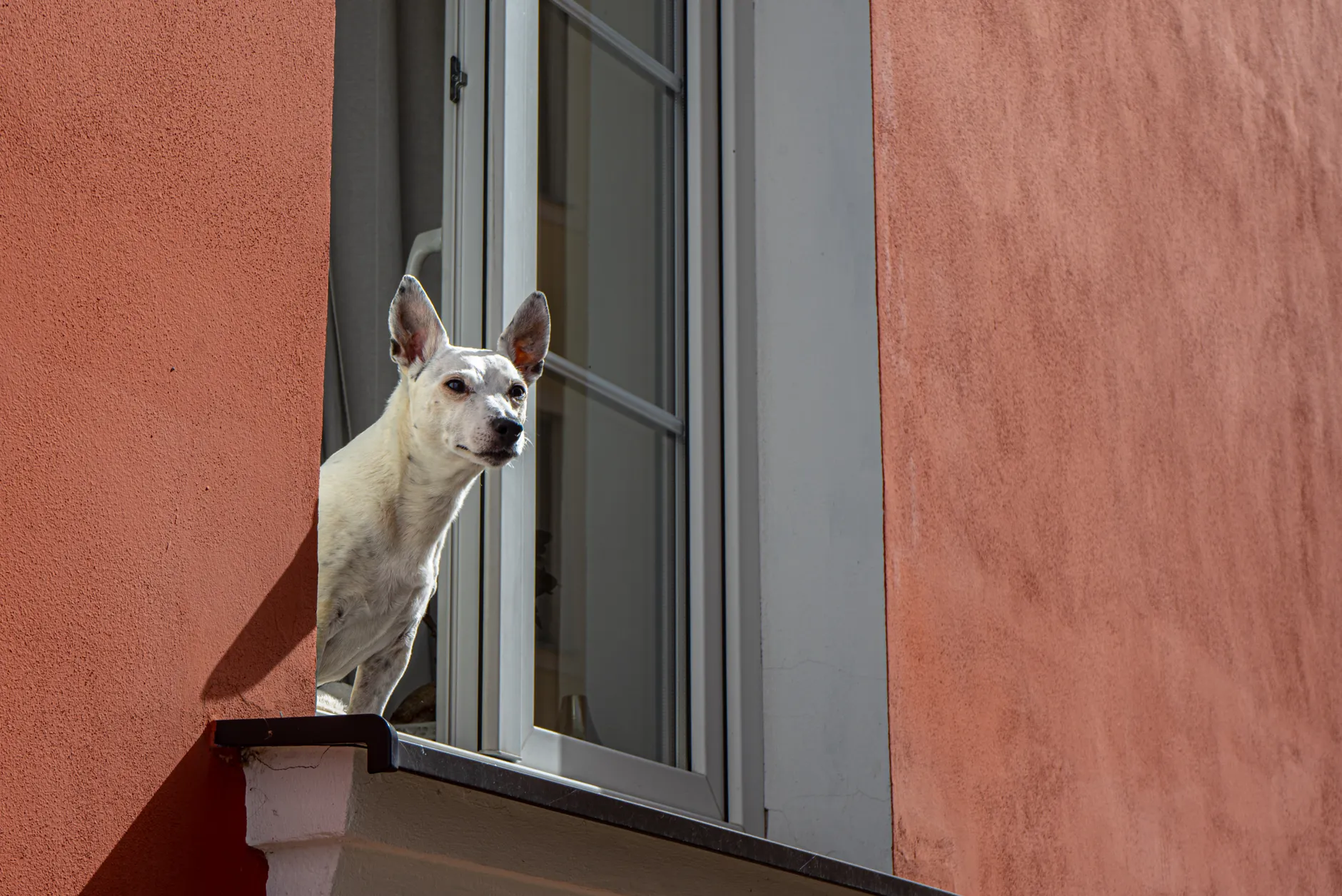
Frequently asked questions
- What makes a dog apartment-friendly?
- The key factors are: low-to-moderate energy level indoors (the dog settles well between walks), low barking tendency (for shared-wall buildings), appropriate size for the space, and reasonable exercise needs that can be met without a private garden. Surprisingly, it is not purely about size — a large Greyhound or Great Dane can live well in an apartment because of their calm indoor temperament, while a small Jack Russell Terrier can be genuinely unsuitable due to high energy and barking.
- Can high-energy breeds live in apartments?
- It depends entirely on how consistently their exercise needs are met. Border Collies, Huskies, and similar working breeds are listed as poor apartment fits — not because they physically cannot live there, but because meeting their 90-180+ minutes of daily vigorous exercise without a garden requires exceptional owner commitment. When that commitment exists, many high-energy breeds adapt. When it does not, the result is a miserable, destructive dog.
- How do I manage barking in an apartment?
- Prevention is more effective than correction. Consistent daily exercise reduces anxiety-driven barking. Management: identify triggers (other dogs in the hallway, doorbells, external noise) and desensitise systematically using counterconditioning. White noise machines reduce reactivity to hallway sounds. For alert barking, teaching a "quiet" cue and rewarding the silence is effective with consistent application. If barking is severe, a qualified behaviourist can help more than generic advice.
- What size dog is best for an apartment?
- Size is less predictive than energy level and barking tendency. Many smaller dogs (Chihuahua, Jack Russell Terrier, Miniature Pinscher) are energetic, vocal, and challenging in apartments. Many larger dogs (Greyhound, Great Dane, Bulldog, Bernese Mountain Dog) are calm indoors and adapt well. Use our Dog Breed Finder by Traits to filter by apartment-friendliness, barking, and energy level together — that combination tells you more than size alone.
- How much exercise is enough without a garden?
- The absence of a garden increases the importance of structured walks, not the total time required. Most dogs need their breed-appropriate daily exercise in any living situation. The practical difference: you will be taking walks for every toilet break, and those walks must cover the exercise need. Two structured walks per day plus enrichment activities usually meets the need for small to medium breeds. High-energy breeds in apartments need additional off-lead running in parks or enclosed areas.


