
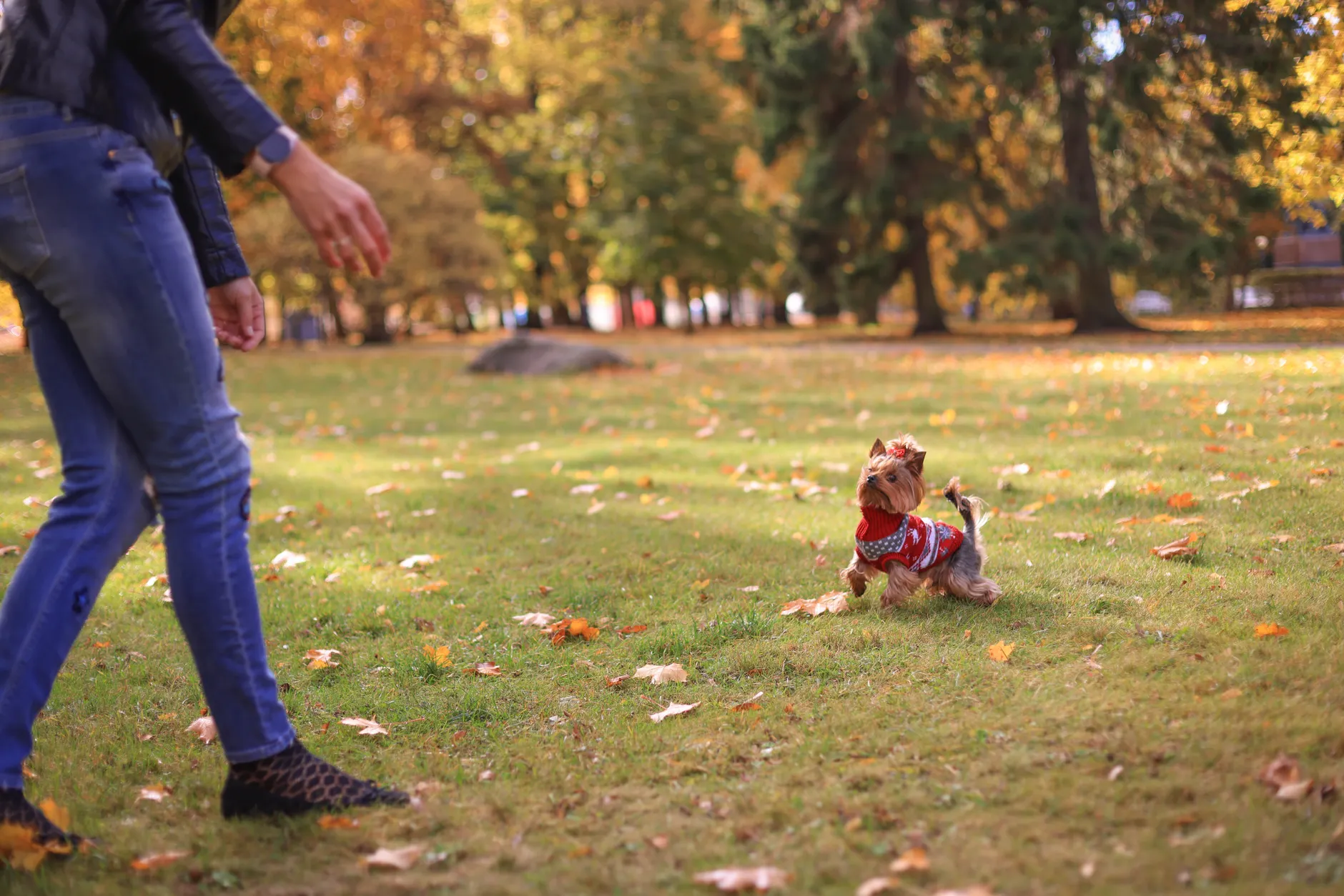
A reliable recall — your dog returning to you immediately when called, regardless of what else is happening — is the single most important skill any dog can learn. It is a safety behaviour, not a party trick. It prevents dogs from running into traffic, approaching aggressive animals, eating dangerous objects, and disappearing into the distance. Yet recall is also one of the most commonly failed skills, because owners rush the process, use the cue inconsistently, or accidentally teach the dog that coming back ends all the fun.
Why recall fails: the three most common mistakes
Before looking at how to train recall, it helps to understand why most recall training breaks down. Nearly every recall failure traces back to one of three errors.
The cue has been poisoned
A poisoned cue is one the dog has learned to associate with something unpleasant. If "come" has been followed by nail trimming, bath time, being put in the crate, or having the leash clipped on to leave the park, the dog has learned that "come" predicts the end of good things. The word still means something to the dog — it means "something I don't want is about to happen." A poisoned cue cannot be rehabilitated easily. In most cases, you need to start fresh with a completely new word or whistle.
Too much too soon
The most common training error is expecting reliable outdoor recall before the dog has mastered it indoors. A dog that comes when called in the kitchen is performing a completely different task from a dog that comes when called at the dog park. The smells, the movement, the social opportunities, and the sheer novelty of outdoor environments create competing motivators that are orders of magnitude stronger than anything indoors. Recall must be built in graduated stages of distraction, with the difficulty increasing only when the current level is fluent.
Inconsistent consequences
When a dog comes back sometimes and gets a treat, sometimes gets ignored, and sometimes gets scolded for taking too long, the dog is on a variable and unpredictable schedule. The only reliable lesson the dog learns is that recall is a gamble. In the early stages, every single recall must be rewarded — generously. The dog needs to build a rock-solid association: hearing the cue and running back to you is always the best decision available.
The three non-negotiable rules of recall
These three rules apply from the first day you start training recall until the day you stop owning dogs. They are not suggestions — violating any of them degrades recall reliability.
- Never punish a return. No matter how long it took, no matter what the dog did before coming back, the moment the dog arrives at you, it gets rewarded. Punishing a slow return teaches the dog that coming back is dangerous. The dog did not learn "come faster next time" — it learned "don't come at all."
- Always reward the recall. In the training phase, every recall gets a high-value reward. Even after the behaviour is fluent, intermittent rewards should continue for life. Recall is too important to let the reinforcement history decay. A dog whose recall has never been unrewarded is a dog whose recall stays sharp.
- Never give the cue if you cannot follow through. If your dog is 200 metres away chasing a deer and you have no leash, no long line, and no way to influence the outcome, do not call the dog. Every time the cue is given and the dog ignores it successfully, the cue loses value. Only use your recall cue when you are confident the dog will respond — or when you have a way to make it happen (such as a long line).
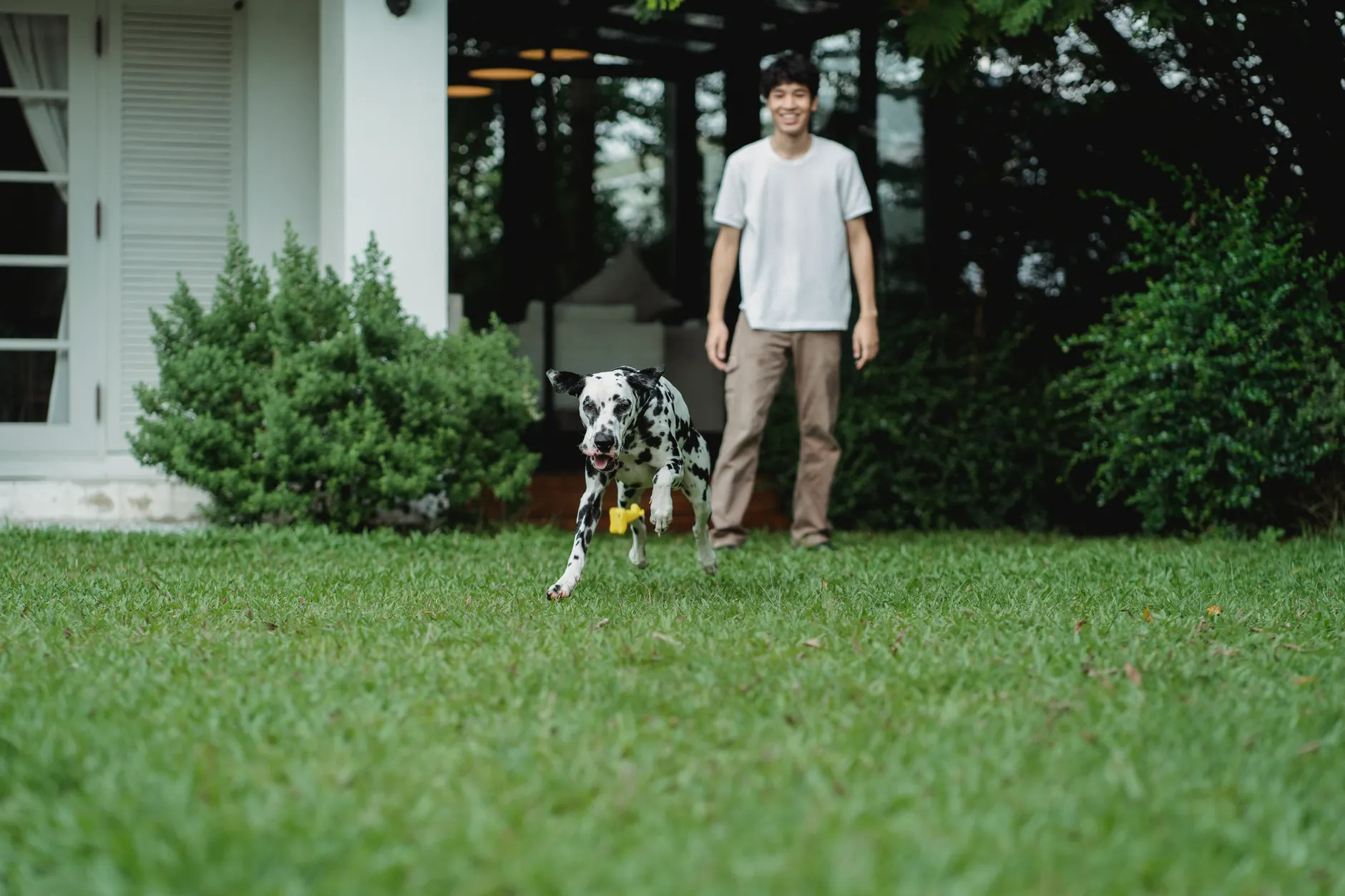
Building recall in stages
Reliable recall is built through a progression of environments, each adding more distraction. Moving to the next stage before the current one is reliable (8 out of 10 successful recalls at minimum) guarantees failure. Patience at each stage saves months of frustration later.
Stage 1: Indoors, minimal distraction
Start in a quiet room with no other people or animals. Wait until the dog is a few feet away but not engaged with anything compelling. Say your recall cue once (a clear, upbeat word — "here," "come," or a whistle), and immediately show a high-value treat. When the dog reaches you, mark ("yes" or a clicker), deliver 3 to 5 treats in a row (a "jackpot" builds a stronger association than a single treat), and praise warmly. Practice 10 to 15 repetitions across a day, spread over 3 to 4 short sessions.
Stage 2: Indoors with mild distractions
Add a family member in the room, a toy on the floor, or some background noise. Call the dog while it is mildly engaged. If the dog does not respond on the first cue, do not repeat it — instead, move closer, make a kissy noise or clap to get attention (not the recall cue), and try again when the dog looks at you. This stage teaches the dog to disengage from mild distractions to respond to the cue.
Stage 3: Enclosed outdoor area
A fenced garden, a tennis court, or an enclosed dog park during off-hours. The outdoor smells and sights are significantly more distracting than indoors. Increase your reward value: if kibble worked inside, use chicken or cheese outside. Keep sessions to 5 to 10 minutes. If the dog fails more than 2 out of 10 recalls, you are asking for too much distraction — simplify the environment or increase your reward value.
Stage 4: Long line in open spaces
A 15 to 30 foot long line is essential for this stage. It allows the dog to experience distance and freedom while giving you a safety net. Never use the long line to reel the dog in — that teaches the dog that the line is a restraint, not that recall is a choice. Let the line drag on the ground, call the dog, and reward heavily. If the dog does not respond, you can step on the line to prevent further departure, then encourage (not drag) the dog back.
Stage 5: Proofing with real-world distractions
Practice near (but not in the middle of) other dogs, people, bikes, and wildlife. Gradually decrease distance to distractions as the dog's recall reliability improves. This stage takes weeks to months. It is the stage where most owners get impatient and remove the long line too early. The long line stays on until you have at least 50 consecutive successful recalls in the presence of the specific distraction you are proofing against.
The emergency recall: a separate, high-value cue
An emergency recall is distinct from your everyday recall cue. It is a specific sound — a referee's whistle, a double-blast on a dog whistle, or an unusual word your dog has never heard in any other context — reserved exclusively for situations where the dog's safety depends on an immediate return.
Training protocol:
- Choose your emergency cue. It must be unique — never used for anything else.
- In a low-distraction environment, give the emergency cue and immediately deliver the highest-value reward your dog has ever received: an entire handful of roast chicken, a piece of steak, a dollop of peanut butter. The reward must be extraordinary.
- Repeat once per day for 2 weeks. Do not increase distractions yet — you are building an automatic, reflex-level response.
- After 2 weeks, test with mild distractions. If the dog responds instantly, reward with the same extraordinary jackpot. If not, return to step 2 for another week.
- Practice the emergency recall no more than once per week after the initial training phase. Overuse dilutes the cue. It stays powerful precisely because it is rare and always paired with an exceptional reward.
Breed considerations for recall training
All dogs can learn recall, but breed heritage creates real differences in how easy it is to achieve reliability and how much ongoing management is required.
| Breed group | Recall tendency | Management notes |
|---|---|---|
| Herding (Border Collie, Australian Shepherd) | Generally responsive; handler-oriented | Strong recall once trained, but may fixate on movement (cars, bikes, joggers) and need impulse control work |
| Sporting (Labrador, Golden Retriever) | Highly food-motivated; eager to engage | Usually excellent recall candidates; adolescent retrievers may regress temporarily |
| Scent hounds (Beagle, Bloodhound, Basset) | Scent drive competes heavily with recall | Long line often needed permanently in uncontrolled environments; a scent trail can override even excellent training |
| Sighthounds (Greyhound, Whippet, Saluki) | Movement triggers chase instinct | Off-leash in unfenced areas is often not safe regardless of training; enclosed areas recommended |
| Terriers (Jack Russell, Cairn, Fox Terrier) | Independent; prey-driven | Can build good recall but need higher-value rewards and more proofing around small animals |
| Working/guardian (Akita, Great Pyrenees) | Independent decision-making bred in | Recall possible but these breeds are not handler-dependent by nature; management tools (fencing, long line) recommended |
Breed tendencies are averages, not destiny. Individual dogs within any breed may be easier or harder to train. But understanding your breed's heritage helps you set realistic expectations and choose appropriate management strategies while training is in progress.
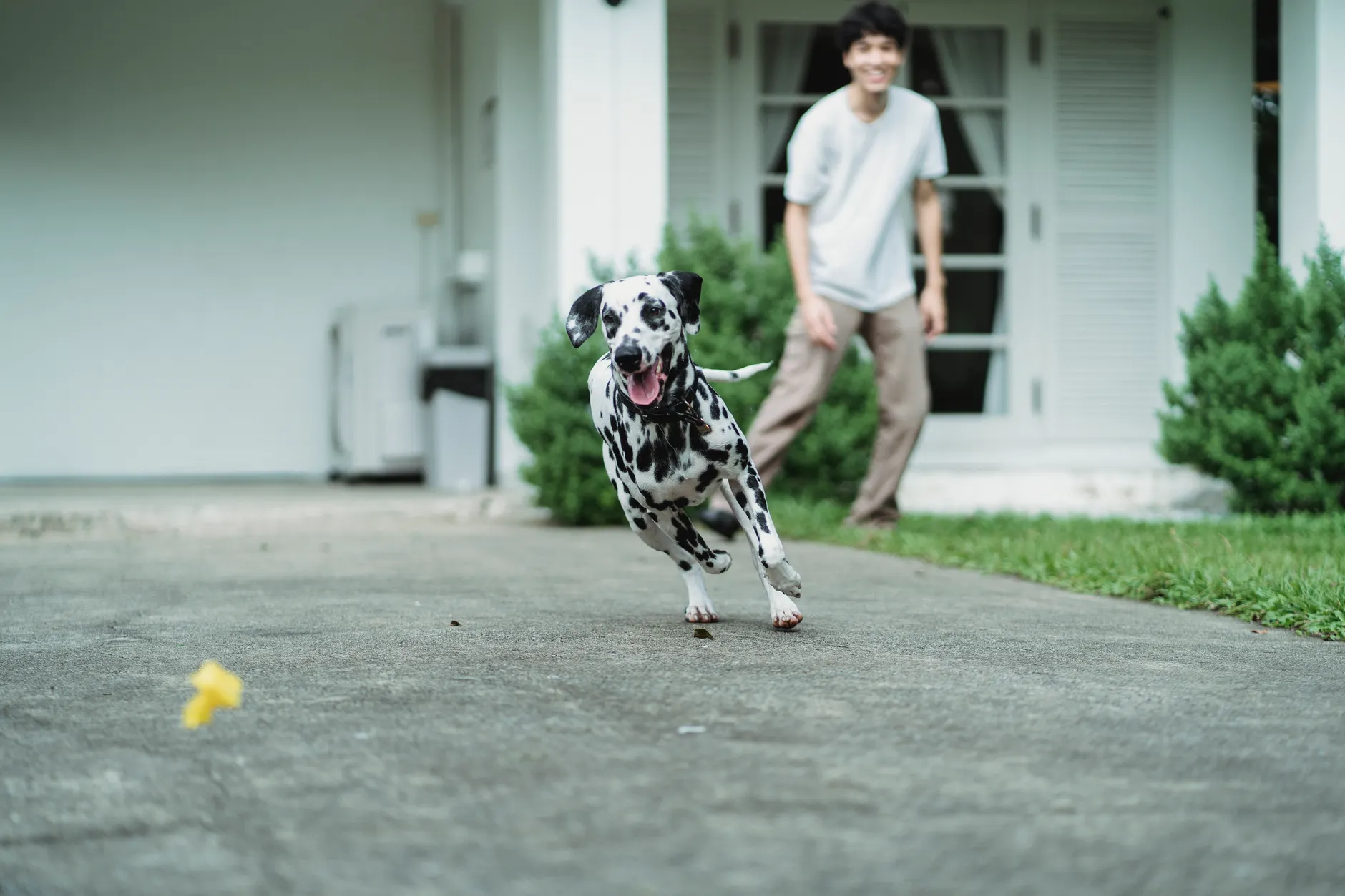
Safety management while recall is in training
Until recall is truly reliable — tested over dozens of successful repetitions in the specific environment you are using — the dog should not be off-leash in uncontrolled areas. Safety management bridges the gap between "learning recall" and "has recall."
- Long lines (15 to 30 feet): Provide freedom to explore while preventing the dog from leaving your influence. Use a flat, lightweight long line attached to a harness (not a collar). Let the line drag; do not hold it at full extension.
- Enclosed off-leash areas: Tennis courts, fenced dog parks during off-peak hours, and enclosed training fields let the dog practice off-leash behaviour safely.
- Avoid off-leash near roads: No level of recall training justifies off-leash walking near traffic until the behaviour has been proofed hundreds of times in that specific context. The cost of a single failure is too high.
- Use management, not hope: "He usually comes back" is not reliable recall. If you would not bet money on the dog returning within 3 seconds of the cue, use a long line.
Maintaining recall for life
Recall is not a skill you train once and then stop reinforcing. Even a dog with excellent recall will gradually degrade if the behaviour is never rewarded. The reinforcement can shift from food to real-life rewards (being released to play, getting to greet another dog, going for a swim), but it must continue.
- Practice in every walk: Call the dog 3 to 5 times per walk, reward each time, and release immediately to continue exploring. Short, rewarded recalls during normal activities maintain the behaviour better than dedicated training sessions.
- Vary rewards: Sometimes food, sometimes a game of tug, sometimes access to a smell, sometimes release to go play. Variety prevents the dog from only responding when it sees a treat bag.
- Never let recall predict only bad things: If the only time you call the dog is to leave the park, clip the leash, or end the fun, recall will deteriorate. Call the dog, reward, and release back to freedom at least 4 out of 5 times.
Frequently asked questions
- How long does it take to train a reliable recall?
- Indoor recall can be reliable within 2 to 4 weeks of consistent daily practice. Recall in moderate outdoor distractions typically takes 2 to 3 months. Reliable recall around high-value distractions (other dogs, wildlife, food on the ground) takes 6 to 12 months for most dogs, and some breed types (hounds, terriers) may always need management in certain environments. The timeline depends on the dog's reinforcement history, breed traits, and how consistently you practice.
- Why does my dog come when called at home but ignore me at the park?
- Dogs do not generalise well — a skill learned in one environment does not automatically transfer to another. At the park, competing motivators (smells, other dogs, squirrels) are far more rewarding than anything you have offered for recall in that context. The fix is gradual proofing: practice recall in progressively more distracting environments, increasing your reward value to compete with the distractions. Jumping from the kitchen to an off-leash dog park skips too many steps.
- Should I use an e-collar or shock collar for recall training?
- No. Electronic collars rely on aversive stimulation (pain or discomfort) to motivate compliance. Research published in the Journal of Veterinary Behavior and position statements from AVSAB and the RSPCA show that aversive methods increase stress, can produce fear-based behaviour fallout, and are not more effective than reward-based methods for recall. A well-built reward history produces recall that is intrinsically motivated — the dog wants to come back — rather than externally suppressed by fear of correction.
- What is an emergency recall and do I need one?
- An emergency recall is a separate, rarely used cue (a specific whistle pattern, an unusual word) reserved for genuine safety situations — your dog is heading toward traffic, an aggressive dog, or dangerous wildlife. It is trained with extremely high-value rewards (an entire handful of roast chicken, for example) and never used for routine recalls, so the association stays exceptionally strong. Every dog that spends time off-leash or in unfenced areas should have one.
- Can I train recall with an older dog who has never had it?
- Yes, but it takes longer than starting with a puppy because you are working against an established reinforcement history where ignoring the recall cue was successful. Start with a completely new cue word the dog has never heard before — the old cue is likely poisoned. Build the new cue from scratch indoors with high-value rewards, and progress through the same stages as a puppy, just with more patience at each level.
- How do I stop my dog running off when I unclip the leash?
- This usually happens because the dog has learned that being off-leash is more rewarding than being on-leash, and that the moment of unclipping is their only chance to access freedom. The fix is twofold: first, practice recalls on a long line so the dog experiences "freedom" while still under your influence; second, make coming back to you the gateway to more freedom rather than the end of it. Call the dog, reward, then release them to play again. This teaches the dog that returning to you predicts more good things, not the end of the fun.
- Are some breeds harder to train for recall than others?
- Yes. Scent hounds (Beagles, Bloodhounds, Basset Hounds) were selectively bred to follow a scent trail independently of handler direction. Terriers were bred for independent prey pursuit. Sighthounds (Greyhounds, Whippets) have high prey drive triggered by movement. These breeds are not disobedient — their genetics create competing motivators that are harder to outweigh with food rewards alone. Reliable recall is still possible but requires more management (long lines, enclosed areas) and acceptance that off-leash freedom in uncontrolled environments may never be fully safe for some individuals.


