
Dogs communicate continuously through body language. The signals are often subtle, frequently misread, and carry real consequences when misunderstood. Reading your dog accurately — particularly recognising stress before it escalates — is one of the most practical skills any owner can develop.
Why body language matters more than sound
Dogs vocalise — they bark, growl, whine, and howl. But vocalisation is the last resort, not the first. In the time before a dog barks or growls, it has already communicated discomfort through body posture, facial expression, and movement. Most bites, most conflicts with other dogs, and most anxiety-driven behaviours are preceded by body language signals that were missed.
The practical consequence: an owner who can read body language can intervene before a situation escalates. An owner who cannot read it tends to accidentally reward stress or ignore early warning signals until they become unavoidable.
Relaxed body language
A relaxed dog shows a cluster of soft, loose signals:
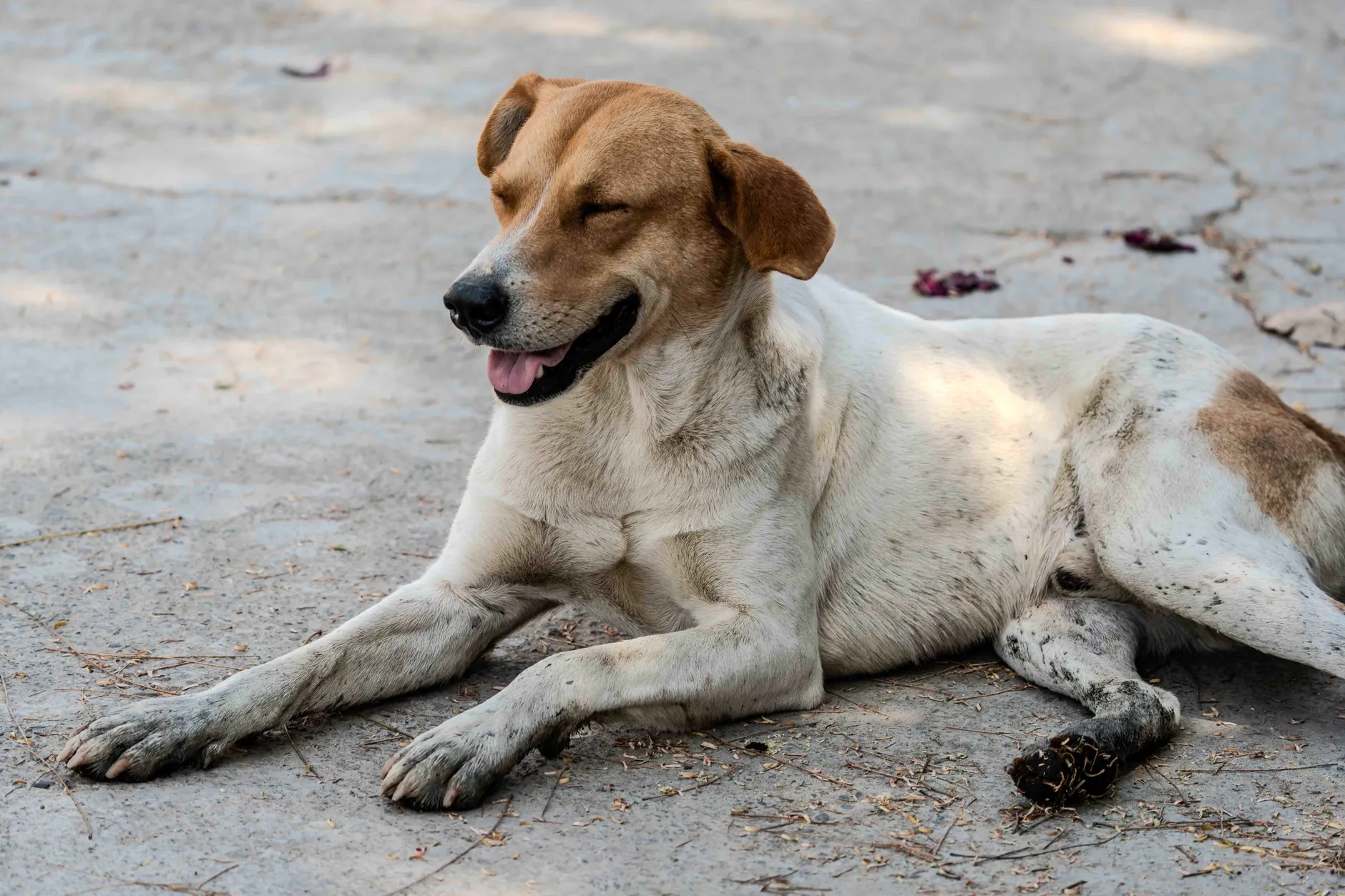
- Soft eyes — slightly squinted, no tension around the eyes; pupils normal
- Relaxed mouth — slightly open or closed, no lip tension; tongue may loll loosely
- Neutral tail — resting at a natural position for the breed; loose movement
- Soft body — weight distributed evenly, no rigidity in the shoulders or hindquarters
- Relaxed ears — in a natural position for the breed; not pinned back or rigid
A loose, wiggly body that involves the whole dog — including the hips — is the clearest indication of a relaxed, approachable dog. The "whole body wag" is meaningfully different from a stiff, fast tail wag with a rigid body.
Stress and discomfort signals
Stress signals appear on a spectrum. Early, low-level signals are often described as "calming signals" — communication that the dog is uncomfortable and attempting to de-escalate. Later signals indicate higher distress.
Low-level stress signals
- Yawning (out of context) — during handling, training, or proximity to something uncomfortable
- Lip licking — a quick tongue flick when not food-related
- Looking away / turning the head — breaking eye contact with something the dog finds uncomfortable
- Nose licking — rapid licking of the nose, often subtle
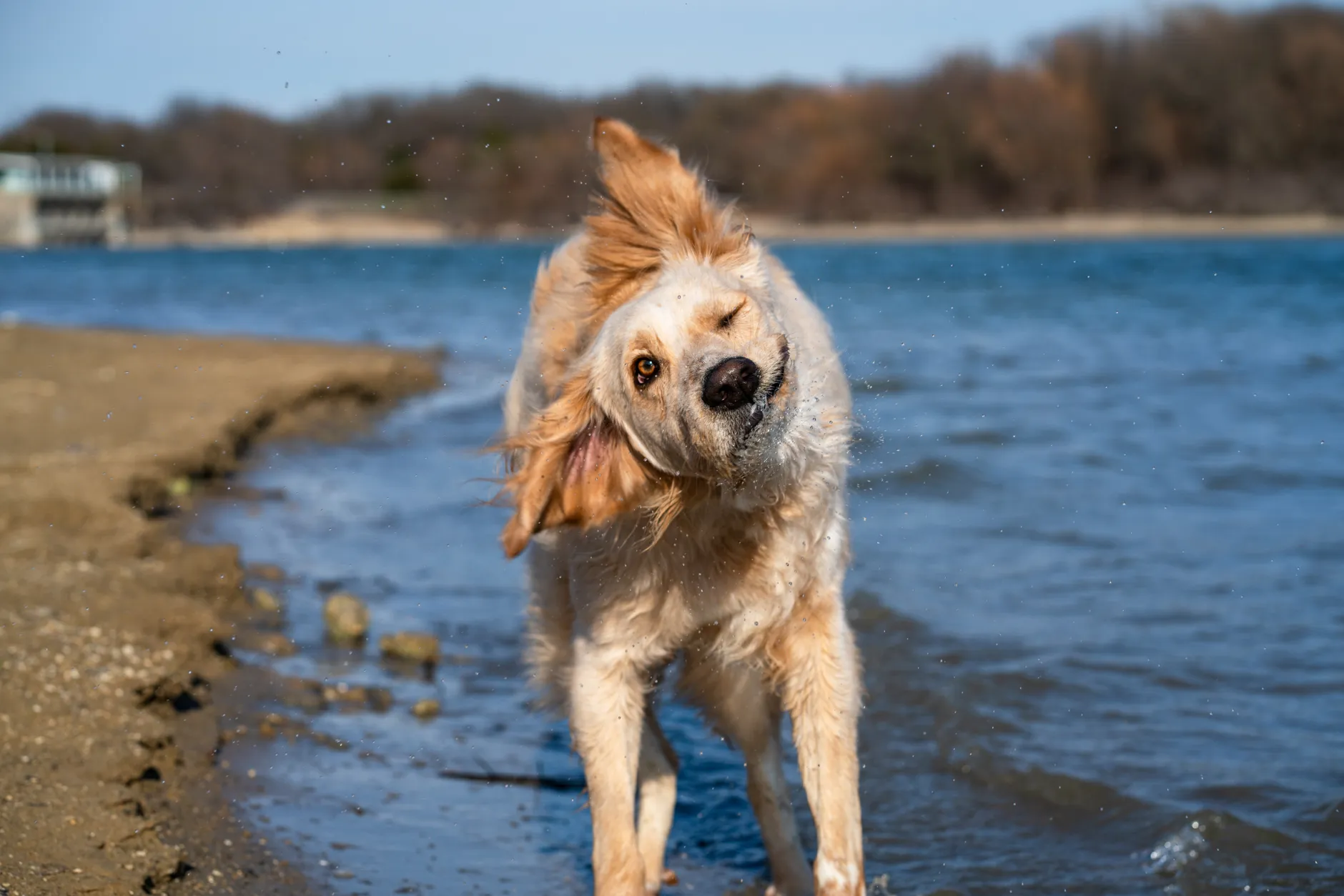
- Shaking off — a full-body shake (like after a bath) at the end of an interaction; signals relief or reset
- Slow movement — moving toward something in a curved, exaggerated arc rather than directly
High-level stress signals
- Whale eye — whites of the eyes visible as the dog turns away while keeping its gaze fixed
- Piloerection — hackles raised along the back (indicates arousal, not necessarily aggression)
- Tail tucked — under the body; indicates fear; a low, stiff tail indicates threat appraisal
- Ears pinned flat — against the skull; indicates fear or extreme appeasement
- Panting when not hot or post-exercise — stress panting has a different quality — shallower, more constant
- Refusing food — a dog that normally takes treats but won't in a given situation is beyond its comfort threshold
Play signals
Play signals communicate intent — the dog is initiating interaction and the behaviour that follows is in play context, not threat or fear context:
- Play bow — front end lowered, hindquarters up; the clearest play invitation in the species
- Bouncy, exaggerated movement — loose, inefficient movement signals playfulness; efficient stalking movement does not
- Open mouth, relaxed — "play face"; soft around the eyes
- Self-handicapping — a larger dog flopping on its back or pulling punches with a smaller dog; demonstrates intent to play fairly
Play can tip into overarousal when it becomes one-directional — one dog always chasing, never being chased. Watch for the dog being "chased" offering no play signals — this may be pursuit, not play.
Warning signals and the bite escalation sequence
Bites rarely occur without prior communication. The typical escalation sequence:
- Freeze — sudden stillness; the dog has decided something is a potential threat and is assessing it
- Hard stare — direct, sustained, unblinking eye contact; very different from soft eye contact in play
- Low growl or rumble — a warning; the dog is communicating it wants the pressure to stop
- Snap or air bite — a controlled warning; the dog is able to make contact but chose not to
- Bite — the sequence has broken down or the warning was overridden
The most dangerous thing owners do is punish growling. A dog that learns growling leads to punishment removes step 3 from the sequence — not the bite. The bite becomes the first warning, which appears to have come without prior signal. Growling is communication; it should be respected as such.
When you observe a freeze, hard stare, or stiffened body: stop the interaction, move calmly away, and give the dog space. Do not escalate, reach over the dog, or attempt to physically manage the situation with your hands near the dog's head.
Common misreadings
- Treating a submissive roll as an invitation to rub the belly — a fear roll and an invitation roll look different; a tense, freezing dog that rolls is not asking for contact
- Reading a stiff, high tail wag as friendliness — tail movement alone is not sufficient; body tension, hackles, and eye contact complete the picture
- Interpreting a dog leaning on you as affection — usually is; but in some contexts with high body tension it can indicate guarding behaviour
- Misreading a panting, still dog as relaxed — a dog that is panting in a non-hot, non-exercise context and not moving much may be in mild shutdown, not relaxation
- Assuming a dog's greeting behaviour reflects its general temperament — greetings are high-arousal events; the dog at the door is not the dog at rest
Frequently asked questions
- What does it mean when a dog yawns?
- Context determines the meaning. A yawn after waking is simply fatigue. A yawn during training, handling, or in a stressful situation is a stress signal — the dog is communicating discomfort and often asking for the pressure to decrease. Repeated yawning alongside lip licking, looking away, or body tension indicates significant discomfort. This is sometimes called a "calming signal" — the dog is attempting to de-escalate the situation.
- Is a wagging tail always a sign of a friendly dog?
- No. Tail wag speed, height, and direction all carry information. A high, stiff, fast wag is not the same as a loose, low, wide wag. Research suggests rightward wags correlate with positive emotional states; leftward wags with negative. A tail held high and vibrating rapidly is often seen in dogs that are highly aroused and potentially about to act on that arousal — in dogs not known to you, this should increase caution, not decrease it. The whole body tells the story, not the tail alone.
- How do I know if a dog is about to bite?
- Bites rarely come without warning signals that were missed or ignored. The escalation sequence: freeze (goes still), hard stare (direct, unblinking eye contact), low growl, snap (air or near contact), bite. Many bites occur when owners suppress early warnings — particularly growling — which removes the warning from the sequence. The warning signs before this sequence: lip licking, yawning, whale eye (whites of eyes showing), stiffening, tail up and still, piloerection (hackles raised). Any dog showing sustained hard eye contact while stiff should be given space and not approached.
- What is whale eye in dogs?
- Whale eye describes the whites of the eyes (sclera) being visible — the dog turns its head away from something while keeping its eyes focused on it, revealing the white half-moon at the outer or inner corner of the eye. It consistently indicates stress or discomfort, often related to resource guarding, handling, or proximity to something the dog is uneasy about. It is one of the clearest body language signals of internal conflict. If you see it: reduce pressure, give the dog space, and do not reach over the dog.
- Why does my dog roll over but seem tense?
- Rolling over has two distinct meanings. In relaxed play, it is an invitation or expression of comfort. But passive submission (rolling over quickly when approached or during handling) is often fear or appeasement, not relaxation. The distinguishing features: a relaxed dog rolling over has a soft, wiggly body, loose muscles, and may paw at the air. An appeasement roll-over has a tense body, a tucked or low tail, pulled-back ears, and sometimes urination. If a dog rolls over and freezes rather than wriggles, it is communicating anxiety, not contentment.


