
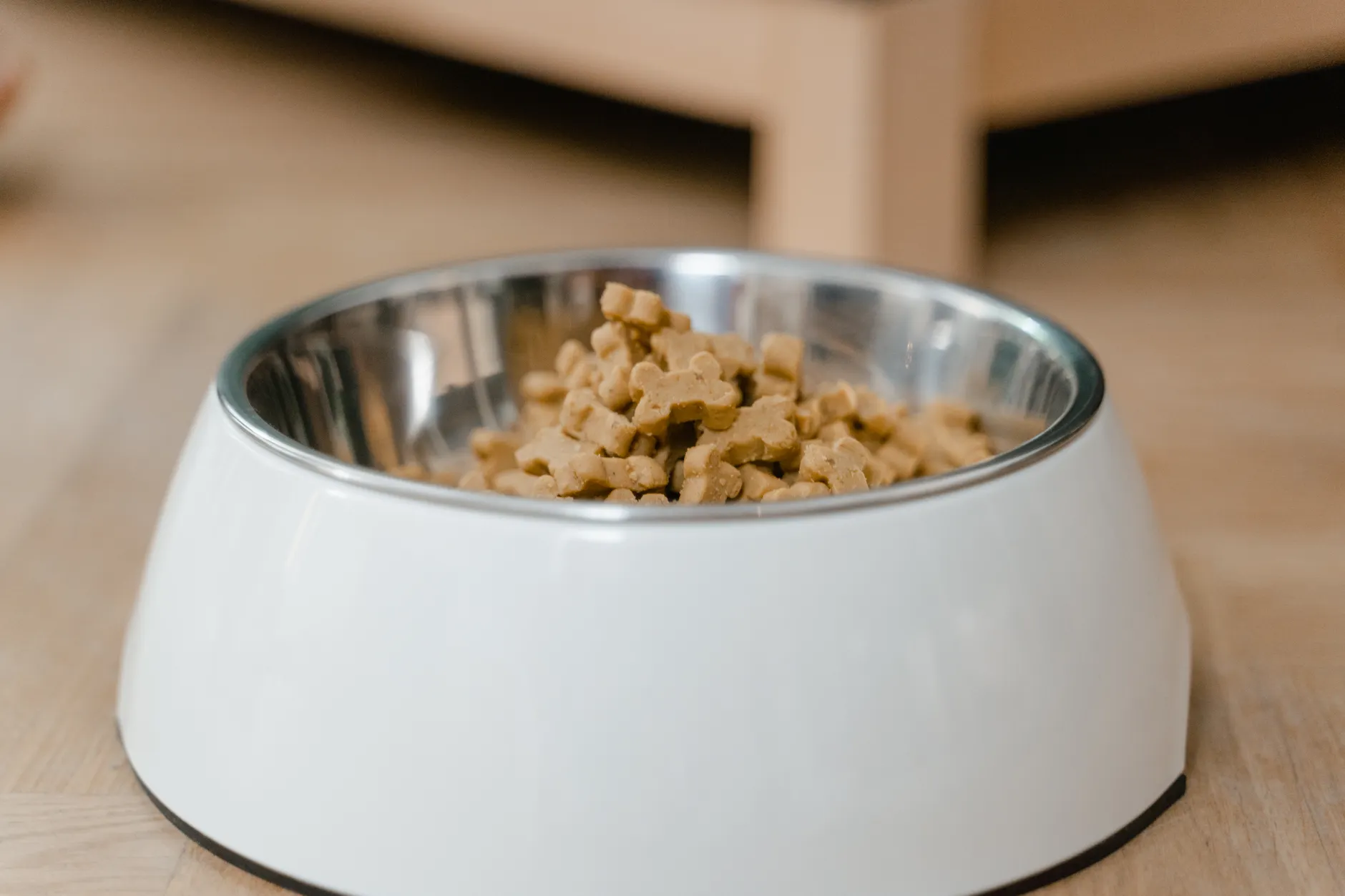
The health information on PupWiki is for educational purposes only and does not constitute veterinary medical advice, diagnosis, or treatment. Always seek the guidance of a licensed veterinarian with any questions you may have regarding your dog's health or a medical condition.
Your dog is chewing a bone and you walk past. The dog freezes, tucks the bone closer, and gives you a hard stare. Or your dog is eating dinner and the family cat approaches, and the dog lunges with a growl. This is resource guarding — the protection of valued items from perceived threats. It is one of the most common behaviour concerns owners face, and one of the most frequently made worse by well-intentioned but counterproductive advice. This guide explains what resource guarding is, how to prevent it in puppies, how to manage mild cases safely, and when the situation calls for a professional who can work with your dog in person.
Resource guarding is normal canine behaviour
Every living creature that has ever competed for limited resources has some mechanism for protecting what it has. In dogs, resource guarding is an inherited behavioural tendency that exists on a wide spectrum. A wild canid that did not protect its food would not survive long enough to reproduce. Domestic dogs retain this tendency to varying degrees.
Understanding that guarding is biologically normal — not a sign of dominance, spite, or a "bad" dog — is the foundation for addressing it effectively. A dog that growls when approached while eating is communicating clearly: "I value this and I am not comfortable with you approaching." That communication deserves a response that changes the dog's emotional experience, not one that punishes the dog for being honest.
Common guarded resources include:
- Food bowls and feeding areas
- High-value chews (bully sticks, bones, rawhide)
- Toys, particularly novel or preferred items
- Resting places (beds, couches, crates)
- Stolen items (socks, tissues, remote controls)
- People (owner guarding)
- Spaces (doorways, rooms, the car)
The severity spectrum
Resource guarding exists on a continuum. Recognizing where your dog falls on this spectrum determines whether you can address it with the strategies in this guide or whether professional help is essential.
| Level | Behaviours | Appropriate response |
|---|---|---|
| Mild | Eating faster when approached; turning body away; picking up item and moving away; mild stiffening | Prevention exercises and counter-conditioning (this guide) |
| Moderate | Hard stare; freezing with visible tension; low growling; lip lift showing teeth; snapping in the air without contact | Management plus professional guidance recommended |
| Severe | Lunging; biting with contact; guarding from a distance (guarding items across the room); guarding multiple resource types; guarding against multiple people or animals | Veterinary behaviourist required; management is critical for safety |
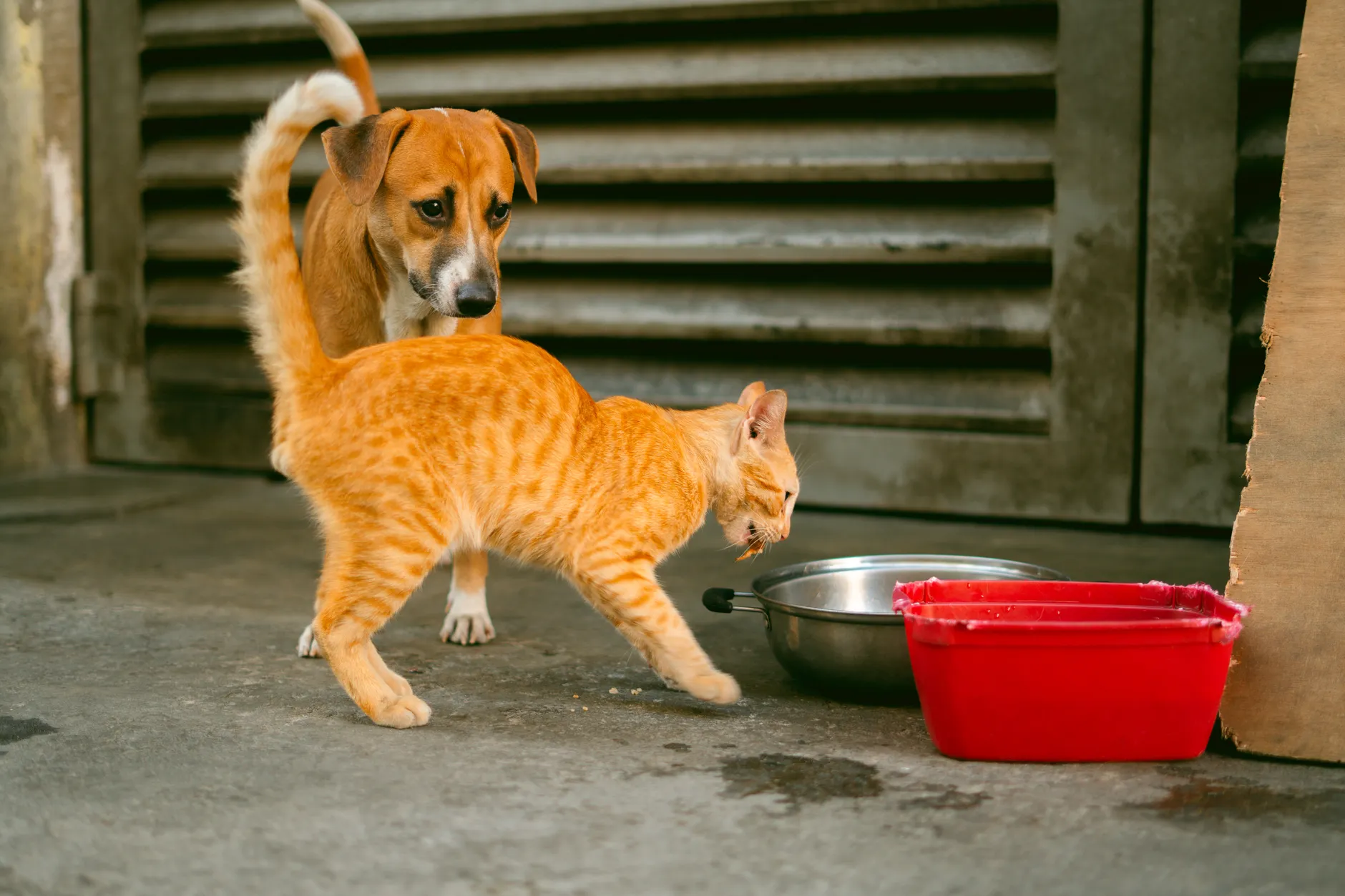
Prevention in puppies: building a positive approach history
The most effective treatment for resource guarding is preventing it from developing in the first place. Prevention works by building a history where people approaching the puppy during meals and play consistently predicts gaining something better — never losing what they already have.
The "approach and give" protocol
This is the cornerstone prevention exercise. It should begin the day you bring a puppy home and continue through the first year.
- While the puppy is eating from its bowl, walk past at a comfortable distance (5 to 6 feet initially) and toss a piece of high-value food (chicken, cheese) near the bowl without reaching toward the puppy or the bowl. Keep walking.
- Over several meals, gradually decrease your passing distance. The puppy should start looking up eagerly when it hears you approach — this is the emotional shift you want.
- When the puppy looks up happily at your approach, begin dropping the treat directly into the bowl. Still do not reach for the puppy or the bowl.
- After several weeks of consistent practice, you can briefly touch the bowl (lift it 1 inch, add the treat, set it down) before moving on. The puppy learns: people touching my bowl means bonus food appears.
The goal is not that the puppy tolerates your approach — it is that the puppy welcomes it. Tolerance can erode under stress; genuine positive associations are durable.
Trade games
Trade games teach the puppy that giving something up voluntarily always results in receiving something better.
- Give the puppy a moderately valued toy or chew.
- After 30 seconds, present a high-value treat (hold it near the puppy's nose but do not force the exchange).
- When the puppy drops the toy to take the treat, say "thank you" or "trade" (your chosen cue word), give the treat, and immediately return the original item.
- Repeat. The puppy learns two things: dropping the item produces something better, and the original item comes back anyway.
The critical detail: always return the original item during the learning phase. If you trade and then keep the item, the puppy learns that "trade" means "lose your thing." Return the item at least 80% of the time during training. The remaining 20%, give something of equal or greater value in exchange.
Management strategies for mild guarding
For adult dogs showing mild guarding (stiffening, eating faster, moving away with items), the combination of environmental management and counter-conditioning can produce lasting improvement. Management removes the situations that trigger guarding; counter-conditioning changes how the dog feels about those situations.
Environmental management
- Feed in a low-traffic area. If the dog guards its food bowl, feed in a room where people and other animals are unlikely to pass. Closing a door during mealtimes eliminates the trigger entirely — the dog does not need to guard if there is nothing to guard against.
- Remove high-conflict items. If the dog guards specific chews or toys around other dogs or children, those items are provided only during supervised, separated time. This is not depriving the dog — it is preventing conflict.
- Do not chase for stolen items. A dog that grabs a sock and runs is often not guarding — it is playing. But chasing the dog teaches it that possessing stolen items produces an exciting pursuit game, which can develop into genuine guarding. Instead, use your trade cue or toss a treat on the floor to redirect, then manage access to the items being stolen.
- Avoid confrontation. Never reach into a guarding dog's mouth, pin the dog down, or physically force an item away. These approaches escalate the situation and teach the dog that people approaching means a physical struggle for the resource — exactly the association you are trying to prevent.
Counter-conditioning for mild food guarding
This protocol is only appropriate for mild guarding where the dog shows no aggression beyond stiffening or eating faster. For moderate or severe cases, seek professional help.
- Begin at a distance where the dog does not stiffen or change its eating behaviour. This might be 10 feet or across the room.
- At that distance, toss a high-value treat (something better than the food in the bowl) toward the bowl. The treat should land near the bowl without you reaching toward it.
- Repeat across multiple meals. The dog should begin looking up at you with a relaxed body when it hears you at that distance.
- Decrease your distance by 1 to 2 feet. Repeat until the dog is relaxed at the new distance. Do not rush this process — moving too fast too soon can intensify guarding.
- Over weeks, work your way to being able to walk past and drop a treat into the bowl without any sign of tension from the dog.
If at any point the dog's body language worsens (growling, hard stare, freezing), you have moved too fast. Return to the previous distance where the dog was relaxed and spend more time there before progressing.
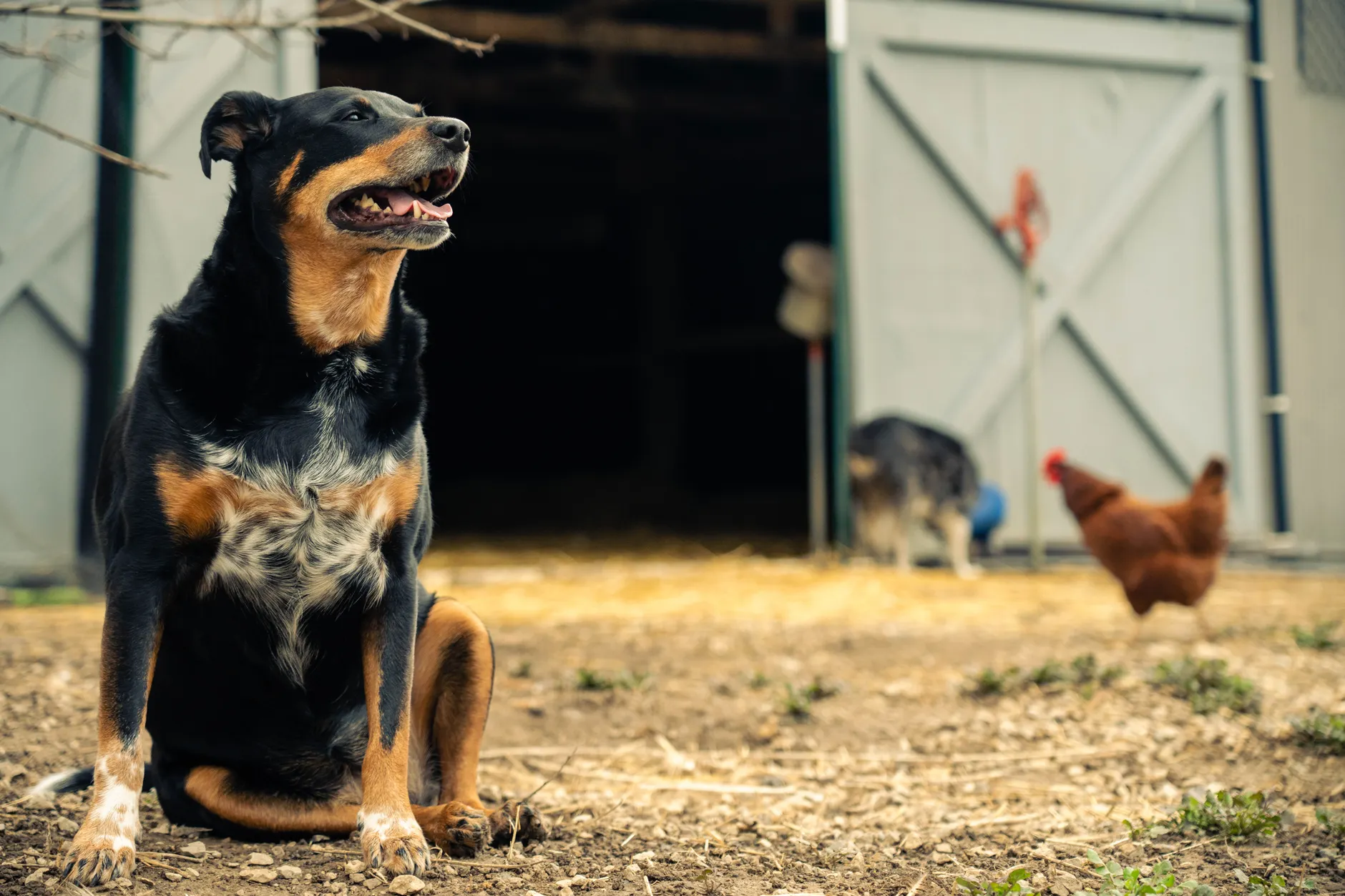
Why "teaching them who is boss" creates worse guarding
The most common bad advice for resource guarding is: "Take the food bowl away while the dog is eating to teach them that you are in charge." Variations include putting your hand in the dog's food, removing the bowl repeatedly, and holding the dog down while you take an item.
This approach produces the opposite of the intended result. From the dog's perspective:
- Person approaches while I am eating (trigger).
- Person takes my food (the dog's fear is confirmed).
- Next time, I need to guard harder, faster, and with more intensity to prevent loss.
Research published in Applied Animal Behaviour Science confirms that confrontational methods for resource guarding are significantly more likely to provoke an aggressive response than non-confrontational methods. Dogs whose owners used confrontational techniques (staring down, rolling, grabbing the jowls, hitting, alpha rolls) responded with aggression 25% to 43% of the time. This approach is dangerous and counterproductive.
Multi-dog household considerations
Resource guarding between dogs in the same household is common and requires consistent management. Dog-to-dog guarding often appears at meal times, around chews, at preferred resting spots, or over access to the owner.
- Feed all dogs in separate spaces — different rooms with doors closed, or at least in different areas with enough distance that no dog feels pressure from another. Pick up bowls when meals are finished.
- Distribute high-value chews separately. Each dog gets its chew in its own space, with no opportunity for one dog to approach another. Supervise and separate if needed.
- Provide multiple resources. Multiple water bowls, multiple beds, multiple toy options reduce competition. Scarcity creates conflict.
- Do not intervene by punishing the guarder. Punishing a dog for growling at another dog over a resource removes the warning signal. The next interaction may go from zero to a bite with no escalation sequence. Instead, manage the environment to prevent the situation from arising.
Children and resource guarding: a safety-first approach
Children are at disproportionate risk in resource guarding situations for three reasons: they are more likely to approach dogs during guarding contexts (reaching for a toy, approaching during meals, trying to pet a sleeping dog), they are less able to read canine warning signals, and their smaller size means face-level contact during a bite.
The approach for households with children is management, not training the child:
- The dog eats in a separate, closed room — always.
- High-value chews are given only when the child is not present, or the dog is in a separate area.
- Children never approach a dog that is eating, sleeping, or chewing — this is a household rule, not a suggestion.
- The dog has a safe space (a crate, a gated room) where it can retreat with a valued item without being followed.
- Interaction between children and dogs is always actively supervised by an adult who understands canine body language.
When professional help is essential
This guide is appropriate for prevention and for mild guarding in adult dogs. Professional help is essential — not optional — in any of the following situations:
- The dog has bitten someone (any contact, any severity).
- The dog lunges, snaps, or bites toward people who approach valued items.
- The dog guards multiple types of resources (food and toys and resting spots and people).
- The dog guards against multiple targets (family members, other dogs, visitors).
- The guarding has escalated in intensity over time.
- The guarding began suddenly in an adult dog with no previous history (may indicate pain or medical cause).
- There are children under 10 in the home and the dog is showing any guarding behaviour.
A veterinary behaviourist (DACVB) can assess the severity, identify contributing factors (including pain and anxiety), design a safe behaviour modification plan, and determine whether medication would support the process. Your regular veterinarian can provide a referral. For cases involving children or a bite history, do not wait — management must be implemented immediately while professional help is arranged.
Frequently asked questions
- Is resource guarding normal in dogs?
- Yes. Resource guarding is a biologically normal behaviour that exists on a spectrum from mild (eating faster when you approach, turning the body away from a chew) to severe (biting when someone reaches toward a food bowl). Most dogs display some form of resource guarding — it only becomes a problem when the intensity exceeds what is safe in the dog's living situation. A dog that stiffens over a bone is not "bad" — it is communicating that it values the item and would prefer you not take it. The question is not whether your dog guards, but how intensely and how to manage it safely.
- Should I take things away from my dog to teach them not to guard?
- No. Repeatedly taking items away teaches the dog that people approaching means losing valued resources, which increases guarding behaviour over time. The dog does not learn "this person is the boss" — it learns "I need to guard harder and faster because things disappear when people come near." The effective approach is the opposite: teach the dog that people approaching predicts gaining something better, not losing what they have. Trade games (offering a higher-value treat in exchange for the item) build positive associations with human approach.
- My puppy growls when I approach its food bowl. Should I be worried?
- A puppy showing early guarding signs (eating faster, stiffening, mild growling) is giving you a valuable early warning and an opportunity for prevention. This is far easier to address now than after months of rehearsal. Start "approach and give" exercises immediately: walk past the puppy while eating and drop a piece of chicken into the bowl without reaching for anything. Repeat over many meals until the puppy looks up eagerly when you approach. Do not punish the growl — that suppresses the warning without changing the feeling. If the growling is intense, directed at multiple resources, or accompanied by snapping, consult a trainer now rather than waiting.
- Can resource guarding be cured?
- For mild to moderate cases, counter-conditioning (changing the dog's emotional response to people approaching valued items) can produce lasting improvement. The dog's gut reaction shifts from "they might take it" to "they bring me good things." For severe cases, the realistic goal is usually reliable management — preventing situations where guarding is triggered — rather than a complete elimination of the tendency. The underlying predisposition does not disappear, but the behaviour can be managed safely and reliably. A veterinary behaviorist can give you a realistic prognosis for your specific dog.
- Is resource guarding more common in certain breeds?
- Some studies suggest slightly higher incidence in certain breeds (English Springer Spaniels and Cocker Spaniels are sometimes cited), but resource guarding occurs across all breeds, sizes, and backgrounds. Shelter and rescue dogs are sometimes overrepresented in guarding cases, but this may reflect their history (resource scarcity, competition for food) rather than an inherent breed or background trait. The most important factor is not breed but individual learning history — a dog that has experienced resource loss will guard more intensely than one that has not.
- My dog guards me from other dogs or family members. Is that resource guarding?
- Yes — this is called "person guarding" or "owner guarding" and operates on the same principles as food or toy guarding. The dog perceives you as a valued resource and displays guarding behaviour (body blocking, growling, snapping) when others approach. It is often misinterpreted as "protective" behaviour, but the dog is guarding access to you, not protecting you from danger. This type of guarding can be particularly risky in multi-dog or multi-person households and typically benefits from professional guidance, because the "resource" (you) cannot be removed or managed as easily as a food bowl.
- How should I handle resource guarding with children in the home?
- Children and resource guarding are a high-risk combination. Children are more likely to approach dogs while eating, reach for toys, or try to take items from a dog's mouth — all triggers for guarding behaviour. Children are also less able to read canine warning signals and more likely to be injured due to their smaller size and proximity to the dog's head. The approach is management first: children should never approach a dog that is eating, chewing, or possessing a valued item. Feed the dog in a separate room with the door closed. Pick up high-value items when children are playing. This is not a training problem for children to solve — it is a safety management issue for adults.


