

Every dog owner has been there: the doorbell rings and the dog explodes, or the sun goes down and the barking at the window begins, or dinner starts and the demand barking escalates until someone cracks. Barking is the behaviour complaint owners search for most — and the one most commonly addressed with methods that make it worse. The reason is simple: most "stop barking" approaches try to suppress the noise without understanding what the dog is communicating. A dog that barks at the mailman is doing something fundamentally different from a dog that barks for dinner, and the two problems require entirely different solutions.
Barking is communication, not defiance
Dogs bark for the same reason people talk — to express something. Barking can communicate alertness, excitement, fear, frustration, pain, boredom, or a learned request for attention. Treating all barking as "bad behaviour" is like treating all human speech as noise. The first and most important step in addressing problem barking is identifying why the dog is barking. The function determines the fix.
A bark is also not a single behaviour. The pitch, duration, frequency, and body language accompanying the bark all carry information. A low, slow bark with a stiff body is a warning. A high-pitched, rapid bark with a play bow is excitement. A monotonous, repetitive bark with pacing is often boredom or frustration. Learning to hear the difference helps you respond appropriately rather than reflexively.
The six functional types of barking
Most barking falls into one of six categories. A dog may display more than one type in different contexts. The key is matching your response to the function.
Alert barking
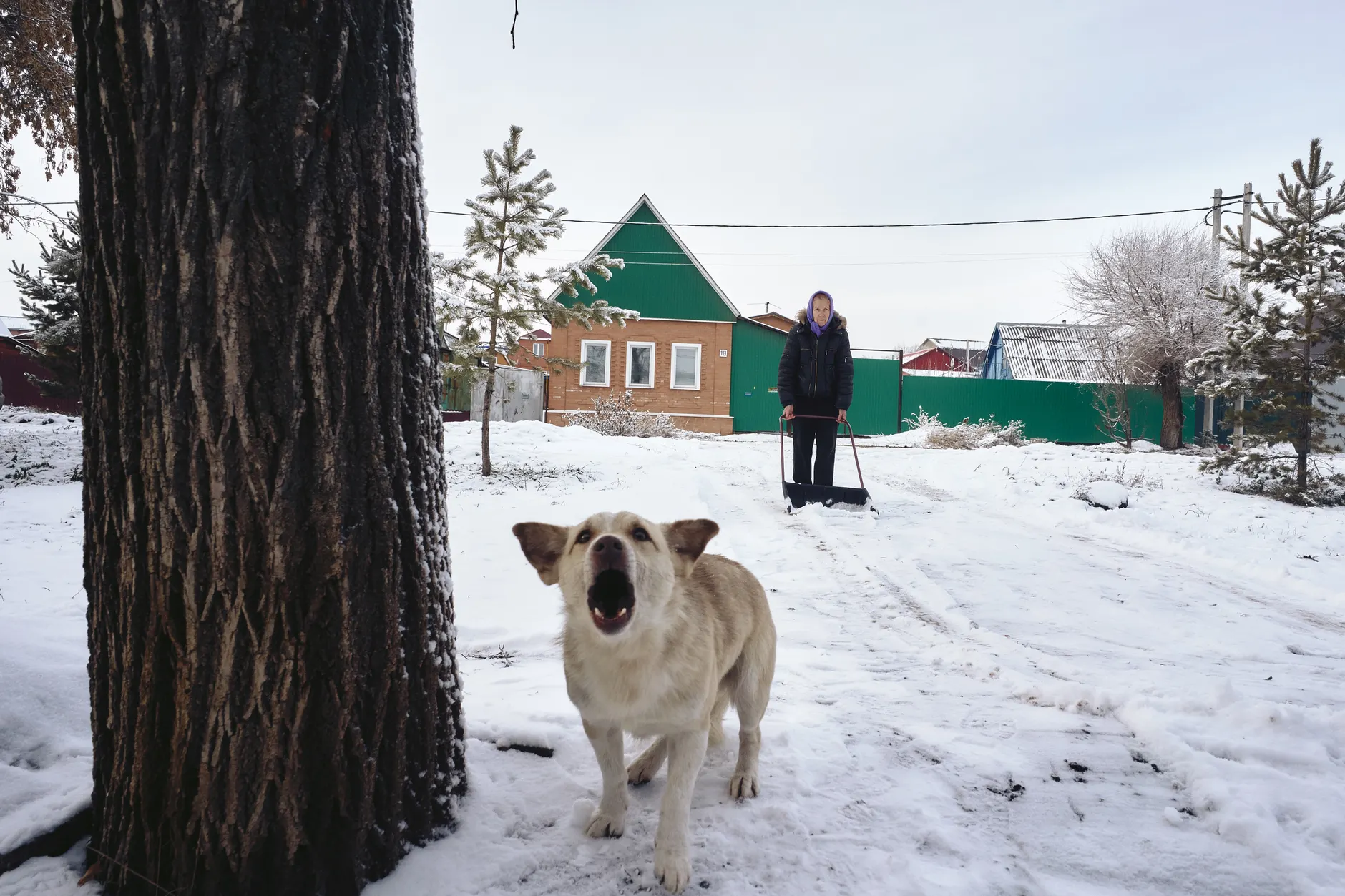
The dog hears or sees something unfamiliar and barks to signal "something is here." This is the most natural and oldest function of domestic dog vocalisation — humans selectively bred for it. Alert barking is typically a short burst (2 to 5 barks), directed at a door, window, or fence, with an alert body posture (ears forward, tail up, weight forward).
The issue: Alert barking becomes problematic when it does not stop after the initial alert — the dog continues barking at every passing pedestrian, car, or leaf for minutes or hours.
Demand barking
The dog barks at you to get something: food, attention, a toy, access to a room, or the start of a walk. The bark is directed at you specifically (not at the environment), often with direct eye contact, and escalates in volume and intensity if ignored.
The issue: Demand barking exists because it has worked in the past. Every time the dog barked and someone responded (even by saying "quiet"), the behaviour was reinforced.
Frustration and boredom barking
A monotonous, repetitive bark — often the same pitch and rhythm for extended periods — that occurs when the dog is under-stimulated or physically confined without adequate outlets. Often accompanied by pacing, digging, or chewing. This is not communication in the usual sense; it is a coping mechanism for unmet needs.
Fear barking
The dog is frightened and barking defensively. The body posture is typically lower or weight-shifted backward, with ears pinned or flattened. Fear barking often looks similar to alert barking but has a different emotional driver — the dog is not signaling "something is here" but "something scary is here and I need it to go away."
Play and excitement barking
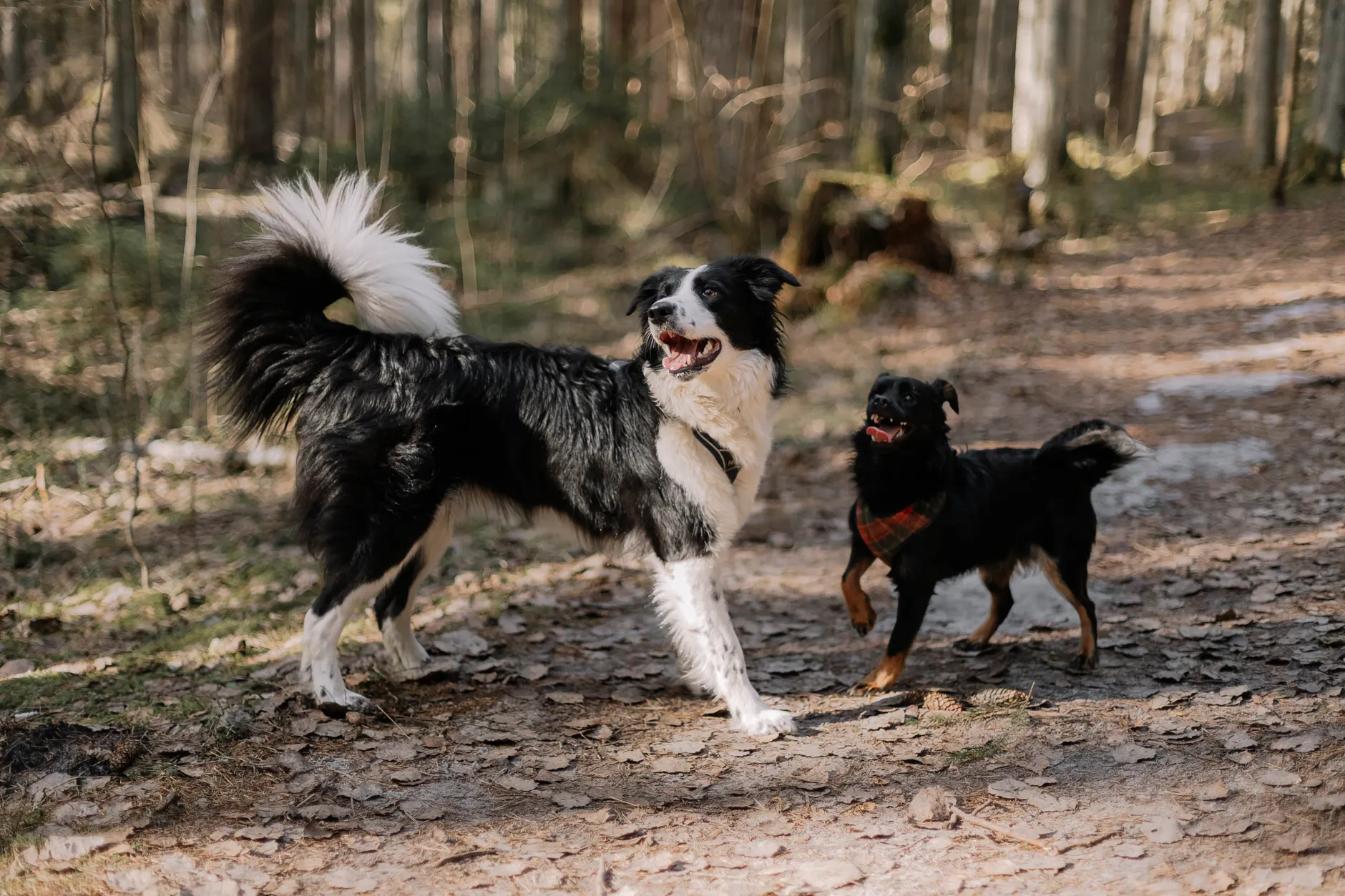
High-pitched barks during play, greeting, or anticipation of a favourite activity. The body language is loose and wiggly. This type of barking is rarely problematic unless the arousal escalates to a point where the dog cannot calm down, or it occurs at volumes or times that affect neighbours.
Separation barking
Barking (often mixed with howling or whining) that begins shortly after the owner departs and continues for extended periods. This is driven by separation distress or separation anxiety and requires a specific desensitization protocol — the interventions for other bark types do not apply. See our separation anxiety guide for the full approach.
Function-based interventions
Once you have identified the function, apply the matching intervention. Applying the wrong intervention (using extinction for fear barking, or enrichment for demand barking) either fails or makes the problem worse.
Alert barking: acknowledge and redirect
The dog has a job — alerting you — and fighting against that instinct is counterproductive. Instead, give the alert a structure:
- Acknowledge the alert. When the dog barks at a sound or visitor, calmly say "thank you" or "I see it" in a neutral tone. Go to the window or door yourself and check. This communicates that you have received the alert and assessed the situation.
- Redirect to an alternative behaviour. After acknowledging, ask the dog to do something incompatible with barking — "go to your bed," "sit," or "find your toy." Reward the alternative behaviour.
- Manage the environment. If the dog stares out the window barking for hours, remove access to the window during unsupervised periods (close blinds, use frosted window film, rearrange furniture). This is not punishment — it is removing the trigger that starts the chain.
Demand barking: planned extinction
The only effective treatment for demand barking is making it no longer work. This requires complete consistency from everyone in the household.
- When the dog barks for attention or resources: do absolutely nothing. No eye contact, no verbal response, no physical touch, no "shh." Turn away if needed. Any response — even a negative one — is reinforcement.
- Expect an extinction burst. When a previously successful behaviour stops working, the dog will try harder — barking louder, longer, and more intensely. This is not the dog "getting worse." It is a predictable and temporary escalation that means the extinction is working. If you give in during the burst, you have taught the dog that extreme barking is the new threshold.
- Reinforce the behaviour you want. The moment the dog is quiet (even a 2-second pause), mark and reward. Teach the dog that silence — not noise — is the strategy that produces results.
Frustration and boredom barking: address the unmet need
If the dog is barking because it has nothing to do, the solution is not teaching it to be quieter — it is providing adequate mental and physical stimulation. Review our exercise and enrichment guide for a complete framework, but the key interventions include:
- Adequate daily exercise appropriate to the dog's breed, age, and energy level
- Food puzzles, stuffed Kongs, snuffle mats, and other enrichment during alone time
- Training sessions (10 to 15 minutes of reward-based training provides significant mental exercise)
- Structured social opportunities (playdates, daycare for appropriate dogs)
- Rotation of enrichment items to prevent habituation
Fear barking: desensitization and counter-conditioning
A dog barking out of fear needs the fear reduced, not the barking punished. The approach is the same as for fear-based reactivity: identify the trigger, find the distance at which the dog notices it but can remain calm, and pair the trigger's appearance with high-value rewards. Over time, the dog's emotional response shifts from "that is scary" to "that predicts good things." For detailed protocols, see our anxiety and fear guide.
What does not work (and why)
The most popular "solutions" for barking are the least effective — and some are actively harmful.
- Yelling "quiet" or "no": From the dog's perspective, you are barking too. Your loud response adds energy to the situation and, for demand barking, constitutes attention — which reinforces the behaviour.
- Bark collars (shock, citronella, ultrasonic): These punish the symptom without addressing the cause. A dog that stops barking because it fears the collar has not stopped being afraid, bored, or frustrated — it has learned to suffer silently. Citronella collars also trigger indiscriminately, punishing appropriate barking along with problematic barking.
- Debarking surgery (ventriculocordectomy): This surgical procedure reduces the volume of the bark but does not address the emotional or functional driver. It is considered inhumane by the AVMA when performed for owner convenience and is banned in several countries and US states.
- Spraying water: A short-term startle that suppresses the behaviour momentarily. The dog learns to bark when you are not holding the spray bottle. It also damages trust in dogs that are already fearful.
Building a quiet cue
A "quiet" cue is useful, but it is not the first step — it is a skill you build after the underlying cause of excessive barking has been addressed. Teaching "quiet" to a dog that barks from fear or boredom without addressing the fear or boredom is like teaching someone to whisper while they are in pain.
Once the functional cause is managed, you can build a "quiet" cue:
- Wait for a natural pause in barking (even 1 to 2 seconds of silence).
- Mark the silence immediately ("yes" or a clicker) and deliver a treat.
- Gradually extend the duration of silence required before the mark — from 2 seconds to 5, to 10, to 30.
- Once the dog reliably pauses when it sees you prepare to mark, add the cue word ("quiet" or "enough") during the pause, just before the mark.
- Practice in increasingly stimulating environments, the same way you would proof any other cue.
This process takes 2 to 4 weeks of daily practice. The "quiet" cue works because the dog has learned that silence is a rewarded behaviour, not because it fears a consequence for barking.
When barking signals a deeper problem
Some barking patterns indicate an issue that goes beyond training:
- Sudden onset of excessive barking in a previously quiet dog — may indicate pain, cognitive decline (in older dogs), hearing loss (leading to startling), or a medical condition. A veterinary check is the first step.
- Barking accompanied by self-harm, destruction, or toileting — suggests separation anxiety that requires a specific treatment protocol and possibly medication.
- Barking that occurs alongside aggression (growling, snapping, biting) — this is beyond a barking problem and should be assessed by a veterinary behaviorist.
- Barking that does not respond to 4 to 6 weeks of consistent, appropriate intervention — consider a professional assessment. Some barking patterns involve compulsive behaviour or anxiety disorders that benefit from medication alongside behavioural work.
Frequently asked questions
- Is it realistic to expect my dog never to bark?
- No. Barking is a normal, healthy form of canine communication. Expecting a dog never to bark is like expecting a person never to speak. The goal is not silence — it is reducing excessive or problematic barking by addressing the cause. A dog that barks once or twice to alert you to a visitor and then settles is doing exactly what dogs do. A dog that barks for 45 minutes straight at a closed window has an unmet need that requires intervention.
- Do bark collars work?
- Bark collars (citronella, ultrasonic, or shock) may suppress the outward behaviour temporarily, but they do not address the reason the dog is barking. A dog barking out of fear does not stop being afraid when punished — it becomes afraid AND in pain. Studies in Applied Animal Behaviour Science show that dogs trained with aversive devices show higher stress indicators and more avoidance behaviour. Additionally, bark collars cannot distinguish between appropriate barking (alerting to a genuine intruder) and problematic barking (demand barking for attention), so they punish all vocalisation indiscriminately.
- Why does my dog bark when I leave the house?
- Barking that begins within minutes of departure and continues for extended periods is usually a sign of separation distress or separation anxiety — the dog is not misbehaving but is genuinely panicking at being alone. Set up a camera to observe the dog during your absence to confirm. If the barking is accompanied by pacing, drooling, destruction at exit points, or toileting indoors, the dog likely needs a structured separation anxiety protocol. Short-duration barking that settles within 5 to 10 minutes is more likely mild distress or boredom that responds to enrichment and gradual alone-time training.
- My dog barks at other dogs on walks. Is that the same as barking at home?
- No — on-walk barking at other dogs is typically leash reactivity, driven by fear or frustration, and requires a different approach (counter-conditioning and desensitization). Home-based barking is usually alert barking, demand barking, or boredom barking, each with its own intervention. The same dog may bark for completely different reasons in different contexts. Identifying the function of the bark in each situation is essential to choosing the right response.
- How do I stop demand barking when I am eating dinner?
- Demand barking is maintained by the fact that it works — at some point, the dog barked, and someone gave it attention, food, or the thing it wanted. The treatment is extinction: completely and consistently ignoring the barking (no eye contact, no "shh," no pushing the dog away — all of which are forms of attention). Critically, there will be an "extinction burst" where the barking temporarily gets louder and more intense before it decreases. If you give in during the burst, you have taught the dog that louder barking works. At the same time, reinforce quiet behaviour: when the dog is lying calmly during meals, reward that. Extinction without reinforcing the alternative is only half the equation.
- Does yelling at my dog to stop barking actually make it worse?
- Yes. From the dog's perspective, you are barking too. The dog hears you making loud, excited sounds in response to its own noise, which reinforces the behaviour. For alert barking, your yelling sounds like you are also alarmed, confirming that the trigger is worth barking at. For demand barking, your yelling is a form of attention — the dog got a response. Calm, quiet management is always more effective than matching the dog's volume.
- Are some breeds more prone to barking?
- Yes. Breeds selectively bred for guarding tend to be more vocal in alert contexts (German Shepherds, Dobermans). Small terriers and spitz breeds (Shetland Sheepdogs, Pomeranians, Miniature Schnauzers) are often more reactive to environmental stimuli. Beagles and other hounds have baying instincts. Herding breeds may bark during arousal and play. However, individual variation within a breed is large, and training and management affect barking far more than breed alone. No breed is inherently "quiet" or inherently "noisy" — both are tendencies that can be shaped.


