
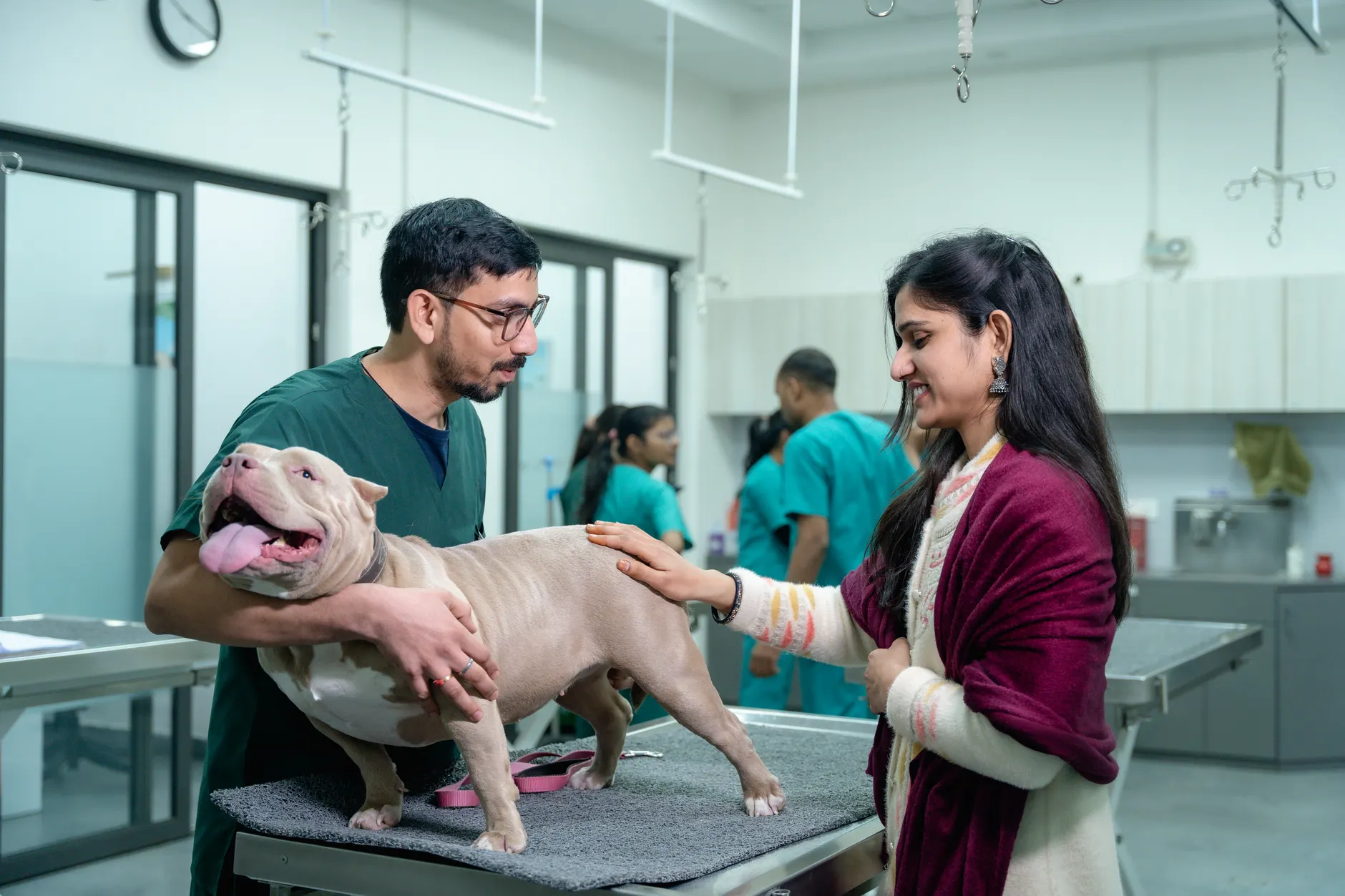
Health information is educational only. Always consult your veterinarian.
The first veterinary visit is one of the most valuable appointments in your puppy's life — and one of the most underutilized. Many owners treat it as a quick vaccination stop, but it is your best opportunity to establish a baseline health record, ask questions you will not think of later, and catch conditions that are easiest to address early. Going in with a structured list transforms a 15-minute check into a roadmap for the entire first year.
Before you go: preparation checklist
The more information you bring, the more your vet can do at the first visit. Gather the following before you leave the house:
- Vaccination records. Whatever the breeder, rescue, or shelter provided — even handwritten notes. The vet needs to know which vaccines were given, when, and which product was used, so they can schedule the correct booster timing.
- Deworming history. Dates and products used for any deworming treatments the puppy has already received. Puppies from breeders are typically dewormed at 2, 4, 6, and 8 weeks.
- Health test certificates. If the parents had OFA, PennHIP, or genetic screening done (and the breeder provided results), bring these. They help the vet anticipate breed-related health risks.
- Microchip number. If the puppy was already microchipped, bring the chip number and registration details so the vet can verify placement and you can update the registration to your contact information.
- Current food information. The brand, variety, amount per meal, and number of meals per day. A photo of the food bag (including the guaranteed analysis panel) is the easiest way to capture this accurately.
- Purchase contract or adoption paperwork. Some contracts require a vet exam within 3 to 5 days for the health guarantee to be valid. Knowing the terms helps the vet provide the documentation you may need.
- A written list of your questions. Vet visits are short and it is easy to forget things in the moment. Write down every question you have — this guide provides a structured list below.
- A fresh stool sample. Collect a small, fresh fecal sample from within the last 12 hours in a sealed plastic bag. The vet will run a fecal float test to check for intestinal parasites (roundworms, hookworms, coccidia, giardia). This saves a separate trip for the test.
What happens during the exam
The first physical exam is the most thorough your puppy will receive, because the vet is establishing a baseline with no prior records at your clinic. Here is what a comprehensive first exam covers and why each element matters:
Vital signs
- Weight: Recorded as a baseline. The vet will track growth at every subsequent visit and compare against breed-specific growth curves.
- Temperature: Normal range for puppies is 99.5 to 102.5 degrees Fahrenheit (37.5 to 39.2 Celsius). Elevated temperature can indicate infection.
- Heart rate and rhythm: Checked with a stethoscope. Puppies have higher resting heart rates than adult dogs. The vet is listening for murmurs, arrhythmias, or abnormal sounds.
Head-to-tail physical assessment
- Eyes: Checked for clarity, pupil response, and congenital conditions like persistent pupillary membranes, entropion (inward-rolling eyelids), or cherry eye (prolapsed third eyelid gland).
- Ears: Examined for redness, debris, mites, or signs of infection. Breeds with floppy ears (Cocker Spaniels, Basset Hounds) and breeds with narrow ear canals need particular attention.
- Mouth and teeth: Bite alignment assessed (scissors bite is normal for most breeds). Baby teeth counted. Any retained teeth or jaw abnormalities noted. This establishes the dental baseline.
- Skin and coat: Checked for fleas, ticks, mites (especially demodectic mange in young puppies), ringworm, and general coat condition.
- Abdomen: Palpated for umbilical hernias (common, often self-resolving, but the vet will note the size), organ abnormalities, or pain responses.
- Limbs and joints: Flexed and extended to check for laxity, pain, or structural abnormalities. In large breeds, the vet may note hip joint laxity for future monitoring.
- Reproductive organs: In male puppies, the vet checks whether both testicles have descended. Cryptorchidism (undescended testicle) is common in some breeds and should be monitored — undescended testicles that do not descend by 6 months typically require surgical removal due to cancer risk.
- Lymph nodes: Palpated at the neck, behind the knees, and in the armpits. Enlarged nodes can indicate infection or immune response.
The entire exam typically takes 10 to 15 minutes. Your vet should explain their findings as they go. If they do not, ask — "Is everything looking normal?" is a perfectly good question at any point during the exam.
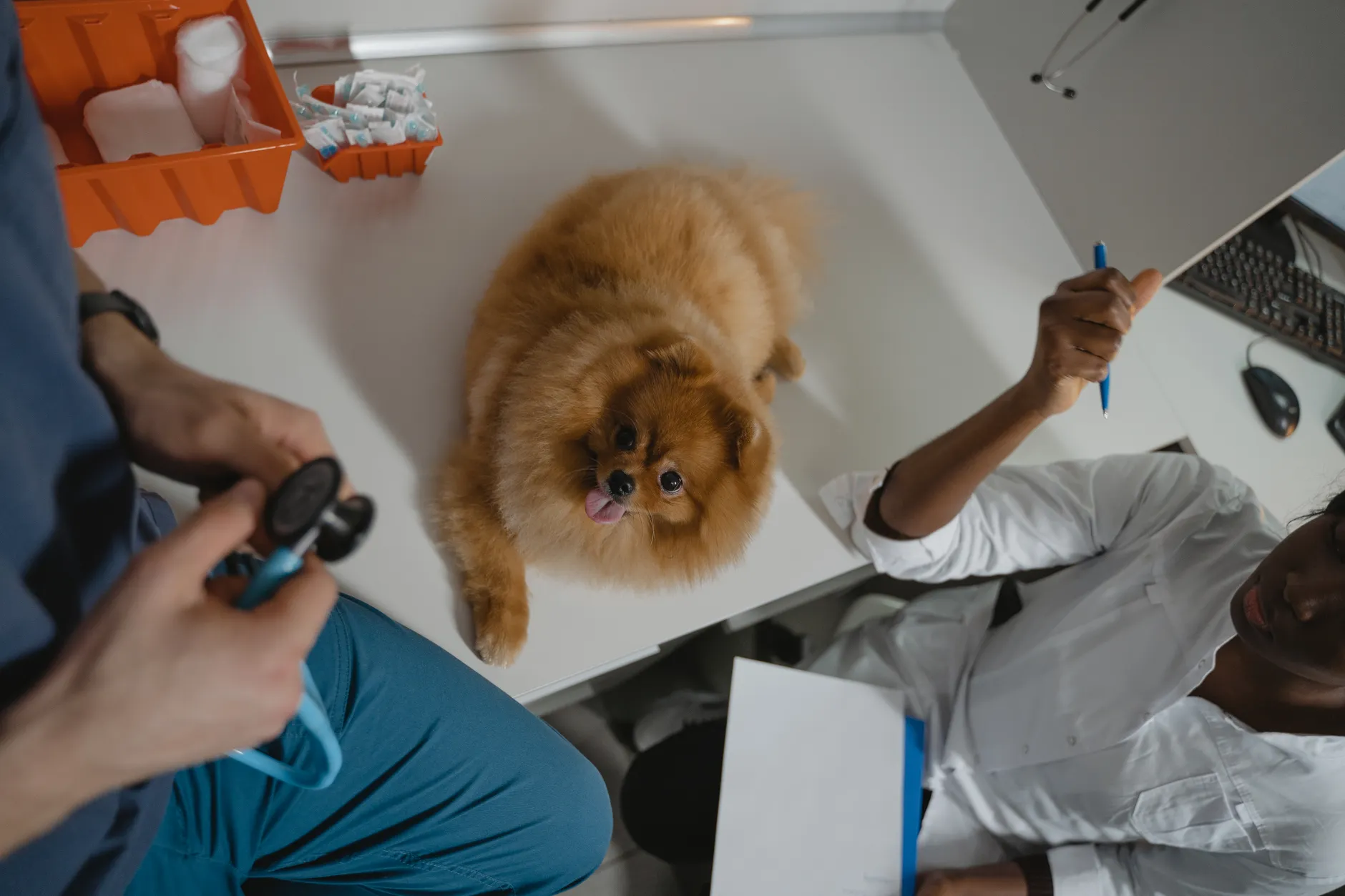
Questions to ask: vaccinations
Vaccination is the primary reason for the first visit, but the schedule is not one-size-fits-all. These questions help you understand the specific plan for your puppy:
- Which vaccines is my puppy getting today, and which are next? Core vaccines (distemper, parvovirus, adenovirus, parainfluenza — often combined as DA2PP or DHPP) are given in a series of 2 to 3 doses, 3 to 4 weeks apart. Rabies is typically given at 12 to 16 weeks, depending on state law.
- When will my puppy be fully protected? Full immunity typically develops 1 to 2 weeks after the final dose in the puppy series (usually the 16-week booster). Until then, the puppy has partial protection.
- Which non-core vaccines do you recommend for my area? Non-core vaccines include Bordetella (kennel cough), Leptospirosis, Lyme disease, and canine influenza. Recommendations vary by geography, lifestyle (boarding, dog parks, rural exposure), and disease prevalence.
- What side effects should I watch for after today's vaccines? Mild lethargy and soreness at the injection site for 24 to 48 hours are normal. Facial swelling, vomiting, difficulty breathing, or collapse require emergency veterinary attention immediately.
- Can my puppy attend puppy classes before the series is complete? The AVSAB recommends that puppies attend socialization classes as early as 7 to 8 weeks, provided the class requires proof of at least the first vaccination and the facility is clean. Your vet can advise based on local disease risk.
For a complete vaccination timeline with costs, see the Puppy Vaccination Schedule guide.
Questions to ask: nutrition
Nutrition questions at the first visit set the foundation for healthy growth. Your vet sees hundreds of puppies and has data-driven views on what works:
- Is my current food appropriate for my puppy's breed and size? Large-breed puppies need a formula with controlled calcium (labelled "for large breed puppies" or "for growth of large-size dogs" per AAFCO). Toy breeds need calorie-dense food to prevent hypoglycemia.
- How much should I feed per meal, and how many meals per day? Portion sizes depend on the puppy's current weight, expected adult weight, and the caloric density of the specific food. The bag guidelines are starting points — your vet can refine based on your puppy's body condition.
- When should I transition from puppy food to adult food? Toy and small breeds typically transition at 9 to 12 months. Large breeds at 12 to 18 months. Giant breeds may stay on puppy food until 18 to 24 months.
- Do you recommend any supplements? For most puppies on a complete and balanced commercial diet, the answer is no. Adding calcium, vitamins, or joint supplements without veterinary guidance can cause more harm than good, particularly in large breeds.
- What treats are safe, and how many per day? Treats should not exceed 10 percent of daily calorie intake. Your vet can suggest appropriate training treats and warn against any that are unsafe for puppies.
Use the Dog Food Calculator after the visit to calculate precise daily calorie and portion needs based on your vet's weight assessment.
Questions to ask: parasites
Virtually all puppies carry some parasite load — this is normal and treatable, but it needs to be addressed systematically:
- What did the fecal test show? The fecal float test detects common intestinal parasites including roundworms, hookworms, whipworms, coccidia, and giardia. Some parasites shed eggs intermittently, so a single negative test does not guarantee absence — your vet may recommend retesting.
- What deworming schedule do you recommend? Standard protocol is deworming every 2 weeks until 12 weeks of age, then monthly until 6 months. After that, a monthly broad-spectrum preventative typically takes over.
- When should I start flea, tick, and heartworm prevention? Most preventatives can start at 8 weeks. Your vet will recommend products appropriate for your puppy's age, weight, and your geographic area. Heartworm prevention is year-round in most US climates.
- Are there any parasites endemic to our area that I should know about? Tick-borne diseases (Lyme, ehrlichiosis, anaplasmosis) vary by region. Heartworm prevalence varies by state. Certain areas have higher coccidia or giardia risk. Local knowledge matters here.
Questions to ask: behavior and socialization
Behavioral health is increasingly recognized as a core component of veterinary wellness care. Your vet can provide early guidance and identify red flags:
- Does my puppy seem appropriately confident for their age? A vet who handles hundreds of puppies can quickly assess whether your puppy's reactions during the exam — fear, aggression, extreme timidity, or comfortable curiosity — fall within normal range for their age and breed.
- Do you recommend any puppy socialization classes nearby? Vets typically know the reputable, reward-based puppy classes in the area and can warn you away from trainers who use aversive methods.
- My puppy is showing [specific behavior] — is this normal? Common first-visit behavioral questions include: mouthing and biting, excessive crying at night, fear of certain sounds, resource guarding over food or toys, and house training struggles. Most are normal developmental behaviors, but some benefit from early professional guidance.
- How should I handle fear of the vet? If your puppy was anxious during the exam, ask your vet about "happy visits" — brief, positive-only trips to the clinic where the puppy gets treats and handling without any procedures. These visits build a positive association with the clinic and make future visits dramatically easier.
For a reward-based training schedule tailored to your puppy's age, use the Dog Training Plan Generator.
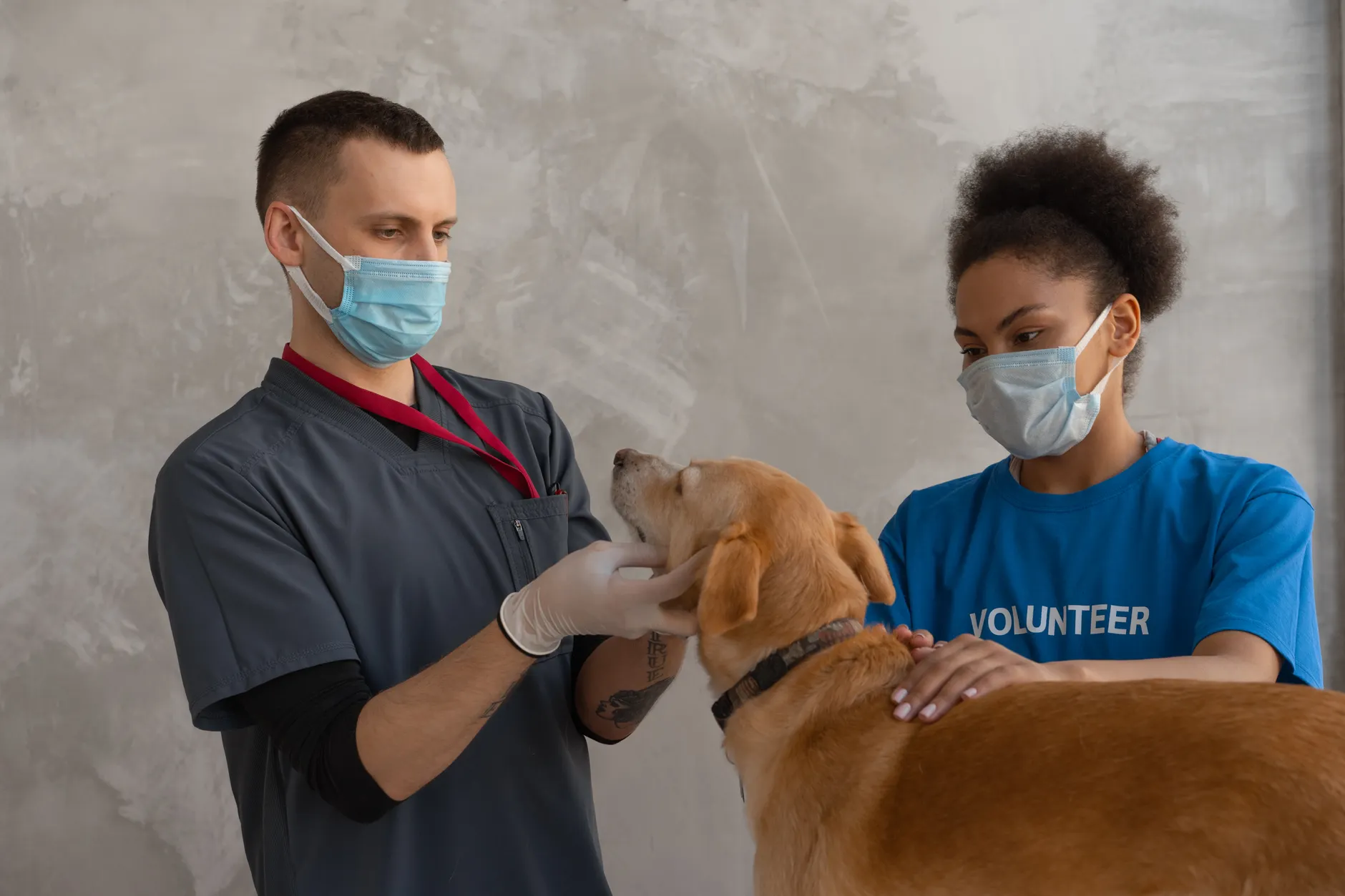
Questions to ask: spay and neuter timing
This is not a decision you need to make at the first visit, but it is the right time to start the conversation:
- When do you recommend spaying or neutering my puppy? Recommendations have shifted significantly in the last decade. Traditional advice was 6 months for all dogs. Current evidence suggests that the optimal timing varies by breed, sex, and size. Large breeds may benefit from waiting until 12 to 18 months to allow full skeletal development.
- Are there breed-specific considerations for timing? Studies in Golden Retrievers, German Shepherds, and Labrador Retrievers have found correlations between early desexing and increased rates of certain cancers and joint diseases. Your vet can advise based on the current evidence for your specific breed.
- What are the risks and benefits of waiting vs doing it early? Benefits of spay/neuter include eliminating the risk of certain reproductive cancers and pyometra (uterine infection), preventing unwanted litters, and reducing some hormone-driven behaviors. Risks of early surgery (before skeletal maturity) include potential effects on growth plate closure and joint development.
- What will the surgery cost, and what does recovery look like? Getting a cost estimate now helps with budgeting. Typical spay costs range from $200 to $500, neuter $150 to $400, depending on location and the dog's size. Recovery is usually 10 to 14 days of restricted activity.
Questions to ask: breed-specific health
Every breed has a characteristic set of health predispositions. Your vet can help you understand what to monitor proactively:
- What are the most common health issues in my puppy's breed? This is not about creating anxiety — it is about knowing what to screen for and when. A Cavalier King Charles Spaniel owner should know about mitral valve disease screening. A German Shepherd owner should know about degenerative myelopathy. A Dachshund owner should understand intervertebral disc disease risk.
- Are there any screening tests you recommend for this breed? Some conditions benefit from early or periodic screening: hip and elbow radiographs (large breeds), cardiac auscultation (Cavaliers, Boxers), eye exams (breeds prone to progressive retinal atrophy), thyroid testing (breeds prone to hypothyroidism).
- Should I be concerned about the heart murmur / hernia / bite issue you found? Low-grade puppy heart murmurs are common and many resolve by 4 to 5 months. Small umbilical hernias often close on their own. Mild bite misalignment may self-correct as adult teeth come in. Your vet will tell you which findings need monitoring and which need intervention.
- Is my puppy's weight on track for their breed and age? The vet can compare your puppy's current weight against breed-specific growth curves and flag any concerns about being significantly over or under. See the Puppy Growth Chart for reference ranges by size class.
Post-visit action items
The first visit generates information and tasks. Organize them immediately so nothing falls through the cracks:
- Record the next appointment date. The next vaccination booster is typically 3 to 4 weeks after the first. Put it in your calendar now — missed or delayed boosters can require restarting the series.
- Start preventative medications as directed. If the vet prescribed flea, tick, or heartworm preventatives, start them on the recommended date. Set a monthly reminder for ongoing doses.
- Monitor for vaccine reactions for 24 to 48 hours. Mild lethargy and a small lump at the injection site are normal. Call the vet if you see facial swelling, hives, vomiting, diarrhea, difficulty breathing, or extreme lethargy.
- Update microchip registration. If the puppy was already microchipped, transfer the registration to your name, address, and phone number. An unregistered or outdated microchip is useless for reunification.
- Adjust feeding if the vet recommended changes. If portion sizes, meal frequency, or food brand were discussed, make the changes gradually over 7 to 10 days to avoid digestive upset.
- File the paperwork. Create a health folder for your puppy — physical or digital — with vaccination records, test results, and the vet's notes. This file follows your puppy through their entire life and is needed for boarding, travel, and any future veterinary referrals.
- Set up the full first-year plan. Use the Puppy First-Year Planner to map the entire first year — vaccination boosters, deworming schedule, spay/neuter timing, training milestones, and cost estimates — into a single month-by-month view.
Making vet visits positive from the start
How a puppy experiences the first few vet visits shapes their attitude toward veterinary care for life. A puppy who learns that the clinic means fear and discomfort becomes a dog who is difficult to examine, stress-reactive during procedures, and sometimes a safety risk for veterinary staff.
Practical steps to build a positive association:
- Bring high-value treats. Ask the vet and technicians to give treats throughout the exam. Most clinics encourage this — the puppy learns that the people in scrubs are a source of good things.
- Stay calm yourself. Puppies read your body language. If you are tense, restrain them tightly, or speak in a high anxious voice, the puppy mirrors that energy. A relaxed owner produces a more relaxed puppy.
- Schedule "happy visits." Between medical appointments, stop by the clinic for 5 minutes. Let the puppy walk in, get treats from the receptionist, and leave. No procedures, no exam room — just positive association with the space.
- Practice handling at home. Touch ears, open the mouth, hold paws, lift the tail, and restrain briefly — all paired with food rewards. This mimics what the vet does and reduces novelty stress during actual exams.
- Ask about Fear Free certification. Many veterinary practices are now "Fear Free" certified, meaning they use low-stress handling techniques, pheromone diffusers, non-slip mats, and treat-based distraction during procedures. If your clinic offers this, it is worth asking for.
Red flags at the first visit
Most first visits produce a clean bill of health. Occasionally, the vet discovers something that requires follow-up. Common findings and what they mean:
- Heart murmur (grade 1-2): Low-grade murmurs in puppies under 16 weeks are often "innocent" or "physiologic" — they result from the rapid blood flow in a growing heart and typically resolve by 4 to 5 months. Your vet will recheck at the next visit. Higher-grade murmurs (3+) may warrant an echocardiogram.
- Umbilical hernia: A small, soft bulge at the belly button. Very common in puppies. Small hernias (under 1 cm) often close on their own by 6 months. Larger hernias may be repaired during the spay/neuter surgery.
- Undescended testicle: One or both testicles not palpable in the scrotum. They may descend by 4 to 6 months. If not, surgical removal is recommended because retained testicles have a significantly elevated cancer risk.
- Intestinal parasites: Roundworms are present in the vast majority of puppies. Treatment is straightforward — deworming medication given at prescribed intervals. Not a cause for alarm, but it does need to be addressed.
- Bite misalignment: Base-narrow canines, underbite, or overbite. Mild cases may self-correct as adult teeth erupt. Significant malocclusion can cause pain and may need intervention — your vet will advise on timing.
If any finding is unclear, ask your vet: "Do we need to do anything about this now, or is it something we monitor?" This simple question clarifies the urgency and helps you prioritize.
Choosing the right vet for your puppy
If you have not yet selected a veterinarian, the first visit is effectively an audition. Here is what to look for:
- Communication style. A good vet explains findings in plain language, answers questions without rushing, and involves you in decisions rather than simply dictating a plan.
- Handling approach. Watch how the staff handles your puppy. Gentle, reward-based handling with treats is the standard of care. Forceful restraint or dismissing fear as "they'll get over it" is a warning sign.
- Transparency on costs. The clinic should provide cost estimates before procedures and discuss options if budget is a concern. A vet who recommends everything without discussing cost is not respecting your financial reality.
- Emergency protocols. Ask about after-hours emergency care. Does the clinic handle emergencies, or do they refer to a local emergency veterinary hospital? Knowing this before an emergency occurs is important.
- Accessibility. Same-week appointments for sick visits, a reasonable wait time, and a staff that answers the phone are practical factors that matter more than fancy facilities.
To estimate the full cost of veterinary care in your puppy's first year — including vaccinations, spay/neuter, and routine wellness — use the Dog Cost Calculator.
Frequently asked questions
- When should my puppy have their first vet visit?
- Ideally within 48 to 72 hours of bringing the puppy home — even if they appear healthy and have had a recent breeder or shelter vet check. The first visit establishes a baseline health record with your vet, confirms or begins the vaccination schedule, addresses any parasites, and creates a clinical relationship before an emergency arises. Many breeders include a health guarantee clause that requires a vet examination within a specific window (often 3 to 5 days), so checking your purchase agreement is important.
- How much does a first puppy vet visit cost?
- A first puppy visit typically costs between $75 and $200 in the US, depending on location and what is included. A basic wellness exam usually runs $50 to $75. Vaccinations (often 1 to 2 core shots at the first visit) add $20 to $40 each. A fecal parasite test costs $25 to $50. Deworming medication is usually $15 to $30. Microchipping, if done at this visit, adds $40 to $60. Your vet should give you a cost estimate before proceeding with any non-urgent services. The Dog Cost Calculator can help you budget for the full first-year veterinary schedule.
- What documents should I bring to the first vet visit?
- Bring everything the breeder, rescue, or shelter provided: vaccination records showing which vaccines were given and when, deworming treatment dates and products used, health test certificates for the parents if available, the puppy's microchip number if already chipped, any health guarantee or contract, and a record of the food the puppy is currently eating (brand, variety, amount, and frequency). If this is a rescue puppy with no paperwork, that is fine — your vet will simply start from scratch and build the record forward.
- What does the vet check during the first puppy exam?
- A thorough first exam covers the entire body systematically. The vet will listen to the heart for murmurs and abnormal rhythms, check the lungs, examine the eyes for congenital defects like persistent pupillary membranes or cherry eye, look inside the ears for mites or infection, inspect the teeth and bite alignment, palpate the abdomen for hernias or organ abnormalities, check the skin and coat for parasites, assess joint and limb structure, evaluate the testicles in males (whether descended), and record weight, temperature, and general body condition. The whole physical typically takes 10 to 15 minutes.
- Can I ask the vet about behavior and training at the first visit?
- Yes, and you should. Vets increasingly recognize that behavioral health is as important as physical health, and early guidance on socialization, bite inhibition, crate training, and house training can prevent serious behavioral problems later. Many veterinary practices employ or can refer to veterinary behaviorists or certified trainers. Questions about behavior at the first visit also help the vet identify any early signs of fear, anxiety, or temperament issues that benefit from early intervention.
- How many vet visits does a puppy need in the first year?
- Most puppies need 3 to 4 wellness visits in the first year, spaced around the vaccination schedule: the first visit (8 to 10 weeks), a booster visit at 12 to 14 weeks, another at 16 weeks for the final core vaccines and rabies, and a spay/neuter consultation if planned. Some vets add a 6-month wellness check. After the first year, healthy adult dogs typically see the vet once or twice annually. The Puppy First-Year Planner generates a month-by-month schedule that includes all recommended vet checkpoints.


