
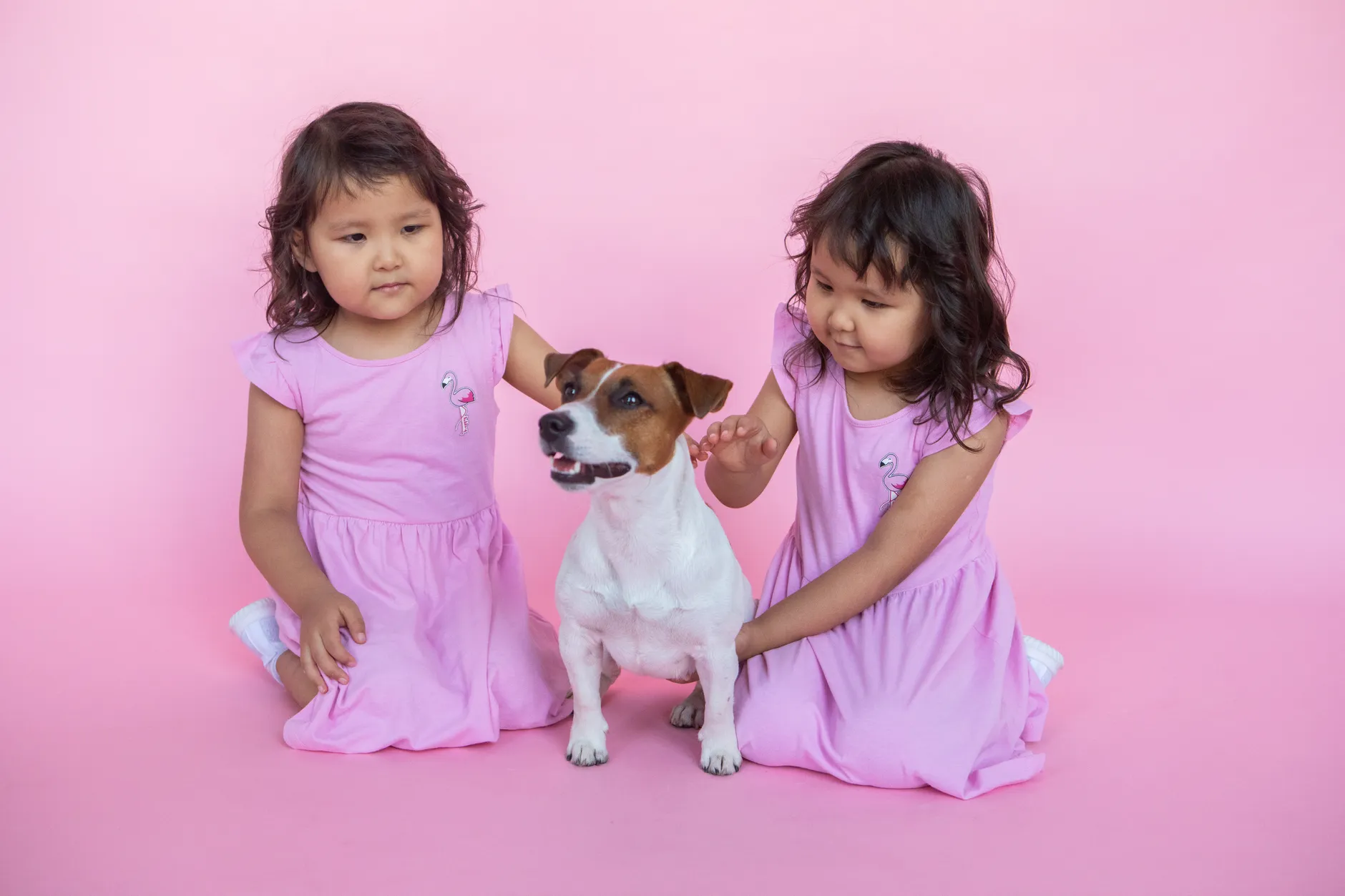
Pre-vaccination safety: Consult your vet before exposing an unvaccinated or partially-vaccinated puppy to unknown dog populations. Balance the behavioral benefits of early socialization with infection risk carefully — especially in areas with high parvovirus prevalence.
Of all the things you do with your puppy in the first months, socialization has the highest long-term behavioral impact. A puppy that misses the critical window — that reaches 16 weeks without structured, positive exposure to the world — is statistically more likely to develop fear-based behavior problems, aggression, and anxiety. None of these are traits that training easily fixes later. This guide gives you a practical checklist and the science behind why each item matters.
Why the socialization window matters
Between approximately 3 and 16 weeks of age, a puppy's brain is in a developmental phase that does not recur. During this period, novel experiences are filed as "normal" with a biological efficiency that is simply not available in adult dogs. After 16 weeks, the brain's response to novelty shifts: what is unfamiliar becomes suspicious rather than interesting.
This is not a metaphor — it reflects measurable changes in neurological plasticity. The AVSAB (American Veterinary Society of Animal Behavior) position statement on socialization notes:
"Behavioral issues, not infectious diseases, are the number one cause of death for dogs under 3 years of age."
Fear-based aggression, generalized anxiety, noise phobia, and hyperreactivity to strangers are the behavioral consequences most strongly associated with inadequate socialization during this window. They are significantly more common in dogs whose early exposure was restricted — whether by cautious owners waiting for full vaccination, or by early-life circumstances that limited exposure.
The goal of socialization is not maximum exposure — it is maximum positive exposure. A puppy flooded with overwhelming experiences learns that the world is unpredictable and frightening. A puppy with carefully paced, positive experiences learns that novelty is interesting and manageable.
The socialization checklist: 5 categories
Work through these five categories over the 8–16 week period. Not all items need to happen in week 1 — pace them based on what is logistically possible and what your puppy's current confidence level can handle. Aim to tick each category multiple times, not just once.
1. People
Dogs that are well-socialized to people in general are not just comfortable with the humans in their household — they are comfortable with the full range of human appearances and behaviors. Aim to expose your puppy to:
- Children of different ages — toddlers, school-age, teenagers (with supervision)
- Men with beards, mustaches, or facial hair
- People wearing hats, hoods, sunglasses, or helmets
- People in uniforms (postal workers, delivery drivers, people in high-visibility jackets)
- Elderly people, people with mobility aids (walking frames, wheelchairs, canes)
- People of different heights and body types
- People carrying large objects (shopping bags, umbrellas, backpacks, pushchairs)
- People running, cycling, or moving fast
Keep interactions positive — have visitors offer a treat from a flat hand, let the puppy approach rather than being pushed toward the person. If the puppy hangs back, that is fine — do not force the interaction.
2. Animals
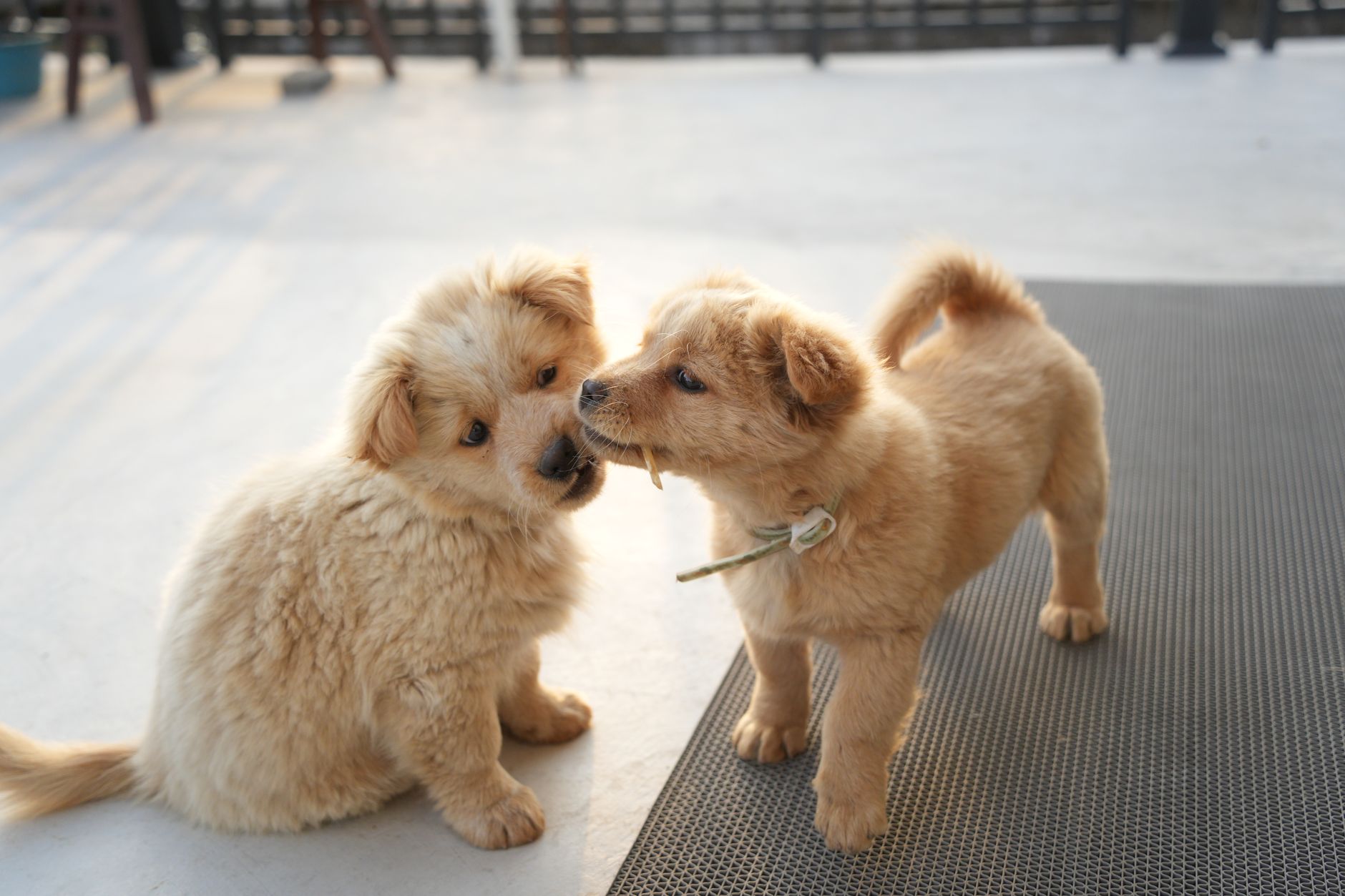
- Other vaccinated dogs: Controlled meetings with known, friendly, vaccinated adult dogs are ideal. Dog parks are not recommended pre-vaccination. Well-run puppy classes with health-screened participants are the gold standard.
- Cats (with safety): If there is a resident cat, initial introductions through a baby gate are the safest approach. Never hold the cat still for the puppy — the cat must be able to retreat. Many dogs that are problematic around cats simply never had calm, positive cat exposure as puppies.
- Other animals: Based on your lifestyle — horses, livestock, birds — the principle is positive, calm exposure at a distance the puppy can handle, building closer proximity only when the puppy is clearly calm.
3. Environments
- Car travel — make early trips short and positive; feed treats in the car
- Stairs — wooden stairs, spiral stairs, open-grate stairs (each can be its own challenge)
- Different floor surfaces: wet grass, gravel, tiles, wooden floors, grating, sand
- Busy streets, markets, town centers (carried before full vaccination)
- Quiet parks and woodland paths
- Shops that allow dogs
- Veterinary clinic visit (not for a procedure — just for a positive "say hello" visit)
- Public transport, if relevant to your lifestyle
4. Sounds
Sound sensitivity is one of the most common phobias in adult dogs, and is almost always preventable with early exposure. The key is volume: always start at a level where the puppy shows curiosity rather than fear, then build up gradually over days and weeks.
- Thunderstorms and fireworks — recordings at very low volume, paired with play and treats
- Household appliances: vacuum cleaner, washing machine, dishwasher, food processor
- Traffic: lorries, motorbikes, buses, emergency vehicles
- Baby or child crying — relevant if there are or may be children in the home
- Power tools, lawn mowers
- Crowd noise, music, parties
- Television and radio at volume
5. Handling
A dog that tolerates — or better, enjoys — handling is far safer for veterinary care, grooming, and family interactions. This is one of the most overlooked socialization categories. Systematically practice:
- Ear examination — gentle lifting and touching of the ear flap, then inside
- Paw handling — touching each paw, each toe, pressing gently between pads
- Mouth examination — gently lifting the lips, touching teeth and gums
- Nail trim simulation — touching each nail with clippers or scissors without cutting
- Body handling — running hands along the back, belly, under the tail
- Collar and lead touching — grabbing the collar as a vet or groomer might
- Being held still briefly — simulate what a vet table exam requires
Pair each handling experience with treats. The goal is a puppy that has a conditioned positive association with being handled — not just tolerance.
How to socialize safely before full vaccination
The AVSAB, AAHA (American Animal Hospital Association), and most board-certified veterinary behaviorists agree: the benefits of early socialization outweigh the disease risk when exposure is managed carefully. The guidelines:
- Safe from any age
-
- Carrying in arms in any public environment — no ground contact, no disease vector
- Visits to vaccinated dogs' homes — known vaccination status, controlled environment
- Sitting outside cafes, markets, or parks in your arms or on your lap
- Car travel to new environments (remaining in the car or being carried)
- Veterinary clinic "happy visits" — ask your vet about social-only visits
- Safe after first vaccine dose (at 8–10 weeks)
-
- Puppy classes held in clean indoor facilities with vaccinated-only participants
- Playdates with vaccinated adult dogs in their own garden
- Low-traffic outdoor areas not heavily used by unknown dogs
- Avoid until 7–14 days after final puppy dose
-
- Dog parks (unknown vaccination status, disease exposure risk)
- High-traffic pavement areas used by many unknown dogs
- Any area with known parvovirus or distemper history
Positive socialization vs. flooding
Flooding is the term for exposing a dog to a frightening stimulus at full intensity until they stop reacting. The theory is that they learn the stimulus is not dangerous. The reality is different: most flooded dogs become more sensitized, not less, and the experience can cause lasting damage to their stress-response system.
Counter-conditioning is the evidence-based alternative:
- Find the distance or intensity at which the puppy notices the stimulus but is not frightened — they can still eat treats and their body language is relaxed.
- Pair the stimulus with high-value treats at that threshold.
- Over multiple sessions, gradually decrease the distance or increase the intensity, always working below the threshold where the puppy stops being able to eat.
Recognizing stress signals is essential for this approach. The puppy is communicating — learn to read the signals rather than dismiss them:
- Mild stress: yawning (out of context), lip licking, nose lick, looking away, soft eye blink
- Moderate stress: ears pinned back, tail tucked, whale eye (white of eye visible), low body posture, unable to take treats
- High stress: shaking, attempting to flee or hide, vocalizing (whining, barking from fear), freezing
When you see moderate or high stress, the stimulus was too much. Increase distance immediately. Do not push through — stop the session and try again another day at a lower intensity.

Red flags: signs socialization is going wrong
Most socialization challenges are fixable when caught early. Watch for these signals that something needs to change:
- Puppy consistently freezes or hides during socialization attempts. Reduce the intensity of what you are exposing them to. The puppy should be able to show curiosity and take treats in every socialization session. If they cannot, the stimulus is too much.
- Growling or snapping at known people. This needs professional assessment — not punishment. A board-certified veterinary behaviorist or certified applied animal behaviorist (CAAB) should assess the puppy if early aggression signals are emerging.
- Fear generalization: If fear of one stimulus (e.g., men in hats) is spreading to a broader category (all men) or becoming more frequent, a behaviour professional should be consulted promptly.
- Shutdown or extreme arousal during puppy class. Some puppies are not ready for group play — individual sessions or smaller controlled meetings may be more appropriate. A good puppy class instructor will help you identify this.
Early behavioral concerns are not a source of shame — they are a signal to get professional input early, when behavioral modification is most effective.
Frequently asked questions
- When should I start socializing my puppy?
- Socialization should begin the day the puppy arrives home — typically at 8 weeks. The primary socialization window runs from approximately 3 to 16 weeks of age, with the most critical and sensitive period between 8 and 12 weeks. Do not wait until full vaccination at 16 weeks to begin socialization — by that point, the window is closing and you have missed more than half of the most impressionable period. In many cases, the behavioral damage from poor socialization during this window is permanent or very difficult to reverse.
- Can I socialize my puppy before all vaccines are complete?
- Yes, with appropriate risk management. The American Veterinary Society of Animal Behavior (AVSAB) recommends that puppies attend socialization classes from as early as 7–8 weeks of age, after at least one set of vaccines and a deworming. The risk of behavioral problems from inadequate socialization is greater than the disease risk in a controlled, vaccinated-dog environment. Carrying the puppy in arms in public areas is safe at any age. The high-risk activities to avoid before full vaccination are: contact with unknown, unvaccinated dogs; walking in areas heavily frequented by unknown dogs; contact with dog feces or urine in public areas.
- What if my puppy is afraid during socialization?
- Fear during socialization is a signal to slow down, not push through. Flooding — forcing a fearful puppy to stay in a situation until they stop reacting — does not desensitize them; it sensitizes them and damages trust. If the puppy is showing stress signals (yawning, lip licking, pinned ears, cowering, shaking, tail tucked, whale eye), create distance from the stimulus until the puppy relaxes, then build back up more gradually using counter-conditioning: pair the scary thing with high-value treats at a distance where the puppy can eat and remain calm. Let the puppy choose the pace of approach. Forcing proximity is counterproductive.
- How do I introduce my puppy to other dogs?
- The ideal early dog-dog socializations are with vaccinated, known-friendly adult dogs in a controlled setting — a friend's yard, not a dog park. Off-leash meetings in a neutral space are less tense than on-lead greetings (which constrain movement and can trigger leash frustration). Keep initial meetings brief (5–10 minutes) and positive. Avoid dog parks in the pre-vaccination period (unknown vaccination status, high-stress environment, risk of disease transmission). Well-run puppy classes with vet-screened puppies are the gold standard for structured dog-dog socialization.
- Is puppy class worth it?
- Yes, for most puppies — and not just for what is taught. The primary value of puppy class is controlled, age-appropriate dog-dog interaction at the most critical developmental stage. A well-run class (using reward-based methods, capping group size, screening health requirements) provides structured socialization opportunities that are difficult to replicate otherwise. The training instruction is a secondary benefit. Look for classes run by certified trainers (CPDT-KA, KPA CTP, or similar credentials) that explicitly use force-free, positive-reinforcement methods.


