
Health information is educational only. Always consult your veterinarian.
Puppy teething is one of the most physically uncomfortable phases your dog will go through in their first year. Between 3 and 7 months of age, 28 baby teeth are replaced by 42 adult teeth — a process that involves sore gums, intense chewing urges, and the occasional bloody spot on a favorite toy. Understanding the timeline helps you prepare the right chews at the right time, distinguish normal discomfort from problems that need a vet, and protect your furniture along the way.
Baby teeth: the first set
Puppies are born without visible teeth. The deciduous (baby or "milk") teeth begin erupting at around 2 to 3 weeks of age, and the full set of 28 is usually in place by 6 to 8 weeks — right around the time most puppies go to their new homes.
These teeth are small, sharp, and serve two purposes: they allow the puppy to begin eating solid food as they wean from their mother, and they play a critical role in bite inhibition learning during play with littermates. The sharpness is a feature, not a flaw — it teaches the puppy that biting too hard ends the game, because those needle teeth genuinely hurt their siblings.
The baby teeth are arranged as follows: 12 incisors (6 upper, 6 lower), 4 canines (2 upper, 2 lower), and 12 premolars (6 upper, 6 lower). Puppies do not have baby molars — the molars only appear as part of the adult set.
Week-by-week teething timeline
Every puppy is slightly different, but the general sequence is consistent across breeds. Smaller breeds tend to teethe slightly earlier than large and giant breeds, where the process can extend an extra 2 to 4 weeks at the tail end.
| Age | What is happening | What you will notice |
|---|---|---|
| 2-4 weeks | Baby incisors begin erupting | Tiny teeth appear at the front of the mouth; still nursing |
| 3-6 weeks | Baby canines and premolars come in | Full set of 28 baby teeth by 6-8 weeks |
| 8-12 weeks | Baby teeth fully in; adult teeth developing below the gum line | Normal exploratory mouthing; chewing on soft objects |
| 12-16 weeks | Baby incisors loosen and fall out; adult incisors erupt | Gaps in front teeth; small teeth found on floor or in toys; mild bleeding |
| 16-20 weeks | Baby premolars replaced; adult premolars and first molars erupt | Increased chewing intensity; possible reduced appetite on sore days |
| 20-24 weeks | Baby canines fall out; adult canines erupt; remaining molars come in | Peak discomfort; strongest chewing urges; possible drooling |
| 24-28 weeks | Final molars erupt at the back of the mouth | Chewing still elevated but easing; gums less inflamed |
| 28-32 weeks | Full adult set of 42 teeth in place | Teething discomfort resolved; chewing continues as normal behavior |
Use the Puppy First-Year Planner to generate a month-by-month timeline that includes teething milestones alongside vaccinations, training checkpoints, and vet visits.

Normal signs vs vet-worthy concerns
Knowing what is expected makes it easier to spot what is not. Most teething symptoms look alarming to first-time puppy owners but are entirely routine.
Normal during teething
- Light bleeding on chew toys or in the water bowl. A small amount of pink-tinged saliva or spots of blood is typical when baby teeth loosen.
- Drooling more than usual. Active eruption stimulates saliva production.
- Chewing on everything. Chewing applies counter-pressure to the gums and relieves pain — this is functional, not naughty.
- Occasionally skipping a meal. Some puppies have tender gums that make crunching kibble uncomfortable for a day or two. Softening kibble with warm water usually solves this.
- Finding teeth on the floor. Or never finding them — puppies frequently swallow their baby teeth while eating, which is completely harmless.
- Mild irritability. A puppy whose gums are actively swollen may be less tolerant of mouth handling.
Contact your vet if you see
- Two teeth in one socket. If the adult tooth has erupted and the baby tooth is still firmly in place alongside it, this is a retained tooth that likely needs extraction.
- Persistent heavy bleeding. More than a spot or two — active bleeding that does not stop within a few minutes.
- Swelling, pus, or foul odor. These suggest infection rather than normal teething inflammation.
- Refusing food for more than 24 hours. Brief appetite dips are normal; a full day without eating warrants a check.
- Misaligned jaw or visibly crooked adult teeth. Early intervention gives the best outcome for orthodontic issues in dogs.
- A loose adult tooth. Adult teeth should not be loose once fully erupted. This can indicate trauma or a developmental problem.
Safe chew options by age
The right chew at the right age makes a measurable difference in both comfort and safety. Baby teeth and erupting adult teeth are more fragile than mature adult teeth, so the hardness of chew items should increase as the puppy matures.
| Age range | Safe choices | Avoid |
|---|---|---|
| 8-12 weeks | Soft rubber teething toys (puppy Kong, Nylabone puppy); frozen damp washcloth; braided fleece tug toys | Hard nylon bones; real bones; antlers; rawhide |
| 12-20 weeks | Textured rubber chews; frozen Kongs stuffed with peanut butter or wet food; rope toys (supervised); appropriately sized edible dental chews | Antlers; hard nylon; cooked bones; anything that does not pass the thumbnail test |
| 20-28 weeks | Firmer rubber chews (classic Kong); frozen treats; dental sticks designed for puppies; larger rope toys | Weight-bearing bones; ice cubes without supervision; very small toys that pose a choking hazard as the puppy grows |
| 7+ months (adult teeth in) | Standard adult chews appropriate for breed size; Kongs; Benebones; rubber balls; dental chews | Anything that does not indent under firm thumbnail pressure (risk of slab fractures) |
Retained baby teeth: small breeds at higher risk
Retained deciduous teeth are the most common dental problem in puppies, and they disproportionately affect toy and small breeds. The issue occurs when the root of a baby tooth does not fully resorb, so the tooth stays in place while the adult tooth erupts beside it.
The upper canines are the most frequently retained teeth, followed by the lower canines and the incisors. When two teeth share a socket, several problems develop:
- Crowding pushes the adult tooth into an abnormal position, potentially affecting the bite.
- Food trapping between the two teeth creates a breeding ground for bacteria and early-onset periodontal disease.
- Pain from pressure on the root and surrounding tissue.
The standard recommendation is extraction of any retained baby tooth once the adult replacement is visible. Most vets combine this with the spay or neuter procedure, since the puppy is already under general anesthesia. If your puppy is a small or toy breed, ask your vet to check for retained teeth at every wellness visit between 4 and 7 months.
Breeds with higher incidence of retained teeth include Yorkshire Terriers, Maltese, Pomeranians, Chihuahuas, Shih Tzus, and Toy Poodles. If you own one of these breeds, use the Puppy First-Year Checklist to track the expected tooth transition timeline for your size class.
Protecting your belongings during peak teething
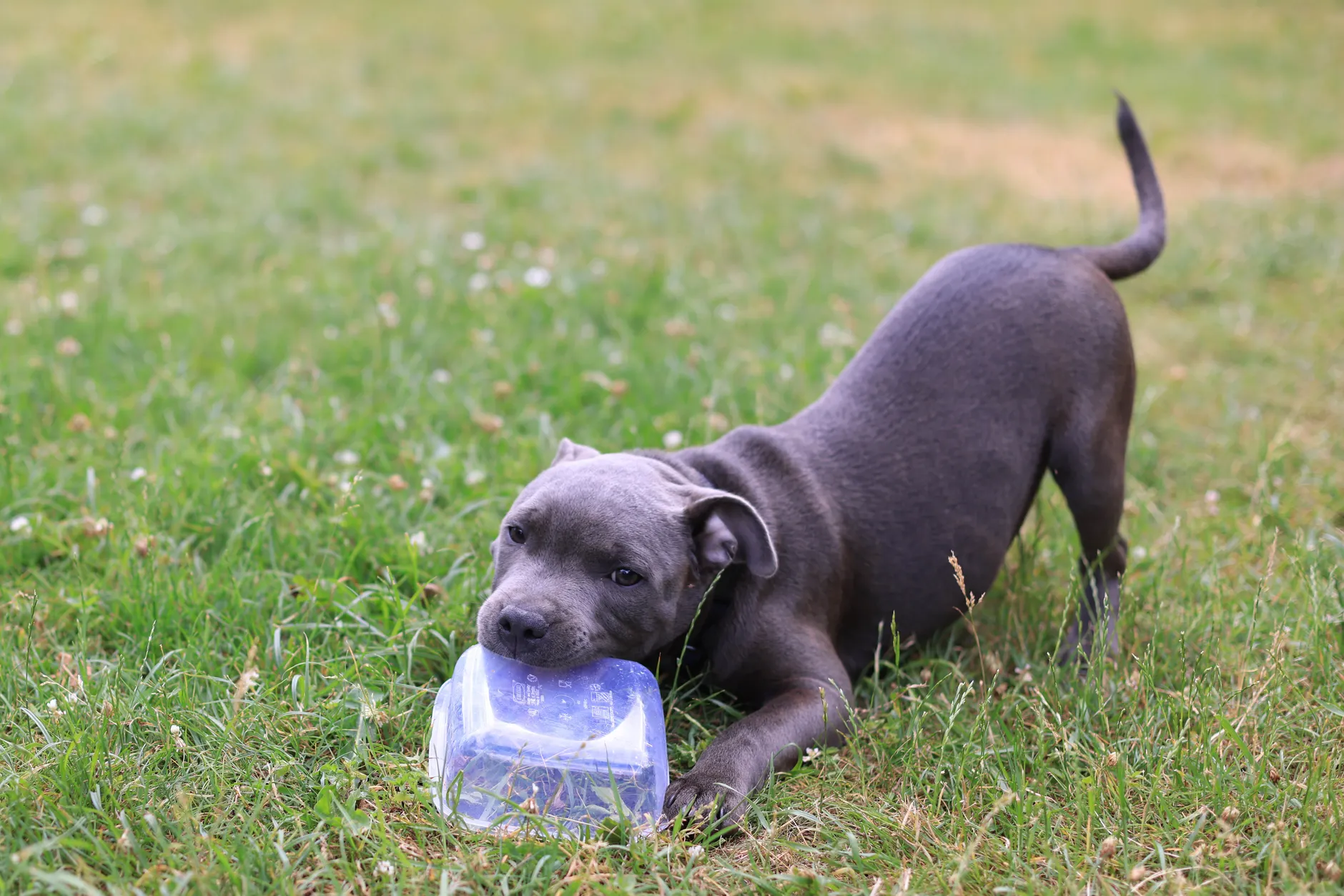
The 4-to-6-month window is when most destructive chewing happens. This is not spite or disobedience — it is a puppy in physical discomfort seeking relief through the only tool available to them. Management and redirection are far more effective than correction.
- Puppy-proof the environment proactively. Pick up shoes, remote controls, charging cables, and children's toys before the puppy finds them. If it is on the floor and chewable, assume it will be chewed.
- Provide a rotating selection of appropriate chews. Puppies lose interest in the same toy after repeated exposure. Rotate 3 to 4 chews daily so each one feels novel.
- Use confinement when you cannot supervise. A crate or puppy-proofed pen with appropriate chews prevents unsupervised destruction. Use the Crate and Bed Size Calculator to get the right dimensions for your breed.
- Redirect, do not punish. If you catch the puppy chewing something inappropriate, calmly remove it and immediately offer an appropriate alternative. Punishment after the fact is ineffective — the puppy cannot connect a correction to something they chewed 10 minutes ago.
- Apply deterrent sprays selectively. Bitter apple spray can discourage chewing on specific items (furniture legs, baseboards) but should supplement management and redirection, not replace them.
- Increase structured mental stimulation. Puzzle feeders, snuffle mats, and short training sessions tire a puppy's brain and reduce the restless energy that drives excessive chewing. See the Dog Training Basics guide for age-appropriate exercises.
Teething and training: adjusting expectations
A puppy in active teething discomfort may be less focused during training sessions, more mouthy with hands and clothing, and more likely to mouth the leash during walks. This is not regression — it is a temporary dip caused by physical discomfort.
Practical adjustments during peak teething:
- Keep training sessions shorter (2 to 3 minutes maximum during heavy eruption periods).
- Use soft, high-value treats that do not require hard chewing.
- Have a chew toy in your pocket to redirect mouthing during leash work.
- Do not introduce muzzle conditioning or intensive mouth handling exercises during active eruption — wait until the gums have settled.
- Maintain consistency on existing cues even if progress is slower. The skills will rebound once the discomfort passes.
For a full age-appropriate training plan that accounts for teething phases, use the Dog Training Plan Generator.
The adult teeth: what the final set looks like
By 7 to 8 months, your puppy should have a full set of 42 adult teeth:
- 12 incisors (6 upper, 6 lower) — small front teeth used for nibbling and grooming
- 4 canines (2 upper, 2 lower) — the long, pointed teeth used for gripping
- 16 premolars (8 upper, 8 lower) — used for shearing and tearing food
- 10 molars (4 upper, 6 lower) — flat grinding teeth at the back; these are new, with no baby tooth predecessor
Once the adult teeth are fully in, the chewing urge typically subsides from its peak intensity, though dogs remain natural chewers throughout their lives. Transitioning to a regular dental care routine — brushing, dental chews, and annual vet dental checks — is the next priority. See the Dog Dental Health guide for a practical long-term dental care plan.
Frequently asked questions
- When do puppies start losing their baby teeth?
- Most puppies begin losing their deciduous (baby) teeth between 12 and 16 weeks of age. The incisors at the front typically loosen first, followed by the premolars, and finally the canines. You may find tiny teeth on the floor, embedded in a toy, or not at all — many puppies swallow them during eating, which is completely harmless. The process is gradual, not overnight, so you will usually notice gaps appearing in the front teeth first.
- Is it normal for a puppy to bleed from the gums during teething?
- Small amounts of blood on chew toys, in the water bowl, or on light-colored food is normal and expected during active teething. The bleeding occurs when a baby tooth root is reabsorbed and the tooth loosens. This is comparable to a child losing a tooth. If bleeding is heavy, persistent, or accompanied by swelling, foul odor, or reluctance to eat, contact your vet — this can indicate infection or a retained root fragment rather than normal teething.
- What are retained baby teeth and do they need treatment?
- A retained baby tooth is one that has not fallen out by the time the adult tooth has erupted in the same position, resulting in two teeth occupying the same socket. This is most common with the upper canines and is seen more frequently in small and toy breeds (Yorkshire Terriers, Chihuahuas, Pomeranians). Retained baby teeth should be extracted by your vet, usually during the spay or neuter procedure. Left untreated, they cause crowding, trap food debris, and can lead to misalignment of the adult teeth, gum disease, and painful bite issues.
- How long does the worst teething phase last?
- The most intense chewing and discomfort typically occurs between 4 and 6 months, when the largest teeth — the premolars, molars, and canines — are erupting simultaneously. This 8-to-10-week window is when owners report the most destructive chewing and the most mouth sensitivity. By 7 months, most puppies have their full set of 42 adult teeth and the acute teething discomfort has resolved, though appropriate chewing behavior still needs reinforcement.
- Can I give my teething puppy ice cubes?
- Plain ice cubes are generally safe for teething puppies and the cold can soothe inflamed gums. However, very hard ice cubes can chip developing teeth if a puppy bites down aggressively. A safer alternative is to freeze a damp washcloth — the texture provides something to gnaw on while the cold reduces gum inflammation. You can also freeze low-sodium broth in ice cube trays for a more appealing option. Always supervise ice and frozen items to prevent choking on small fragments.
- Should I brush my puppy's teeth during teething?
- You should continue gentle mouth handling during teething to maintain the habit, but skip brushing directly on sore, actively erupting areas. Use a soft finger brush or damp gauze on the teeth and gums that are not visibly inflamed. The goal during teething is to maintain the puppy's tolerance for mouth handling rather than achieving a thorough clean. Once the adult teeth are fully in (around 7 months), resume full brushing with a puppy-sized toothbrush and enzymatic pet toothpaste.


