
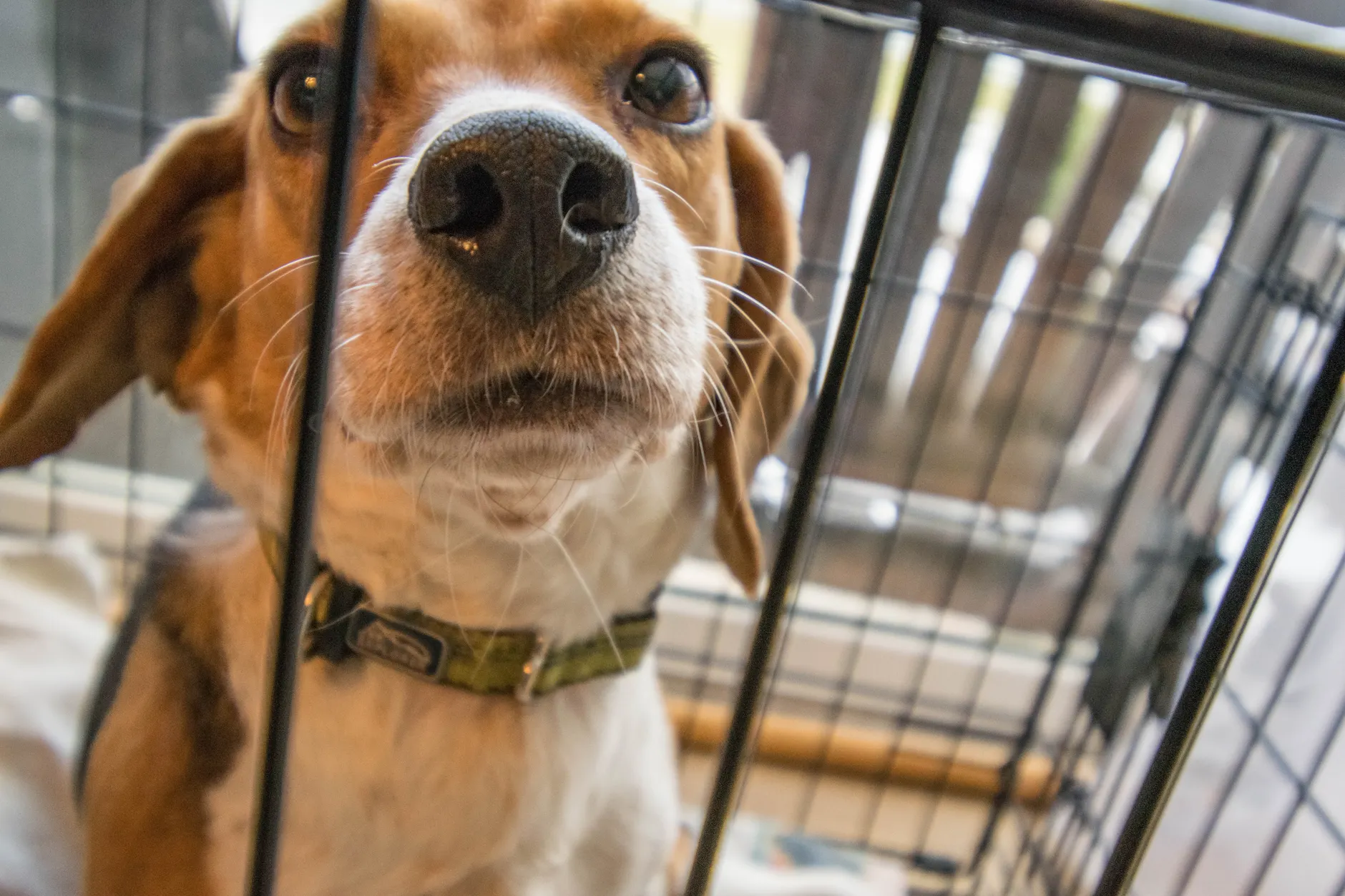
A puppy who has never practised being alone will struggle the first time it happens for real — and in most households, that first time is a workday morning. The good news is that alone-time tolerance is a learnable skill, not a personality trait. Started early and built gradually, most puppies learn to be relaxed on their own within a few weeks. Started late or skipped entirely, the same puppy can develop anxiety that is much harder to resolve. This guide walks through the process from day one.
Why alone-time training matters
Separation-related distress is one of the most common behavioral problems in pet dogs. Studies estimate that 20 to 40 percent of dogs presented to veterinary behaviorists show some degree of separation-related behavior. The majority of these cases are preventable with early, gradual exposure.
The core issue is not that dogs cannot be alone — wild and feral canids spend time apart from group members regularly. The issue is that domestic puppies often go from constant companionship (breeder, littermates, then new owner during the honeymoon period) to sudden, extended isolation (first day back at work) with no transition. That abrupt jump is what creates panic rather than confidence.
The goal of alone-time training is simple: teach the puppy that your departure is safe, predictable, and always followed by your return. When this association is strong, the puppy can rest calmly because they are not uncertain about what happens next.
Maximum alone time by age
These guidelines combine bladder capacity with emotional development. Both matter — a puppy who can physically hold it for 5 hours may not yet have the emotional resilience to be calm for that long.
| Age | Max alone time | Notes |
|---|---|---|
| 8-10 weeks | 1 hour | Practice in short intervals (minutes); a midday visit or puppy sitter is essential if you work full-time |
| 10-12 weeks | 2 hours | Build from successful shorter sessions; crate or puppy-proofed room |
| 3-4 months | 3-4 hours | Bladder capacity allows longer stretches; emotional resilience is still developing |
| 5-6 months | 4-5 hours | Most puppies are reliable in a crate or safe room; still not ready for a full workday |
| 7-9 months | 5-6 hours | Adolescent phase may temporarily increase restlessness; maintain structure |
| 10-12 months | 6-8 hours | Adult bladder capacity; emotional tolerance depends on prior training |
| 12+ months | 8 hours maximum | Healthy adult dogs should not routinely be alone for more than 8-10 hours |
The graduated departure protocol
This protocol works by building positive associations with brief separations and then extending the duration only when the puppy is calm at the current level. Rushing this process is the single most common mistake owners make.
Phase 1: separation within the house (days 1-7)
The puppy does not need to be literally alone to begin building independence. The first step is teaching them that they do not need to follow you to every room.
- Place the puppy in their crate or behind a baby gate with a stuffed Kong or chew.
- Stay visible but do not interact — read a book, fold laundry, scroll your phone.
- Start with 2 to 5 minutes. If the puppy settles, calmly return and reward.
- Gradually increase to 10, then 20, then 30 minutes over the first week.
- If the puppy whines, wait for a pause in the vocalisation (even 2 seconds of quiet) before returning. Never reward active whining with your return.
Phase 2: out of sight, in the house (days 7-14)
Once the puppy is reliably calm while separated by a barrier but with you still visible, move to out-of-sight departures.
- Leave the room with the puppy secured in their crate or safe area. Close the door.
- Start with 30 seconds to 1 minute. Return before the puppy gets distressed.
- Gradually extend: 2 minutes, 5 minutes, 10 minutes, 20 minutes.
- Vary the duration — do not always increase. After a 15-minute absence, do a 3-minute one. Unpredictability teaches the puppy that any departure length is safe.
- Do not make returns exciting. Come back, calmly acknowledge the puppy, and go about your business.
Phase 3: actual departures (days 14-28)
Now add the real departure cues: putting on shoes, picking up keys, opening the front door.
- Give the puppy a high-value chew or stuffed Kong in their safe space.
- Leave through the front door. Walk to the end of the driveway and come back. Total time: 1 to 2 minutes.
- Extend gradually: a walk around the block (5 minutes), a coffee run (15 minutes), a short errand (30 minutes), a grocery trip (1 hour).
- The first time you leave for more than an hour, consider using a pet camera to monitor the puppy. Most settle within 10 to 15 minutes of a well-practised departure routine.
The crate's role in alone-time training
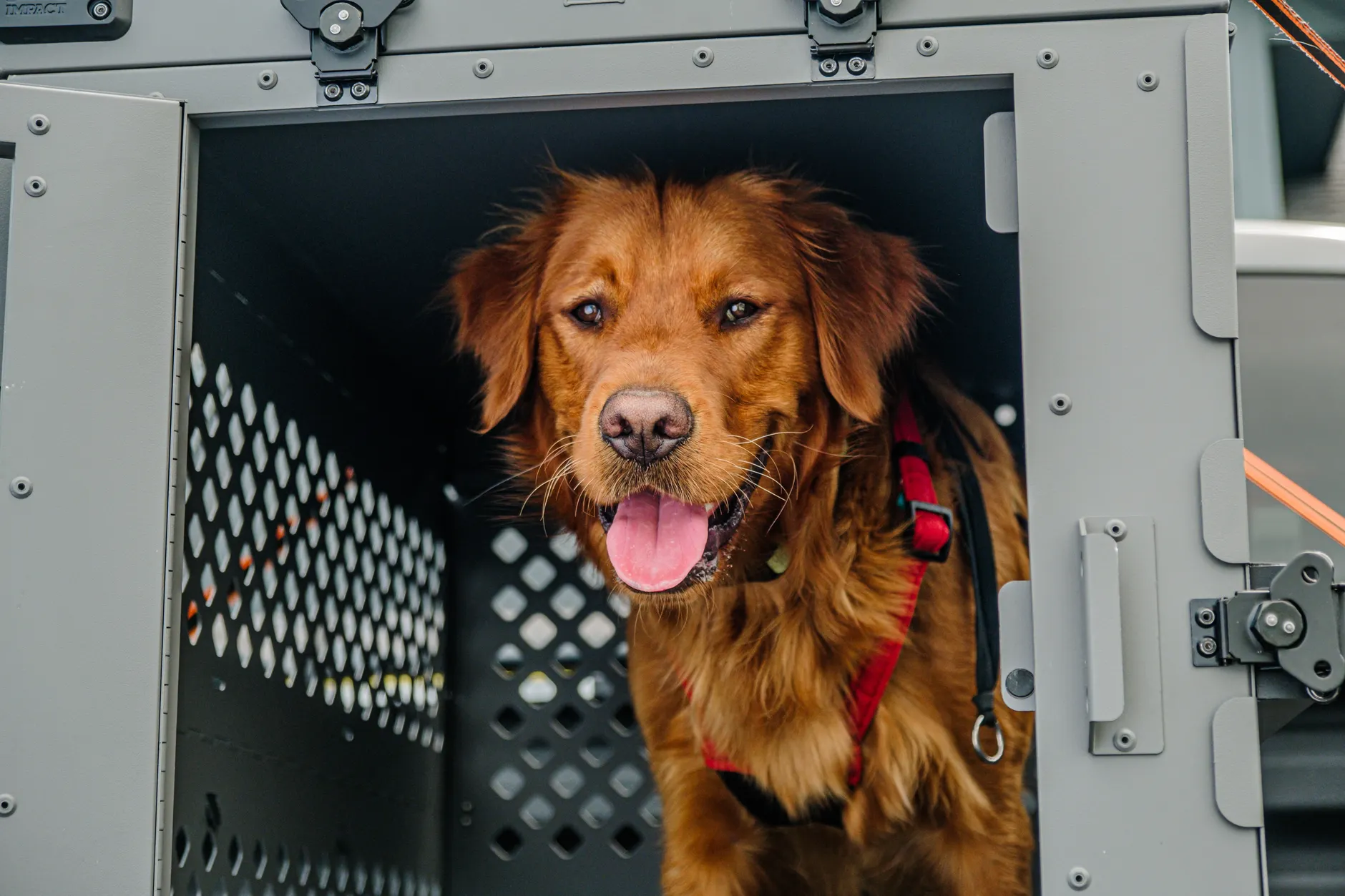
A properly introduced crate serves as a portable "safe zone" — a den-like space the puppy associates with rest and security. This makes it an excellent tool for alone-time training because it provides physical boundaries, protects the home from destructive chewing, and supports house training.
The critical prerequisite: the puppy must be comfortable in the crate before you use it for departures. If the crate itself is stressful, combining it with your absence creates a double negative that can create or worsen anxiety.
If your puppy is not yet crate-trained, work through the Crate Training Guide first. Most puppies can learn to rest calmly in a crate within 5 to 7 days of consistent positive introduction.
Not all puppies thrive in crates. Some do better in a small, puppy-proofed room (bathroom or laundry with hard flooring, nothing chewable, water available). If your puppy panics in a crate but settles in a room, use the room. The goal is calm alone time, not crate time specifically.
Desensitising departure cues
Puppies are pattern-recognition machines. Within days of arriving home, most learn that the sequence of shoes-keys-bag-door means you are leaving. If departures are currently stressful, the puppy begins reacting at the first cue in the chain — often the moment you put on shoes.
Desensitisation means breaking the predictability of those cues:
- Pick up your keys randomly throughout the day. Carry them to the kitchen, put them back. Pick them up, sit down. Keys stop predicting departure.
- Put on shoes and stay home. Wear your coat inside. Open the front door and close it without leaving. Walk out and come back 5 seconds later.
- Vary your exit routine. Sometimes leave through the back door. Sometimes put your bag in the car 10 minutes before leaving. The less predictable the pattern, the less the puppy rehearses the anxiety sequence.
This only works if you are also practising the graduated departure protocol. Breaking departure cues without building actual alone-time tolerance gives the puppy a different problem: they cannot predict when you are leaving, but they are still anxious when you do.
Prevention vs treatment: why early training matters
There is a large gap between preventing separation anxiety and treating an established case. Prevention — the graduated protocol described above, started in the first few weeks — typically takes 2 to 4 weeks and can be done by any committed owner.
Treatment of clinical separation anxiety in an adult dog often requires:
- A certified veterinary behaviorist (not just a trainer)
- Medication (typically an SSRI such as fluoxetine, prescribed by a vet)
- A structured desensitisation program lasting months, not weeks
- Complete avoidance of triggering absences during the treatment period — which may require dog sitters, daycare, or schedule changes
- Costs that can reach thousands of dollars over the course of treatment
The time invested in gradual alone-time training during puppyhood is a fraction of what treatment requires later. For a comprehensive look at recognising and managing established separation anxiety, see the Managing Dog Separation Anxiety guide.
When to get professional help
Most puppies respond to the graduated protocol within 3 to 4 weeks. Seek help from your vet or a certified animal behaviorist if:
- The puppy shows no improvement after 4 weeks of consistent, graduated practice.
- Distress is escalating rather than decreasing — the puppy is more frantic at week 3 than week 1.
- The puppy shows physical signs of panic: excessive drooling, self-injury (broken nails from scratching at doors, bleeding gums from crate biting), or loss of house training despite previously being reliable.
- The puppy cannot settle even when you are home — follows you room to room, panics when you close the bathroom door, and cannot rest unless in physical contact with you.
- You observe destructive behavior targeting exits (doors, window frames, crate bars) rather than general chewing on random objects.
These signs suggest the problem has moved beyond normal adjustment and into a clinical range where professional intervention and possibly medication are warranted. Early professional assessment prevents months of escalation.
Practical tips for working owners
If you work outside the home and have a young puppy, the graduated protocol needs to coexist with reality. Here are practical bridging strategies:
- Take time off for the first week if possible. Even 3 to 5 days gives you a window to establish the crate routine, the departure protocol, and the basic schedule before the puppy faces a full workday.
- Arrange a midday visit. A dog walker, neighbor, family member, or professional pet sitter who comes midday to let the puppy out, provide companionship for 30 to 60 minutes, and reset the alone-time clock.
- Consider puppy daycare for the first month. Quality puppy daycare (small groups, supervised play, nap time) provides socialisation and prevents long isolation stretches during the critical period.
- Use a pet camera. A two-way camera lets you check on the puppy, confirm they have settled, and identify the point in your absence where distress begins (if it does). This data helps you calibrate the protocol.
- Front-load the enrichment. A frozen Kong, a snuffle mat, or a puzzle feeder given as you leave occupies the puppy during the first 15 to 20 minutes — the window when most distress occurs. If they are calm past that point, they typically stay calm.
Use the Puppy First-Year Planner to map vet visits, training milestones, and alone-time goals into a single month-by-month schedule.
Frequently asked questions
- How long can I leave my puppy alone?
- As a general guideline, a puppy can hold their bladder for roughly their age in months plus one hour — so a 2-month-old for about 3 hours, a 4-month-old for about 5 hours. However, bladder capacity is only one factor. Emotional tolerance for being alone also develops gradually. Even if a 4-month-old can physically hold it for 5 hours, most puppies at that age have not built the emotional resilience for that duration without gradual training. Starting with minutes and building to hours over weeks produces far better outcomes than leaving a puppy for long stretches early on.
- What is the difference between normal protest and separation anxiety?
- Normal protest is a puppy who whines or barks briefly when you leave but settles within 5 to 15 minutes, especially in the first few weeks. Separation anxiety is a clinical condition where the dog shows extreme, sustained distress — destructive behavior directed at exits (scratching doors, chewing window frames), continuous vocalisation for hours, house soiling despite being fully house-trained, and physical signs like drooling, panting, or self-harm. If your puppy is still showing escalating distress after 4 or more weeks of consistent gradual training, consult your vet or a certified behaviorist.
- Should I use a crate when leaving my puppy alone?
- A crate is helpful for most puppies, provided they have been positively crate-trained first (the crate must be a safe, calm place, not a punishment zone). Crates prevent destructive chewing, support house training, and create a contained "den" that many puppies find calming. However, a puppy who panics in a crate when alone is not a candidate for crated alone time — crating an already distressed puppy escalates the anxiety. If your puppy is not yet comfortable in the crate, work on crate training while you are home before using it for departures.
- Will getting a second dog fix my puppy's alone-time problems?
- Not reliably, and often not at all. True separation anxiety is typically attachment to a specific person, not loneliness in general — a dog with human-directed separation anxiety can be just as distressed with another dog present. A second dog also introduces its own training, cost, and management demands. Address alone-time tolerance through graduated training first. If you eventually want a second dog for other reasons, that is a separate decision — but it is not a treatment for separation anxiety.
- Is it cruel to leave a puppy alone at all?
- No — teaching a puppy to be comfortable alone is one of the most important life skills you can give them. Every dog will experience alone time at some point (vet stays, emergencies, normal work schedules), and dogs who have never practised being alone are significantly more likely to develop anxiety when it happens. The key is that alone time is introduced gradually and positively, not imposed suddenly for long periods. A puppy who learns that departures are safe and predictable is a more resilient, less anxious adult dog.
- Can I leave a radio or TV on for my puppy?
- Background sound (radio, TV, white noise machine) can mask startling external noises (doorbells, delivery trucks) that trigger barking, and some studies suggest classical music at moderate volume has a mild calming effect on dogs. However, background sound is a supplementary measure, not a substitute for gradual departure training. If your puppy is genuinely distressed when alone, a radio will not resolve the underlying problem — but it can be a useful addition to an otherwise solid routine.


