
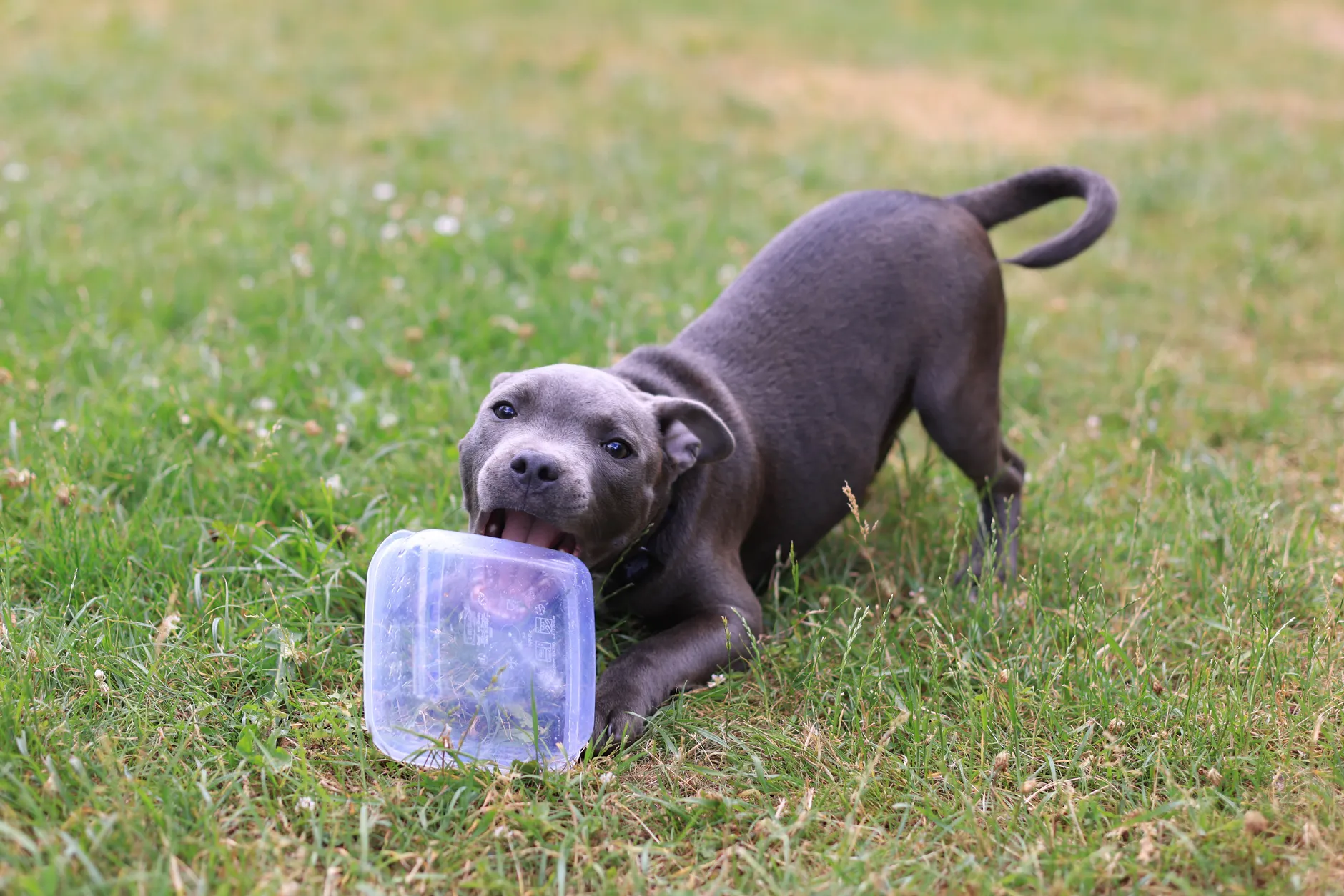
Sharp little teeth, constant mouthing, and surprisingly painful nips are one of the most common reasons new puppy owners feel overwhelmed in the first few weeks. The good news: this is completely normal puppy behaviour, it is temporary, and the way you respond now is actively teaching your puppy something valuable for the rest of their life — how gently to use their mouth.
Why puppies bite and mouth
Puppies don't bite because something is wrong — they bite because it's how they experience the world and how they play. Several things are usually happening at once:
- Exploration — puppies investigate new objects, textures, and even hands and feet with their mouths, the same way they use their nose.
- Teething — from around 12 weeks, adult teeth begin pushing through, and chewing relieves gum discomfort.
- Play — mouthing, wrestling, and gentle biting are core parts of how puppies play with littermates and with people.
- Overtiredness and overstimulation — an overtired puppy often becomes more "mouthy," not less — much like an overtired toddler becomes harder to manage rather than sleepier.
- Attention-seeking — if grabbing a sleeve or trouser leg reliably gets a reaction (even a negative one), puppies quickly learn it's an effective way to get attention.
Bite inhibition: the most important skill your puppy can learn
Bite inhibition is a dog's learned ability to control the force of their mouth — to know the difference between a gentle, controlled bite and a hard one, even when startled, excited, or in pain. Puppies start learning this from their mother and littermates: bite too hard during play, and the other puppy yelps and stops playing. The lesson is about force, not about whether to use the mouth at all.
This is why the early weeks matter so much. A puppy that learns "soft mouth, even when excited" as a baby carries that calibration into adulthood. An adult dog with good bite inhibition that is startled into a snap is far less likely to cause serious injury than one that never learned to moderate their bite force — which is one of the strongest arguments for working on this consistently while your puppy is young, even though the biting itself feels like the more urgent problem.
Step by step: reducing mouthing day to day
- Redirect to an appropriate object immediately. The moment your puppy's mouth touches skin or clothing, calmly offer a toy or chew instead. Consistency matters more than any single technique — every family member needs to respond the same way.
- Remove attention for biting, give attention for not biting. If redirection doesn't work and your puppy keeps going for hands or clothes, calmly stand up, turn away, and disengage for 10 to 20 seconds. No talking, no eye contact. Resume play once your puppy is calm.
- Keep play sessions short and end them before they escalate. Most mouthing happens when a puppy becomes overstimulated mid-play. Shorter sessions with planned breaks for sniffing, chewing, or rest tend to produce far less biting than long, high-intensity sessions.
- Provide an appropriate outlet before the need builds. A puppy with regular access to safe chew toys, especially during teething, is less likely to seek out hands and furniture.
- Manage the environment. If certain situations reliably trigger mouthing — getting your puppy out of the crate, putting on a harness, greeting visitors — have a chew toy ready in advance rather than reacting after the fact.
- Be patient and consistent. Mouthing typically reduces gradually over weeks, not days. A puppy that "suddenly gets worse" around 4 to 6 months is often just teething again as adult teeth finish coming in — stay consistent rather than escalating your response.
Teething timeline and chew solutions
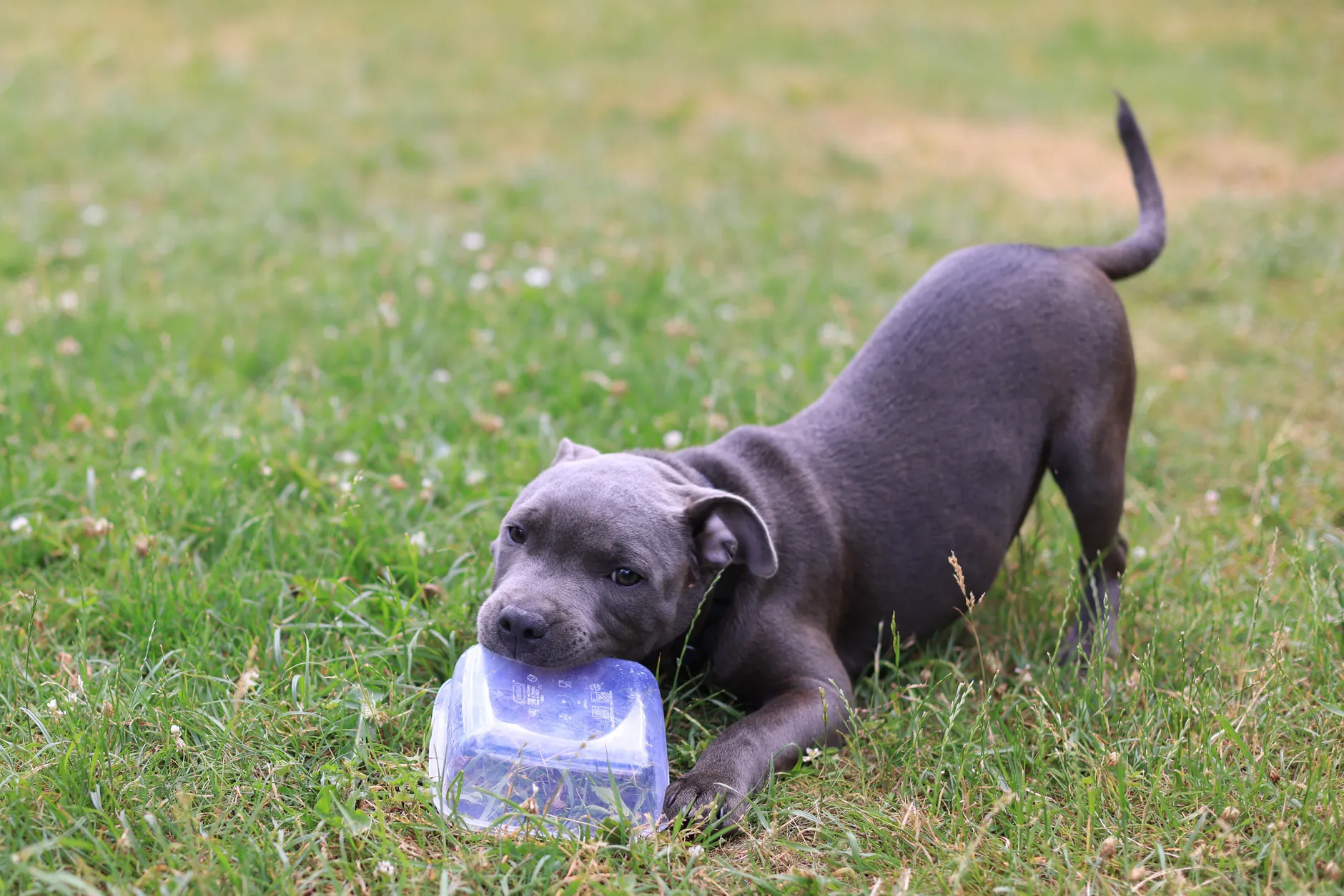
Puppies are born without teeth; baby ("milk") teeth come in from around 3 to 6 weeks of age. Adult teeth begin replacing them from roughly 12 weeks, with the full adult set of 42 teeth usually complete by 6 to 7 months. The most intense chewing urges generally occur from 3 to 6 months, when the most adult teeth are erupting at once.
- Offer a rotating selection of textures — rubber chews, rope toys, and appropriately sized edible chews — so your puppy doesn't lose interest in any one option.
- A clean, damp washcloth, twisted and frozen, can soothe sore gums during heavy teething.
- Avoid anything hard enough that it wouldn't dent under firm thumbnail pressure (such as real bones, antlers, or hard nylon bones) — these carry a real risk of fractured teeth.
- Supervise all chewing, and replace toys that have become small enough to swallow or have sharp broken edges.
What not to do
Some traditional responses to puppy biting are not just ineffective — they actively work against teaching a soft mouth, and several major veterinary behaviour organisations explicitly advise against them:
- Don't hold the muzzle shut, hit, or flick the nose. These can teach a puppy to fear hands approaching their face, which can create handling problems and, in some cases, defensive aggression later.
- Don't physically roll or pin your puppy ("alpha rolling"). This outdated technique is not supported by modern behaviour science and can significantly increase fear and defensive responses.
- Don't play rough hand-wrestling games that encourage biting hands. It's confusing for a puppy to be encouraged to bite hands in one context and corrected for it in another. Use toys for all hand-involving games from day one.
When mouthing might be something else
The vast majority of puppy mouthing is normal and resolves with consistency and time. Consider involving a certified trainer or your veterinarian if you notice:
- Biting that is accompanied by growling, stiff body language, or a hard stare rather than loose, playful movement
- Biting directed at specific situations — being handled in a particular spot, having an item taken away, or being approached while resting — that looks defensive rather than playful
- No improvement at all in frequency or force by 6 to 7 months despite consistent redirection
- Bites that reliably break skin even during calm interactions, not just high-arousal play
Our dog aggression guide explains the difference between developmental mouthing and the warning signs worth taking seriously, and how to find the right kind of professional help if needed.
Frequently asked questions
- Is it normal for my puppy to bite this much?
- Yes. Mouthing, nipping, and play-biting are completely normal for puppies, typically peaking between 8 and 18 weeks. Puppies explore the world with their mouths the way toddlers explore with their hands, and biting is also a major part of normal puppy play. It is rarely a sign of aggression. Most puppies grow out of the most intense mouthing as their adult teeth come in and they get more practice with bite inhibition, usually by 6 to 8 months.
- Should I yelp loudly when my puppy bites, like a littermate would?
- It can work for some puppies, but it backfires for others — a sudden yelp or squeal can over-excite a puppy and make the biting worse, especially in high-energy or herding-type breeds. If you try it, use a single short "ow" and immediately stop interacting (turn away, fold your arms, go still). If your puppy gets more excited rather than less, drop this method and rely on redirection and removing attention instead.
- My puppy's teeth are so sharp — when does that get better?
- Puppy ("milk") teeth are needle-sharp and start being replaced by adult teeth from around 12 to 16 weeks, with the full adult set usually in by 6 to 7 months. The sharpness itself improves as adult teeth come in, but the appropriate response — redirecting to a toy and not allowing skin contact — should continue throughout this period regardless of which teeth are doing the biting.
- Is mouthing a sign my puppy will be aggressive as an adult?
- On its own, no. Normal puppy mouthing during play and exploration is developmentally typical and not predictive of adult aggression. What matters more is how the puppy responds to frustration, handling, and having things taken away — and whether biting is accompanied by growling, stiff body language, or genuine attempts to cause harm rather than playful, open-mouthed contact. If you are concerned about the quality of the biting rather than just the amount, see our guide on dog aggression.
- My puppy bites harder when excited during play — what should I do?
- This is extremely common and usually means the play session has gone on too long or become too intense for your puppy to regulate. End the game calmly the moment teeth touch skin — stand up, turn away, and ignore for 10 to 20 seconds — then resume with a calmer activity or a chew toy. Shorter, calmer play sessions with planned breaks usually reduce escalation more effectively than longer sessions that build to a peak.


