
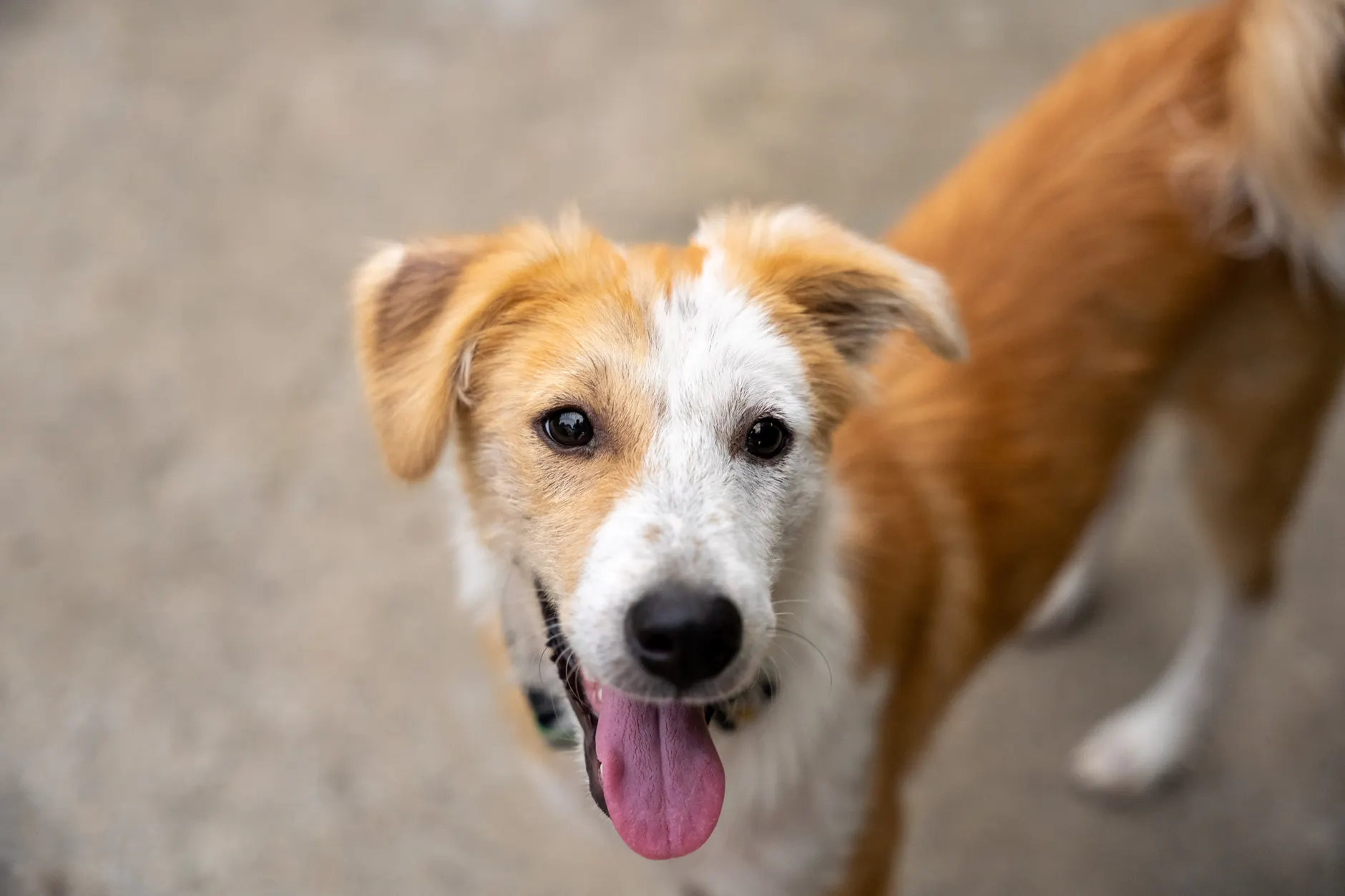
At 5 months your puppy sat on cue, came when called, and walked politely on a leash. At 8 months they act as if they have never heard a single command in their life. You have not broken your dog. You have not failed at training. Your puppy is an adolescent — and understanding what is happening neurologically during this phase is the single most important thing you can do to get through it without damaging your relationship or your dog's confidence.
What is happening in the adolescent brain
Puppy adolescence is not a metaphor — it is a real neurological event with measurable effects on behavior. Two major processes are happening simultaneously:
Prefrontal cortex remodeling
The prefrontal cortex is the brain region responsible for impulse control, decision-making, working memory, and the ability to override instinctive responses in favor of learned behavior. During adolescence, this region undergoes significant synaptic pruning — the brain is eliminating underused neural connections and strengthening frequently used ones. This is ultimately how the brain becomes more efficient, but during the process, the circuitry is temporarily less reliable.
The practical result: a puppy that could inhibit their impulse to chase a squirrel at 5 months may genuinely struggle to do so at 8 months. The training is still in there — the retrieval pathway is just under construction.
Hormonal surges
Sexual maturation brings significant hormonal changes regardless of neuter status. Testosterone in males and estrogen in females affect arousal levels, reactivity thresholds, and social behavior. These hormones amplify responses to environmental stimuli — other dogs become more interesting, novel sounds more startling, and the adolescent's overall arousal level rises. Intact dogs experience this more intensely, but neutered adolescents are not exempt — the hormonal surge is one factor among several, and brain maturation drives the majority of behavioral changes.
Increased environmental sensitivity
Adolescent dogs process their environment differently than puppies. A younger puppy's brain prioritizes bonding with their caregiver — the owner is the most interesting thing in the room. During adolescence, the brain shifts to prioritize environmental exploration and peer interaction. Your recall cue is now competing with a much more powerful pull from the outside world. This is not defiance — it is a brain that is developmentally wired to explore and test independence.
Adolescent developmental phases by size class
The timing and duration of adolescence varies significantly by breed size. Smaller breeds mature faster; giant breeds may remain behaviorally adolescent for two to three years.
| Size class | Adult weight | Adolescence onset | Peak difficulty | Social maturity | Growth plates close |
|---|---|---|---|---|---|
| Toy | Under 5 kg (11 lb) | 4-5 months | 6-8 months | 10-12 months | 8-10 months |
| Small | 5-10 kg (11-22 lb) | 5-6 months | 7-9 months | 10-14 months | 10-12 months |
| Medium | 10-25 kg (22-55 lb) | 6-7 months | 8-11 months | 12-18 months | 12-14 months |
| Large | 25-45 kg (55-100 lb) | 7-9 months | 9-14 months | 18-24 months | 14-18 months |
| Giant | Over 45 kg (100 lb) | 8-10 months | 10-18 months | 24-36 months | 18-24 months |
These ranges are approximations. Individual variation within breed and size class is significant. Working and herding breeds often show extended adolescent energy and drive compared to companion breeds of similar size.
Behavior changes to expect
The following table maps common adolescent behavioral changes to their underlying causes and the appropriate owner response.
| What changes | Why it happens | What to do |
|---|---|---|
| Recall becomes unreliable | Environment is now more rewarding than the owner; impulse control is reduced | Use a long line (5-10 m) for safety; increase treat value; practice in low-distraction environments first; rebuild gradually |
| Pulling on leash increases | Higher arousal; greater interest in environmental stimuli; physical strength has increased | Use a front-clip harness; reward check-ins; keep walks shorter and more enrichment-focused; avoid retractable leads |
| "Selective deafness" to known cues | Prefrontal cortex remodeling reduces impulse override; competing motivations are stronger | Lower criteria temporarily; reinforce at a higher rate; use higher-value rewards; do not repeat cues multiple times |
| Increased mouthing or jumping | Arousal regulation is poor; social greeting behaviors are exaggerated | Redirect to a toy; reward four-on-the-floor; manage greetings with a leash; do not knee or push (increases arousal) |
| Over-excitement around other dogs | Social motivation peaks; hormonal changes increase interest in conspecifics | Practice calm parallel walks; reward disengagement; avoid unstructured dog park visits; build a "look at me" cue |
| Increased chewing and destructiveness | Second teething phase (adult molars settling); exploration; boredom; arousal | Provide appropriate chew outlets; manage the environment (do not leave valuable items accessible); increase enrichment |
| Testing boundaries (counter surfing, trash raiding) | Increased environmental exploration; reduced impulse control; physical ability has increased (taller, stronger) | Management first (push items back, use baby gates, secure bins); do not leave opportunities available; reinforce "leave it" |
| Sudden fearfulness or spookiness | Second fear period (typically 6-14 months); heightened environmental sensitivity | Do not force exposure; reduce intensity; use counter-conditioning; the phase passes in 1-4 weeks |
Regression vs. normal development
The word "regression" implies the dog is going backward. In reality, they are not losing skills — the brain is reorganizing. The distinction matters because how you interpret the behavior shapes how you respond to it.
What looks like regression but is actually normal
- Inconsistent recall. The dog comes when called in the kitchen but ignores you in the park. The behavior exists — the impulse control to execute it in a high-distraction environment does not yet.
- House training "accidents" after months of reliability. Hormonal changes (especially in intact males) can trigger marking behavior that is distinct from house training failure. Increased excitement and reduced bladder control awareness also contribute.
- Ignoring known cues. The dog has not forgotten "sit." They are choosing between competing motivations with a brain that is temporarily worse at making that choice. Lower the distraction level, and the cue works again.
What is not regression and may need attention
- Aggression that escalates. A puppy that growled occasionally but is now lunging and snapping is not in a normal adolescent phase — the behavior is escalating and needs professional intervention.
- Anxiety that worsens week over week. Mild uncertainty in new situations is normal. Panic attacks, inability to settle, self-harm, or avoidance that becomes progressively more severe is not.
- Complete social withdrawal. An adolescent who was previously social but now refuses to interact with people or dogs entirely warrants veterinary assessment to rule out pain or illness.
Fear periods during adolescence
Most dogs experience a second fear period between 6 and 14 months of age. Unlike the first fear period at 8-10 weeks (which is brief and relatively mild), the adolescent fear period can last several weeks and can be more intense. During this phase, a dog that was previously confident may suddenly become fearful of things they have encountered without issue before — garbage trucks, men in hats, slippery floors.
The adolescent fear period is believed to be an evolutionary adaptation: in wild canids, this is the age when juveniles begin ranging further from the pack, and heightened caution toward novel or potentially dangerous stimuli has survival value.
How to handle the adolescent fear period:
- Do not flood. Forcing the dog to confront what scares them will sensitize, not desensitize. A single traumatic experience during a fear period can create a lasting phobia.
- Create distance. Move away from the stimulus until the dog can relax. Work at that distance with counter-conditioning (scary thing = treats) before closing the gap.
- Maintain routine. Keep walks, training, and daily structure consistent. Predictability is calming.
- Avoid major new experiences. This is not the time to introduce the dog to fireworks, a crowded festival, or an off-leash beach for the first time.
- Be patient. The fear period will pass. Most last 2-4 weeks. If the fearfulness does not improve or worsens significantly over 4-6 weeks, consult a professional.
Exercise restrictions for large breeds during growth
Large and giant breed puppies present a specific challenge during adolescence: they have high energy and a strong drive to run and play, but their skeletal system is not yet mature. Growth plates — the areas of developing cartilage at the ends of long bones — do not fully close and harden until 12-24 months depending on breed size.
Until growth plates are closed, repetitive high-impact activity increases the risk of:
- Osteochondritis dissecans (OCD) — cartilage and bone damage in joints
- Panosteitis — painful inflammation of long bones ("growing pains")
- Growth plate fractures — which can cause permanent limb deformity
- Early-onset joint disease — contributing to arthritis later in life
Exercise guidelines by growth plate status
| Activity | Before growth plates close | After growth plates close |
|---|---|---|
| Self-directed play (sniffing, exploring) | Encouraged — let the dog set the pace | Continue freely |
| Short walks on varied terrain | Safe — 5 minutes per month of age, twice daily, as a general guideline | Gradually increase duration |
| Off-leash play with matched dogs | Safe in moderation — monitor for excessive rough play | Continue with supervision |
| Swimming | Excellent low-impact exercise at any age | Continue freely |
| Forced running (jogging with owner) | Avoid — repetitive impact on immature joints | Introduce gradually from 12-18 months depending on size |
| Jumping (agility, frisbee, in/out of vehicles) | Avoid — high impact on growth plates | Introduce gradually after vet confirmation |
| Extended fetch on hard surfaces | Avoid — repetitive sudden stops and direction changes | Moderate — still use varied surfaces |
| Stairs (multiple flights daily) | Minimize — carry if possible for large/giant breeds under 4 months; limit thereafter | Normal use is fine |
The "5 minutes per month of age" guideline (so a 6-month-old walks for 30 minutes) is a rough framework, not a rigid rule. The principle behind it is sound: let the puppy's skeletal maturity, not their energy level, determine exercise duration. A puppy that wants to run for an hour does not mean their joints can handle it.
How to adjust your training during adolescence
The core training principles do not change during adolescence. What changes is your expectations and the intensity of your management. Here are the practical adjustments that get owners through this phase:
- Lower your criteria. If your dog could hold a stay for 30 seconds at 5 months, go back to 5 seconds and rebuild. This is not going backward — it is working with where the brain actually is, not where you wish it were.
- Increase reinforcement rate. Adolescent dogs need more frequent rewards, not fewer. The notion that you should be "fading treats by now" ignores brain development. When the behavior is reliable again, you can thin the schedule.
- Use higher-value rewards. The kibble that worked at 4 months may not compete with the environment at 8 months. Upgrade to real meat, cheese, or whatever your dog finds most motivating.
- Manage the environment. If your dog cannot be trusted off-leash, use a long line. If they counter-surf, manage the counters. Prevention is not giving up — it is preventing the dog from practicing unwanted behaviors while the brain matures.
- Increase mental enrichment. Puzzle feeders, scent work, training games, and foraging activities tire the adolescent brain more effectively and safely than an extra hour of physical exercise.
- Practice impulse control games. "Wait" before meals, "leave it" with high-value items, "look at me" near distractions, and hand-targeting all build the prefrontal cortex pathways that adolescence is disrupting.
- Keep sessions short. Adolescent attention spans are shorter than you expect. Five minutes of focused training three times a day beats one frustrating 20-minute session.
- Do not punish. Punishment during adolescence — verbal corrections, leash pops, physical intimidation — damages the relationship at the exact moment when trust is most important. The dog is not being defiant. Their brain is under construction.
Normal adolescent behavior vs. behavior that needs professional help
Not everything that happens during adolescence is "just a phase." The following comparison helps distinguish between normal developmental behavior and signs that professional intervention is needed.
| Normal adolescent behavior | Concerning behavior (seek professional help) |
|---|---|
| Inconsistent recall — comes sometimes, ignores other times | Never comes when called in any environment, even low-distraction |
| Increased mouthing during play or excitement | Biting that breaks skin or is directed at faces; biting during calm interactions |
| Over-excitement when seeing other dogs | Lunging, snarling, or sustained aggressive displays toward other dogs |
| Brief fear of a new stimulus that resolves within days | Fear that escalates over weeks; panic responses; inability to recover |
| Testing boundaries (stealing items, counter surfing) | Resource guarding with escalating intensity (freezing, snapping, biting) |
| Increased independence and reduced attention to owner | Complete social withdrawal; refusal to interact with people or dogs |
| Difficulty settling after exercise or excitement | Inability to settle at all; pacing, panting, or destructiveness when alone |
| Occasional house training lapses (especially intact males marking) | Complete loss of house training; sudden onset in a previously reliable dog (rule out medical causes) |
When to seek professional help
Adolescence is challenging but manageable for most owners with patience, consistency, and realistic expectations. Professional help is warranted when:
- Aggression is escalating. Any behavior involving snapping, biting, or sustained aggressive displays that is getting worse over time — not an isolated incident during a fear period, but a pattern — requires a certified professional.
- Anxiety is severe and worsening. Separation anxiety that involves destructiveness, self-harm, or vocalization lasting longer than 30 minutes; panic reactions that are becoming more frequent; or generalized anxiety (inability to settle in the home environment).
- You are losing your temper regularly. If the frustration of adolescence is causing you to yell, physically correct, or punish the dog frequently, the relationship is suffering and a professional can help you reset with better management strategies.
- You are considering rehoming. Adolescence is the single most common age at which dogs are surrendered to shelters. Before making that decision, invest in 4-6 sessions with a certified trainer. Many adolescent behaviors that feel permanent resolve within weeks with the right approach.
- A sudden dramatic change. If behavior changes are abrupt rather than gradual — a friendly dog becomes aggressive overnight, a confident dog suddenly refuses to walk — consult your vet first to rule out pain, illness, or neurological issues.
Look for trainers certified through evidence-based organizations: CPDT-KA (Certification Council for Professional Dog Trainers), KPA CTP (Karen Pryor Academy), or IAABC (International Association of Animal Behavior Consultants). For severe behavioral issues, a veterinary behaviorist (Diplomate ACVB) is the gold standard. Avoid any trainer who uses punishment, dominance theory, or aversive equipment as their primary methodology.
Frequently asked questions
- Why has my puppy suddenly stopped listening to commands they knew?
- Your puppy has not forgotten their training. During adolescence (roughly 6-18 months depending on breed size), the prefrontal cortex — the brain region responsible for impulse control, decision-making, and learned behavior recall — is undergoing a major remodeling phase. Hormonal surges from sexual maturation add further disruption. The result is that behaviors that were reliable at 4-5 months become inconsistent at 7-8 months. This is a normal, temporary developmental phase, not a training failure. Continue reinforcing the same cues with patience and consistency, and the behaviors will return as the brain matures.
- How long does puppy adolescence last?
- The duration varies significantly by breed size. Toy and small breeds (under 10 kg adult weight) typically enter adolescence around 5-6 months and settle by 10-12 months. Medium breeds begin around 6-7 months and settle by 12-15 months. Large breeds start around 7-8 months and may not fully mature until 18-24 months. Giant breeds can remain in adolescence until 2-3 years of age. The most challenging phase for most owners is between 7 and 12 months regardless of breed size.
- Should I increase exercise to tire out my adolescent dog?
- More exercise is not the answer, and for large and giant breeds it can be actively harmful. Growth plates in large breeds do not close until 12-18 months (giant breeds up to 24 months). Repetitive high-impact activities — forced running, jumping from heights, extended fetch on hard surfaces — before growth plate closure increase the risk of joint problems later in life. Instead of increasing physical exercise, increase mental stimulation: training sessions, puzzle feeders, scent work, and structured enrichment activities tire the brain more effectively and safely than a longer run.
- Is my adolescent dog being dominant or defiant?
- No. The dominance framework has been thoroughly debunked by behavioral science. What looks like defiance is a combination of neurological immaturity (poor impulse control), competing motivations (the environment is more interesting than your cue), and hormonal changes that increase reactivity and distractibility. Punishing "defiance" damages trust and increases anxiety-based behaviors. The effective approach is to go back to basics: lower your criteria, increase your reinforcement rate, manage the environment to prevent rehearsal of unwanted behaviors, and be patient. The teenage brain is doing exactly what teenage brains do.
- When should I be worried about my adolescent dog's behavior?
- Normal adolescent behavior includes increased distractibility, reduced recall reliability, testing boundaries, increased interest in other dogs, selective deafness to known cues, and brief fear periods. Behavior that warrants professional assessment includes: aggression that is escalating in intensity or frequency, severe fear or anxiety that is worsening rather than remaining stable, resource guarding that involves actual biting (not just stiffening or growling), self-harming behaviors, and any sudden dramatic personality change. A certified force-free trainer or veterinary behaviorist is the right professional for these concerns.
- Does neutering or spaying fix adolescent behavior problems?
- Neutering or spaying is a health decision, not a behavior fix. While it eliminates hormone-driven behaviors like marking, roaming, and heat cycles, it does not address the core adolescent challenges of impulse control, distractibility, and training regression — these are brain maturation issues, not hormone issues. In some cases, early neutering before the brain has fully matured can actually increase anxiety and fearfulness. Discuss the optimal timing with your vet based on breed, size, and individual health factors. Do not expect surgery to replace training.


