
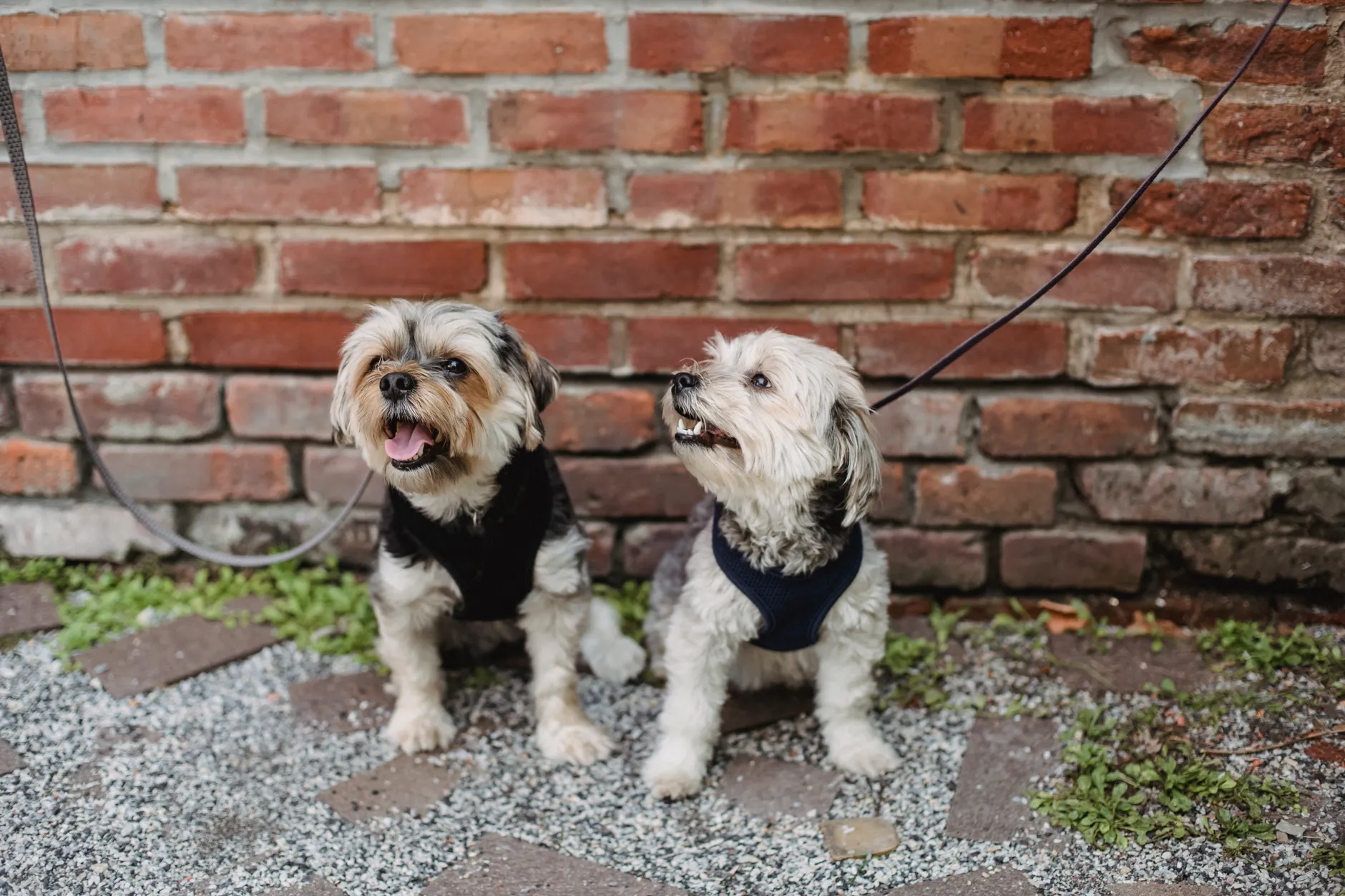
Living with multiple dogs can be deeply rewarding — or consistently stressful — depending almost entirely on how the relationship is established and managed. The introduction period is decisive: a rushed or mishandled first meeting creates tensions that can take months to undo. A properly managed introduction sets a foundation that persists for the life of the household.
Before bringing a second dog home
The most important decisions happen before the new dog arrives. Compatibility assessment is not about breed alone — energy level, play style, and individual temperament are more predictive than breed pairing rules.
- Energy level match — a calm, older dog paired with a high-energy puppy faces persistent harassment; a more balanced energy match reduces daily friction
- Size considerations — large size differences are manageable but require more careful supervision during play; small dogs can be injured in boisterous interactions with large dogs
- Resource guarders — if your resident dog guards food, toys, or resting spaces, this requires specific management before adding a second dog
- Age considerations — puppies require a very different introduction than adult dogs; resident dogs benefit from knowing the newcomer is not a permanent intrusion before full integration
If possible, arrange a neutral-ground meeting between the prospective new dog and your resident dog before committing. Rescue organisations and reputable breeders typically accommodate this. A single positive neutral meeting predicts a better outcome than relying on breed compatibility alone.
The introduction protocol
Introductions should proceed in stages, each stage requiring consistent calm before progressing. Rushing any stage because the dogs "seem fine" is the most common error.
Stage 1: Neutral ground, parallel walk
The first meeting should happen on neutral territory — not your home or garden, which the resident dog may defend. A park or quiet street works well. Walk both dogs in parallel, initially 10 to 15 feet apart, allowing them to observe each other without direct contact. Reward calm behaviour. Gradually decrease distance as both dogs remain relaxed. Do not allow face-to-face contact yet.
Stage 2: Controlled on-lead greeting
When both dogs are relaxed walking near each other, allow a brief side-by-side sniff (not face-to-face, which is high-pressure). Keep leads loose — a tight lead communicates tension and restricts the dog's ability to use natural appeasement signals. Allow 5 to 10 seconds, then redirect both dogs forward. Repeat several times. Watch for stiff body posture, hard stares, or raised hackles, which signal the dogs need more distance before contact.
Stage 3: Off-lead in a neutral enclosed space
Once both dogs are comfortable with on-lead proximity, allow off-lead interaction in a secure, enclosed neutral space. Supervise closely but avoid constant intervention — dogs need space to communicate. Remove any toys, food, or high-value items from the space. If play escalates, interrupt calmly and redirect, then allow re-engagement. Keep initial sessions short (5 to 10 minutes) and end on positive terms.
Stage 4: Introduction to the home
Bring the resident dog into the home first, then bring the new dog in. Give both dogs separate spaces to retreat to. Remove all food bowls, toys, and high-value chews from common areas. Supervise all interactions for the first week. Do not leave both dogs alone together during this phase. The resident dog should retain access to all their usual spaces — the new dog is the guest adapting to the household, not the resident dog adapting to an intruder.
Managing shared resources
Resource management is ongoing, not a one-time setup. The most common trigger for household conflict between dogs who otherwise coexist well is competition over resources.
- Feed separately, always — separate rooms with closed doors; collect bowls immediately after meals; never allow one dog to approach the other's bowl
- High-value chews and bones — give only when dogs are in separate spaces; a dog working a bully stick or bone is at high risk of guarding behaviour regardless of baseline temperament
- Toys — interactive toys (tug ropes, balls) can be used together under supervision; possession toys should be managed the same as chews
- Resting spaces — every dog should have a crate, bed, or defined resting area they can access without competition; do not allow one dog to displace the other from a resting spot
- Owner attention — avoid situations where you pet one dog while the other is present and unable to access you; this can trigger social competition
Reading inter-dog body language
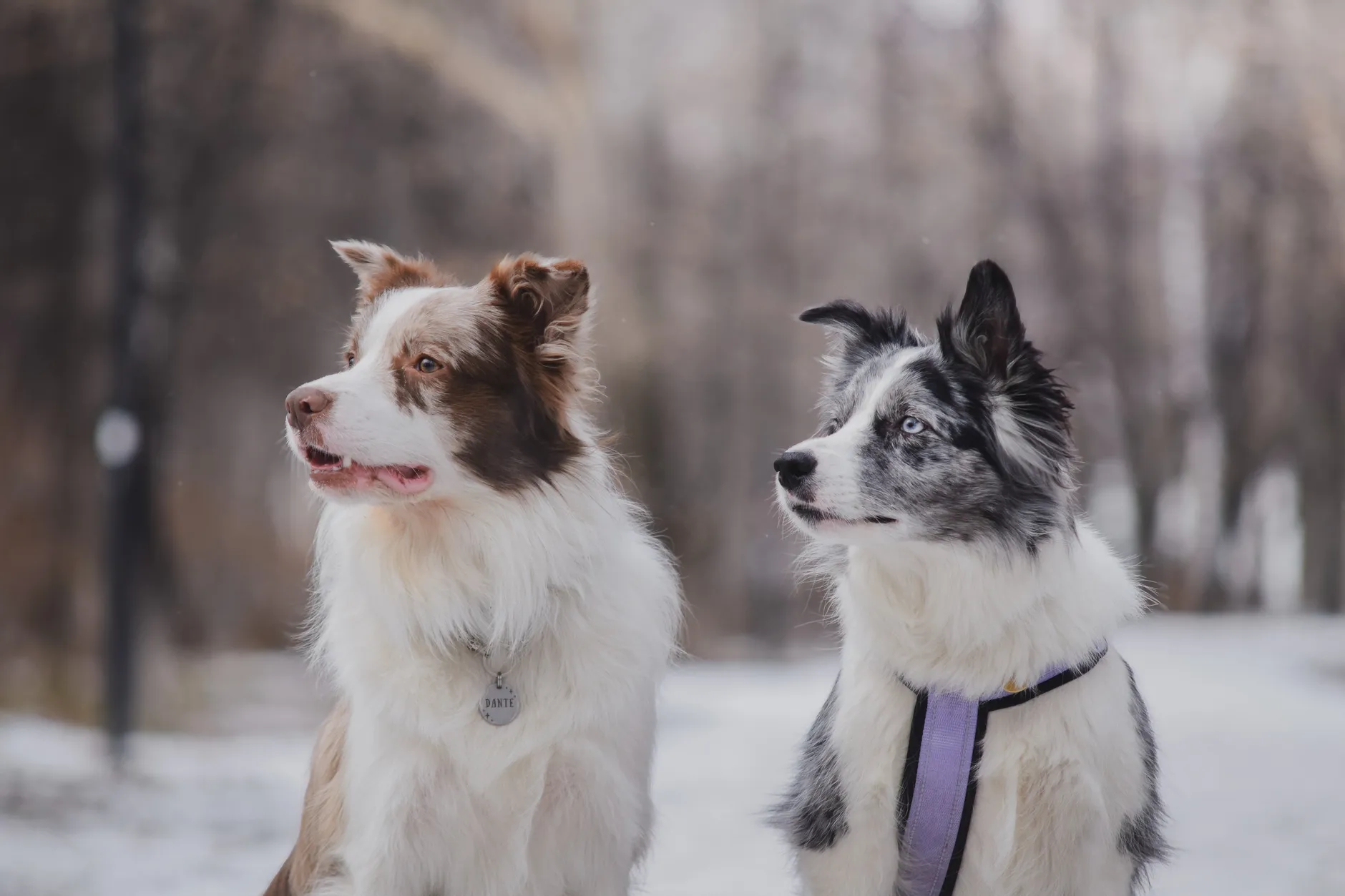
Understanding what you are watching is essential to knowing when to intervene and when to let the dogs work things out.
Positive signals
- Play bow (front end lowered, rear raised) — an explicit invitation to play
- Loose, wiggly body movement
- Role reversal in chase (each dog takes turns being chased)
- Self-handicapping — larger dog lies down or slows to let smaller dog catch up
- Soft, open mouth
Appeasement and calming signals
These signals indicate stress, not aggression — they are communication. A dog showing them is trying to de-escalate. Important to recognise: these are often missed.
- Turning the head away or turning the whole body away
- Yawning, lip-licking when not eating
- Sniffing the ground during an interaction
- Moving slowly or freezing briefly
Warning signals — intervene calmly
- Hard, direct stare without play signals
- Stiff, upright body posture with weight forward
- Closed mouth with tense jaw
- One dog consistently unable to disengage and move away
- Growling without simultaneous play body language
Growling is communication, not failure. A dog who growls is giving a warning before escalating. Suppress growling through punishment and you remove the warning signal — which does not remove the underlying conflict, only the visible indicator.
Long-term household management
Once the household is stable, the work shifts from active management to good habits. Several practices prevent regression:
- Maintain individual time with each dog — training sessions, walks, and attention given separately preserve the individual dog's relationship with you and reduce competition for your attention
- Keep resource management consistent — households that relax food and chew management after an initial smooth period are the most common source of late-stage household conflicts
- Vet visits for any sudden change in dynamic — pain, illness, or cognitive change can trigger resource guarding or aggression in a previously stable dog; a sudden shift in inter-dog dynamics is a reason to rule out a medical cause
- Accept individual preferences — not all dogs become close companions; a polite, neutral coexistence is a good outcome and should not be forced into play-partner behaviour the dogs do not naturally seek
Frequently asked questions
- How long does it take for two dogs to get along?
- Most dogs reach a comfortable coexistence within 3 to 6 weeks of a properly managed introduction. Full social integration — where both dogs genuinely seek out each other's company — can take 3 to 6 months. Rushing the process by allowing unsupervised access before a stable relationship is established is the most common reason introductions fail. Some dogs maintain a polite, neutral relationship rather than becoming close companions; that is a successful outcome.
- Should I get a dog of the opposite sex as my second dog?
- Opposite-sex pairings do have a statistical advantage in reducing same-sex aggression, but they are not universally better. The more important factors are individual personality, energy level compatibility, and size match. A calm, sociable dog of the same sex will integrate better than a high-strung, reactive dog of the opposite sex. Assess the individual dogs rather than relying on sex as the primary determinant.
- My dogs fight over food — what should I do?
- Feed dogs in completely separate locations — separate rooms with doors closed is the most reliable approach. Food guarding is a natural behaviour, not a sign of dominance or training failure. Trying to train dogs to eat together from adjacent bowls increases competition and resource pressure. Permanent separate feeding is simpler and more stable than training a reliable tolerance that can break down under stress.
- Can I leave two dogs alone together at home?
- Only when you are confident the relationship is fully stable and both dogs have demonstrated reliable calm together over many weeks. New dog pairings should not be left unsupervised for the first several weeks. Even stable pairs benefit from being able to access separate spaces when alone. If either dog has shown resource guarding, reactivity, or tension with the other, supervised presence is essential until these are fully addressed.
- How do I know if dog play is getting too rough?
- Healthy play includes role reversals (both dogs take turns chasing and being chased), self-handicapping (the larger dog may exaggerate movement or lie down), and regular pauses. Warning signs that play is tipping into conflict: one dog consistently freezes, turns away, or whale-eyes; one dog is doing all the chasing with no reversal; the pursued dog is not showing play signals on pauses; growling without simultaneous play signals; or either dog showing escalating arousal without the ability to interrupt. If in doubt, call them apart briefly — if they both re-engage willingly with play signals, the play was healthy.


