
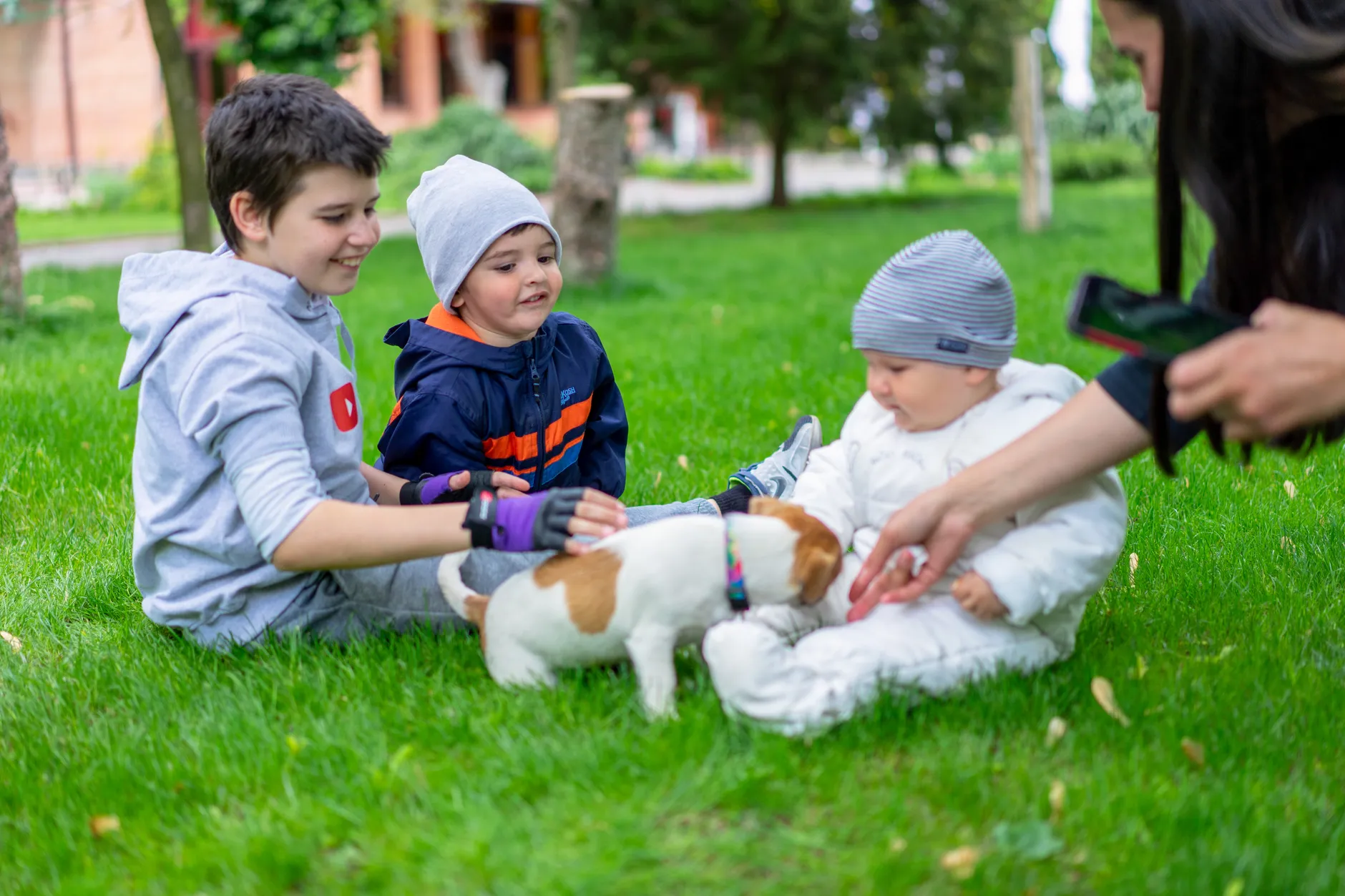
What "Family-Friendly" Actually Means
The phrase "family-friendly breed" gets thrown around loosely, but what it actually points to is a cluster of measurable traits:
- Gentleness and patience
- Tolerance for unpredictable movements, noise, and accidental rough contact — the daily reality of living with children.
- Low reactivity
- A dog that doesn't startle easily, lunge on lead, or escalate quickly to aggression when startled or resource-guarded is far safer around children than a "friendly" breed with high reactivity.
- Good bite inhibition
- All dogs can bite. Breeds with well-developed bite inhibition (learned through proper puppy socialisation and training) are much less likely to break skin if they do bite. Retriever breeds are well-known for soft mouths.
- Adaptability
- Family life is unpredictable — routines change, guests arrive, children have friends over. Breeds that adapt calmly to these changes are far easier to manage safely.
Breed alone does not make a dog safe. Socialisation, training, and how children are taught to behave around dogs are equally important. A Golden Retriever that has never been socialised and is never supervised with children is more dangerous than a well-trained, well-socialised Staffordshire Bull Terrier.
Our Methodology
The 10 breeds below were selected using PupWiki's 70-breed data, filtered for traits that predict lower-risk family interaction: temperament scores, trainability ratings, reactivity levels, and historical use in family contexts. Each breed has a known track record with children across a wide range of households — not just anecdotal reports. We include honest caveats because every breed has trade-offs.
Top 10 Family Breeds
Each breed is assessed on size, energy level, patience with children, what it does well, and what to watch out for.
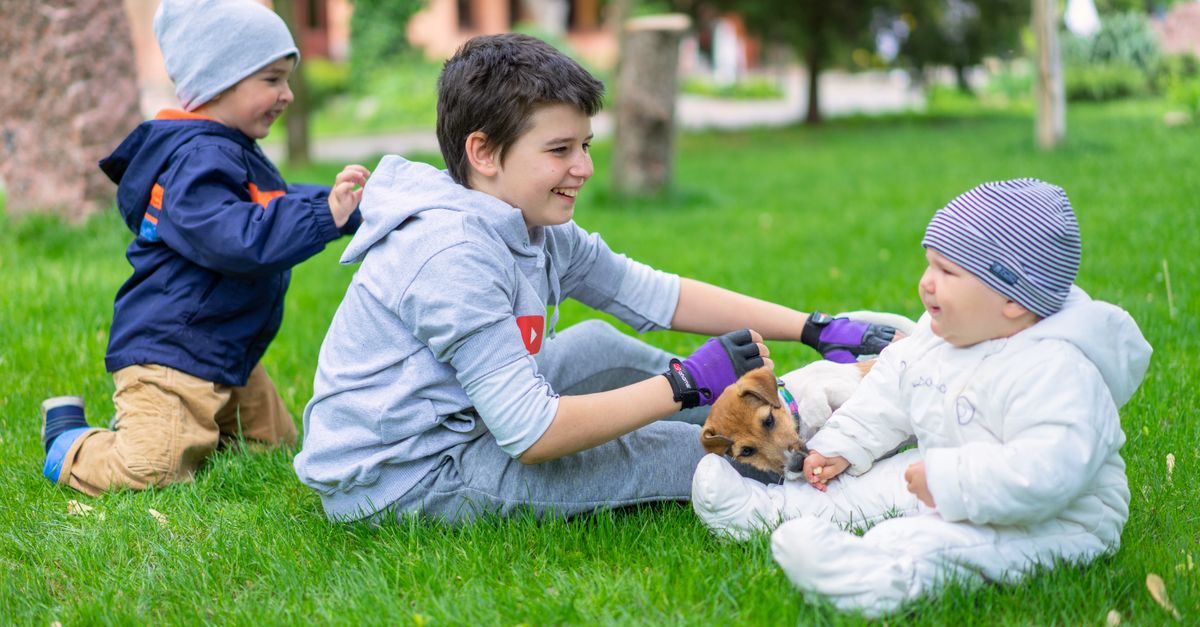
Breeds That Need Careful Management With Young Children
The breeds below are not automatically dangerous — many live safely and happily in family homes. But they come with traits that require more experience, more structure, or more careful management around children:
- Akita — Strong guarding instinct and territorial nature; dominant with other dogs; needs very consistent, experienced handling. Not recommended for families with toddlers.
- Chow Chow — Naturally aloof and cat-like in temperament; prone to guarding behaviour; doesn't tolerate rough handling. Better suited to families with older, calmer children.
- Alaskan Malamute — High prey drive, very strong, and can be dominant. Excellent with humans in the right context, but overwhelming for young children and needs robust management.
- Jack Russell Terrier — High energy, feisty, and can snap when overstimulated. Often better in households with children over 10 who understand dog body language.
This list is not "breeds to avoid" — it is breeds that demand you bring experience and ongoing commitment to management. If you are drawn to one of these breeds, research thoroughly and speak to a reputable breeder or breed rescue about family suitability.
Age of Children Matters More Than You Might Think
A breed that's genuinely great with school-age children (8+) can be a difficult match for a family with toddlers (under 4). The developmental stage of children in the household should be central to your breed decision:
- Toddlers (under 4): Need very large, calm, patient breeds or very small breeds that adults carry (not mix with floor-level toddlers). Avoid boisterous large breeds that haven't been trained — even a friendly dog can knock over a toddler. Best options: Golden Retriever (adult, trained), Cavalier KCS, Newfoundland.
- School-age children (5–10): Most breeds on this list work well. Children can begin learning to read dog body language, which significantly reduces risk. Teach the "3-second rule" (if the dog doesn't seem happy after 3 seconds of petting, stop).
- Teenagers (10+): Wider breed choice. Teenagers can handle more demanding breeds as long as parents remain the lead in training and management decisions.
Supervision Is the Non-Negotiable
Every dog organisation — AVMA, ASPCA, ACVB — is unequivocal: no dog should ever be left unsupervised with a young child, regardless of breed, training, or track record. Most dog bites to children happen in known household dogs, in familiar settings, with the child's parent present in the home (but not in the same room).
The practical rules every family with a dog should follow:
- Never leave a child under 10 alone with any dog.
- Give the dog a safe retreat (crate, room) that children do not enter.
- Teach children not to approach a dog that is eating, sleeping, or in its safe space.
- Teach children to "be a tree" (stand still, arms folded) if a dog jumps or becomes excited.
- Never punish a dog for growling — growling is communication. A dog that is punished for growling learns to skip the warning.
Use the Breed Quiz to Match Your Family
The breeds on this list cover a wide range of sizes, energy levels, and grooming commitments. Use PupWiki's Dog Breed Selector Quiz to input your family's lifestyle, living situation, and preferences — it will rank all 70 breeds for your specific circumstances, not just the "top 10" lists that may not fit your home.
Frequently asked questions
- What is the safest dog breed for kids?
- No breed can be guaranteed safe with children — safety is a product of training, socialisation, supervision, and teaching children to interact respectfully with dogs. That said, breeds consistently cited as reliably gentle with children include Golden Retrievers, Labrador Retrievers, Beagles, and Cavalier King Charles Spaniels. These breeds tend to have lower reactivity, better bite inhibition, and greater tolerance for the unpredictable behaviour of young children. Supervision is always required, regardless of breed.
- Is a Labrador Retriever good with children?
- Yes, Labrador Retrievers are widely considered one of the best family breeds. Their combination of high trainability, forgiving temperament, and genuine enjoyment of human company makes them well-suited to households with children of all ages. The caveat is that young Labs (6–18 months) can be boisterous and accidentally knock over young toddlers. Adult Labs that have been through basic obedience training are excellent family companions.
- Are small dogs safer for kids?
- No — in many cases, small dogs are less tolerant of rough handling from young children, and a small dog that is hurt or frightened is more likely to snap. Small breeds were often bred for tasks unrelated to family life (terrier work, guarding, ratting) and can carry significant feistiness. Larger, calmer breeds like Labradors and Golden Retrievers are frequently more tolerant of accidental rough handling than popular small dogs like Chihuahuas or Jack Russell Terriers.
- What dog breeds can be problematic with young children?
- Breeds that need careful management with young children include those with high prey drive, guarding instincts, or sensitivity to rough handling: Akita, Chow Chow, Alaskan Malamute, Jack Russell Terrier, and Weimaraner. This does not mean these breeds cannot live with children — many do so safely — but they require experienced handling, thorough socialisation, and consistent supervision. Breed-specific traits are tendencies, not certainties.
- Should I get a puppy or an adult dog with young children?
- For families with children under 5, an adult dog (2–5 years) from a reputable rescue or breeder is often a safer choice than a puppy. Adult dogs have known temperaments — you can accurately assess their tolerance, energy level, and interaction style with children. Puppies are unpredictable: even a breed with a calm adult temperament can be chaotic, mouthy, and overwhelming for small children during the first 12 months.
- How do I introduce a new dog to my children?
- Introduce the dog in a calm, neutral environment with the children seated or calm (not running). Let the dog approach at its own pace — do not force interaction. Teach children the "ask before you pat" rule and to avoid hugging, staring into the dog's face, or disturbing a resting dog. Practice the "be a tree" rule if the dog jumps. All initial meetings should be supervised by an adult. Give the dog a safe space (crate or gated room) where children do not go, so the dog always has an exit.


