
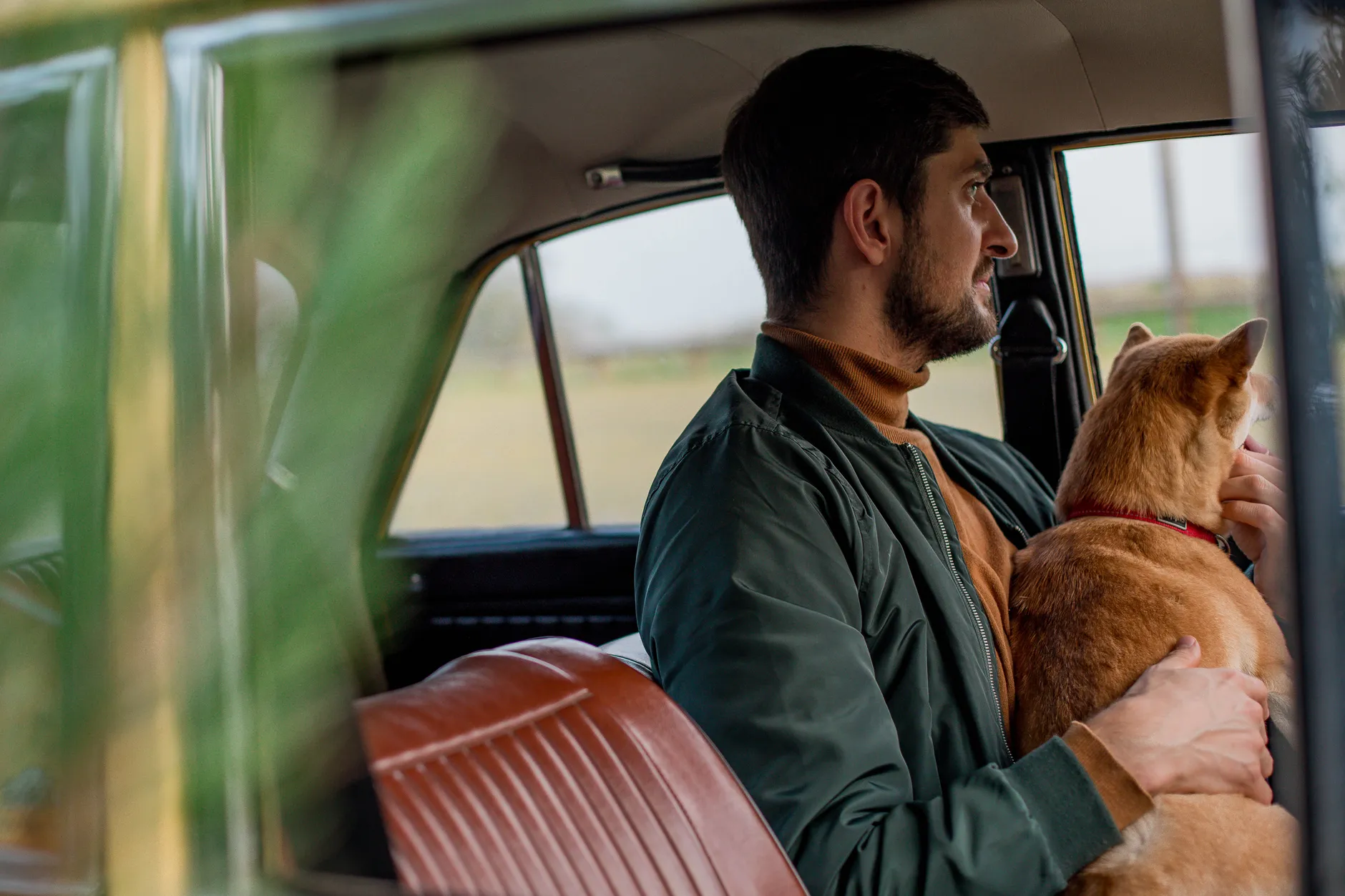
Dogs can travel well, but they need preparation. Whether it is a weekend road trip or international relocation, the difference between a smooth trip and a stressful one usually comes down to advance planning, the right equipment, and gradual acclimatisation before the journey.
Car travel safety
The two non-negotiables for car travel are restraint and temperature. An unrestrained dog in a car can cause accidents by distracting the driver, and becomes a projectile in a collision. Three safe options:
- Crash-tested harness — attached to the seat belt. Look for harnesses that have passed independent crash testing (Centre for Pet Safety provides ratings). Not all harnesses marketed as safe have been independently tested.
- Secured crate in the boot — the crate must be secured to prevent it sliding; a loose crate is nearly as dangerous as no crate. Introduce the crate gradually before travel.
- Car barrier — separates the boot from the passenger cabin. Effective for large dogs but provides less protection than a secured crate in a collision.
For journeys over 2 hours: plan regular breaks (every 2 hours) for water, toileting, and a short walk. Never leave a dog in a parked car in temperatures above 15°C — cars heat rapidly to dangerous temperatures even in overcast conditions.
Motion sickness
Some dogs experience motion sickness — drooling, yawning, vomiting. Most puppies outgrow it. For affected dogs, short positive journeys before longer ones helps desensitise. Withhold food 3 hours before travel. If significant, your vet can prescribe anti-nausea medication for the journey.
Air travel with dogs
Flying with a dog requires research specific to your airline, destination, and dog. The general framework:
In-cabin
Most US airlines allow small dogs (under 8 kg in-carrier, carrier fitting under the seat) in the cabin for a fee (typically $95–$150 each way). The dog must stay in the carrier for the entire flight. Book early — airlines limit the number of pets per flight.
Checked baggage / cargo
Larger dogs travel in temperature-controlled hold as checked baggage or unaccompanied cargo. Requirements: airline-approved hard-sided crate of appropriate size (dog can stand, turn, and lie down), water and food attached outside the crate, health certificate issued within 10 days of travel.
Brachycephalic breeds (French Bulldogs, Pugs, English Bulldogs, Boston Terriers) are frequently restricted or banned from hold travel by major airlines due to elevated respiratory risk at altitude. Some airlines ban them in all travel categories. Check the specific airline policy before booking.
International travel
International requirements vary dramatically by destination country. Some have strict quarantine requirements (Australia up to 10 days; New Zealand, Japan similar). Most require: rabies vaccination, microchipping, health certificate, titre test (blood test proving sufficient rabies immunity), and country-specific entry permit. Begin planning at least 6 months before international travel. The USDA APHIS website has country-specific requirements.
Finding pet-friendly accommodation
"Pet-friendly" varies from genuinely dog-welcoming to technically allowed but inconvenient. Research what to look for:
- Secure outdoor space — for toileting and exercise without a public walk
- Ground-floor access — for large breeds or dogs that have difficulty with stairs
- Nearby walking routes — parks, trails, or quiet streets for daily exercise
- No breed restrictions — some properties exclude certain breeds; confirm before booking
- No weight limits — many "pet-friendly" hotels allow dogs under 10 kg only
Always contact accommodation directly before booking to confirm current pet policy, fees, and any restrictions. Policies change and listings may be outdated.
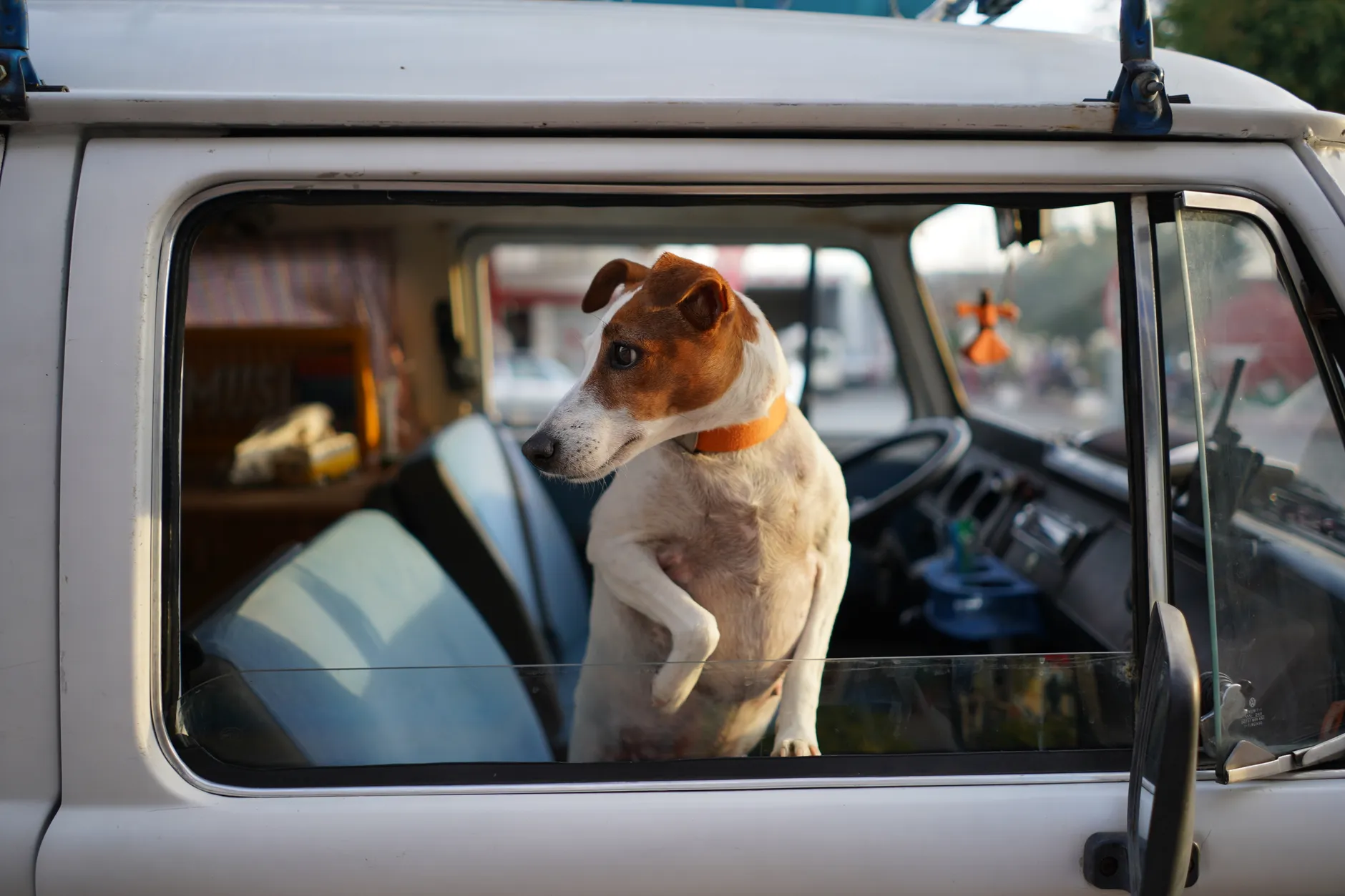
Preparing your dog for travel
Dogs that have positive experiences with travel equipment (cars, crates, carriers) well in advance of a journey travel significantly better. The principle: introduce gradually and associate with positive experiences before the travel event.
- For crate travel: make the crate comfortable and familiar weeks before travel; feed meals in it
- For car travel: short, positive car journeys before longer ones; destination should be somewhere the dog enjoys
- Maintain feeding routines on travel days — familiar routine reduces stress
- Bring a familiar blanket, mat, or item carrying your scent
- Ensure microchip details and ID tags are up to date before any journey
Frequently asked questions
- Is it safe for dogs to travel in cars?
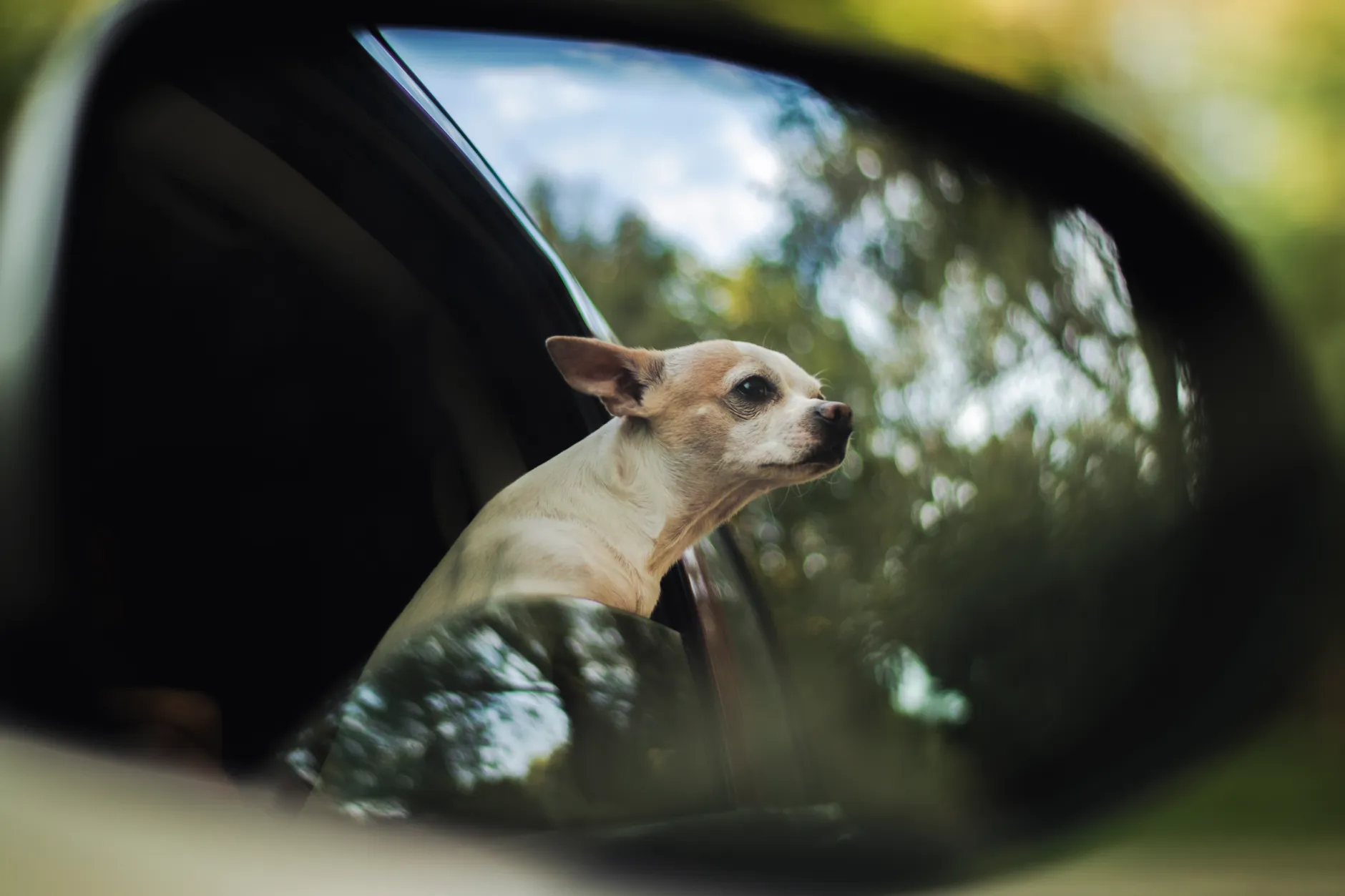
- It is safe with the right restraint. An unrestrained dog in a car is a projectile in a collision — at 30 mph, a 30 kg dog exerts roughly 900 kg of force on impact. Safe options: a crash-tested harness attached to the seat belt, a secured crate in the boot, or a car barrier. Allowing dogs to travel with their head out the window is dangerous (eye and ear injury from debris). Never leave a dog in a parked car in warm weather.
- Can all dogs fly in the cabin?
- No. Most airlines only allow dogs in the cabin if they fit in a carrier under the seat (typically dogs under 8 kg). Larger dogs must travel as checked baggage or cargo. Airlines vary significantly in their policies — some ban all dogs in cargo, some restrict brachycephalic breeds (French Bulldogs, Pugs, English Bulldogs) in hold due to breathing risk at altitude. Always check the specific airline policy before booking.
- Do dogs need a health certificate to travel?
- For domestic travel within the US, no certificate is typically required by airlines (though individual airlines may require one). For international travel, health certificates issued by an accredited veterinarian are required — the timing and specific requirements vary by destination country. Some countries (UK, Australia, New Zealand, Japan) have strict import quarantine rules. Start planning international dog travel at least 6 months in advance.
- How do I reduce my dog's travel anxiety?
- Gradual desensitisation is the most effective approach. For car anxiety: start with short, positive car trips before longer journeys. For crate anxiety: build positive associations with the crate well before travel. For general travel stress: a familiar blanket, a worn item of your clothing, and maintaining feeding routines all help. Anti-anxiety medication for travel (prescribed by a vet) is appropriate for severe cases — discuss with your vet well before the trip.
- How do I find pet-friendly accommodation?
- Booking platforms like BringFido, Bring Fido, and Airbnb with pet filters search specifically for dog-friendly properties. Always confirm the pet policy directly with the accommodation — "pet-friendly" sometimes means limited pet sizes or additional fees. Look for properties with secure gardens, ground floor access, and nearby walking routes. Ask specifically about breed restrictions, which some properties impose.


