
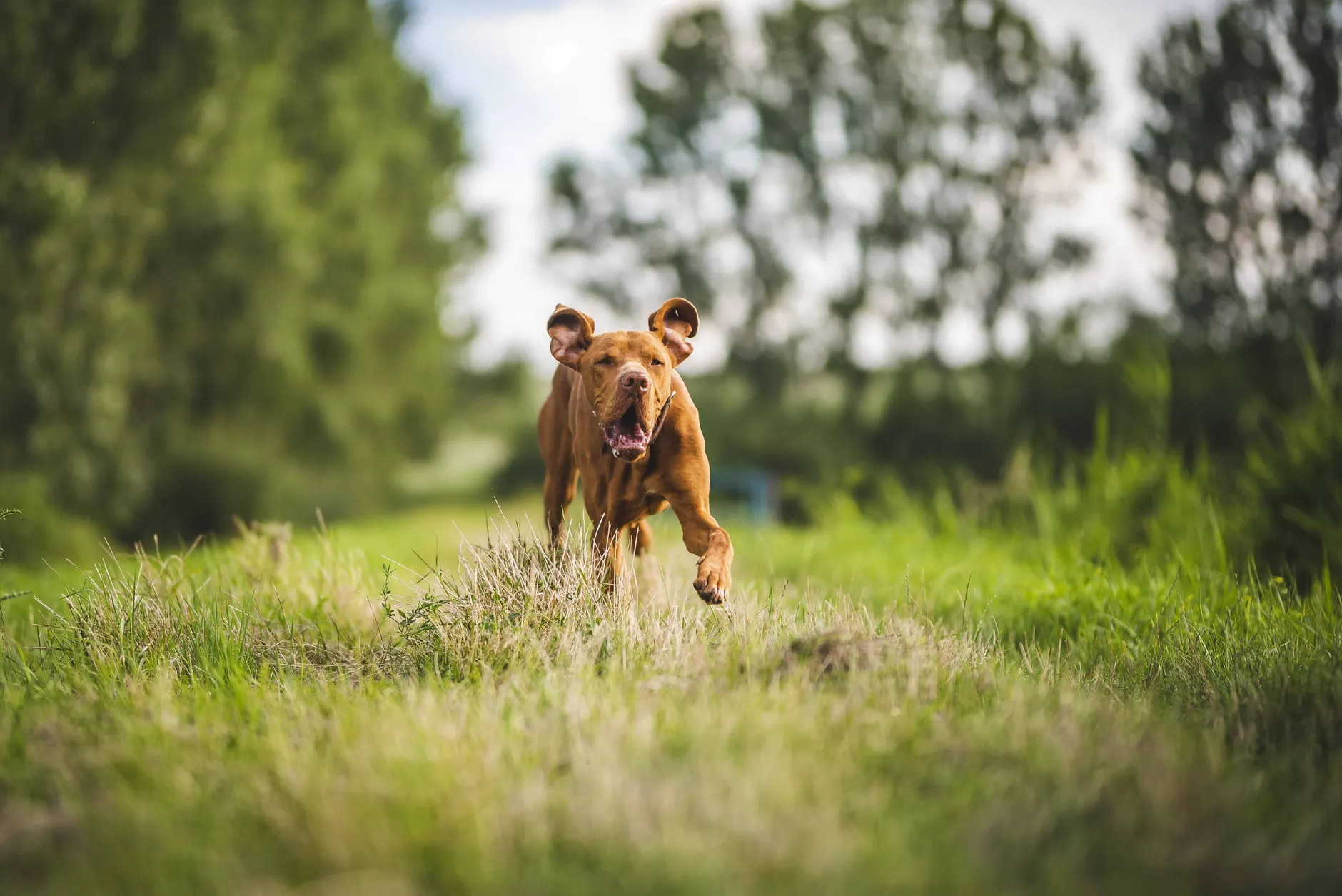
Energy level is the single most consequential trait in breed selection — and the one most often misjudged. Choosing a dog whose energy exceeds your daily capacity creates chronic behaviour problems that no amount of training can fully resolve. Choosing one whose energy is far below yours means a less engaged companion. The goal is not to find the "right" energy level in the abstract, but to match the dog's pace to the one you can honestly sustain every day for the next 10-15 years — in rain, heat, exhaustion, and busy weeks.
The energy spectrum framework
Breed descriptions often reduce energy to a single label — "moderate," "high," "active" — without defining what those terms mean in daily practice. To make energy claims useful, you need to understand three dimensions that together determine how a dog's energy affects your life.
Duration: how long does the dog need to be active?
This is the most straightforward dimension — the number of minutes of structured exercise per day required for the dog to be calm and well-behaved at home. A Basset Hound needs 30 minutes. A Border Collie needs 90-120 minutes. But duration alone does not capture the full picture.
Intensity: what type of activity does the dog need?
A 60-minute gentle walk satisfies a Cavalier KCS. The same 60 minutes does almost nothing for a Vizsla, who needs running, swimming, or structured fetch to genuinely tire. Some breeds need speed (sighthounds), some need endurance (sporting breeds), some need purpose (herding breeds that must solve problems while moving), and some need scent work (hounds that process the world through their nose).
Recoverability: how well does the dog settle after exercise?
This is the off-switch — the most underrated trait in breed selection. A Greyhound runs flat-out for 5 minutes, then collapses on the sofa for hours. A Border Collie runs for 60 minutes, returns home, and immediately begins looking for its next task. Two dogs can have identical exercise needs but create very different household experiences based on whether they settle between active periods or remain restlessly alert.
The four energy tiers
The table below organises breeds into four energy tiers with practical detail on daily demands, enrichment needs, off-switch quality, and mismatch consequences.
| Tier | Daily exercise | Off-switch | Example breeds | Mismatch risk | Best owner fit |
|---|---|---|---|---|---|
| Low | 20-40 min/day | Strong — naturally settles when activity stops | Bulldog, Basset Hound, Shih Tzu, Pug, Cavalier KCS | Low — under-exercise rarely causes severe behaviour problems, though weight gain is common | Less active owners, seniors, apartment dwellers, full-time office workers |
| Moderate | 40-60 min/day | Moderate — settles after adequate exercise | Whippet, Cocker Spaniel, Standard Poodle, Beagle, Miniature Poodle | Moderate — may develop restlessness, mild destructive behaviour, or weight issues if consistently under-exercised | Regular walkers, families with moderate activity, suburban homes |
| High | 60-90 min/day | Variable — some (Labrador, Golden) settle well after exercise; others (Vizsla, Weimaraner) remain alert | Labrador Retriever, Golden Retriever, Vizsla, Dalmatian, Boxer | High — under-exercise leads to destructive behaviour, anxiety, hyperactivity, and leash reactivity | Active individuals, runners, hikers, families with older children who play outdoors |
| Very High | 90-120+ min/day | Weak — many remain alert and restless even after exercise unless specifically trained to settle | Border Collie, Belgian Malinois, Australian Shepherd, Siberian Husky, German Shorthaired Pointer | Very high — behavioural problems are almost guaranteed without adequate physical and mental outlets | Serious athletes, outdoor workers, dog sport enthusiasts, rural/farm owners |
Energy patterns by breed group
Breed groups were historically defined by purpose, and purpose is the strongest predictor of energy pattern. Understanding group-level tendencies helps you narrow your search before evaluating individual breeds.
| Breed group | Typical energy | Energy pattern |
|---|---|---|
| Sporting (Retrievers, Spaniels, Setters) | High | Sustained endurance activity — fetching, swimming, field work. Most have good off-switches after exercise. People-oriented energy that channels well with human interaction. |
| Herding (Collies, Shepherds, Cattle Dogs) | Very High | Persistent mental and physical drive. Many have weak off-switches and will create "work" (herding children, chasing cars) if not given structured outlets. The most commonly mismatched group. |
| Working (Mastiffs, Rottweilers, Great Danes) | Low-Moderate | Many working breeds are surprisingly calm between tasks. Giants (Great Dane, Mastiff) conserve energy. Guard breeds (Rottweiler, Doberman) are alert but not high-endurance. |
| Terrier (Jack Russell, Bull Terrier, Airedale) | Moderate-High | Intense, reactive energy in short bursts. Many terriers have poor off-switches and high alertness. Energy is prey-driven rather than endurance-driven — they chase, dig, and bark. |
| Hound (Beagle, Greyhound, Basset) | Low-Moderate | Split group: sighthounds (Greyhound, Whippet) sprint intensely then sleep for hours. Scenthounds (Beagle, Basset) need moderate walks with heavy sniffing. Most hounds have strong off-switches. |
| Toy (Chihuahua, Pomeranian, Maltese) | Low | Lowest physical exercise needs. Energy is often social (demanding attention, lap-sitting) rather than athletic. Some toy breeds (Miniature Pinscher, Papillon) have higher energy than their group average. |
| Non-Sporting (Bulldog, Poodle, Dalmatian) | Varies widely | The most diverse group for energy. Bulldogs are very low; Dalmatians are very high; Standard Poodles are moderate-high. Breed-by-breed assessment is essential in this group. |
Explore all breeds by group on the breed groups hub to see how individual breeds fit within these patterns.
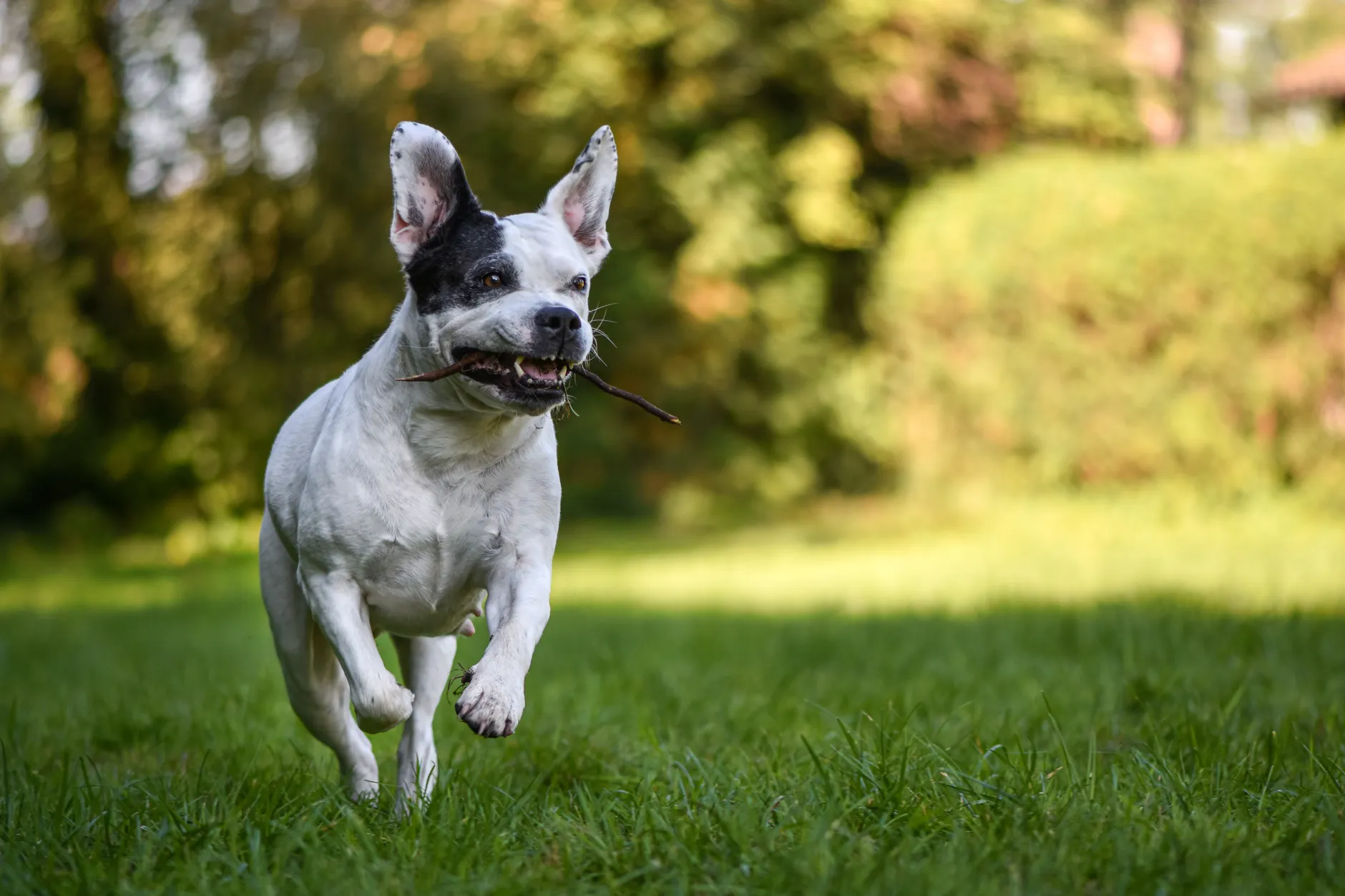
The off-switch: the trait people forget to evaluate
The off-switch may be the most underrated factor in breed selection. Two dogs can have identical exercise requirements but feel completely different to live with based on their ability to settle.
A Greyhound needs a 30-minute sprint and then sleeps for hours. Living with a resting Greyhound feels calm, quiet, and low-demand. A Jack Russell Terrier needs 45 minutes of activity and then remains alert, watchful, and reactive for the rest of the day. Living with a "resting" Jack Russell still feels active and demanding.
Breeds with weak off-switches require not just physical exercise but structured "settle" training — actively teaching the dog to lie down and relax on a mat or in a crate. This is trainable but adds to the daily management workload, and some breeds resist it more persistently than others.
Strong off-switch breeds
- Greyhound and Whippet: Sprint then sleep. Among the calmest indoor dogs despite being capable of 40+ mph bursts.
- Cavalier King Charles Spaniel: Mirrors owner energy naturally. Active when you are active, calm when you are calm.
- Basset Hound: Defaults to resting when not on a scent trail. Content to sleep 14-16 hours per day.
- Mastiff and Great Dane: Calm giants that conserve energy between activities. Surprisingly low daily demands for their size.
Weak off-switch breeds
- Border Collie: Watches, stalks, and herds even when "resting." Will fixate on shadows, reflections, or movement.
- Belgian Malinois: Hypervigilant between tasks. Scans for stimulation continuously.
- Jack Russell Terrier: Alert and reactive even after exercise. Responds to every sound and movement.
- Australian Shepherd: Seeks stimulation continuously. Will create games (and mischief) independently if not directed.
Mental enrichment: the missing half of the energy equation
Physical exercise alone does not satisfy most dogs above the low energy tier. Mental stimulation — activities that engage the dog's brain — is the difference between a tired-but-calm dog and a physically tired-but-still-restless dog.
- Low energy: Puzzle feeders, short training games (2-5 minutes), gentle scent games. These dogs are mentally satisfied with modest engagement.
- Moderate energy: Longer training sessions (10-15 minutes), snuffle mats, interactive toys, supervised social play. Consistent daily variety helps prevent boredom.
- High energy: Structured training (obedience, trick training, rally), nose work, fetch with rules (wait, recall, drop), and exploration-focused walks in novel environments.
- Very high energy: Working-style mental challenges — formal scent detection, herding exercises, agility training, advanced obedience with proofing. These breeds need problems to solve, not just activities to do. A Border Collie that is physically exhausted but mentally understimulated will still be problematic.
The Dog Training Plan Generator builds a training schedule that incorporates mental enrichment appropriate to your dog's breed and life stage.
What happens when energy needs are not met
Energy mismatch is the leading driver of dog behaviour complaints and one of the top reasons dogs are surrendered to shelters. The pattern is predictable and preventable.
- Owner chooses a breed based on appearance, popularity, or a friend's recommendation without honestly assessing their daily exercise capacity.
- The dog's energy needs exceed what the owner provides daily.
- Unmet energy converts to behaviour problems: pulling on lead, jumping, barking, chewing, digging, reactivity toward other dogs or people.
- Owner labels the dog as "badly behaved" or "stubborn" and considers rehoming.
The dog is not badly behaved. It is under-stimulated. The fix is not more punishment or more obedience classes — it is more appropriate exercise and enrichment, or an honest acknowledgment that the match was wrong.
Energy across life stages
A dog's energy level is not static throughout its life. Understanding the trajectory helps set expectations and prevents surprises.
- Puppy (0-12 months): Bursts of intense energy separated by long sleep periods. Puppies need frequent short activity sessions, not endurance exercise. Do not over-exercise puppies of any breed — growth plates are vulnerable until they close at 12-18 months depending on size.
- Adolescent (6-24 months): Peak energy period for most breeds. Many hit their highest energy level during adolescence, which coincides with declining obedience ("adolescent regression"). This is the hardest period for owners of high-energy breeds — and the most common age at which dogs are surrendered.
- Adult (2-7 years): Stable baseline energy. This is the period that breed energy descriptions are calibrated to. The dog you live with from 2-7 is the one you should plan for when choosing a breed.
- Senior (7+ years): Gradual energy decline. Most breeds mellow significantly, though some high-energy breeds (Border Collie, Jack Russell) remain active well into old age. Joint issues may limit exercise type before energy itself declines, requiring a shift from running to swimming or gentle walking.
Matching your lifestyle to a breed
The best match is a dog whose exercise needs align with what you already do — or what you are genuinely committed to doing every day, in all weather, for the next decade.
| Your daily activity | Energy tier | Breed suggestions |
|---|---|---|
| 20-30 min gentle walking | Low | Basset Hound, Shih Tzu, Cavalier KCS |
| 40-60 min brisk walking | Moderate | Whippet, Cocker Spaniel, Beagle |
| 60-90 min running or hiking | High | Labrador, Golden Retriever, Boxer |
| 90+ min intense sport or outdoor work | Very High | Border Collie, Australian Shepherd, German Shepherd |
Use the Dog Breed Finder by Traits to filter breeds by energy level alongside other traits — size, grooming, trainability — to find breeds that match your full lifestyle, not just your activity level. The Dog Breed Selector Quiz takes your daily activity patterns into account when generating personalised breed matches.
The bottom line
Energy level is not a cosmetic preference. It is the single factor most likely to determine whether dog ownership feels like companionship or chronic stress. Choose a dog whose daily needs match what you can provide on your worst day, not your best. If your honest daily activity is 30 minutes of walking, a low-energy breed will give you a calm, well-adjusted companion. If you run 90 minutes daily and want a partner, a high-energy breed will thrive alongside you. The match — not the breed's reputation or appearance — is what makes ownership work.
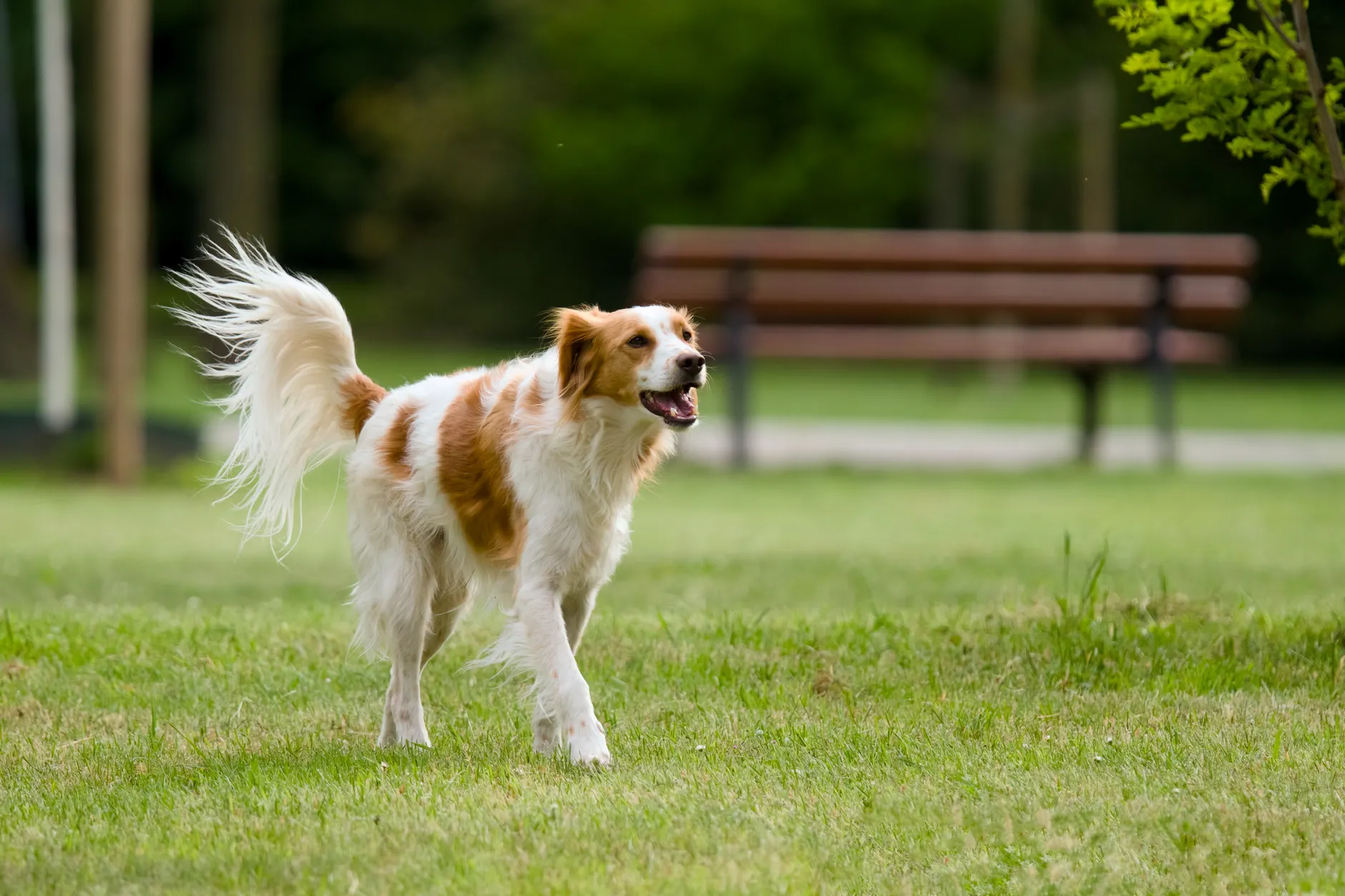
Frequently asked questions
- What does "high energy" actually mean for a dog breed?
- A high-energy dog needs 60-120+ minutes of structured physical exercise daily plus additional mental stimulation. These dogs were bred for sustained physical work — herding, retrieving, sled-pulling, hunting — and their bodies and brains are wired for it. Without adequate outlets, high-energy dogs develop anxiety, destructive behaviour, excessive barking, and compulsive habits. Critically, "high energy" means the dog needs this level of activity every single day, in all weather, not just on weekends.
- Can you reduce a high-energy dog's exercise needs with training?
- Training can teach a high-energy dog better impulse control and household manners, but it cannot fundamentally change the dog's exercise requirement. A well-trained Border Collie still needs 90+ minutes of activity daily — it just waits more politely between sessions. Mental enrichment can partially substitute for physical exercise on occasional rest days, but it cannot replace daily physical activity long-term. Breed energy level is a biological trait, not a behavioural one you can train away.
- What is the "off-switch" in dogs and why does it matter?
- The "off-switch" refers to a dog's ability to settle calmly when there is nothing happening — to rest between active periods rather than pacing, whining, or seeking stimulation. Greyhounds, Cavalier KCS, and Basset Hounds have natural off-switches: they are active when you engage them and calm when you stop. Border Collies, Belgian Malinois, and Jack Russell Terriers have weak off-switches: they remain alert and restless even after exercise. A weak off-switch increases the daily management burden significantly, even if the dog's exercise needs are met.
- How do I honestly assess my own exercise capacity before choosing a breed?
- Track your actual activity for two weeks before choosing a breed. Count the minutes you spend walking, running, hiking, or doing outdoor activities each day — not your aspirational plan, but what you actually do. Include weather variation: do you still go out in rain, snow, or 95-degree heat? A high-energy dog needs its exercise regardless of weather or motivation. Your lowest consistent day — not your best day — determines which energy tier you can sustain.
- What happens when a dog's energy needs are consistently not met?
- Under-exercised dogs develop a predictable pattern of behavioural problems: destructive chewing and digging, excessive barking or howling, hyperactivity and inability to settle, leash reactivity, escape attempts (digging under fences, jumping gates), and in some cases anxiety-driven behaviours. These are not signs of a "bad dog" — they are symptoms of an unmet biological need. Energy mismatch between the dog and the owner's lifestyle is one of the most common reasons dogs are surrendered to shelters.
- How does a dog's energy level change as it ages?
- Puppies have high energy in short bursts with long sleep periods. Adolescents (6-24 months) typically hit their peak energy level, which coincides with declining obedience — the hardest phase for owners of high-energy breeds. Adult dogs (2-7 years) settle into their stable baseline energy. Senior dogs (7+) gradually mellow, though some high-energy breeds like Border Collies and Jack Russell Terriers remain notably active into old age. Joint issues may limit exercise type before energy itself declines.


