
What "Hypoallergenic" Actually Means
"Hypoallergenic" means less likely to cause an allergic reaction — not allergy-free. When applied to dogs, it's used to describe breeds that some allergy sufferers tolerate better than others. The label has no regulated definition, no breed certification standard, and no scientific consensus behind it.
The American Veterinary Medical Association (AVMA) is clear on this: no dog breed is truly hypoallergenic. All dogs produce proteins that can trigger allergic reactions in sensitive individuals.
The Science: What You're Actually Allergic To
Most people assume they're allergic to dog hair. They aren't. The primary dog allergen is a protein called Can f 1 — short for Canis familiaris allergen 1. It's produced in:
- Sebaceous glands in the skin (shed as dander)
- Saliva (deposited on fur and surfaces when dogs groom themselves)
- Urine (less commonly the trigger, but relevant for highly sensitive individuals)
Can f 1 is exceptionally stable and adhesive. It binds tightly to surfaces — furniture, walls, carpets, clothing — and can persist in a home for months after a dog has left. A secondary allergen, Can f 2, is relevant for some allergy sufferers, particularly those who react to multiple dog breeds.
Hair is a vector, not the source. When dogs shed, hair carries skin flakes and dried saliva (containing Can f 1) into the environment. Low-shedding breeds distribute less of this allergen — which is why some allergy sufferers tolerate them better. But low-shedding does not mean low-allergen. A Poodle produces as much Can f 1 per unit of skin as a Labrador Retriever.
Breeds That Some Allergy Sufferers Tolerate Better
The following breeds are frequently cited as more tolerable for people with dog allergies. The reason is consistently their coat type — single-coat or curly-coat with minimal shedding — which means less airborne dander distribution. This is not a guarantee. Individual variation in allergen sensitivity is large, and individual variation between dogs within a breed also exists.
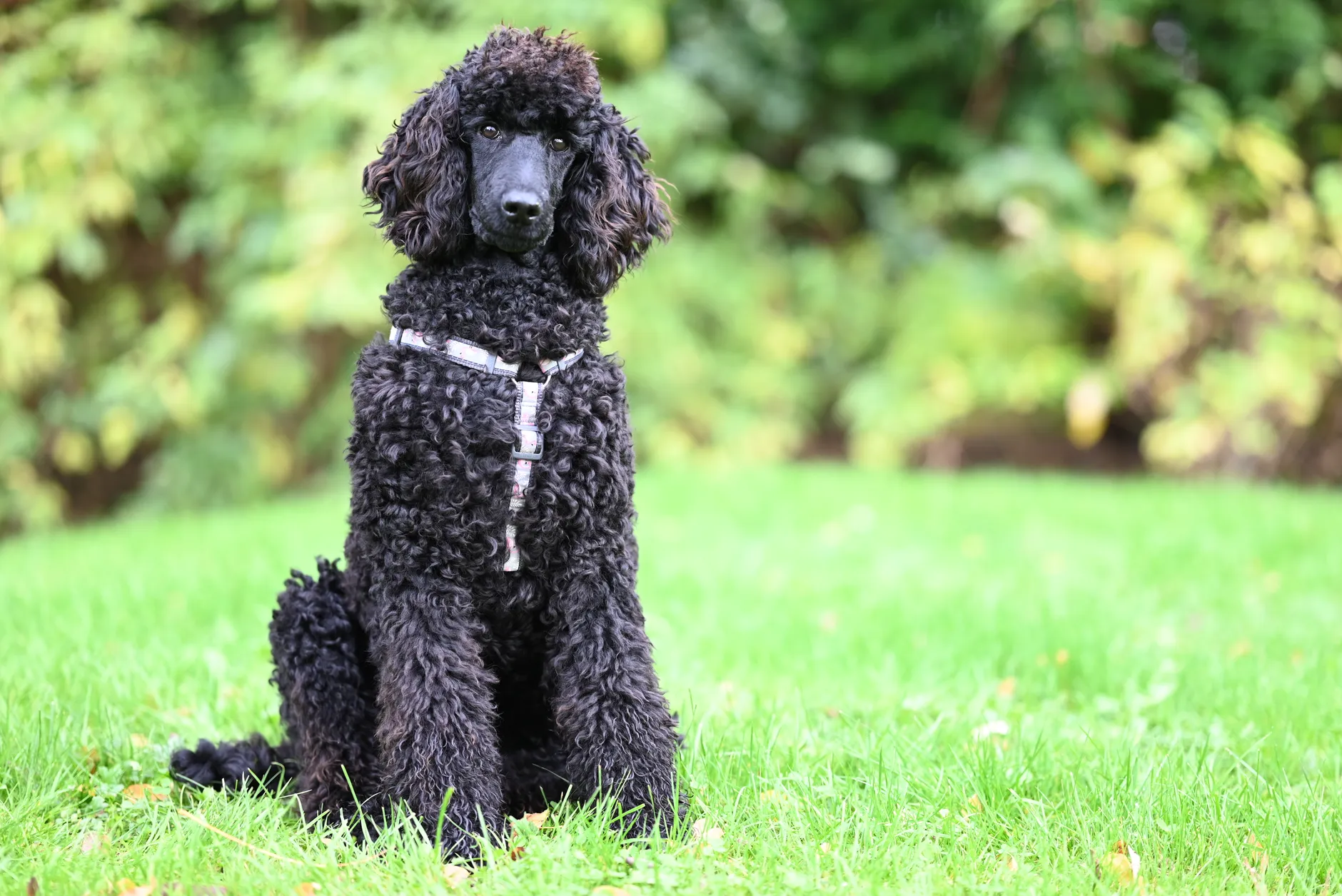
Poodle (all sizes)
Curly-single- Why some tolerate it:
- Tightly curled coat traps dander, minimal shedding distributes less allergen into environment
- Important caveat:
- Still produces Can f 1; reactions possible especially in severe allergy sufferers
Bichon Frise
Curly-double- Why some tolerate it:
- Dense curly coat retains dander; low shedding
- Important caveat:
- Requires significant grooming; some people still react
Portuguese Water Dog
Curly or wavy- Why some tolerate it:
- Single coat, low-shedding, less dander distribution
- Important caveat:
- Active breed with significant exercise needs; medium size
Maltese
Long-silky single- Why some tolerate it:
- Single coat with very low shedding; less airborne dander
- Important caveat:
- Daily grooming required; some find the saliva more triggering than the coat
Yorkshire Terrier
Silky single- Why some tolerate it:
- Fine, single-layer coat sheds minimally
- Important caveat:
- Feisty breed; high grooming needs; reactions still occur in some people
Miniature Schnauzer
Wire-double- Why some tolerate it:
- Dense wiry outer coat with minimal shedding; some people tolerate well
- Important caveat:
- Needs regular hand-stripping or clipping; vocal and opinionated temperament
Notice what's absent from this list: most of the "hypoallergenic breeds" lists you'll find online. The Schnoodle, Labradoodle, Cockapoo, and other designer cross-breeds are marketed as hypoallergenic but have no consistent coat type. A Labradoodle's coat can range from a Lab's double coat (high-shedding) to a Poodle's curly coat (low-shedding) — there's no way to predict which puppy in a litter will have which coat.

What Actually Reduces Allergic Reactions
Research into dog allergy management consistently finds that environmental interventions matter as much as — or more than — breed choice. For allergy sufferers who are committed to owning a dog, these strategies have the best evidence:
A true HEPA filter (H13 or H14) captures particles down to 0.1 microns, including Can f 1 particles. Run continuously in bedroom and main living area.
Keeping the dog out of the bedroom (or off the bed) is one of the most effective interventions. You spend 7-8 hours there — a low-allergen sleeping environment makes a significant difference.
Bathing the dog weekly (done by a non-allergic household member or professional groomer) removes surface allergen. Brushing distributes dander — it should be done outdoors by the non-allergic person.
Washing hands immediately after touching the dog — and before touching your face — significantly reduces contact allergen exposure.
Carpet traps Can f 1 and re-releases it when walked on. Hard flooring with regular damp-mopping is dramatically easier to keep allergen-low.
Consult an allergist about allergen immunotherapy (allergy shots or sublingual drops). This is the only intervention that addresses the immune response rather than reducing exposure.
Before You Commit: Spending Time With the Specific Dog
Individual dogs within any breed vary in how much allergen they produce. Two Poodles from the same litter can cause very different reactions in the same allergy sufferer. This is why spending time with the specific dog you plan to buy or adopt — not just any dog of that breed — is the only reliable test.
What a reliable allergy test looks like:
- Visit the dog in their home environment (not a brief meet at a park or breeder's grooming area)
- Spend at least 30-60 minutes in the dog's primary living space
- Don't take antihistamines before the visit — you need to observe your real reaction
- Touch the dog, allow the dog to approach you, handle what the dog has been lying on
- Note symptoms over the following hours — reactions can be delayed 2-4 hours
If you have moderate to severe dog allergies, consider consulting an allergist before making a commitment. Skin-prick testing or specific IgE blood testing for Can f 1 can quantify your sensitivity level and help set realistic expectations.
Frequently asked questions
- Are there truly hypoallergenic dogs?
- No. There are no truly hypoallergenic dog breeds. All dogs produce the protein Can f 1 — the primary dog allergen — in their saliva, skin glands, and urine. Low-shedding breeds distribute less Can f 1 around the home because they carry less dander into the environment, but they still produce the allergen. Studies comparing supposed hypoallergenic breeds to non-hypoallergenic breeds have not found significantly lower allergen levels in the home for breeds marketed as hypoallergenic.
- Which dogs are best for allergy sufferers?
- There is no universally safe breed for allergy sufferers. However, many allergy sufferers find they react less to low-shedding, lower-dander breeds — particularly Poodles, Bichon Frises, Portuguese Water Dogs, Maltese, and Yorkshire Terriers. Individual reactions vary enormously between people and between specific dogs within a breed. The only reliable test is spending time with the specific dog you're considering in their home environment before committing.
- Do Poodles cause allergies?
- Poodles produce the Can f 1 allergen like all dogs. However, their tightly curled, single-layer coat sheds minimally, which means less dander is distributed around the home. Many allergy sufferers tolerate Poodles better than high-shedding breeds for this reason — not because Poodles produce less allergen, but because less of it travels around the environment. Reactions still occur in some people, especially those with severe dog allergies.
- What is the allergy protein in dogs?
- The primary dog allergen is a protein called Can f 1 (Canis familiaris allergen 1), produced in dog sebaceous glands (skin), saliva, and urine. When dogs groom themselves, saliva dries on the coat and becomes airborne as dander. Can f 1 is extremely sticky — it adheres to walls, furniture, clothing, and soft surfaces and can persist in a home for months after a dog is removed. A secondary allergen, Can f 2, is also relevant for some allergy sufferers.
- Will I react to a low-shedding dog?
- It depends on your individual allergy sensitivity and the specific dog. Mild allergy sufferers sometimes find low-shedding breeds manageable with home management strategies (HEPA filtration, regular grooming, bedroom exclusion). People with moderate to severe dog allergies often still react to low-shedding breeds. The only way to know is to spend extended time (30-60 minutes, not a brief visit) with the specific dog in their home. An allergist can also do skin-prick or blood testing for Can f 1 sensitivity before you commit.


