
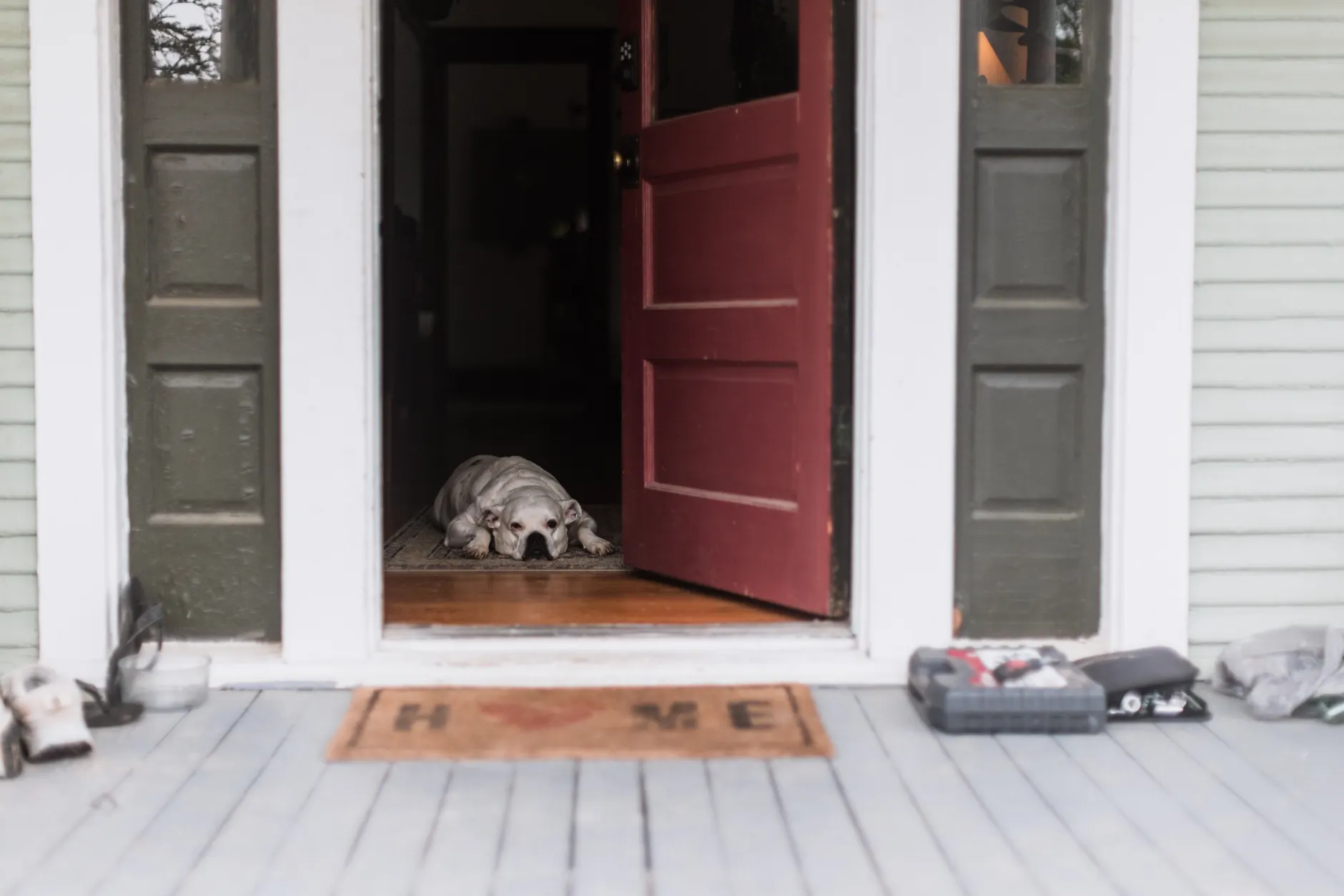
Getting a dog when you work full time is not irresponsible — but it does require more planning than most people realise before they commit. The difference between a working owner whose dog thrives and one whose dog develops behavioural problems is almost always the quality of the plan, not the number of hours at the office. This guide builds that plan.
Honest time assessment
Before anything else, map out your actual time. Not the time you hope to have, but the time you reliably have on a typical work day, including your worst days.
- How long is your dog alone? Count from the moment you leave to the moment you return, including commute time. An 8-hour office job with a 30-minute commute each way means the dog is alone for 9 hours, not 8.
- What are your morning margins? Can you consistently provide 30 to 60 minutes of exercise and attention before leaving? This is the single most important factor for a calm dog during the day.
- What time do you get home? A dog that was alone since 7:30 AM and sees you at 6 PM has had 10.5 hours of solitude. That is a long time for most breeds.
- How do you spend your evenings? If you frequently have after-work commitments, gym sessions, or social plans that keep you out until 9 or 10 PM, your dog's total daily interaction time drops sharply.
Write this schedule down honestly. It is the foundation every other decision rests on.
A realistic daily schedule
This is what a sustainable working-day routine looks like for most full-time dog owners. Adjust the times, but maintain the structure.
| Time | Activity | Duration | Notes |
|---|---|---|---|
| 6:30 AM | Morning walk and toilet break | 30-45 min | This is the most important part of the day. A tired dog is a calm dog. |
| 7:15 AM | Breakfast and settle routine | 15 min | Feed, provide a filled Kong or puzzle toy, crate or confine to safe area. |
| 7:30 AM | Owner departs | - | Keep departures calm and undramatic. No prolonged goodbyes. |
| 12:00 PM | Midday break (walker or owner) | 20-30 min | Toilet break and short walk. Critical for dogs under 1 year and high-energy breeds. |
| 5:30 PM | Owner returns; immediate walk | 30-60 min | Prioritise this over other after-work activities. The dog has been waiting all day. |
| 6:30 PM | Dinner and indoor time | Ongoing | Training practice, play, or simply calm companionship. |
| 9:30 PM | Final toilet break and settle for night | 10-15 min | Consistent bedtime routine helps the dog predict the daily pattern. |
Alone-time tolerance by breed type
Breeds vary significantly in how well they cope with being alone. This is not purely about energy — it is about attachment style, anxiety predisposition, and independence.
| Tolerance level | Typical breeds | Alone-time limit (adult) | Working owner notes |
|---|---|---|---|
| High independence | Basset Hound, Chow Chow, Shiba Inu, Greyhound, Whippet | 8+ hours | Good candidates for standard work schedules without midday care |
| Moderate independence | Labrador Retriever, French Bulldog, Pug, Miniature Schnauzer, Boston Terrier | 6-8 hours | Generally fine with a midday walker; may need enrichment activities |
| Moderate attachment | Golden Retriever, Cocker Spaniel, Beagle, Boxer, Dalmatian | 4-6 hours | Benefit significantly from daycare or midday visits; may bark or chew if alone too long |
| High attachment / anxiety-prone | Cavalier King Charles Spaniel, Bichon Frise, Italian Greyhound, Vizsla, Weimaraner | 3-5 hours | Challenging for standard work schedules; daycare or work-from-home strongly recommended |
These are general patterns, not guarantees. Individual dogs within any breed can vary considerably. A Labrador with separation anxiety exists just as a Vizsla who copes well alone does. But breed tendencies are useful for stacking the odds in your favour when choosing.
Care options during work hours
If your dog needs a midday break or cannot manage the full day alone, several options exist. Each has trade-offs in cost, reliability, and suitability.
| Option | Typical cost | Best for | Limitations |
|---|---|---|---|
| Dog walker (midday visit) | $15-$25 per visit | Dogs that need a toilet break and short walk but are otherwise content alone | Short interaction (20-30 min); limited supervision; relies on one person's availability |
| Doggy daycare (full day) | $25-$45 per day | Social, high-energy dogs that struggle alone; puppies needing socialisation | Not all dogs enjoy group settings; stressful for anxious or reactive dogs; adds up quickly ($500-$900/month at 5 days/week) |
| Daycare (2-3 days/week) | $200-$540/month | Balancing cost with the dog's social needs; hybrid work schedules | Inconsistent routine for dogs that prefer predictability |
| Neighbour, friend, or family | Free to informal payment | Dogs comfortable with the person; reliable arrangements | Reliability varies; can strain relationships if expectations are unclear |
| Coming home at lunch | Free (time cost) | Owners who live close to work; dogs that need minimal midday interaction | Commute time reduces break effectiveness; not sustainable if office is far |
Breed traits that matter most for working owners
When you work full time, certain breed traits matter far more than they would for someone who is home all day. Prioritise these in order:
- Alone-time tolerance. This is the top priority. A dog that develops separation anxiety will affect your ability to work, sleep, and maintain housing (noise complaints).
- Exercise efficiency. You need a dog whose exercise needs can be met in 30 to 60 minutes of focused activity, not one that requires 2 hours of running to be calm indoors.
- Low destructive tendency. Boredom chewing is correlated with under-exercised, high-energy breeds left alone too long. Independent, moderate-energy breeds are less likely to destroy your home.
- Moderate grooming needs. You have less time for daily brushing or frequent grooming appointments. Low-to-moderate grooming breeds reduce one more daily task.
- Noise level. A dog that barks when left alone creates problems with neighbours, especially in apartments. Breeds known for alarm barking or demand barking are higher risk for working owners.
The puppy vs adult decision
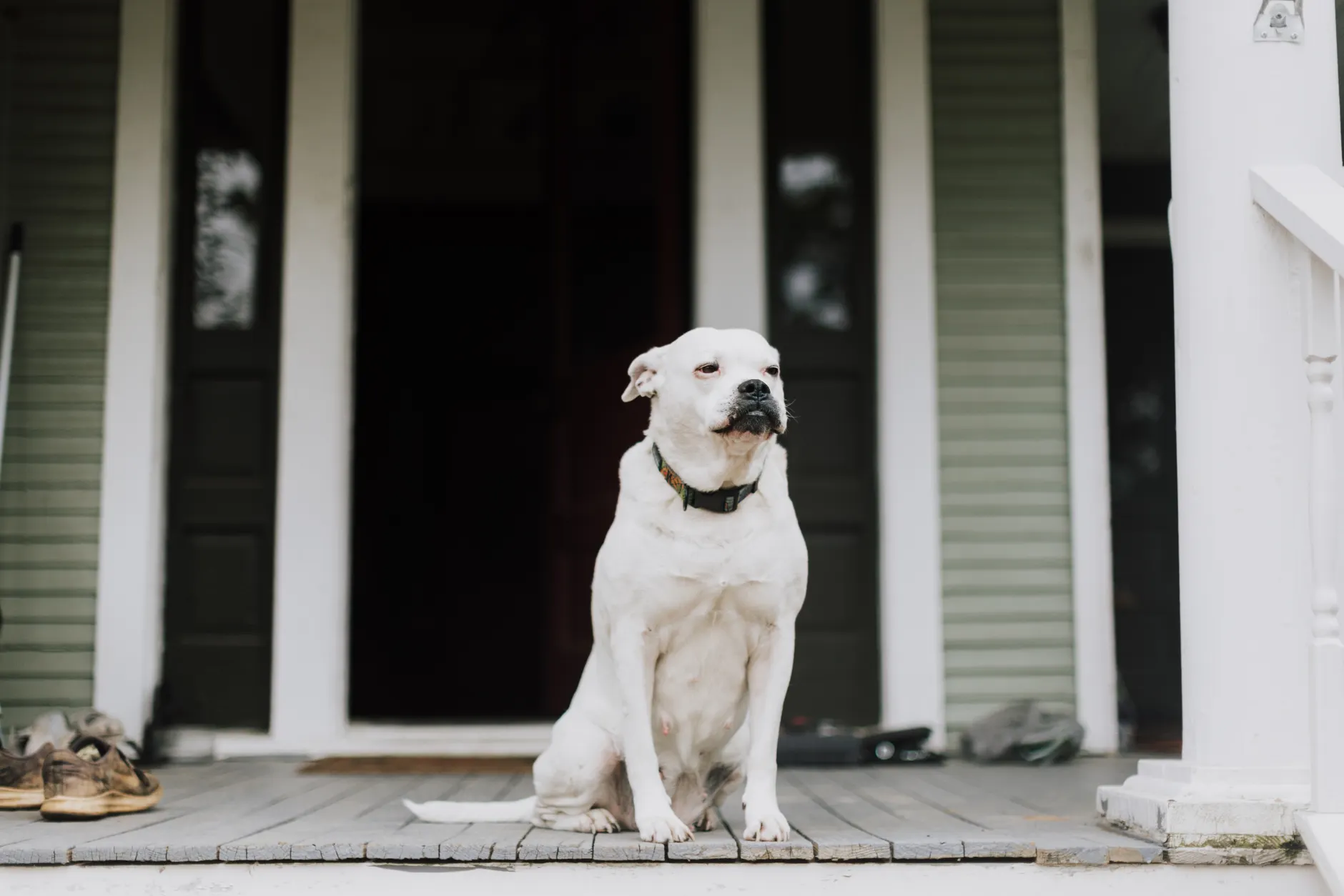
This decision has outsized importance for full-time workers because the first 6 months with a puppy are dramatically more demanding than any subsequent period.
- Puppies under 4 months need toilet breaks every 2 to 3 hours. This is physically impossible to manage during a standard work day without coming home, having someone visit, or using daycare. House-training setbacks from being left too long are difficult to reverse.
- Puppies 4 to 8 months are in their most destructive, curious phase. Unsupervised time means chewed furniture, eaten shoes, and potential ingestion of dangerous objects. Crating helps but has time limits of its own — most guidelines suggest no more than 4 to 5 hours for this age.
- Adolescence (6 to 18 months) brings behavioural regression even in well-trained dogs. Previously reliable recall and house-training may lapse. This is normal but harder to manage when you are not present to redirect.
- Adult dogs (2+ years) with basic training typically settle into a work-day routine within 2 to 4 weeks. Their bladder control, lower destructive tendency, and established temperament make the transition far smoother.
If you work full time and are getting your first dog, an adult dog aged 2 to 5 years from a rescue or rehoming situation is often the most practical and rewarding choice. You can assess their temperament, alone-time tolerance, and energy level before committing.
Remote and hybrid work considerations
Working from home changes the equation significantly, but not always in the ways people expect.
- The advantage is real. Being present eliminates the alone-time problem, allows flexible toilet breaks, and means the dog gets companionship throughout the day. For puppies especially, remote work is a major practical enabler.
- The trap is over-attachment. A dog that is never alone learns to expect constant presence. When you do need to leave — for meetings, errands, travel, or an eventual return to the office — the dog has zero practice being independent. This is how separation anxiety develops in dogs of working-from-home owners.
- Practice separation deliberately. Even if you work from home full time, leave the dog alone regularly — behind a closed door for increasing periods, then outside the home. Build alone-time tolerance as a skill even when it is not strictly necessary yet.
- Hybrid schedules need consistency. If you are home three days and in the office two, the two office days should have the same structure every week (same departure time, same walker or daycare arrangement). Dogs adapt well to predictable patterns, even alternating ones, but poorly to random variation.
Working owner setup checklist
Complete this before the dog arrives, not during the first week when everything feels overwhelming.
- Safe confinement area established. Whether a crate, an exercise pen, or a dog-proofed room — the dog needs a space where they cannot access hazards while unsupervised.
- Midday care arranged. Dog walker booked, daycare trial completed, or neighbour agreement confirmed. Do not assume you will "figure it out" after the dog arrives.
- Morning routine tested. Set your alarm to the new time for a week before the dog arrives. Make sure 30 to 45 minutes of morning exercise is sustainable, not aspirational.
- Enrichment supplies stocked. Stuffed Kongs, puzzle feeders, and safe chew toys. These are not optional extras — they are tools that make alone time manageable for the dog.
- Emergency backup arranged. Who takes the dog if you are stuck at work late, need to travel unexpectedly, or are unwell? Identify at least one person.
- Budget confirmed. Monthly costs including any paid care (walker or daycare) calculated and confirmed as sustainable, not just affordable for the first month.
- Pet camera considered. A $30 to $50 camera lets you check on the dog during the day. It does not replace care, but it reduces anxiety about how the dog is coping and helps you identify problems early.
Frequently asked questions
- How long can I leave a dog alone during the work day?
- Most adult dogs can manage 6 to 8 hours alone, provided they have had adequate morning exercise, a toilet break, and access to water. Beyond 8 hours regularly, most dogs show increased stress behaviours — destructive chewing, excessive barking, or house-training regression. Puppies under 6 months should not be left alone for more than 3 to 4 hours. If your work day including commute exceeds 8 hours, a midday break — either coming home, using a dog walker, or daycare — is important for the dog's welfare and your home's survival.
- Is it fair to get a dog if I work full time?
- Yes, millions of dogs live happily with working owners. The question is not whether you work, but whether you have a realistic plan for the dog's needs during working hours and the discipline to prioritise exercise and attention during non-working hours. A working owner with a solid morning routine, a midday walker, and dedicated evening time provides a better life than an owner who is home all day but provides little interaction or structure. The key is honest planning, not guilt.
- Should I get a puppy or an adult dog if I work full time?
- An adult dog is significantly easier for a full-time worker. Puppies need toilet breaks every 2 to 3 hours, constant supervision to prevent destructive chewing, and intensive socialisation during the critical 8 to 16 week window — all of which are extremely difficult to manage around a 9-to-5 schedule without taking significant time off work or arranging full-time puppy care. If you are set on a puppy, plan to take at least 2 weeks off when they arrive and arrange reliable midday visits for the following 4 to 6 months.
- What happens when I switch from working from home to going back to the office?
- Dogs that have become accustomed to your constant presence can struggle significantly when you suddenly start leaving for 8 or more hours. This transition needs to be gradual — start with short absences (30 minutes, then 1 hour, then 2 hours) over 2 to 4 weeks before returning to a full office schedule. Sudden changes from full-time presence to full-day absences are one of the most common triggers for separation anxiety in adult dogs. If you know a return-to-office is coming, start practicing departures well in advance.
- Is doggy daycare worth the cost for a working owner?
- For social, high-energy breeds that struggle with long alone periods, daycare can be well worth the $25 to $45 per day cost — it provides exercise, socialisation, and eliminates the alone-time problem entirely. However, not all dogs enjoy daycare. Dogs that are anxious, reactive, resource-guard, or prefer calm environments may find daycare stressful rather than enriching. A trial session before committing to a package is essential. For calmer, independent breeds, a midday dog walker ($15 to $25 per visit) may be sufficient and less costly.
- Which breeds are worst for full-time workers?
- Breeds with very high exercise needs (Border Collie, Belgian Malinois, Vizsla), breeds prone to separation anxiety (Cavalier King Charles Spaniel, Bichon Frise, Italian Greyhound), and breeds with both high energy and strong attachment drives (German Shepherd, Labrador Retriever when young) are the hardest to manage for full-time workers without daycare or walker support. This does not make them impossible, but they require more active management during working days than independent, lower-energy breeds.


