
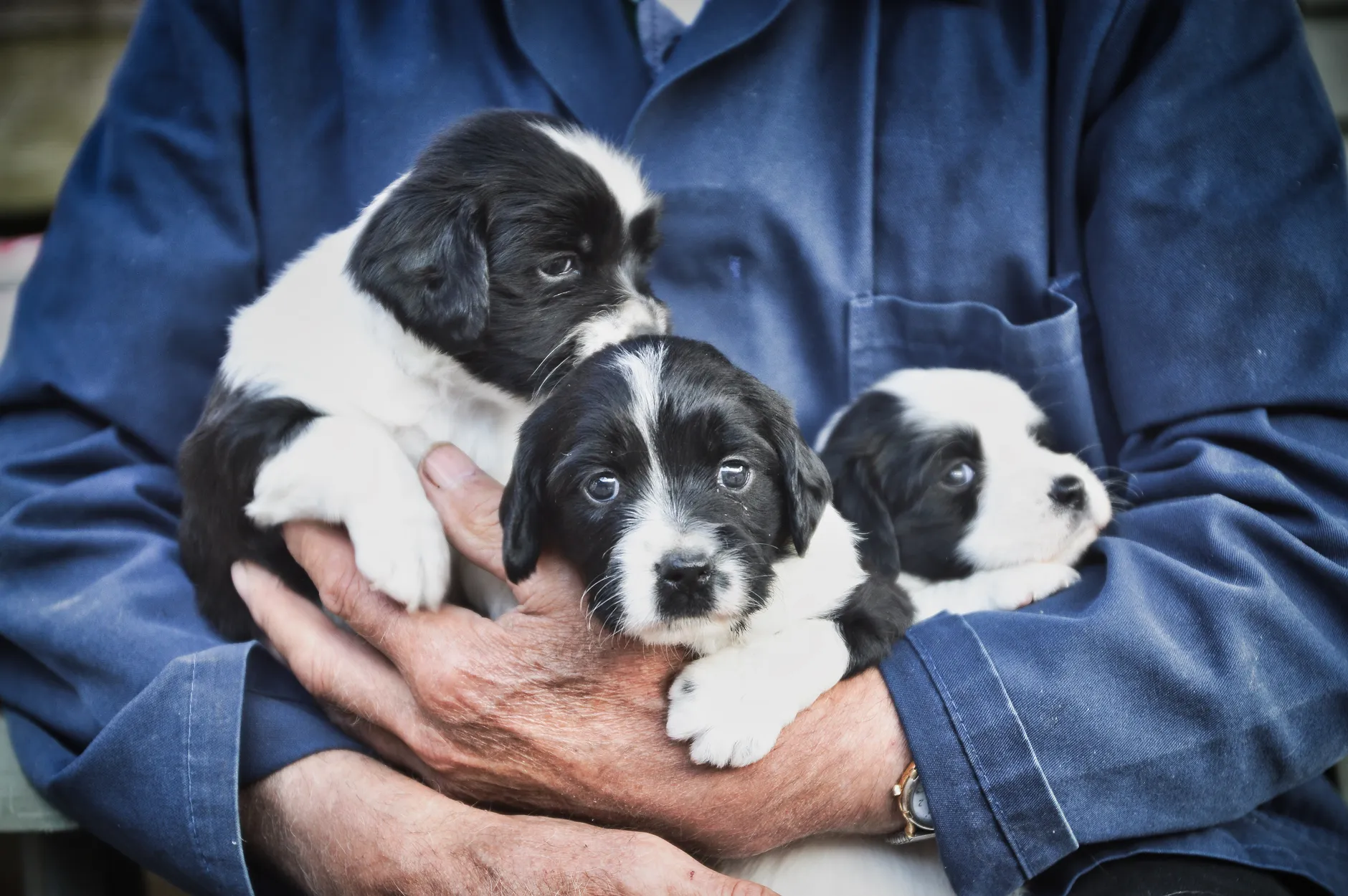
The source of your puppy determines more about its health, temperament, and lifelong wellbeing than almost any other factor. Responsible breeders health-test parent dogs, socialise puppies properly, and stand behind the animals they produce. Puppy mills and unethical breeders do none of these things — and the consequences are carried by the dog and its owner for life.
What responsible breeders do differently
Responsible breeders treat breeding as a long-term commitment to improving the breed's health and temperament. This involves:
- Health testing parent dogs — not assuming they are healthy, but verifying with specialist examinations and genetic tests before each breeding
- Selecting for temperament — not breeding unstable, fearful, or aggressive dogs, regardless of other qualities
- Limiting litter frequency — not breeding a female at every cycle or producing multiple litters simultaneously
- Socialising puppies — exposing them to sounds, surfaces, people, and gentle handling during the critical 3–8 week window
- Screening buyers — asking questions about the buyer's lifestyle, experience, and plans; being prepared to take a puppy back at any point in its life
- Providing a health contract — with clear terms, not a vague "guarantee" that amounts to nothing
Health testing: what to look for by breed type
Every breed has known genetic health vulnerabilities. Responsible breeders test for the conditions documented in their breed's health program. The OFA (Orthopedic Foundation for Animals) database at ofa.org is publicly searchable — you can look up any registered dog by name and see its health test results before buying.
| Test type | Relevant to | How to verify |
|---|---|---|
| OFA hip and elbow evaluation | Large and giant breeds (Labrador, German Shepherd, Golden Retriever, Rottweiler, Bernese Mountain Dog) | OFA database — results rated Good/Fair/Excellent or Mild/Moderate/Severe |
| CAER eye examination | Most breeds — especially Collies, Spaniels, Poodles, Shelties | OFA database; must be current (valid 12 months) |
| OFA cardiac exam (cardiologist) | Cavalier King Charles Spaniel, Great Dane, Boxers, Dobermans | OFA database; performed by board-certified cardiologist |
| MDR1 genetic test | Herding breeds (Shetland Sheepdog, Border Collie, Australian Shepherd) | Test certificate from approved laboratory (e.g. WSU Veterinary Clinical Pharmacology) |
| Thyroid (OFA thyroid) | Dobermans, Shetland Sheepdogs, Golden Retrievers | OFA database |
| DNA panel (breed-specific) | Poodles (PRA, vWD), Border Collies (CEA, MDR1), Irish Setters (PRA) | Certificate from Embark, Paw Print Genetics, or similar approved lab |
This is a representative guide, not a complete list. Check the breed health program on the relevant breed club website for the full testing requirements for your breed.

Red flags: identifying puppy mills and unethical sources
These warning signs indicate a commercial breeding operation or irresponsible breeder. Any single red flag warrants caution; multiple red flags are disqualifying.
- Puppies available immediately, no waiting list — responsible breeders usually have waiting lists because they limit litters
- Multiple breeds available simultaneously — ethical breeders typically specialise in one or two breeds
- Unable or unwilling to show where dogs live — puppies should be raised in a home or clean kennel environment, not wire cages
- No health documentation for parent dogs — claiming dogs are "healthy" without OFA certificates is not documentation
- Puppies shipped before 8 weeks of age — illegal in most states; 8–10 weeks minimum for social development
- Reluctance to answer questions or allow visits — reputable breeders invite questions and encourage visits
- No contract with a return clause — responsible breeders take back any dog they've produced, at any point in its life
- Vague or absent medical records — puppies should have first vaccinations, deworming records, and vet check completed before sale
Where to find responsible breeders
The most reliable starting point for finding a responsible breeder is the national breed club associated with your target breed. Breed clubs maintain referral lists of members who follow the club's code of ethics. The AKC Marketplace also lists breeders with health testing documentation attached — filter for OFA-tested litters.
Breed-specific rescues are another option worth researching. Many purebred dogs end up in rescue through no fault of their own. Rescue organisations can provide dogs with known temperament assessments, veterinary histories, and often pre-training.
Research steps before purchasing:
- Identify the national breed club for your breed and read their health program page
- Search the OFA database for both parent dogs by name — verify health clearances yourself
- Visit the breeder in person before committing; see where puppies are raised
- Read the purchase contract carefully; ensure there is a return-at-any-age clause
- Ask to meet the mother (dam) at minimum; observe her temperament

Frequently asked questions
- What health tests should a responsible breeder perform?
- It depends on the breed. For most large breeds, OFA hip and elbow evaluations are standard. Eye conditions require annual CAER certification. Heart conditions require OFA cardiac exams performed by a cardiologist. Herding breeds should test for MDR1 gene mutation. Responsible breeders share all parent health results publicly through the OFA database or breed club health registries — they do not just claim their dogs are "healthy".
- What are the biggest puppy mill red flags?
- Key red flags: puppies available immediately with no wait, multiple breeds available simultaneously, puppies shipped without meeting the buyer, no health testing documentation, reluctance to show where the puppy lives, pressure to decide quickly, prices that seem very low, and no contract with a return clause. Responsible breeders welcome questions and maintain a waiting list.
- Should I buy from a pet shop?
- Pet shop puppies (from physical retail locations) almost always originate from commercial breeding operations — puppy mills or high-volume breeders. The humane society, ASPCA, and most breed clubs advise against purchasing puppies from pet shops. Alternatives: breed-specific rescues, reputable breeders, or AKC Marketplace with thorough vetting.
- What is an OFA health certification?
- OFA (Orthopedic Foundation for Animals) is the US's primary health testing registry for dogs. Breeders submit radiographs and test results for OFA evaluation; approved results are published publicly. Certifications cover hips, elbows, eyes, heart, thyroid, and genetic tests for specific conditions. Search the OFA database (ofa.org) to verify any breeder's claimed health results.
- Is a written health guarantee enough?
- No. A written guarantee is meaningless without underlying health testing on parent dogs. A guarantee that "replaces" a puppy with a serious genetic condition does not undo the experience or the costs involved. What matters is documented health testing on both parents before the breeding, completed by appropriate specialists and recorded with OFA or a recognised breed registry.


