
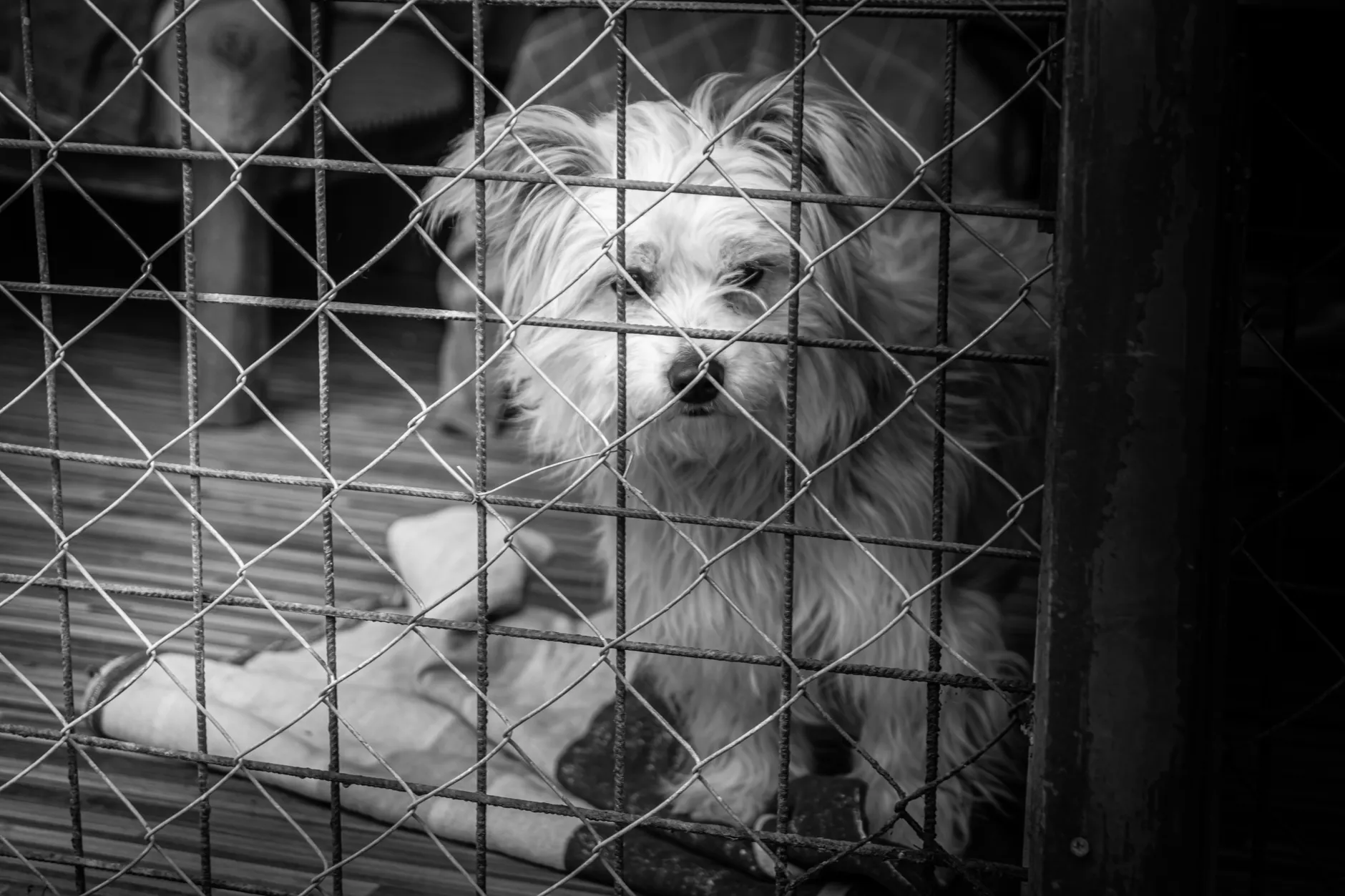
Adopting a dog with unknown history means making decisions without the information most ownership guides assume you have. You may not know the breed, the age, whether the dog has been trained, what it was fed, whether it lived indoors, or what it is afraid of. This uncertainty is manageable if you plan for it, but it requires a different approach than bringing home a puppy from a breeder with a known lineage and health-tested parents. This guide prepares you for what you actually don't know and what to do about it.
What you genuinely don't know
Being clear about what is uncertain helps you plan appropriately rather than assuming the best or fearing the worst. For a dog with unknown history, these are the common unknowns:
- Breed composition. Visual guesses are unreliable. A dog labelled "Lab mix" at a shelter may have little or no Labrador genetics. Breed labels affect expectations but often do not reflect reality.
- Actual age. Veterinary age estimates from dental condition and physical appearance can be off by 1 to 3 years, especially in medium-sized dogs between 2 and 7 years old.
- Medical history. Vaccination status, spay/neuter timing, previous illnesses, injuries, or chronic conditions may be entirely unknown.
- Behavioural history. Whether the dog has been trained, socialised, lived with children or other animals, experienced abuse or neglect, or has established triggers — all unknown.
- Dietary history. What the dog ate before, whether it has food sensitivities, and how it responds to dietary changes.
None of these unknowns are disqualifying. Millions of dogs with unknown backgrounds live perfectly happy, well-adjusted lives. But acknowledging what you don't know prevents the two most common mistakes: over-optimistic assumptions ("the shelter said it's friendly, so it will be fine with everything") and catastrophising ("any unknown could mean the dog is dangerous").
What shelter assessments can and can't tell you
Shelters and rescues do their best to evaluate dogs before adoption, but the shelter environment is inherently stressful and assessments have well-documented limitations.
| Assessment area | Reasonably reliable | Often unreliable |
|---|---|---|
| Temperament | General energy level (high vs low); extreme fear or aggression; sociability with familiar handlers | How the dog behaves once decompressed in a home; behaviour around children, cats, or unfamiliar dogs in non-shelter settings |
| House-training | Whether the dog avoids soiling its kennel area | Reliability in a home; many dogs regress or need refresher training in a new environment |
| Resource guarding | Severe guarding (snapping or biting when food is approached) | Mild-to-moderate guarding, which often appears only after the dog feels secure enough to claim resources |
| Dog-to-dog behaviour | Obvious aggression or extreme avoidance during controlled introductions | Leash reactivity, resource guarding with other dogs, or conflict that only emerges after the initial greeting |
| Fear triggers | Extreme phobias (loud noises, specific objects) observed in the shelter | Context-specific fears (cars, men in hats, stairs, vacuums) that only appear in home environments |
| Training level | Whether the dog responds to basic cues (sit, down) in a low-distraction setting | Recall reliability, leash manners, or behaviour around distractions |
The practical takeaway: treat shelter information as a starting hypothesis, not a complete picture. Plan for a 4 to 8 week discovery period where you learn who this particular dog actually is in your specific home environment.
The 3-3-3 adjustment timeline
The 3-3-3 rule is the most widely used framework for what to expect after adopting a rescue dog. It is approximate — some dogs move through these phases faster, others take longer — but it is a useful structure for managing your expectations.
| Phase | Timeframe | What you may see | What to do |
|---|---|---|---|
| Decompression | First 3 days | Withdrawal, not eating, hiding, excessive sleeping, or conversely restlessness and inability to settle. May not show "real" personality. | Keep things quiet and predictable. No visitors, no outings, no overwhelming introductions. Provide a safe retreat space. Offer food but do not force interaction. |
| Learning routines | Days 4-21 | Beginning to understand the household schedule. Testing boundaries. May start showing behaviours not seen in the first 3 days — both positive (playfulness, affection) and challenging (guarding, reactivity, barking). | Establish consistent feeding, walking, and sleeping schedules. Begin gentle boundary setting. Start positive-reinforcement training with simple cues. Introduce the home gradually — one room at a time. |
| Settling in | Weeks 3-12 | True personality emerges. Bonding deepens. Remaining behavioural issues become clearer and more consistent rather than random. Some previously suppressed behaviours may surface as the dog gains confidence. | Address emerging behavioural patterns with consistent training. Expand the dog's world gradually (new environments, new people, longer walks). Seek professional help if problems are worsening rather than improving. |
Red flags vs normal adjustment
One of the hardest parts of adopting a dog with unknown history is distinguishing between normal adjustment behaviours that will improve with time and patience, and genuine warning signs that need immediate professional attention. This comparison can help.
| Behaviour | Normal adjustment (likely to improve) | Warning sign (seek professional help) |
|---|---|---|
| Eating | Reduced appetite for 1 to 3 days; eating cautiously or at unusual times | Complete food refusal for more than 48 hours; guarding food with snapping or biting |
| House-training | Accidents in the first 1 to 2 weeks, especially in unfamiliar areas of the home | Marking or soiling that increases rather than decreases after 3 weeks of consistent routine |
| Fear or avoidance | Startle responses to new sounds; avoiding certain rooms or objects; hiding behind furniture | Panic that prevents the dog from functioning (unable to go outside, self-harm, extreme escape attempts); fear aggression (biting when cornered or startled) |
| Behaviour with people | Wariness around strangers that improves over days; clinging to one person; slow to warm up | Unprovoked aggression toward household members; biting without warning signals; escalating growling or snapping |
| Behaviour with other pets | Cautious sniffing; mild tension; occasional posturing that de-escalates | Sustained aggression (pinning, biting, not releasing); prey drive toward cats or small animals; conflict that intensifies over days |
| Destructive behaviour | Chewing when left alone in the first 2 weeks; exploring by mouthing objects | Extreme destruction directed at exits (clawing doors, chewing window frames); self-injury from escape attempts |
The general pattern: behaviours that are gradually improving on a week-by-week basis are usually adjustment behaviours. Behaviours that are static or worsening after 3 to 4 weeks of consistent management warrant professional assessment.
Setting up without knowing triggers
When you don't know what might frighten, overwhelm, or trigger your dog, the safest strategy is to control the environment first and expand it gradually. This approach works regardless of what the dog's unknown history contains.
- Start small. Confine the dog to one or two rooms initially. This is not punishment — it is reducing the number of novel stimuli the dog has to process simultaneously. A whole house full of unfamiliar sounds, surfaces, stairs, and spaces is overwhelming.
- Remove obvious hazards. Secure bins, put cleaning products out of reach, cover electrical cords, and move small objects that could be swallowed. You do not yet know this dog's chewing habits or what it might ingest.
- Introduce family members gradually. Not everyone at once. Let the dog approach people on its own terms rather than being crowded. Children should be supervised at all times during the first month and taught not to approach, grab, or corner the dog.
- Keep walks short and local. The first week's walks should be brief, low-traffic routes near your home. You are learning the dog's reactivity to other dogs, people, traffic, bikes, and environmental sounds. Long walks in busy parks can overwhelm a dog that is still decompressing.
- Use a secure collar and lead. Until you know the dog's recall and flight-risk level, a well-fitted collar with ID tags (plus microchip registration in your name) and a standard 4 to 6-foot lead are essential. Do not use a retractable lead until you understand the dog's reactivity. Consider a martingale collar or harness for dogs that can slip standard collars.
- Establish a predictable routine immediately. Consistent feeding times, walk times, and sleep arrangements give the dog a framework to orient around. Predictability reduces anxiety faster than almost anything else.
Health unknowns and first vet visit
Schedule a vet appointment within the first 3 to 5 days of adoption, even if the shelter provided a health check. Shelter vet assessments are necessarily brief and focused on immediate concerns. Your vet can provide a more thorough baseline.
Priorities for the first vet visit with a dog of unknown history:
- Age estimation. Your vet will assess dental condition, coat, eyes, and musculoskeletal condition to estimate age. Accept that this is an approximation, especially for dogs between 2 and 7 years old.
- Vaccination status review. If records are incomplete or absent, your vet may recommend a fresh vaccination series or titre testing to check existing immunity. Discuss the most appropriate approach for the dog's estimated age.
- Parasite screening. Faecal test for intestinal parasites, heartworm test if the dog was in a heartworm-endemic area, and flea/tick assessment. Start preventive treatments as your vet recommends.
- General physical exam. Heart, lungs, skin, joints, eyes, ears, teeth, and weight. This establishes a baseline for future comparison and can reveal previously undiagnosed conditions.
- Spay/neuter status. If unclear from adoption records, your vet can confirm whether the dog has been spayed or neutered.
- Behavioural observations. Mention any behaviours you have noticed so far — fear of specific things, limping, head tilting, excessive drinking, or other patterns. Some behavioural issues have medical causes.
When to get professional help
Most rescue dogs adjust well with patient, consistent ownership. But some need professional support, and the sooner you get appropriate help, the better the outcome.
Seek help immediately for:
- Any bite that breaks skin, regardless of context
- Aggression toward household members that includes sustained growling, snapping, or lunging
- Predatory behaviour toward cats or small animals in the home
- Extreme panic (self-injury, extreme escape attempts, complete shutdown for more than 3 days)
Seek help within 2 to 4 weeks if:
- Leash reactivity (barking, lunging at dogs or people) is not improving with management
- Resource guarding is present and not responding to avoidance strategies
- House-training has not improved after 3 weeks of consistent routine
- Separation anxiety symptoms persist despite gradual departure training
- The dog's fear or withdrawal is not gradually improving
Look for a certified, force-free professional — credentials to look for include CPDT-KA, CAAB, or veterinary behaviourist (Dip. ACVB). Avoid any trainer who uses punishment-based methods (prong collars, shock collars, alpha rolls, flooding) — these are particularly harmful for dogs with unknown trauma histories and can escalate fear-based aggression.
First-month checklist
Use this as a practical tracker for the first 30 days with your rescue dog.
- Set up a quiet retreat space (crate or bed in a low-traffic area)
- Establish feeding, walking, and sleep schedule
- Keep visitors and introductions to a minimum
- Observe the dog's responses to household sounds, surfaces, and spaces
- Confirm vet appointment is booked within the first 5 days
- Ensure ID tags are on the collar and microchip is registered to you
- Maintain consistent daily schedule
- Begin positive-reinforcement training (sit, name recognition, recall indoors)
- Complete first vet visit and start recommended preventive treatments
- Gradually expand access to more areas of the home
- Begin short, low-stimulation walks in the neighbourhood
- Note emerging behaviours (positive and challenging) for tracking
- Introduce crate or safe confinement space if not already done
- Extend walks and introduce new (but not overwhelming) environments
- If no concerning behaviours, begin controlled introductions to new people
- Practice brief alone-time periods if not already comfortable being alone
- Assess whether any behavioural patterns need professional support
- Transition food gradually if changing from the shelter or foster diet
- Schedule any follow-up vet appointments recommended at the first visit
The first month is a process of learning who your dog is, not making the dog fit a predetermined idea of who you want them to be. The dogs that thrive after adoption with unknown histories are almost always the ones whose owners gave them time, consistency, and the space to decompress at their own pace.

Frequently asked questions
- Can a shelter or rescue accurately predict a dog's breed mix?
- Visual breed identification is unreliable. Studies consistently show that shelter staff and even experienced veterinarians correctly identify breed composition less than 25% of the time for mixed-breed dogs. DNA tests ($100 to $200) provide more accurate breed information, but even DNA results do not reliably predict an individual dog's behaviour — a dog that is 50% Labrador may or may not act like a Labrador. Focus on the individual dog's observed behaviour rather than guessed or tested breed composition when making adoption decisions.
- How reliable are shelter behaviour assessments?
- Shelter assessments provide useful but limited information. Dogs in shelter environments are stressed, and stress changes behaviour significantly — a dog that appears shut down and passive in a kennel may be energetic and reactive once it decompresses in a home. Food and toy guarding tests in shelters have particularly poor predictive validity for in-home behaviour. Take assessments as a starting point, not a guarantee, and expect the dog's true personality to emerge over weeks rather than days.
- What is the 3-3-3 rule for rescue dogs?
- The 3-3-3 rule is a general framework for what to expect after adoption: the first 3 days are about decompression — the dog may be withdrawn, not eating, or anxious as they process the change. The first 3 weeks are about learning routines — the dog starts to understand your schedule, boundaries, and household patterns. The first 3 months are about settling in — the dog's real personality, comfort level, and any lingering issues become clear. It is a useful guideline for managing expectations, not a strict timeline every dog follows.
- My rescue dog seemed fine for the first week and then started showing problem behaviours. What happened?
- This is extremely common and has a name: the "honeymoon period." Many rescue dogs are on their best behaviour initially because they are still in a shutdown or cautious state. As they decompress and begin to feel safe, previously suppressed behaviours emerge — this can include barking, guarding resources, reactivity to other dogs, or testing boundaries. This is actually a positive sign that the dog is feeling secure enough to express itself. The behaviours that appear in weeks 2 through 6 are usually the ones you will need to address through training and management.
- When should I get a professional behaviourist involved with my rescue dog?
- Seek professional help immediately for any aggression toward people (biting, snapping, sustained growling with intent), aggression toward other pets in the home that escalates rather than diminishes, extreme fear that prevents the dog from functioning (refusing to eat, unable to go outside, self-harm), or resource guarding that involves lunging or biting. For moderate issues like leash reactivity, mild resource guarding, or house-training difficulty that persists past the 3-week mark, a qualified force-free trainer or veterinary behaviourist can provide significant help. Do not wait months hoping things will resolve on their own if the trajectory is worsening.
- Should I give my rescue dog full access to the house from day one?
- No. Start with one or two rooms and expand gradually over the first 2 to 4 weeks. Full house access for a dog whose house-training status, chewing habits, and anxiety triggers are unknown is a recipe for accidents, destruction, and the dog learning habits that are hard to reverse. A smaller, controlled space also helps the dog feel less overwhelmed — a whole house is a lot of territory to process for a dog already dealing with a massive change. Use baby gates, closed doors, or an exercise pen to manage access while you learn the dog's patterns.


