
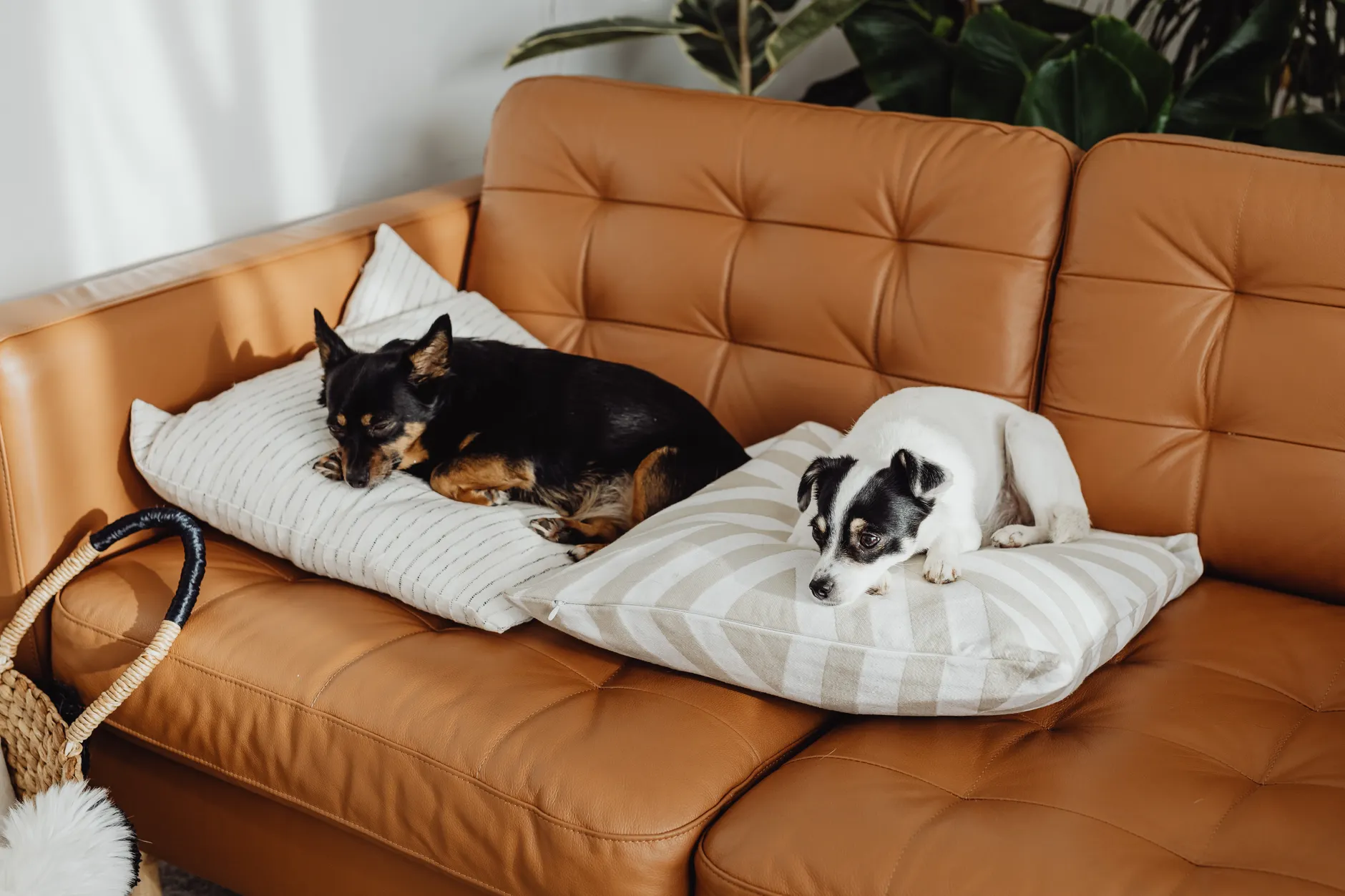
"Low-maintenance dog" is one of the most searched — and most misleading — phrases in dog ownership. Every breed called low-maintenance is low in some dimensions and not others. A French Bulldog barely needs brushing but may cost you tens of thousands in veterinary bills. A Border Collie is easy to groom and train but demands more daily exercise than most people can sustain. This guide breaks "maintenance" into its five real dimensions, rates common breeds across all of them, and identifies the traps that catch owners who optimise for one factor while ignoring the others.
Defining the five maintenance dimensions
"Maintenance" is not a single score. It decomposes into five distinct categories, each of which takes time, money, or both. A breed can be low in one dimension and very high in another — and the high dimension often determines whether ownership feels manageable or overwhelming.
1. Grooming demands
Grooming is the most visible maintenance factor and the one most people evaluate first. It includes coat brushing, bathing, professional grooming sessions, nail trimming, ear cleaning, and dental care. A short-coated Whippet may need brushing once a week and a bath every few months. A Standard Poodle needs brushing every 1-2 days and professional grooming every 6-8 weeks at $60-$120 per session. Over a year, the difference can be $0-$50 versus $500-$1,200 — before you account for your own time.
Use the Dog Grooming Schedule Generator to see exactly what your breed's coat type demands.
2. Exercise needs
Exercise is the maintenance dimension with the highest daily time cost. A low-exercise breed (Shih Tzu, Basset Hound) may need 20-30 minutes of walking daily. A high-exercise breed (Border Collie, German Shorthaired Pointer, Siberian Husky) needs 60-120 minutes of vigorous activity — not casual walking, but running, swimming, or structured play. Under-exercised high-energy dogs develop destructive behaviours, excessive barking, and anxiety. Exercise needs cannot be trained away; they are biological.
3. Training difficulty
Some breeds respond to training quickly with minimal repetition and retain learned behaviours reliably. Others require significantly more patience, consistency, and professional guidance. Eager-to-please breeds (Labrador, Golden Retriever, Poodle) make first-time training feel achievable. Independent breeds (Shiba Inu, Afghan Hound, Basenji) can make experienced trainers feel like beginners. Training difficulty affects your first 1-2 years most intensely, but ongoing reinforcement is a lifelong commitment.
4. Health complexity
This is the maintenance dimension that surprises owners most because it often does not manifest until years into ownership. Brachycephalic breeds (French Bulldog, Pug, English Bulldog) have chronically elevated veterinary costs due to breathing difficulties, skin fold infections, spinal issues, and heat intolerance. Cavalier King Charles Spaniels face near-universal mitral valve disease. Giant breeds develop orthopaedic problems at high rates. A breed with low grooming and low exercise needs but high health complexity can end up costing more overall than a breed that needs daily brushing and long walks.
5. Independence and alone-time tolerance
How well a dog tolerates being alone during work hours is a maintenance factor that affects daily logistics. Breeds with high separation anxiety tendencies (Vizsla, Cavalier KCS, Italian Greyhound) may need doggy daycare, a dog walker, or a companion animal to prevent destructive behaviour when left alone. Independent breeds (Basset Hound, Greyhound, Shiba Inu) handle alone time better, reducing the need for supplementary care arrangements. If you work full-time outside the home, this dimension alone can make or break your ownership experience.
Maintenance matrix: 10 breeds rated across all five dimensions
The table below rates 10 popular breeds across all five maintenance dimensions plus an overall assessment. Notice how rarely a breed scores consistently low across the board — and how breeds that appear low-maintenance on one or two dimensions often spike high on others.
| Breed | Grooming | Exercise | Training | Health risk | Independence | Overall effort |
|---|---|---|---|---|---|---|
| Whippet | Very Low | Moderate | Easy | Low risk | Moderate | Very Low |
| Greyhound | Very Low | Low-Moderate | Easy | Low risk | Moderate-High | Very Low |
| Basset Hound | Low | Low-Moderate | Moderate | Moderate | High | Low |
| Cavalier KCS | Moderate | Low-Moderate | Easy | High risk | Low | Moderate |
| Chihuahua | Low | Low | Moderate-Hard | Moderate | Moderate | Moderate |
| Shih Tzu | High | Low | Moderate | Moderate | Moderate | Moderate |
| French Bulldog | Low | Low | Moderate | Very High risk | Moderate | Moderate-High |
| Labrador Retriever | Moderate | High | Very Easy | Moderate | Moderate | Moderate |
| Standard Poodle | Very High | Moderate-High | Very Easy | Low risk | Low | Moderate-High |
| Border Collie | Moderate | Very High | Very Easy | Low risk | Low | High |
Use the Dog Breed Finder by Traits to filter all 70 breeds by grooming level, energy, and trainability simultaneously.
Per-dimension analysis: where breed choice has the most impact
Grooming: the most reducible factor
Grooming is the maintenance dimension where breed choice creates the most dramatic impact on your daily routine. The difference between a short-coated breed and a long-coated breed is measured in hours per week and hundreds of dollars per year.
Lowest grooming breeds: Whippet, Greyhound, Boxer, Doberman, Basenji. These breeds have short, smooth coats that need nothing more than a weekly wipe-down and occasional bath. They shed moderately but do not mat, tangle, or require professional grooming.
Highest grooming breeds: Standard Poodle, Bichon Frise, Maltese, Afghan Hound, Old English Sheepdog. These breeds require daily or every-other-day brushing to prevent matting, plus professional grooming every 4-8 weeks. Skipping sessions leads to matting that causes skin infections and pain.
Exercise: the least flexible factor
You can skip a grooming session and catch up later. You can delay a veterinary check-up by a few weeks. But you cannot consistently under-exercise a high-energy breed without consequences. An under-exercised dog develops behavioural problems — destructive chewing, excessive barking, digging, hyperactivity, and anxiety — that make every other aspect of ownership harder.
The breeds with the lowest genuine exercise needs are those bred for companionship rather than work: Shih Tzu (20-30 min/day), French Bulldog (20-30 min/day), Cavalier KCS (30-45 min/day), and Basset Hound (30-45 min/day). At the other extreme, breeds like the Border Collie, Australian Shepherd, Vizsla, and Weimaraner need 60-120 minutes of vigorous daily activity — and this is non-negotiable for their welfare.
Be honest about your actual daily exercise capacity, not your aspirational one. If you currently walk 20 minutes a day, a breed that needs 90 minutes will not motivate you to change — it will make both of you miserable.
Health: the invisible cost multiplier
Health complexity is the dimension that creates the widest gap between perceived maintenance and actual maintenance. A breed can look and behave like a low-maintenance dog while quietly accumulating thousands in veterinary expenses.
The most striking example: the French Bulldog. Short coat, low exercise needs, compact size, calm temperament — superficially, it checks every low-maintenance box. But brachycephalic syndrome means chronically compromised breathing, heat intolerance, skin fold dermatitis, spinal issues (IVDD), and eye problems. Lifetime veterinary costs for a French Bulldog are among the highest of any breed — $15,000-$30,000+ over their 10-12 year lifespan. Insurance premiums reflect this: a French Bulldog often costs 50-100% more to insure than a similarly sized breed without brachycephalic issues.
Use the Dog Insurance Cost Estimator to see how breed health risk affects premiums.
Low-maintenance traps: breeds that fool you
Several popular breeds are frequently recommended as low-maintenance but carry significant hidden costs in dimensions people do not initially evaluate.
The French Bulldog trap
Appears low-maintenance: short coat, low exercise needs, compact size, calm temperament. Reality: brachycephalic health costs dominate ownership. Heat intolerance limits warm-weather activities. Skin fold infections require regular cleaning. Spinal issues (IVDD) can require $5,000-$10,000 surgery. The breed with the lowest apparent daily demands has among the highest lifetime cost of ownership.
The "hypoallergenic equals easy" trap
Poodles, Bichon Frises, and Maltese shed less hair around the home, but their continuously growing coats require more active grooming than any heavy shedder. A Labrador sheds constantly but needs only occasional brushing. A Poodle barely sheds but needs professional grooming every 6-8 weeks and daily brushing to prevent matting. Low-shedding trades one inconvenience for a more expensive and time-consuming one.
The "designer breed" trap
Labradoodles, Goldendoodles, and similar crossbreeds are marketed as combining the best traits of both parent breeds. In practice, coat type is unpredictable (you may get a high-shedding, high-grooming coat), health testing is inconsistent across breeders, and temperament varies widely. A purpose-bred Poodle or Labrador with predictable traits is often lower maintenance than a crossbreed with uncertain characteristics and a premium price tag.
The "independent breed" trap
Breeds like the Shiba Inu and Akita are sometimes recommended as low-maintenance because they are "cat-like" in independence. But independence in dogs often means difficult to train, poor recall, selective obedience, and challenging socialisation requirements. An independent dog that ignores your commands is not low-maintenance — it is high-management in a different way. True independence (low separation anxiety, self-settling) is different from stubbornness (ignoring training, challenging boundaries).
Building a realistic maintenance budget
Once you understand the five dimensions, you can estimate your actual time and financial commitment. The table below provides benchmarks by overall maintenance level.
| Maintenance level | Daily time commitment | Annual cost range | Typical breeds |
|---|---|---|---|
| Very Low | 30-45 min | $1,000-$1,800 | Whippet, Greyhound, Basset Hound |
| Low | 45-75 min | $1,500-$2,500 | Cavalier KCS, Beagle, Chihuahua |
| Moderate | 60-90 min | $2,000-$3,500 | Labrador, Golden Retriever, Cocker Spaniel |
| High | 90-120+ min | $2,500-$5,000+ | Border Collie, Standard Poodle, German Shepherd |
The Dog Cost Calculator provides breed-specific annual cost estimates, and the Dog Breed Selector Quiz accounts for your time availability and budget when recommending breeds.
Reducing maintenance through smart decisions
Some maintenance reduction comes from breed choice, but much of it comes from how you set up your ownership.
- Choose an adult dog, not a puppy: Adult dogs (2-5 years) are past the intensive puppy phase — housetraining, teething, crate training, socialisation windows — and their temperament is already established. This alone eliminates 12-18 months of peak maintenance.
- Invest in training early: Professional group classes in the first 6 months pay dividends for years. A well-trained dog is dramatically lower maintenance than a poorly trained one, regardless of breed.
- Match energy to your real lifestyle: An honest assessment of your actual daily exercise capacity (not your aspirational one) is the single best predictor of whether a dog will be low-maintenance or high-maintenance for you personally.
- Budget for prevention: Routine vet care, dental cleaning, and appropriate diet prevent expensive and time-consuming health crises. Prevention reduces long-term maintenance; neglect increases it exponentially.
- Establish routines from day one: Dogs thrive on predictability. Consistent feeding times, walk schedules, and household rules reduce behavioural issues and make the dog easier to manage over time.
The honest answer
There is no zero-maintenance dog. The lowest-maintenance breeds — Whippets, Greyhounds, Basset Hounds — still need 30-45 minutes of daily attention, routine veterinary care, and ongoing social interaction. What these breeds offer is not zero effort, but predictably low effort across multiple dimensions without hidden cost spikes.
If you want a genuinely low-maintenance dog, prioritise breeds that score low across all five dimensions rather than breeds that score very low in one dimension you care about. A dog that needs minimal grooming but enormous amounts of exercise is not low-maintenance for a person who works 10-hour days. Match the breed to your actual daily capacity — not the marketing label.
Frequently asked questions
- What does "low-maintenance dog" actually mean?
- Low maintenance is not a single trait — it is the sum of five dimensions: grooming demands, exercise needs, training difficulty, health complexity, and independence (how well the dog tolerates alone time). A breed that scores low across all five is genuinely low-effort. Most breeds marketed as low-maintenance are only low in one or two dimensions and high in others. A French Bulldog has low exercise needs but extremely high veterinary costs; a Beagle needs minimal grooming but demands significant exercise and has stubborn recall.
- Which dog breeds are genuinely the lowest maintenance overall?
- Breeds that score well across all five maintenance dimensions include the Whippet (minimal grooming, moderate exercise, calm indoors, generally healthy, reasonable alone-time tolerance), the Greyhound (nearly identical profile to the Whippet with a larger frame), and the Basset Hound (low grooming, moderate exercise, tolerant of alone time, though prone to ear infections). Even these breeds have trade-offs — no breed is truly zero-effort. The key is finding breeds that do not spike high in any single dimension.
- Are small dogs lower maintenance than large dogs?
- Not inherently. Small dogs eat less and are easier to transport, but many small breeds have high grooming requirements (Maltese, Shih Tzu), significant training challenges (Dachshund, Chihuahua), or serious health issues (French Bulldog, Cavalier KCS). A large breed like a Greyhound may actually be lower total maintenance than a small Yorkshire Terrier, which needs daily coat care, frequent dental cleanings, and careful handling due to fragility.
- What are the hidden maintenance costs people overlook when choosing a dog?
- The most commonly overlooked maintenance burdens are dental care (small breeds often need professional cleanings costing $300-$600 every 1-2 years), breed-specific health screening (cardiac, hip, eye exams), mental stimulation for intelligent breeds (puzzle toys, training sessions, enrichment activities), and separation anxiety management. A dog that seems low-maintenance at adoption may cost thousands more in hidden health and behavioural expenses over its lifetime.
- Can a high-energy breed become low-maintenance with enough training?
- Training improves manageability but does not change fundamental energy biology. A well-trained Border Collie is easier to live with than an untrained one, but it still needs 60-90 minutes of vigorous daily exercise and ongoing mental stimulation. Training reduces behavioural problems — it does not reduce exercise requirements, grooming needs, or health predispositions. If you want a genuinely low-effort daily routine, choose a breed with inherently lower needs rather than trying to train a high-need breed into a different dog.
- Do low-shedding dogs require less maintenance than heavy shedders?
- Usually the opposite. Low-shedding breeds like Poodles and Bichon Frises trap dead hair in their coats, which must be removed through regular brushing and professional grooming every 6-8 weeks at $60-$120 per session. Heavy-shedding breeds like Labrador Retrievers are much lower grooming maintenance despite leaving more hair on your furniture. Low-shedding trades one inconvenience (hair on furniture) for another (grooming time and cost), and the cost trade is rarely in your favour.
- Is there such a thing as a zero-maintenance dog?
- No. Every dog requires daily feeding, fresh water, exercise, social interaction, regular veterinary care, and ongoing training reinforcement. The lowest-maintenance dogs still need 30-60 minutes of daily attention beyond basic care. If your lifestyle cannot accommodate at least this minimum, a dog is not the right pet. Cats, fish, or reptiles may be better suited to extremely limited time availability.


