
Dog breed group guide
Working Dogs: Perform heavy, protective or specialized work such as guarding, pulling, rescue, sledding, carting and water work.
Working dogs are built for serious jobs. Many are large, strong, confident and protective, which makes early socialization, good handling and realistic cost planning especially important.
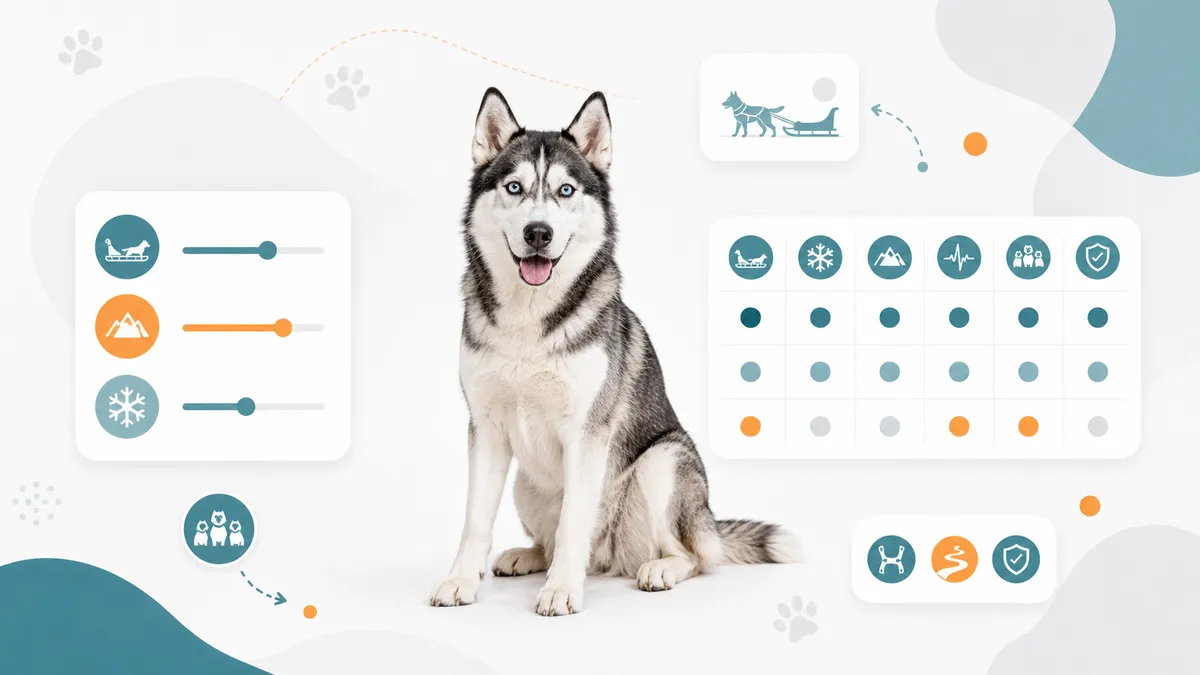
What this group was bred to do
Perform heavy, protective or specialized work such as guarding, pulling, rescue, sledding, carting and water work.
The group includes guard dogs, sled dogs, mountain/rescue dogs, mastiff-type dogs, pinscher/schnauzer types and other utility workers developed to assist humans in demanding roles.
Core instincts:
What that means in a modern home
Often a good fit for:
- experienced owners
- homes with space and training structure
- people prepared for high food/vet/equipment costs
- owners who can commit to socialization and management
Important watch-outs:
- many are not ideal impulse purchases for first-time owners
- size increases cost and safety responsibility
- protective tendencies need careful socialization
- giant breeds may require joint/growth management
Owner fit signals
These are group-level tendencies, not individual guarantees. Always research specific breeds and consult a qualified trainer or breeder.
Good fit if you
- confident adult household
- budget for large-dog costs
- commitment to training/socialization
- secure housing and visitor management
Consider carefully if
- first dog but highly prepared
- small children with no size-management plan
- hot climate for heavy-coated breeds
Not the best fit if
- wants a dog to “guard” without training
- cannot physically manage leash strength
- rental/housing restrictions unresolved
Family note: Many are devoted family dogs, but family fit must include visitor safety, body size, training consistency and cost resilience.
Functional subtypes and instincts
PupWiki functional lens — not a formal registration category.
Subtypes in this group
How instincts appear at home
- calm confidence when mature
- alerting at boundaries
- strength on leash
- slow physical maturity
- high food and medical costs in giant breeds
Training levers that work well
- early neutral socialization
- cooperative handling
- loose-leash strength management
- settle around visitors
- structured jobs without aggression rehearsal
Breeds in this group (32)
- Akita
- Alaskan Malamute
- Bernese Mountain Dog
- Boxer
- Bullmastiff
- Cane Corso
- Doberman Pinscher
- Giant Schnauzer
- Great Dane
- Great Pyrenees
- Leonberger
- Mastiff
- Newfoundland
- Portuguese Water Dog
- Rottweiler
- Samoyed
- Siberian Husky
- Standard Schnauzer
- Tibetan Mastiff
- Anatolian Shepherd Dog
- Black Russian Terrier
- Boerboel
- Chinook
- Danish-Swedish Farmdog
- Dogo Argentino
- Dogue de Bordeaux
- German Pinscher
- Greater Swiss Mountain Dog
- Komondor
- Kuvasz
- Neapolitan Mastiff
- St. Bernard
13 breeds in this group are not yet profiled on PupWiki.
PupWiki tools for this group
Apply group insights to your specific dog with these free tools.
Frequently asked questions
- Are Working dogs good for first-time owners?
- Some Working dogs can fit prepared first-time owners, but many require more size management, socialization, training and cost planning than beginners expect. Protective or giant breeds need especially careful handling.
Sources
- American Kennel ClubThe 7 AKC Dog Breed Groups ExplainedAccessed 2026-06-06
- American Kennel ClubAKC Breeds Broken Out By GroupAccessed 2026-06-06
- American Kennel ClubAKC Breed Groups: Understanding Breed Groups at Dog Shows
- American Kennel ClubList of Breeds by Group
- Fédération Cynologique InternationaleFCI Breeds Nomenclature
- Fédération Cynologique InternationaleBreed Specific Instructions regarding exaggerations in pedigree dogs
- The Royal Kennel ClubBreed standards
- American Veterinary Medical AssociationSelecting a pet dog
- MSD Veterinary ManualSelecting a Dog
See something outdated, unclear, or incorrect? We welcome corrections — just send us the page URL, the issue, and a supporting source if available.
Submit a correction →What makes breed groups most useful to you?
Help improve PupWiki with one quick anonymous answer.
Compare breeds →