
Dog breed group guide
Herding Dogs: Gather, move, control, drive or protect livestock such as sheep, cattle and reindeer.
Herding dogs are often intelligent and responsive, but smart does not mean easy. Many need structured mental work, movement-control training and an off-switch routine as much as physical exercise.
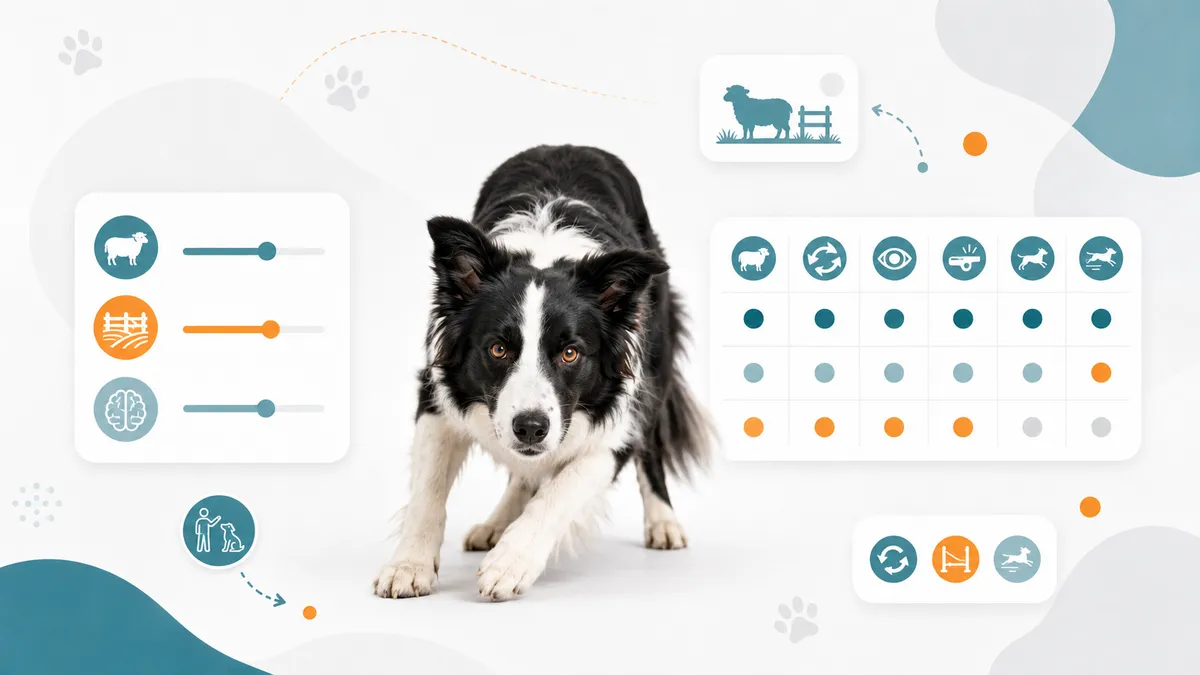
What this group was bred to do
Gather, move, control, drive or protect livestock such as sheep, cattle and reindeer.
AKC Herding became separate from Working in 1983. The group includes sheepdogs, cattle dogs, shepherds, corgis, Belgian/German shepherd types, and Nordic or regional livestock dogs.
Core instincts:
What that means in a modern home
Often a good fit for:
- active owners who enjoy training
- sport and obedience homes
- families prepared for mental enrichment
- rural or highly engaged suburban homes
Important watch-outs:
- can chase or nip moving children, bikes or cars
- under-stimulation may create behaviour problems
- some lines are very intense
- socialization and calmness training are crucial
Owner fit signals
These are group-level tendencies, not individual guarantees. Always research specific breeds and consult a qualified trainer or breeder.
Good fit if you
- enjoys training and routines
- active but also values calmness work
- can provide mental enrichment
- wants responsive partnership
Consider carefully if
- busy household with running children
- long hours alone
- noise-sensitive dog environment
- expects dog park exercise to solve everything
Not the best fit if
- no time for training
- wants a low-demand dog
- cannot manage chasing/nipping around children or bikes
Family note: Many herding breeds bond deeply with families, but children’s movement can trigger instinctive chasing/nipping unless proactively trained.
Functional subtypes and instincts
PupWiki functional lens — not a formal registration category.
Subtypes in this group
How instincts appear at home
- following routines
- chasing bikes/runners
- nipping heels in puppies
- sound sensitivity
- demand for jobs/training
Training levers that work well
- calm observation of movement
- settle/place training
- structured trick/obedience tasks
- impulse control around wheels/kids
- herding-safe outlets or sports
Breeds in this group (33)
- Australian Cattle Dog
- Australian Shepherd
- Belgian Malinois
- Border Collie
- Cardigan Welsh Corgi
- Collie
- Miniature American Shepherd
- Old English Sheepdog
- Pembroke Welsh Corgi
- Shetland Sheepdog
- Bearded Collie
- Beauceron
- Belgian Laekenois
- Belgian Sheepdog
- Belgian Tervuren
- Bergamasco
- Berger Picard
- Bouvier Des Flanders
- Briard
- Canaan Dog
- Entlebucher Mountain Dog
- Finnish Lapphund
- German Shepherd Dog
- Icelandic Sheepdog
- Lancashire Heeler
- Mudi
- Norwegian Buhund
- Polish Lowland Sheepdog
- Puli
- Pumi
- Pyrenean Shepherd
- Spanish Water Dog
- Swedish Vallhund
23 breeds in this group are not yet profiled on PupWiki.
PupWiki tools for this group
Apply group insights to your specific dog with these free tools.
Frequently asked questions
- Are Herding dogs easy because they are smart?
- Not always. Herding dogs are often highly trainable, but their intelligence and motion sensitivity can create problems if they lack outlets, calmness training and structure. Smart does not automatically mean easy.
Sources
- American Kennel ClubThe 7 AKC Dog Breed Groups ExplainedAccessed 2026-06-06
- American Kennel ClubAKC Breeds Broken Out By GroupAccessed 2026-06-06
- American Kennel ClubAKC Breed Groups: Understanding Breed Groups at Dog Shows
- American Kennel ClubList of Breeds by Group
- Fédération Cynologique InternationaleFCI Breeds Nomenclature
- Fédération Cynologique InternationaleBreed Specific Instructions regarding exaggerations in pedigree dogs
- The Royal Kennel ClubBreed standards
- American Veterinary Medical AssociationSelecting a pet dog
- MSD Veterinary ManualSelecting a Dog
See something outdated, unclear, or incorrect? We welcome corrections — just send us the page URL, the issue, and a supporting source if available.
Submit a correction →What makes breed groups most useful to you?
Help improve PupWiki with one quick anonymous answer.
Compare breeds →