
Dog breed group guide
Non-Sporting Dogs: A diverse AKC group for breeds whose histories and modern roles do not fit neatly into the other six AKC groups.
Non-Sporting is the most mixed AKC group. It should be treated as a set of subtypes—companion, utility, primitive/spitz-like, brachycephalic, poodle-type and rare heritage breeds—rather than one temperament bucket.
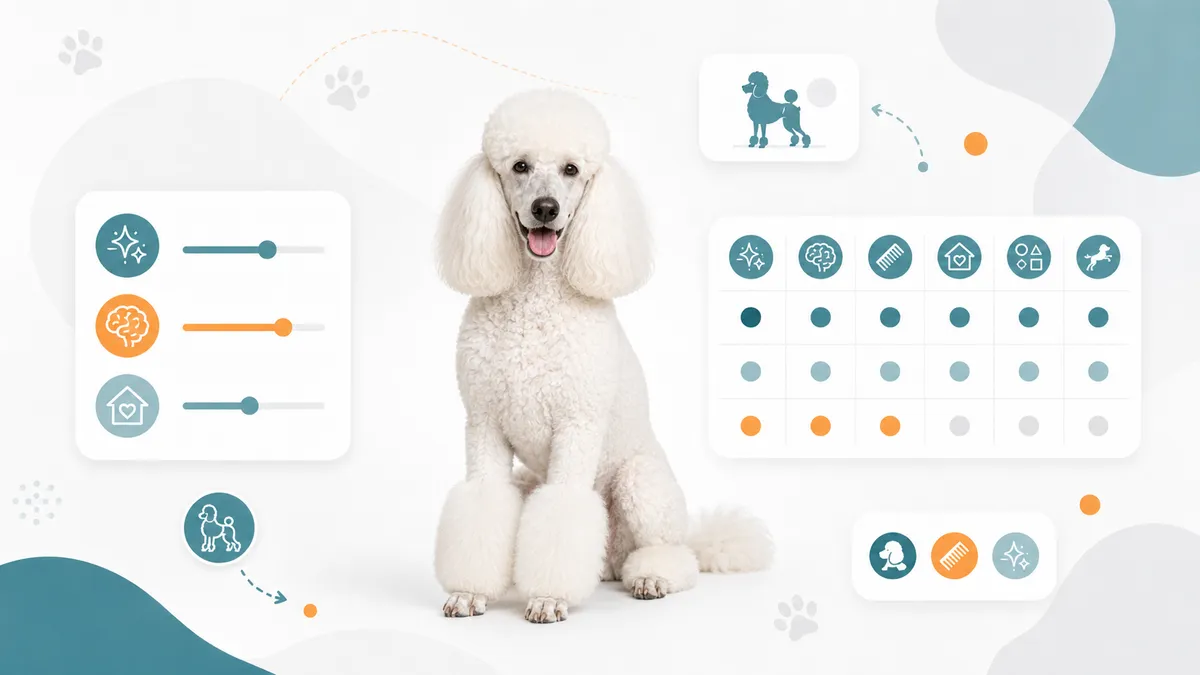
What this group was bred to do
A diverse AKC group for breeds whose histories and modern roles do not fit neatly into the other six AKC groups.
The group acts as a home for breeds with varied origins: companion dogs, watchdogs, utility dogs, primitive/spitz types, poodles and breeds with highly distinctive histories.
Core instincts:
What that means in a modern home
Often a good fit for:
- users comparing very different breeds
- homes wanting a breed-specific rather than group-level answer
- apartment owners depending on breed
- people interested in unusual breed histories
Important watch-outs:
- do not generalize behaviour from this group alone
- health/welfare risks vary greatly
- some breeds need high grooming while others need heat/breathing caution
- breed-specific research is essential
Owner fit signals
These are group-level tendencies, not individual guarantees. Always research specific breeds and consult a qualified trainer or breeder.
Good fit if you
- willing to research individual breed
- open to grooming/health nuance
- wants companion but not one stereotype
- uses tools to compare specific breeds
Consider carefully if
- chooses only by looks
- assumes Non-Sporting means moderate everything
- does not budget grooming/insurance for relevant breeds
Not the best fit if
- wants one simple group answer
- ignores heat/breathing concerns for flat-faced breeds
- chooses a high-intelligence coat-heavy breed without time
Family note: Family fit varies from highly suitable companion breeds to breeds needing specialized structure, grooming or welfare awareness.
Functional subtypes and instincts
PupWiki functional lens — not a formal registration category.
Subtypes in this group
How instincts appear at home
- wide variation in exercise needs
- wide grooming variance
- some heat/breathing caution
- some high intelligence and training demand
Training levers that work well
- breed-specific plan
- structure based on subtype
- cooperative grooming
- heat-aware exercise
- mental enrichment for poodle/utility types
Breeds in this group (20)
- Bichon Frise
- Boston Terrier
- Chinese Shar-Pei
- Chow Chow
- Coton de Tulear
- Dalmatian
- French Bulldog
- Keeshond
- Lhasa Apso
- Shiba Inu
- American Eskimo Dog
- Bulldog
- Finnish Spitz
- Lowchen
- Norwegian Lundehund
- Poodle
- Schipperke
- Tibetan Spaniel
- Tibetan Terrier
- Xoloitzcuintli
10 breeds in this group are not yet profiled on PupWiki.
PupWiki tools for this group
Apply group insights to your specific dog with these free tools.
Frequently asked questions
- Why is the Non-Sporting Group so diverse?
- The AKC Non-Sporting Group contains breeds that do not fit neatly into the other six AKC groups. It includes companion, utility, primitive/spitz-like, poodle-type and brachycephalic breeds, so breed-specific research matters more than group generalization.
Sources
- American Kennel ClubThe 7 AKC Dog Breed Groups ExplainedAccessed 2026-06-06
- American Kennel ClubAKC Breeds Broken Out By GroupAccessed 2026-06-06
- American Kennel ClubAKC Breed Groups: Understanding Breed Groups at Dog Shows
- American Kennel ClubList of Breeds by Group
- Fédération Cynologique InternationaleFCI Breeds Nomenclature
- Fédération Cynologique InternationaleBreed Specific Instructions regarding exaggerations in pedigree dogs
- The Royal Kennel ClubBreed standards
- American Veterinary Medical AssociationSelecting a pet dog
- MSD Veterinary ManualSelecting a Dog
See something outdated, unclear, or incorrect? We welcome corrections — just send us the page URL, the issue, and a supporting source if available.
Submit a correction →What makes breed groups most useful to you?
Help improve PupWiki with one quick anonymous answer.
Compare breeds →