
Dog breed group guide
Hound Dogs: Pursue warm-blooded quarry by scent, sight, stamina, speed or a combination of hunting traits.
Hounds are pursuit specialists. Some live through their noses, some chase by sight and speed, and some combine endurance with strong independence. The best owner fit depends heavily on whether the dog is a scent hound, sighthound or Dachshund-type hunter.
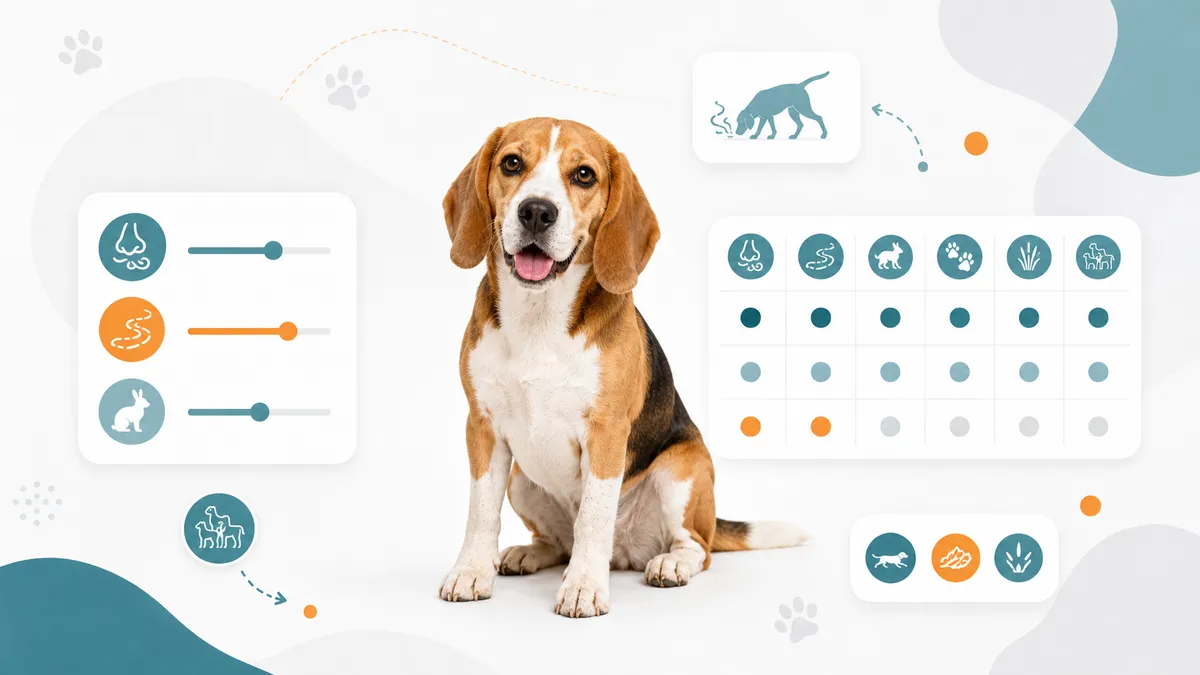
What this group was bred to do
Pursue warm-blooded quarry by scent, sight, stamina, speed or a combination of hunting traits.
Hounds were developed for tracking, trailing, coursing and hunting. Their group identity is less about one appearance and more about the instinct to locate or pursue quarry.
Core instincts:
What that means in a modern home
Often a good fit for:
- owners who respect independent dogs
- homes that can manage prey drive
- people interested in scent work
- families who enjoy long walks and secure outdoor spaces
Important watch-outs:
- recall may be unreliable around scent or movement
- some hounds are highly vocal
- secure fencing and leash management matter
- sighthounds can have strong chase triggers
Owner fit signals
These are group-level tendencies, not individual guarantees. Always research specific breeds and consult a qualified trainer or breeder.
Good fit if you
- likes sniff walks
- has secure outdoor options
- accepts realistic recall work
- enjoys independent personality
Consider carefully if
- busy wildlife area
- thin apartment walls if vocal breed
- expects handler-focus like a herding dog
Not the best fit if
- wants frequent unsecured off-leash freedom
- cannot manage chase risk
- needs silent dog in noise-sensitive housing
Family note: Many hounds are affectionate companions, but owner success depends more on management systems than obedience ideals.
Functional subtypes and instincts
PupWiki functional lens — not a formal registration category.
Subtypes in this group
How instincts appear at home
- nose-to-ground walks
- selective recall
- interest in wildlife
- couch-rest between bursts
- vocal alerts or baying in some breeds
Training levers that work well
- long-line recall
- scent games
- premack access-to-sniffing
- secure field exercise
- calm handling after chase arousal
Breeds in this group (33)
- Afghan Hound
- Basenji
- Basset Hound
- Beagle
- Bloodhound
- Dachshund
- Irish Wolfhound
- Norwegian Elkhound
- Plott Hound
- Rhodesian Ridgeback
- Treeing Walker Coonhound
- Whippet
- American English Coonhound
- American Foxhound
- Azawakh
- Basset Fauve de Bretagne
- Black and Tan Coonhound
- Bluetick Coonhound
- Borzoi
- Cirneco dell’Etna
- English Foxhound
- Grand Basset Griffon Vendeen
- Greyhound
- Harrier
- Ibizan Hound
- Otterhound
- Petit Basset Griffon Vendeen
- Pharaoh Hound
- Portuguese Podengo Pequeno
- Redbone Coonhound
- Saluki
- Scottish Deerhound
- Sloughi
21 breeds in this group are not yet profiled on PupWiki.
PupWiki tools for this group
Apply group insights to your specific dog with these free tools.
Frequently asked questions
- Why are hounds often hard to recall?
- Many hounds were selected to follow scent or chase visual movement independently. That can make recall harder around wildlife, scent trails or moving animals. Long-line work, secure spaces and realistic expectations are important.
- What is the difference between scent hounds and sighthounds?
- Scent hounds use their nose to follow trails, often with endurance and voice. Sighthounds use vision and speed to chase moving prey. FCI separates these groups, while AKC places both within Hound.
Sources
- American Kennel ClubThe 7 AKC Dog Breed Groups ExplainedAccessed 2026-06-06
- American Kennel ClubAKC Breeds Broken Out By GroupAccessed 2026-06-06
- American Kennel ClubAKC Breed Groups: Understanding Breed Groups at Dog Shows
- American Kennel ClubList of Breeds by Group
- Fédération Cynologique InternationaleFCI Breeds Nomenclature
- Fédération Cynologique InternationaleBreed Specific Instructions regarding exaggerations in pedigree dogs
- The Royal Kennel ClubBreed standards
- American Veterinary Medical AssociationSelecting a pet dog
- MSD Veterinary ManualSelecting a Dog
See something outdated, unclear, or incorrect? We welcome corrections — just send us the page URL, the issue, and a supporting source if available.
Submit a correction →What makes breed groups most useful to you?
Help improve PupWiki with one quick anonymous answer.
Compare breeds →